Spray paint, powder, cream, and flour used to "whiten" passersby—Colombia’s Black and White Carnival is ultra-exciting
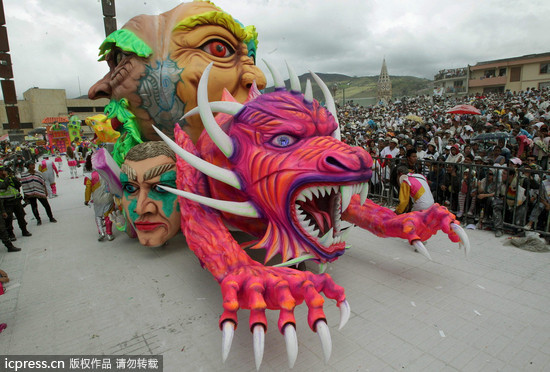
▲ Colombia’s annual early-year Black and White Carnival originates from Spanish tradition. (Photo / IC)
By / Hully
One of the world’s oldest carnivals and a UNESCO World Heritage event, Colombia’s “Black and White Carnival” is set to conclude on the 11th. This nationwide celebration kicks off each year with an end-of-year “Water Carnival” as a warm-up, followed by the wildly creative Children’s Carnival to amp up the atmosphere, and finally culminates with the Black and White Carnival as the grand finale, marking a joyful and lively welcome to the new year.
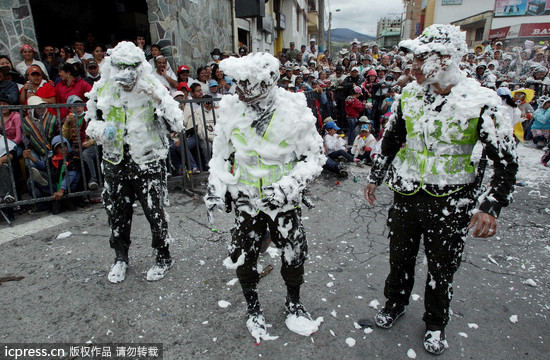
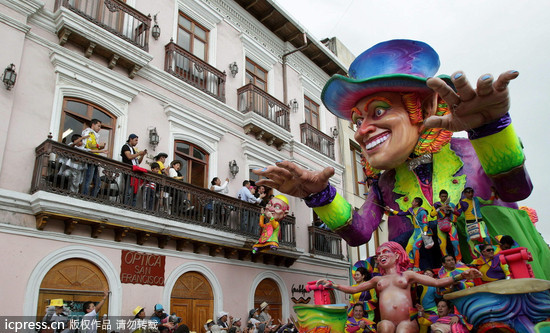
▲ Participants in the Black and White Carnival wear masks and face paint, symbolizing ethnic unity in a festive atmosphere. (Photo / IC)
The Black and White Carnival has its roots in Spanish tradition. During the Spanish colonial period, slaves were required to paint their faces black to attend the festivities. Over time, this evolved into the current practice where, during the final two days of the carnival, people of different ethnicities first apply black makeup, then switch to white the next day—or use spray paint, powder, cream, and flour to “whiten” passersby—as symbols of cultural equality and ethnic harmony.
The Carnival’s Castañeda Family Parade is also one of the most anticipated events. Legend has it that the Castañeda family was invited by local residents to visit in 1928, so participants dress in retro attire, wearing clothes from the early 20th century as they parade through the streets.
★ Disclaimer: Images provided exclusively to this site by IC. No website, newspaper, or TV station may reproduce any part or all of these images without permission from IC.
Share
This article is published by HowToTrip. Sharing and reposting are welcome — please credit the source.
Article URL: https://www.howtotrip.net/views-25364
Related Articles
- Shaoxing's "Grandpa Gourd" hangs the gourds back up: "If there are too many people, we'll interact less — just take a quick look from afar"
- Chinese authorities announce "reciprocal adjustment" to Japan visa fees — single-entry visa jumps from 2,250 to 16,750 yen!
- The "health stones" carried by a traveler were found to have radiation levels exceeding safety limits by a thousand times, potentially endangering fellow passengers on the same flight. Customs issues warning!
- Shenzhen Airport Issues Late-Night Notice: Unidentified Aerial Object Detected, Causing Widespread Flight Delays!
- “They only said it cost money after I opened the box and washed it!” 200g of grapes sold for 60 yuan on a high-speed train—12306 responds!
- Can't buy an airline ticket? Denied exit? Blocked from boarding? A large number of Chinese tourists have mysteriously become "discredited individuals"
- Adverse weather and economic fluctuations impact Colombia's coffee market
- Beach bathing area responds to 2 yuan/30 seconds fee for freshwater foot rinsing: Clearly priced!
- Taking off with an improperly closed cabin door? Wing malfunction? Multiple flights made emergency returns mid-journey!
- Experience the gifts of nature! A countdown of the world’s ten most stunning coastlines