Kamakura — how can you only spend one day here?
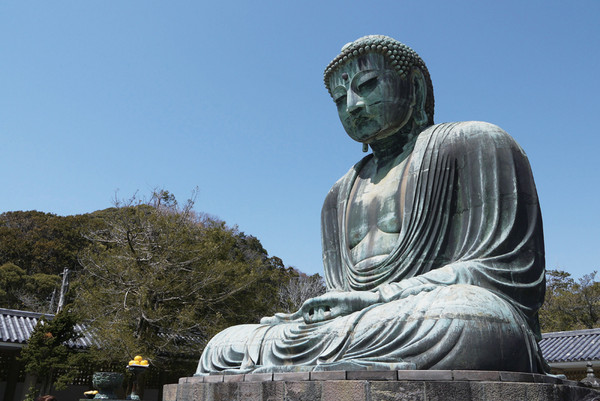
▲ The Great Buddha at Kōtoku-in Temple in Kamakura.
Text and photos by Wu Yanling
“Young women in the Kanto region all dream of visiting Kyoto at least once; young women in the Kansai region will visit Kamakura at least once in their lifetime.” This is something my Japanese teacher once said that left a deep impression on me. My Japanese teacher was from Nara — a true Kansai girl. She recalled that when she was in girls' school, during a class vote on where the students wanted to go for a trip, Kamakura was always the top choice.
But Kamakura’s ability to retain the charm of an ancient city today is thanks to one person — Japanese writer Jirō Osaragi.
In the 1960s, Kamakura was undergoing a fervent wave of residential development. One housing project even expanded into the protected forest of the Tsurugaoka Hachimangū shrine, a historic site. For five consecutive days, Jirō Osaragi wrote a column in the Asahi Shimbun titled “Nature Under Destruction,” describing the damage being done to the landscapes of ancient cities like Nara, Kyoto, and Kamakura, as well as systematically introducing the British National Trust movement.
His writing received widespread resonance; not only that, he also initiated the “Kamakura Scenic Conservation Association,” calling on citizens to protect the ancient city’s scenery. With the 15 million yen raised, they purchased a 1.5-hectare plot of land originally slated for the housing project, successfully halting the development. As a result, today, those wanting to escape the hustle and bustle of Tokyo can reach Kamakura in just an hour by train to enjoy its historic atmosphere. Most people treat Kamakura as a day-trip destination — leaving Tokyo in the morning and returning by evening to continue enjoying the city’s vibrancy.
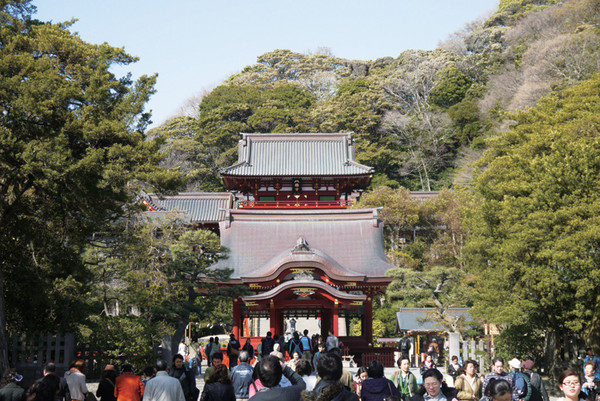
▲ Tsurugaoka Hachimangū is a landmark of Kamakura, attracting many visitors during cherry blossom season.
But how could Kamakura be a place to only spend one day? Kamakura is more than just Komachi Street and Tsurugaoka Hachimangū. Northern Kamakura is dotted with ancient temples, each with its own seasonal flower calendar. In June, the hydrangeas (ajisai) at Hase-dera Temple always draw large crowds.
Yamate is another key area. Hase-dera Temple and the Great Buddha of Kamakura are close to each other. At the Kamakura Museum of Literature, there is a map of literary figures — every Japanese writer you can name, whether for a short or long time, has lived in Kamakura. If you only treat Kamakura as a day trip, it’s hard to understand why these writers chose to live here (not to mention the stunning views of Enoshima and Kamakura Bay).
Because daytime Kamakura is for tourists; when the tourists leave, Kamakura returns to the hands of its local residents. A few restaurants remain open, with small groups of diners chatting over drinks — it’s the epitome of relaxed town life. Of course, Kamakura also boasts the famous Enoshima Island. This island standing in the sea is a perfect blend of fresh seafood, the mysterious goddess Benzaiten, and natural scenery — definitely worth spending an afternoon strolling around.
Perhaps one reason why many treat Kamakura as a day trip is that hotels within walking distance of Kamakura Station are not only scarce but also expensive. Reasonably priced business hotels are mostly located in nearby Fujisawa or Ofuna, requiring at least twenty to thirty minutes by train — which might as well be a trip back to Tokyo.
But I found Hotel New Kamakura, just a two-minute walk from Kamakura Station, solving all those problems. The butter-yellow Western-style building is a Taisho-era structure where Ryūnosuke Akutagawa once stayed to write. Staying in the same hotel as this literary figure became the highlight of my Kamakura trip. Kamakura also has many delicious foods you’d regret missing. I had thought this upscale villa district would be pricey, but it actually hides many experiences that are great value for money.
Ancient temples and flowers, mountains and sea, literature and history. How can you truly appreciate Kamakura without staying for three or four days?
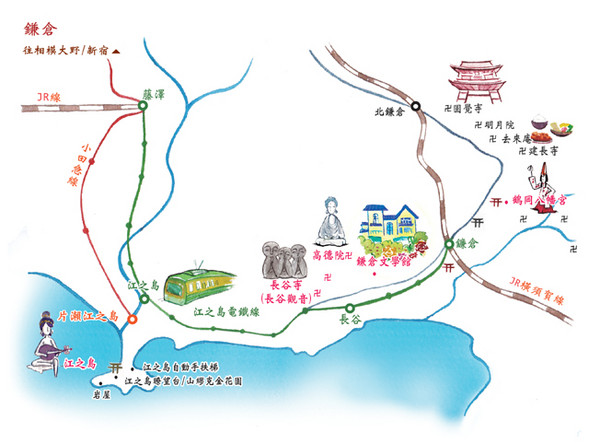
▲ Map of Kamakura.
The above text and images are excerpted fromLove Japan!: 10 Must-Visit Micro-Luxury Routes in a Lifetime》, for more related information: http://bwp25007008.pixnet.net/blog/post/40597027.
Book title:Love Japan!: 10 Must-Visit Micro-Luxury Routes in a Lifetime
Author: Wu Yanling
Price: 350 NTD
Share
This article is published by HowToTrip. Sharing and reposting are welcome — please credit the source.
Article URL: https://www.howtotrip.net/views-24543
Related Articles
- Shaoxing's "Grandpa Gourd" hangs the gourds back up: "If there are too many people, we'll interact less — just take a quick look from afar"
- Chinese authorities announce "reciprocal adjustment" to Japan visa fees — single-entry visa jumps from 2,250 to 16,750 yen!
- The "health stones" carried by a traveler were found to have radiation levels exceeding safety limits by a thousand times, potentially endangering fellow passengers on the same flight. Customs issues warning!
- Shenzhen Airport Issues Late-Night Notice: Unidentified Aerial Object Detected, Causing Widespread Flight Delays!
- “They only said it cost money after I opened the box and washed it!” 200g of grapes sold for 60 yuan on a high-speed train—12306 responds!
- Can't buy an airline ticket? Denied exit? Blocked from boarding? A large number of Chinese tourists have mysteriously become "discredited individuals"
- Adverse weather and economic fluctuations impact Colombia's coffee market
- Beach bathing area responds to 2 yuan/30 seconds fee for freshwater foot rinsing: Clearly priced!
- Taking off with an improperly closed cabin door? Wing malfunction? Multiple flights made emergency returns mid-journey!
- Experience the gifts of nature! A countdown of the world’s ten most stunning coastlines