Thrilling to the extreme: A near-miss with the mountain cliffs on the Death Railway in Thailand
Text and photos byShao Sheng
The Death Railway in Kanchanaburi, northern Thailand, is a world-renowned segment of poignant history. To experience this, you can also join the one-day Death Railway tour organized by the Thai State Railway Authority, allowing visitors to easily explore the arduous process of building the railway back then.
The Death Railway has long been a place I’ve wanted to visit. However, to take the train to Kanchanaburi, you must depart from Bangkok’s Thon Buri Station. But by chance, I discovered that on weekends, Bangkok Railway Station adds a special sightseeing train service. Its route mainly goes from Bangkok Railway Station to Nakhon Pathom, Kanchanaburi, and then to the final stop at Nam Tok before returning along the same path. Moreover, the price isn’t expensive. If you’re looking for an easy one-day trip to the Death Railway, it’s a great option. For my trip to Kanchanaburi, I chose to board this train, but I got off directly in Kanchanaburi upon the return trip to reach my destination.
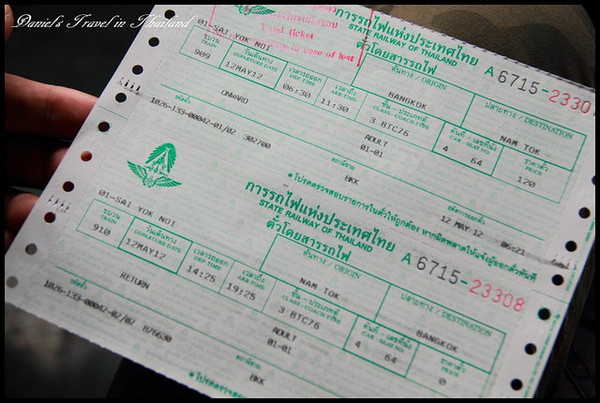
The fare for the sightseeing train is only 120 baht, which is an incredibly low price. Since the Death Railway is a very popular attraction, just the stretch from Kanchanaburi to Nam Tok alone costs 100 baht per one-way trip regardless of duration. Meanwhile, the sightseeing train covers Bangkok to Nam Tok and back for just 120 baht — what an amazing deal. However, the train departing from Bangkok leaves at 06:30, so you have to wake up extremely early to catch it. Also, this section is served by a third-class train, which has no air conditioning—only electric fans—and it gets quite stuffy when it’s hot due to the crowd. Those planning to take it should be mentally prepared.
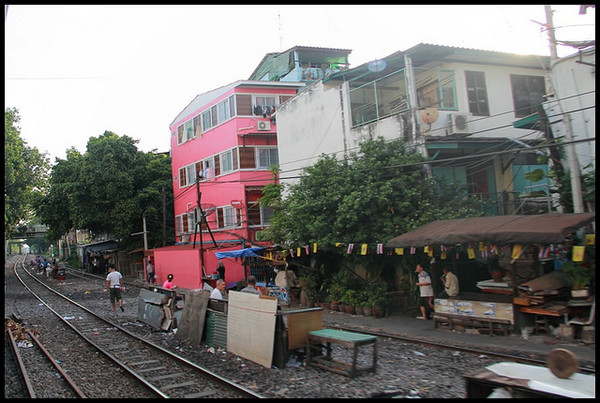
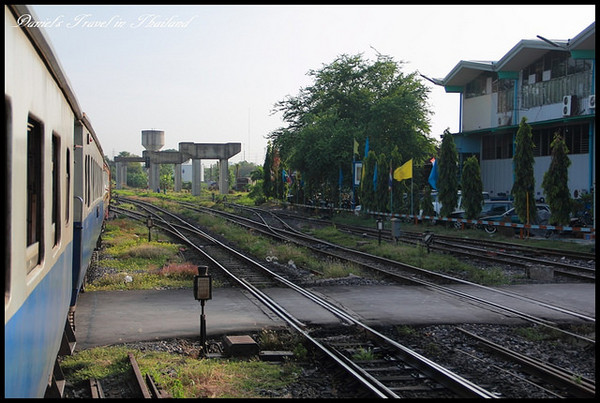
The train slowly departs from Bangkok Station, heading toward the legendary Death Railway in Kanchanaburi. It turns out that not only is there a railway market in Samut Songkhram, but people’s lives are also very close to the railway near Bangkok. Though the railway market is more integrated, such a way of life is hard to imagine in Taiwan. I think one reason might be that Thai trains don’t run very frequently.
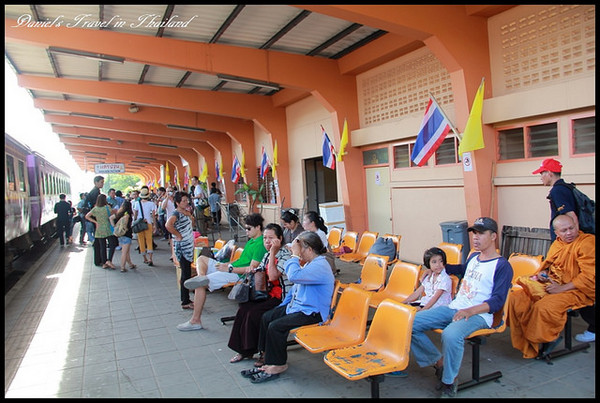
The first stop of the sightseeing train is Nakhon Pathom. When we arrived at Nakhon Pathom, the train stopped to allow passengers to look around for about 30 minutes. However, the announcement was entirely in Thai, which we couldn’t understand very well. We only found out after asking station staff. But because my companion and I weren’t sure, we didn’t dare wander too far.
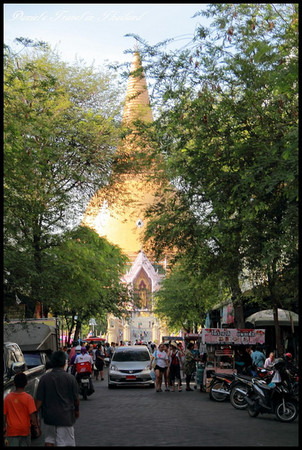
From Nakhon Pathom Railway Station to the temple is only about 200 meters, but this bustling street is lined with vendors. Just strolling down this street took quite some time, and we ate from one end to the other. Aside from the famous temple near the station, I later learned that the Wat Bang Phra, known among Taiwanese for its “money-cat” amulets, is also located in Nakhon Pathom and isn’t far from the station. For those interested in the money-cat amulets and wanting to visit Wat Bang Phra, taking the train is also a good choice.
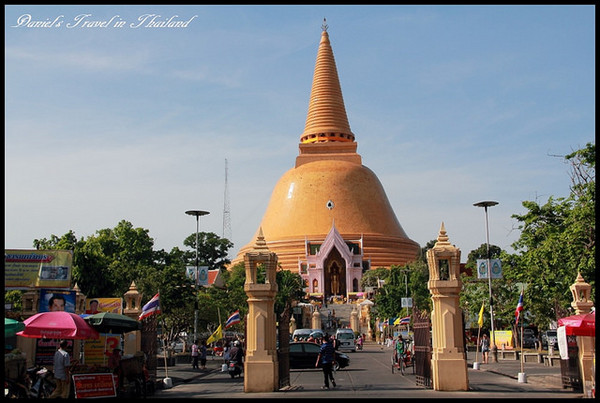
The most famous temple in Nakhon Pathom is Wat Phra Pathom Chedi Ratchaworawihan. However, because we spent too much time exploring the streets and weren’t sure when the train would depart, we only took a photo of the exterior and left without going inside.
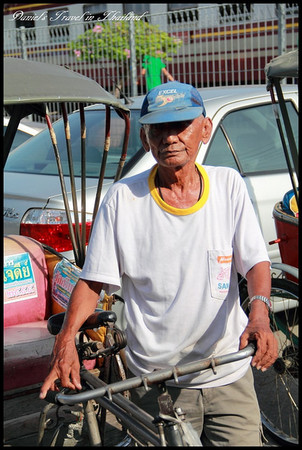
In any unfamiliar place, compared to visiting temples, I prefer strolling through local traditional streets that showcase the diversity of life, capturing the purest daily lives of locals and their distinctive cuisine. But even though we only walked around briefly, the streets of Nakhon Pathom aren’t all that different from typical Thai streets.
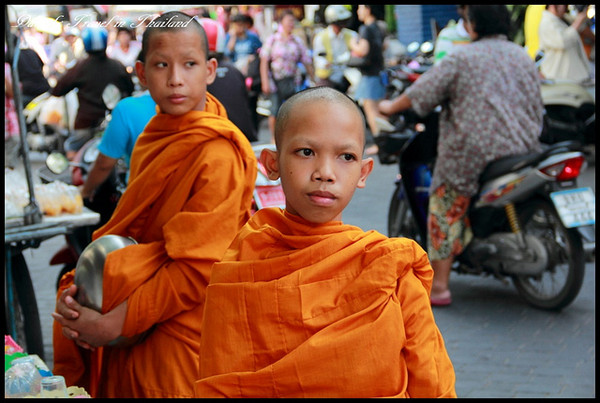
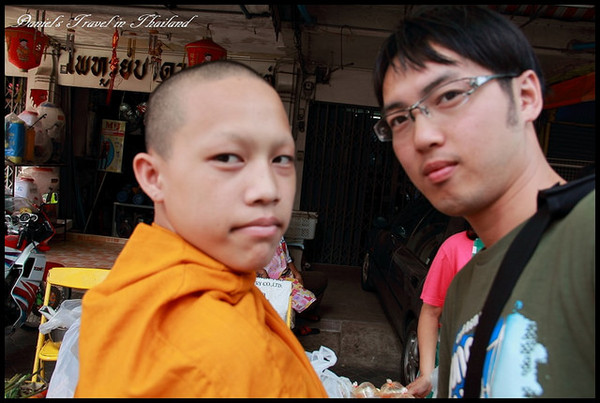
In Thailand, where Buddhism is prevalent, it’s common to see monks collecting alms. So, I went ahead and bought some food for the monks to receive their blessings. But for me, the blessing was secondary—the main goal was to chat with the monks and experience the process. (P.S. Why was I so chubby back then? XD)
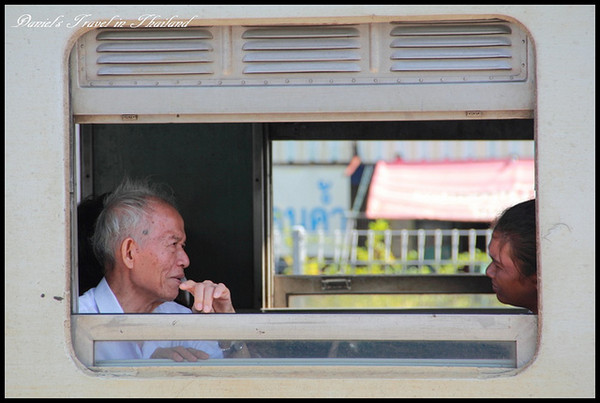
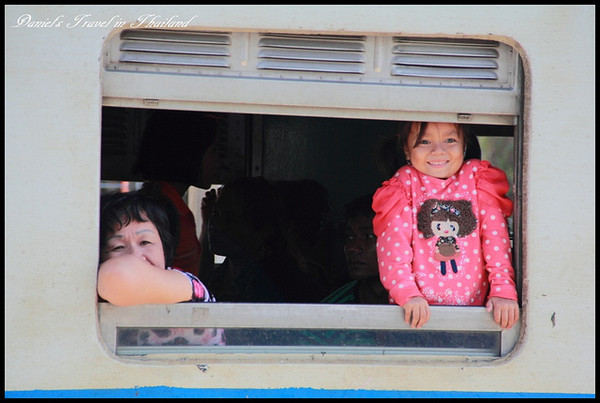
These photos taken from the train window may not be particularly beautiful, but I’ve always loved these weathered scenes and the innocent smiles of children. They are the most precious things during the journey and the stories that touch the heart the most.
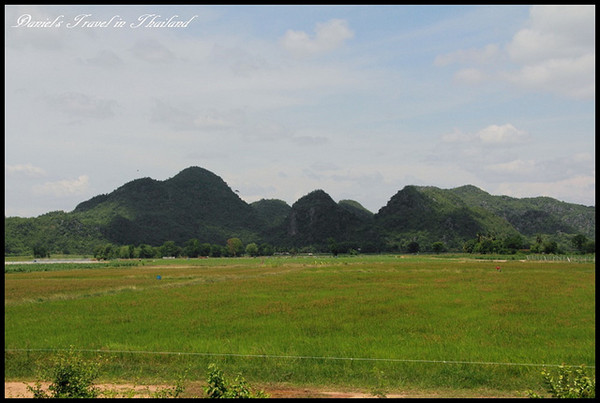
After leaving Nakhon Pathom, the scenery along the way is lush and green. Such a peaceful view makes it hard to associate it with the Death Railway. But later, I learned that this was merely the calm before the storm.
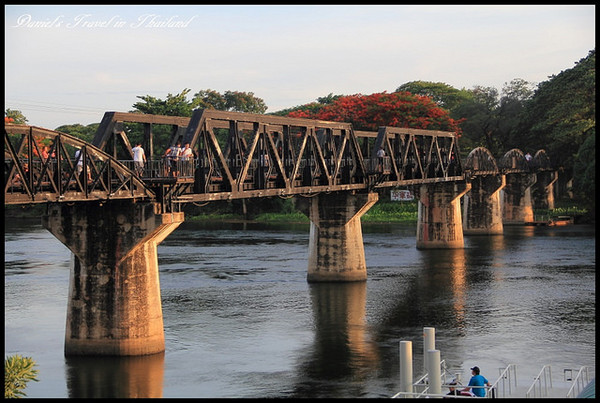
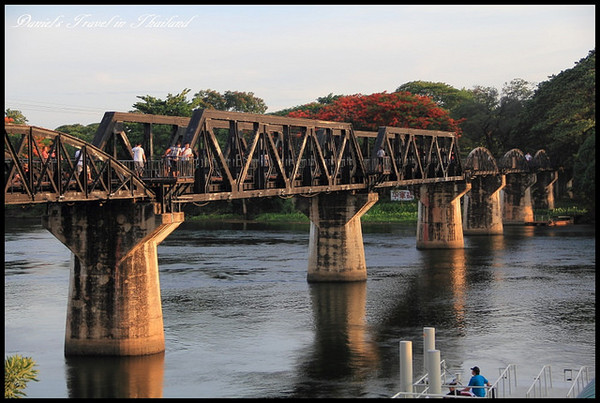
The second stop is the famous Kanchanaburi attraction — the Bridge on the River Kwai. The Bridge on the River Kwai is even more enchanting under the setting sun. However, there will be another article dedicated to the bridge. This piece focuses solely on the train journey, so due to limited space, I won’t go into detail here.
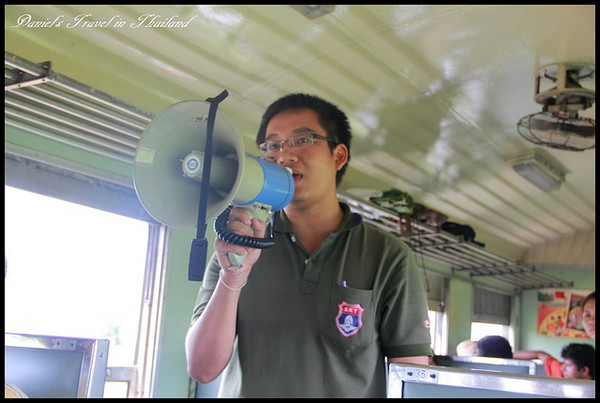
As we neared the Death Railway, someone came to explain the history of the railway (I’m guessing), but since it was entirely in Thai, I had no idea what was being said XD.
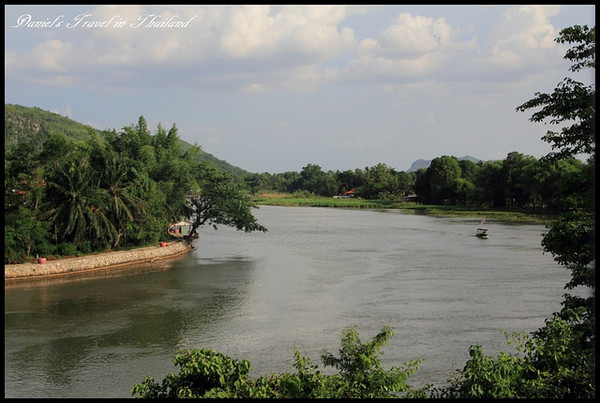
The Death Railway was built along the Kwai River, so after crossing the Bridge on the River Kwai, you can enjoy views of the river and observe the lives of the riverbank communities living alongside it.
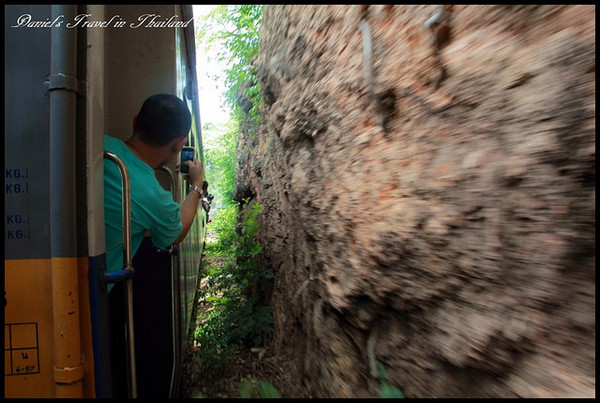
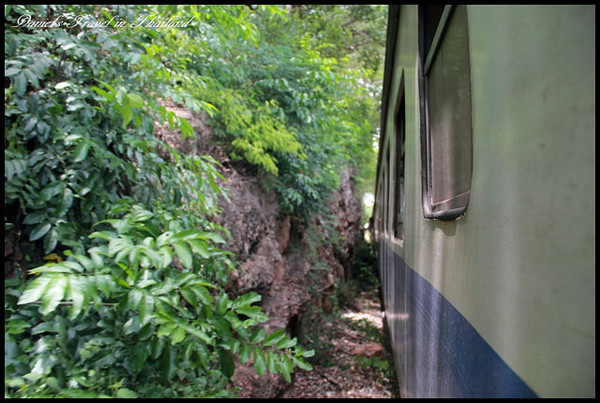
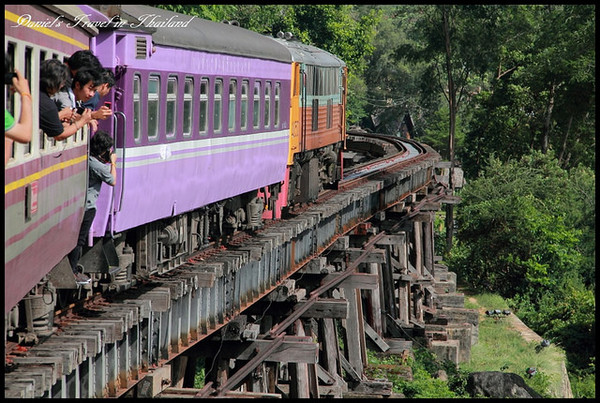
As the train got closer to the Death Railway, the entire car erupted in gasps. It turned out our train was so close to the mountain cliffs. And like the old ordinary trains in Taiwan, the windows in Thailand’s trains could be opened wide, so many people stuck their hands out to capture these rare moments, creating quite a dangerous scene.
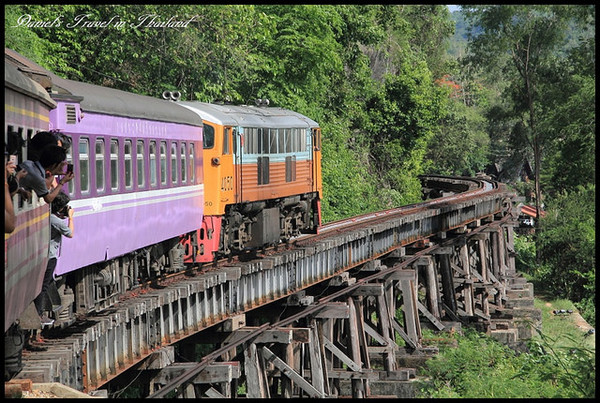
The general origin of the Death Railway is that during World War II, the Japanese military, for strategic reasons, built a railway from Kanchanaburi in Thailand to Yangon in Myanmar. Aside from Japanese soldiers and Thai-Burmese laborers, most of the work was done by prisoners of war from various countries. Due to the lack of modern technology at the time, the railway construction was extremely perilous. They also faced Allied air raids and outbreaks of infectious diseases, resulting in the deaths of tens of thousands of POWs. That’s how the Death Railway got its notorious name.
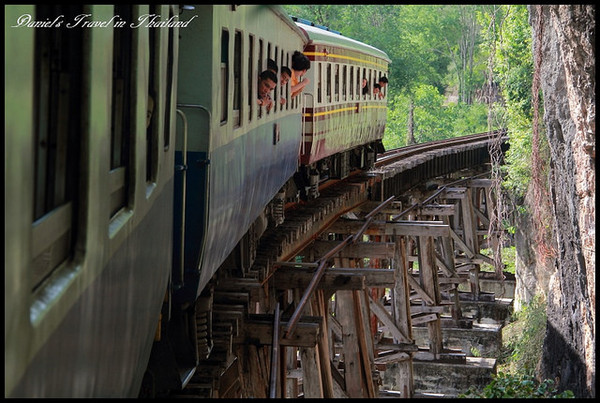
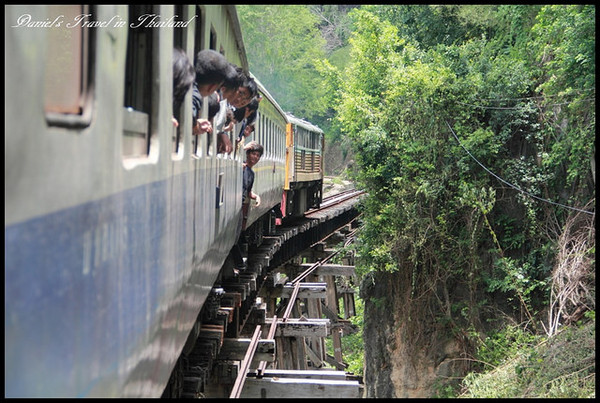
Aside from the cliffs we just passed, this bridge is the legendary highlight of the Death Railway. To someone studying engineering like me, building such a bridge today would be simple. But in an era 70 years ago, during wartime and when transporting large machinery was extremely difficult, constructing this railway bridge was immensely challenging. Moreover, many of the cliffs along the way were blasted and drilled into shape by the builders of that time.
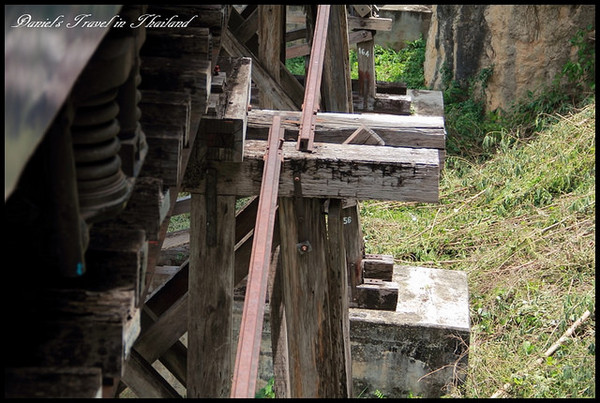
The bridges are all made of wood. Looking closely, the wooden supports holding up the tracks are quite aged. Riding a train over them gives me a sense of unease. I wonder if the Thai State Railway Authority will renovate them in the future. Fortunately, there aren’t many trains on this section of the Death Railway each day, so they should hold up for a while longer.
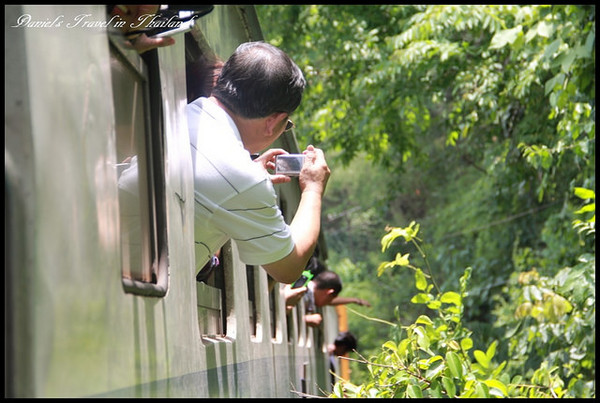
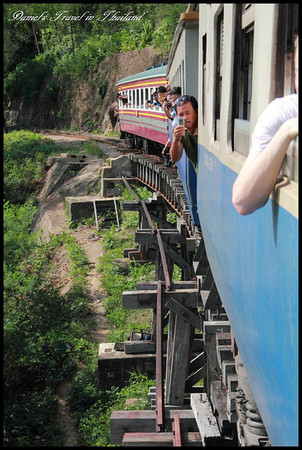
Many tourists, like me, get excited and take tons of photos when they see the Death Railway. The train also slows down when passing through this section to avoid accidents, as the level of danger here is undeniable.
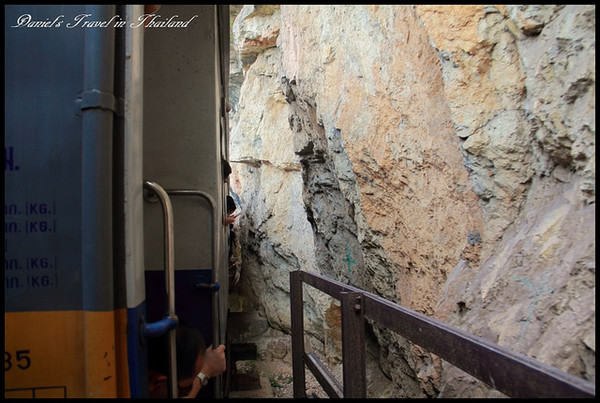
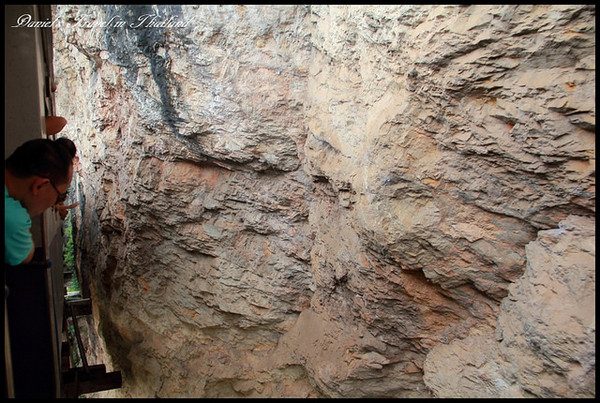
One part of the journey is the most thrilling — not only do you travel across a weathered wooden bridge, but the train also almost scrapes the mountain cliffs. At times, you could practically touch the cliff wall with your hand. Though the experience is heart-stopping, it still makes you marvel at the spirit of the Japanese who managed to build the Death Railway back then, even though the construction process was filled with hardship and is completely unacceptable by today’s standards.
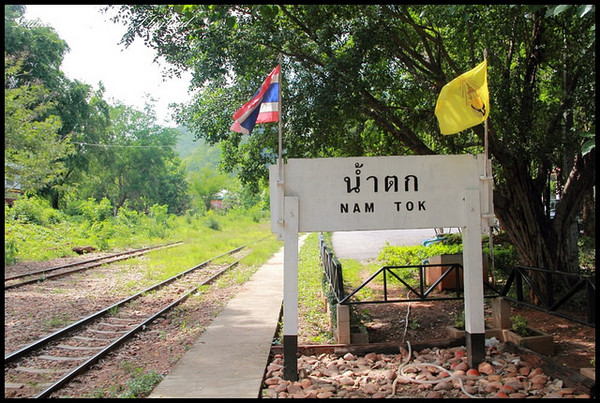
The final stop of the Death Railway is Nam Tok Station. Upon arrival, the train stops here for about two hours because there’s the Sai Yok Noi Waterfall nearby for recreation. From the station, you can take a songthaew (shared taxi) to the waterfall. It costs only 10 or 20 baht per person to get there (the price is a bit hazy now).
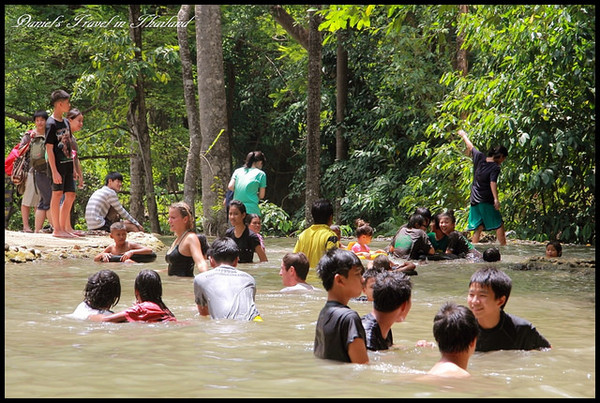
When I visited the waterfall in April, the water flow was actually quite low, and the waterfall wasn’t very picturesque. But there were many locals and kids swimming under it, and some tourists happily joined in after seeing them. My friend and I just took photos on the shore and dipped our feet in the water a little—we didn’t want to get completely soaked at that time.
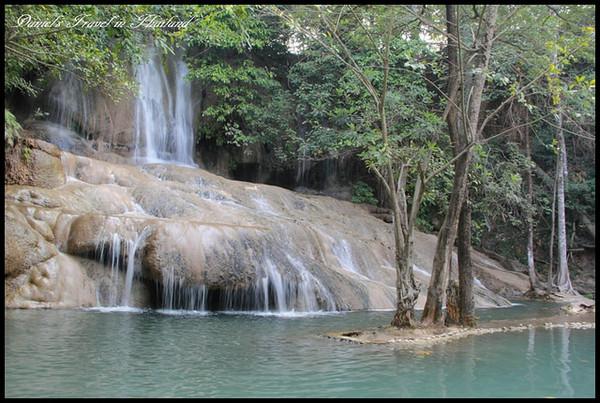
However, when Xiao Yong, a junior, visited Kanchanaburi earlier this year, she happened to pass by this waterfall, so we dropped by to check it out. In winter, because of the cold weather, not many people swim in the waterfall. But since the rainy season had just ended, the waterfall had plenty of water, and the turquoise pool created a stunning view. The winter waterfall scenery is much more beautiful than in summer.
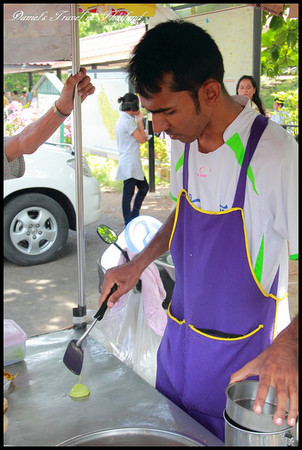
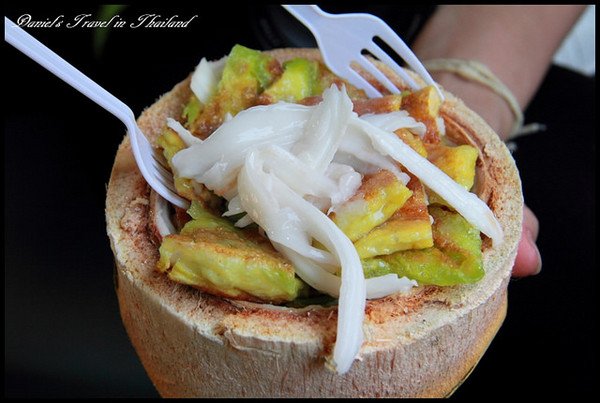
After a brief visit to the waterfall, we returned to Nam Tok Station. At the station, I bought a banana pancake made by an Indian vendor. The method of making the banana pancake was similar to the usual kind, but what made it unique was that the container was made of a coconut shell, and the pancake itself seemed to have pandan juice added, though the flavor wasn’t very strong. There was also added shredded coconut, giving the pancake a very diverse texture. It was the first time I’d tried such a unique banana pancake. If you see this stall at Nam Tok Station, give it a try.
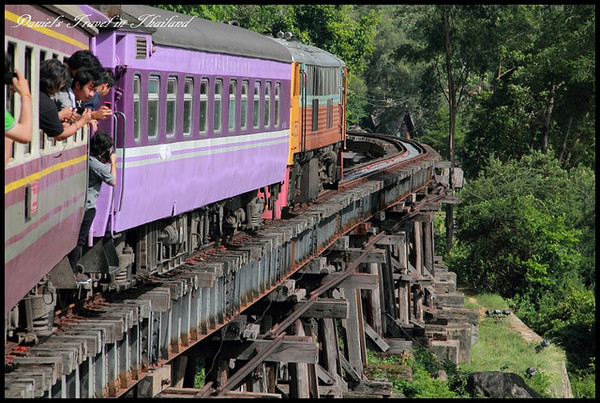
After resting at Nam Tok Station for nearly two hours, the train departs again around 2:30 PM, heading back along the same route to Bangkok Railway Station. Along the way, you get to re-experience the breathtaking scenery you saw earlier. However, on the return trip, many tourists are too exhausted to take many photos, so there’s less photography and fewer distractions. Although the scenery had already been seen once, seeing the Death Railway again on the return journey still fills me with deep respect for the POWs and workers who lost their lives here.
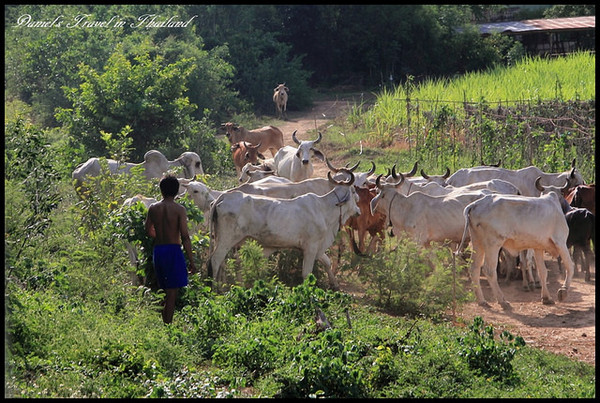
On the return trip, as sunset approaches, you can admire the lives of locals working in the fields along the railway. Such a leisurely and peaceful scene feels like something rarely seen these days.
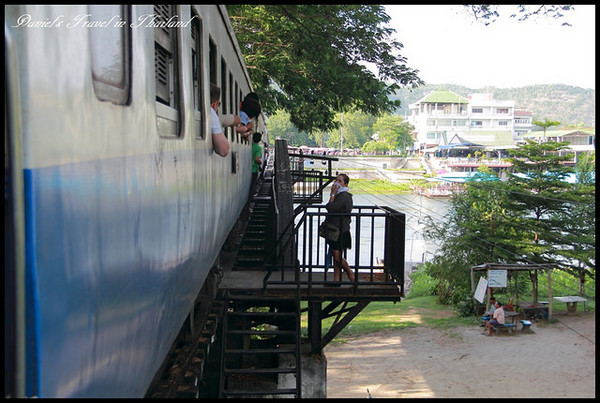
Just before the train returns to the Kwai River Bridge again, what was not mentioned earlier is that due to the large number of visitors at the bridge, the train will sound its horn to alert tourists as it slowly enters the station. However, there will still inevitably be tourists who fail to dodge in time, so the bridge is equipped with many refuge sidings for visitors to take shelter in for safety.
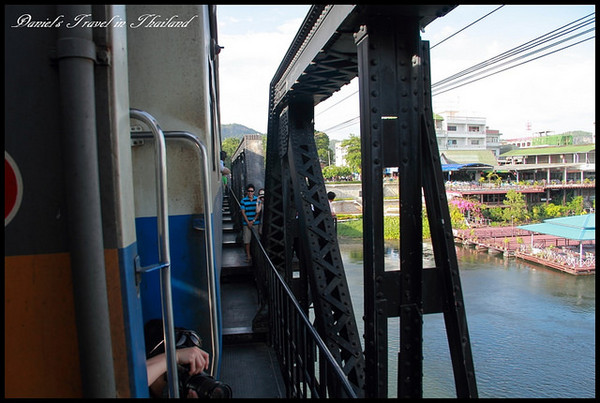
When the train is on the bridge, it is so close to the iron structure, but fortunately, it moves at an extremely slow speed. If it were going fast, it would definitely be a heart-stopping experience.
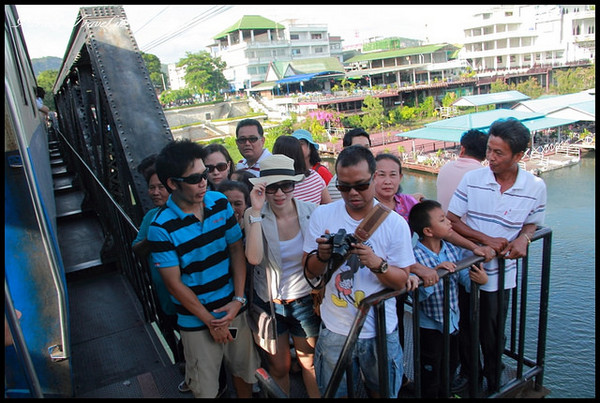
As the train enters the station, the refuge sidings are crowded with people dodging the train. I think this must be another Thai train spectacle, aside from the Maeklong Railway Market in Samut Songkhram.
The Death Railway may not seem like an overly remarkable feat by today’s engineering standards, but during World War II, in an era of war chaos, scarcity of supplies, and limited technology, constructing such a railway was truly astonishing. Yet beyond the amazement, the sacrifices made by prisoners of war behind the Death Railway are what truly move people. Visiting the railway market is about experiencing all of this. For those looking to explore the Death Railway in a more relaxed way, choosing the one-day tour offered by the Thai Railways on weekends is an affordable and easy way to discover this solemn piece of history.
【One-Day Death Railway Tour in Kanchanaburi, Thailand】
Time: Every Saturday and Sunday, departing from Bangkok Railway Station at 06:30 AM and returning to Bangkok Railway Station at 19:25 PM. (As train delays are common in Thailand, the arrival time is for reference only, but it is recommended to arrive at Bangkok Railway Station on time in the morning.)
Ticket Price: 120 Bhat
Attractions Along the Route: Nakhon Pathom, Kwai River Bridge, Death Railway (only passing through, no stop), Nakhon Pathom (2-hour stop), Death Railway (only passing through, no stop), Kanchanaburi Railway Station, Bangkok Railway Station
Xiaosheng’s Wandering Journey
Every journey, every trip is about seeking—though I’m not always sure what I’m searching for—but ultimately, what I gain is more than I could have imagined. That’s why my wandering journey will continue, without end.
Share
This article is published by HowToTrip. Sharing and reposting are welcome — please credit the source.
Article URL: https://www.howtotrip.net/views-22427
Related Articles
- Shaoxing's "Grandpa Gourd" hangs the gourds back up: "If there are too many people, we'll interact less — just take a quick look from afar"
- Chinese authorities announce "reciprocal adjustment" to Japan visa fees — single-entry visa jumps from 2,250 to 16,750 yen!
- The "health stones" carried by a traveler were found to have radiation levels exceeding safety limits by a thousand times, potentially endangering fellow passengers on the same flight. Customs issues warning!
- Shenzhen Airport Issues Late-Night Notice: Unidentified Aerial Object Detected, Causing Widespread Flight Delays!
- “They only said it cost money after I opened the box and washed it!” 200g of grapes sold for 60 yuan on a high-speed train—12306 responds!
- Can't buy an airline ticket? Denied exit? Blocked from boarding? A large number of Chinese tourists have mysteriously become "discredited individuals"
- Adverse weather and economic fluctuations impact Colombia's coffee market
- Beach bathing area responds to 2 yuan/30 seconds fee for freshwater foot rinsing: Clearly priced!
- Taking off with an improperly closed cabin door? Wing malfunction? Multiple flights made emergency returns mid-journey!
- Experience the gifts of nature! A countdown of the world’s ten most stunning coastlines