Is earning a Michelin star a matter of skill or luck? Mak Kwai Pui from Tim Ho Wan: The key lies in dedication
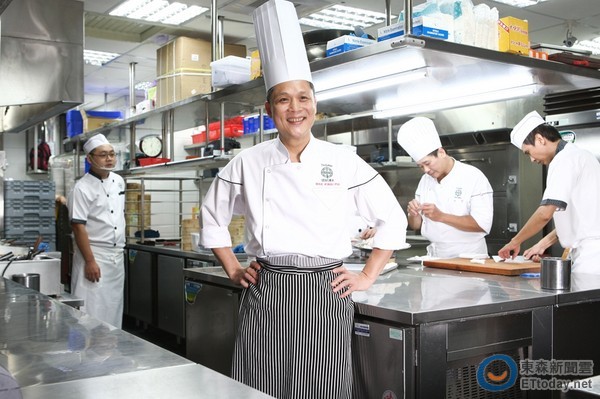
▲ Mak Kwai Pui, founder of Tim Ho Wan.
Reported and photographed by Chen Jui-chung
On the opening day of Tim Ho Wan’s first store in Taiwan, the founder and head chef Mak Kwai Pui specially came from Hong Kong to attend the ribbon-cutting ceremony and participated in a joint interview with the media. When he finally accepted an invitation from an ETtoday News Cloud reporter to enter the kitchen and pose for a few simulated cooking shots, it became instantly clear why Mak Kwai Pui has become a legend in Hong Kong’s culinary scene.
Watching Mak Kwai Pui stand at the cooking station, he didn’t wait for the photographer’s command before casually picking up some dough and scooping a spoonful of filling—within moments, a beautifully shaped dumpling was formed under his skilled hands. He smiled with satisfaction at the dumpling, as joyful as seeing his own child take their first steps. From that smile, one could fully sense Mak Kwai Pui’s deep love for Hong Kong-style dim sum.
Born into a family of chefs, Mak Kwai Pui started as an apprentice at the age of 15, working under his uncle and beginning with menial tasks, gradually accumulating experience. He joked that since it was family, they were less likely to withhold knowledge, so he learned many cooking techniques from his uncle, laying the foundation for his culinary career.
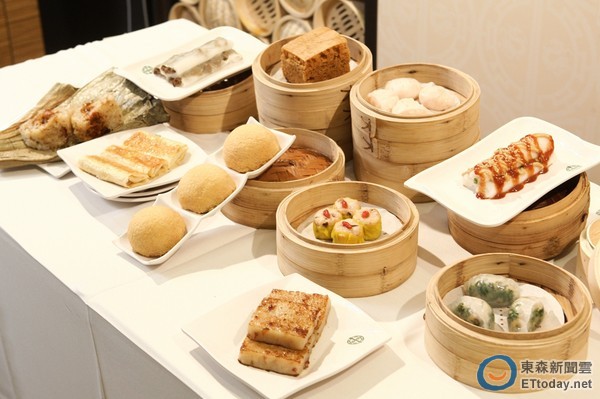
▲ Tim Ho Wan in Taiwan offers over twenty classic types of Hong Kong-style dim sum.
Reflecting on his journey from nothing to becoming a chef, Mak Kwai Pui said he received rigorous training under Executive Chef Chan Yan Tak of Lung King Heen at Hong Kong’s Four Seasons Hotel, and was greatly supported by him throughout his culinary path, for which he remains deeply grateful to this day.
Thanks to this solid training, Mak Kwai Pui gradually found his own path. In July 2009, he joined the Four Seasons Hotel in Hong Kong as the Dim Sum Chef at Lung King Heen. Just a few months later, Lung King Heen was recognized by the 2009 Michelin Hong Kong & Macau Guide, becoming the only three-Michelin-starred restaurant in Hong Kong and the first Chinese restaurant to earn three stars. In March 2010, Mak Kwai Pui left the Four Seasons Hotel and founded Tim Ho Wan.
Recalling the inspiration behind naming the restaurant “Tim Ho Wan,” Mak Kwai Pui said that at the time, he wanted to prove that he could succeed even without abundant resources, so he went independent. But aside from having the skills, he also believed a bit of good luck was needed—hence the name “Tim Ho Wan,” which means “to add fortune.”
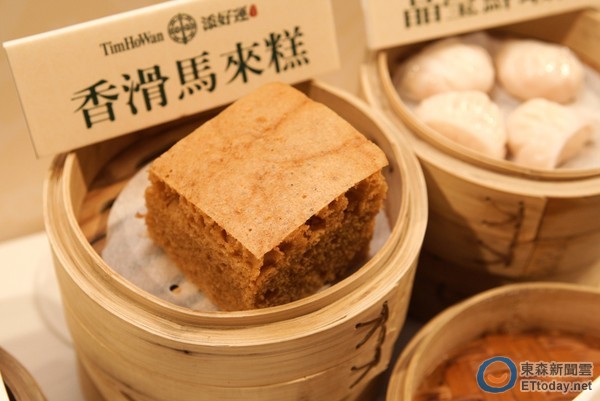
▲ The Malay cake is Mak Kwai Pui’s most confident and proud creation.
Built on Mak Kwai Pui’s strong culinary foundation, Tim Ho Wan earned a Michelin one-star rating by the end of 2010. With its affordable prices, Tim Ho Wan became the cheapest Michelin-starred restaurant in history and also the fastest to earn a star. This once again made Mak Kwai Pui a hot topic in the culinary world.
Mak Kwai Pui humbly stated that the biggest reason Tim Ho Wan earned Michelin recognition was that “everyone on the team put in the effort to overcome challenges, rather than giving up when problems arose.”Take the beef balls served at Tim Ho Wan’s Taiwan branch as an example. Initially, the chefs followed the cooking time standards used in Hong Kong, but Mak Kwai Pui, considering the differences in temperature and humidity between Taiwan and Hong Kong, adjusted the cooking time of the beef balls together with the Taiwan team. That mere difference of a few seconds allowed Taiwanese customers to enjoy more authentic Hong Kong-style beef balls—yet another result of the entire team’s collective efforts.
As Tim Ho Wan continues to open branches overseas, Mak Kwai Pui maintains strict quality control at each location and is quite particular about the menu. Mak Kwai Pui believes, “Just doing a great job with tradition is already incredibly impressive.”
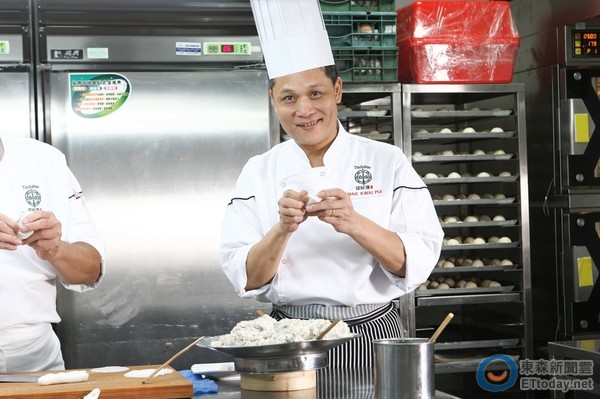
▲ Seeing Mak Kwai Pui’s joyful smile, you can tell how passionate he is about Hong Kong-style dim sum.
Therefore, Tim Ho Wan branches outside of Hong Kong all offer 25 fixed classic flavors, representing the most traditional and iconic dishes, along with other variations tailored to local characteristics. Mak Kwai Pui mentioned that among the four branches in Singapore, each has its own exclusive signature dish—for example, “Laksa Dumplings” are a specialty at one of them. Mak Kwai Pui also said that Taiwan’s sakura shrimp is a highly distinctive local ingredient, and he doesn’t rule out incorporating it into dishes in the future to create uniquely Taiwanese creations.
Pursuit of perfection: No takeout allowed
When talking about his favorite dim sum,Mak Kwai Pui has a particular fondness for his own“Malay Cake.”He explained that while the Malay Cake may seem simple, factors such as weather conditions and the skill required to control heat during cooking are crucial. The technique Tim Ho Wan uses to make the Malay Cake is something no other place can replicate.
Through conversations with Mak Kwai Pui, it becomes clear that beyond ingredient selection and cooking skills, weather and temperature are also key to the deliciousness of Hong Kong-style dim sum. Mak Kwai Pui also pointed out that it is this attention to every detail that led Tim Ho Wan to initially prohibit customers from taking food away. After all, many types of dim sum, once taken home by customers, might not be handled properly and could lose their essence. Even when dining in-store, “temperature” is a factor Mak Kwai Pui carefully controls.
Mak Kwai Pui noted that all Tim Ho Wan restaurants are kept small to ensure the time from when dim sum is made to when it reaches the table isn’t too long—preventing it from cooling and losing flavor—while also ensuring the kitchen staff can handle the customer volume.
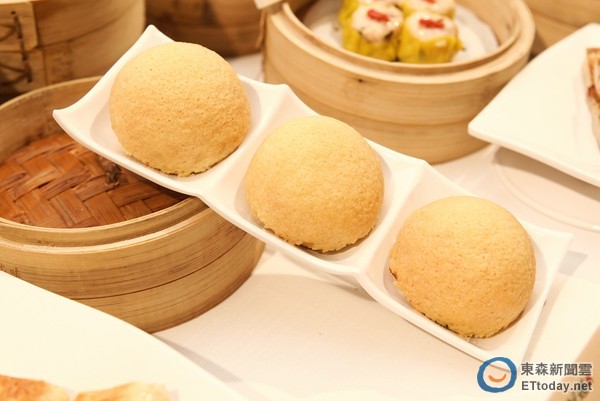
▲ The flaky BBQ pork buns are a popular item at the store. During Taipei’s trial operation period, they sold 66,000 pieces in a single month.
Made fresh on-site: Half the shop is the kitchen
For instance, Tim Ho Wan’s Taipei branch, now the largest in the world, converted nearly half of its space into a kitchen to accommodate the crowd, hiring over 20 chefs. Mak Kwai Pui joked that building such a large kitchen in such an expensive area would definitely get laughed at in Hong Kong.
When speaking of his own achievements, Mak Kwai Pui admitted he never imagined Tim Ho Wan would reach its current success. He believes that the country where a branch opens isn’t the point—what matters more is using Tim Ho Wan’s dim sum to let more people around the world learn about Cantonese cuisine and culture. That, he says, is Tim Ho Wan’s greatest goal.
Share
This article is published by HowToTrip. Sharing and reposting are welcome — please credit the source.
Article URL: https://www.howtotrip.net/views-21081
Related Articles
- Shaoxing's "Grandpa Gourd" hangs the gourds back up: "If there are too many people, we'll interact less — just take a quick look from afar"
- Chinese authorities announce "reciprocal adjustment" to Japan visa fees — single-entry visa jumps from 2,250 to 16,750 yen!
- The "health stones" carried by a traveler were found to have radiation levels exceeding safety limits by a thousand times, potentially endangering fellow passengers on the same flight. Customs issues warning!
- Shenzhen Airport Issues Late-Night Notice: Unidentified Aerial Object Detected, Causing Widespread Flight Delays!
- “They only said it cost money after I opened the box and washed it!” 200g of grapes sold for 60 yuan on a high-speed train—12306 responds!
- Can't buy an airline ticket? Denied exit? Blocked from boarding? A large number of Chinese tourists have mysteriously become "discredited individuals"
- Adverse weather and economic fluctuations impact Colombia's coffee market
- Beach bathing area responds to 2 yuan/30 seconds fee for freshwater foot rinsing: Clearly priced!
- Taking off with an improperly closed cabin door? Wing malfunction? Multiple flights made emergency returns mid-journey!
- Experience the gifts of nature! A countdown of the world’s ten most stunning coastlines