The sound of a baby crying echoes from a dark cave... but it turns out to be the call of the living fossil, the Chinese giant salamander.
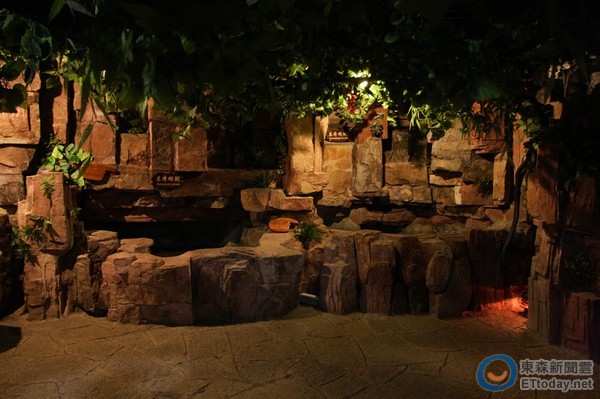
▲ The Golden Giant Salamander Museum, built to replicate the living environment of the Chinese giant salamander. (Photo by reporter Chen Ruizhong, same below)
Reported by Chen Ruizhong in Zhangjiajie
If the spectacular peaks and grotesque rocks are Zhangjiajie’s most famous geological wonders, then the living fossil "Chinese giant salamander," which has lived since the age of the dinosaurs, can be said to be the region’s most representative and precious creature.
The Chinese giant salamander, whose formal scientific name isAndrias davidianus,is called the "giant salamander" or "baby fish" because it often emits sounds resembling the cry of a human baby, and its limbs resemble the tiny hands of an infant. It has an average body length of about 60–70 cm, and can grow up to a maximum of 180 cm,making it the largest amphibian in the world.Currently, besides Zhangjiajie, it can also be found in high-altitude areas of the Yangtze and Yellow River basins.
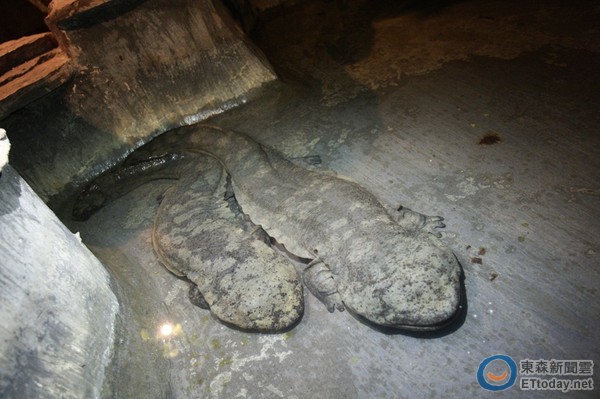
▲ A mature Chinese giant salamander can reach a body length of over 80 cm.
The Chinese giant salamander has a strong self-healing ability and can survive without food for 2–3 years. With a potential lifespan of up to 100 years, it is regarded as a symbol of longevity among the people. Also, as the species has existed on Earth for more than 300 million years, many consider it a precious living fossil.
The Chinese giant salamander has very high requirements for living conditions such as geology, water quality, and temperature. Coupled with folklore that its meat has miraculous effects, the wild population has drastically declined due to human hunting and environmental destruction. It is now listed asa Class II Key Protected Wildlife Species in Chinaand is classified asCritically Endangeredon the IUCN Red List. As a result, China has established protected areas and initiated captive breeding programs, gradually increasing the population of farmed Chinese giant salamanders.
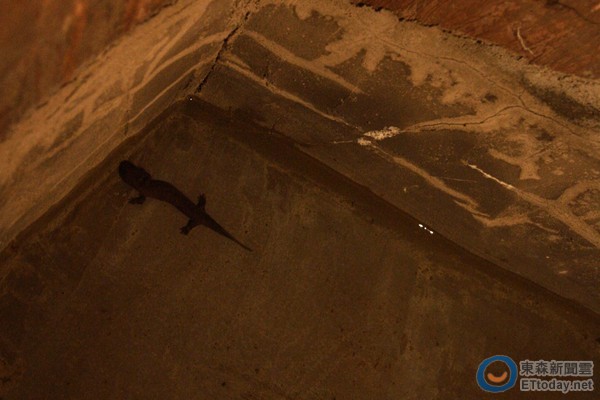
▲ A one-year-old Chinese giant salamander, about 10–15 cm in size.
Located in Zhangjiajie, the Golden Giant Salamander Family once used semi-natural caves within the area as breeding bases for the Chinese giant salamander, successfully raising tens of thousands of them. In the exhibition hall, visitors can learn about the history of the Chinese giant salamander and Zhangjiajie through various materials, and observe specimens of different ages and sizes.
▲ Video of the Chinese giant salamander. (A faint call can be heard at 00:04)
To accommodate the salamanders, the exhibition hall features elements they prefer: cool, quiet, and dim surroundings. The pools are designed in the shape of karst caves to provide the most comfortable living environment. Aside from occasional flashlight use by guides for better observation, it feels like entering a large cave, and the occasional “wa-wa” cries reminiscent of a baby’s cry add a mysterious atmosphere to the exhibit.
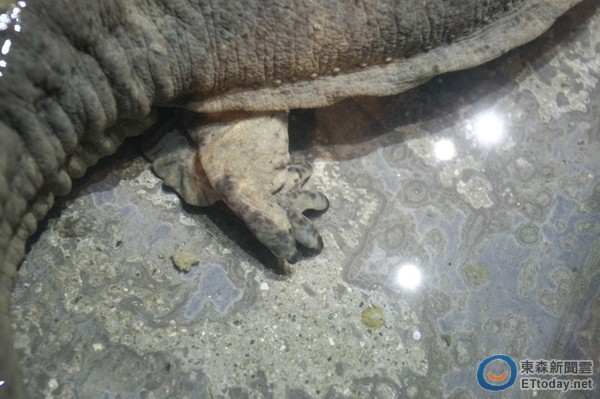
▲ The limbs of the Chinese giant salamander resemble the hands of a human baby.
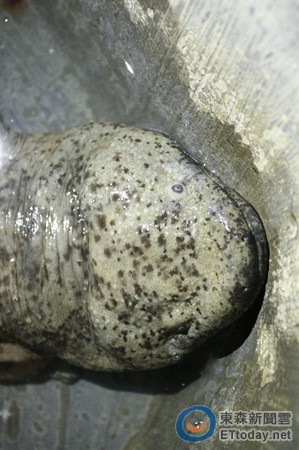
The one-year-old Chinese giant salamanders on display in the hall are only about 10–15 cm in size, similar to the lizards commonly seen in the mountains. However, as they grow older, their massive size transformation can be observed in different pools. Two mature Chinese giant salamanders in the adult display pool are about 80–100 cm in size. Guides also note that although the salamanders appear docile, they are actuallyinherently fierce carnivorous animals,with very strong bite force. Touching them carelessly may result in bites, so observation requires extra caution.
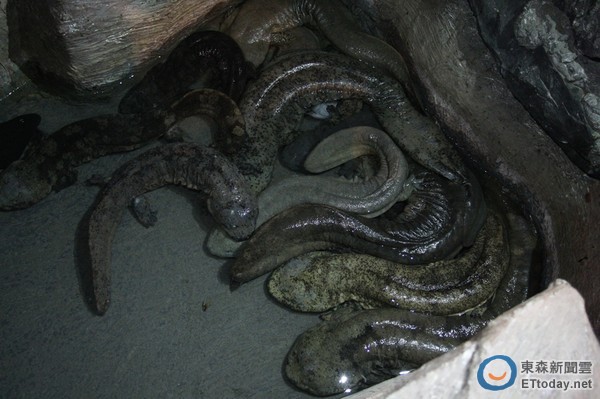
▲ A group of Chinese giant salamanders around 5 years old.
Due to the successful artificial breeding of Chinese giant salamanders in Zhangjiajie, local restaurants have started selling dishes featuring the animal. According to local guides, Zhangjiajie is the only city where it is legal to consume Chinese giant salamander. There are strict regulations on its sale—restaurants must have government-issued permits, and only injured or deformed individuals may be used. However, Lu Yishu, General Manager of Longten Travel Agency,Lu Yishu,stated that although the population of Chinese giant salamanders has increased through artificial breeding, they remain a precious species that needs protection. Upholding the principle of"no buying, no killing,"The philosophy calls on the public to respect ecological conservation in order to achieve sustainable development of the Chinese giant salamander and its natural habitat.
% of the area must be kept untouched, allowing you to witness the natural beauty and vitality of the environment.
Zhangjiajie Golden Salamander Giant Salamander Family
Address: No. 99 Dayong West Road, Yongding District, Zhangjiajie City, Hunan Province
Phone: 4007058188
Share
This article is published by HowToTrip. Sharing and reposting are welcome — please credit the source.
Article URL: https://www.howtotrip.net/views-15967
Related Articles
- Shaoxing's "Grandpa Gourd" hangs the gourds back up: "If there are too many people, we'll interact less — just take a quick look from afar"
- Chinese authorities announce "reciprocal adjustment" to Japan visa fees — single-entry visa jumps from 2,250 to 16,750 yen!
- 旅客携带的“保健石”核辐射超标千倍,同机人员或遭殃!海关提醒!
- 深圳机场深夜通报!出现不明升空物,航班大面积延误!
- “拆盒洗了才说要钱!”高铁200克葡萄卖60元,12306回应!
- 买不了机票?出境被拒?登机被拦?一大波中国游客莫名成了“失信人”
- 不利天气和经济波动影响哥伦比亚咖啡市场
- 海边浴场回应冲脚淡水收费2元/30秒:明码标价!
- 舱门没关好就起飞?机翼出现问题?多个航班途中紧急折返!
- 感受大自然的馈赠!盘点世界十大唯美海岸线