Cherry Blossom Viewing at a World Heritage Site: A Stroll Through Kyoto as It Was 1000 Years Ago
Photos & Text /45-Degree Upper Right
The founding year of Ninnaji Temple is particularly appealing to Chinese visitors: 888 AD! Moreover, this temple is the one where imperial princes and princesses most frequently took monastic vows, having deep ties with the Japanese imperial family. When exploring Western Kyoto, it's best to visit it together with the similarly named Ryoanji Temple.

We happened to arrive during a special viewing period when the cherry blossoms were in bloom. Arriving a bit late, we only had time to visit the highly renowned Important Cultural Property on the temple grounds: the Goten (Imperial Palace).

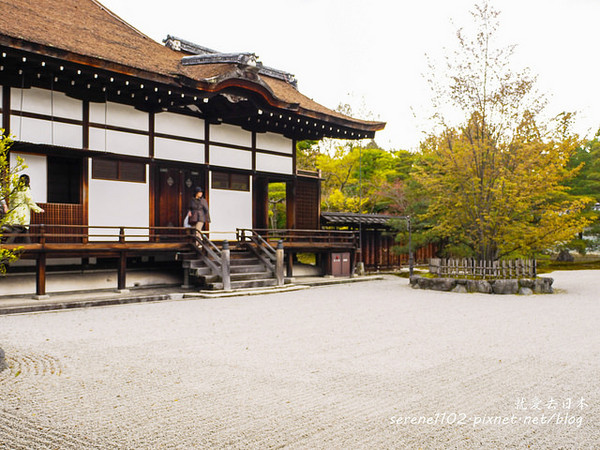
The [Chokushimon Gate] was designed in 1913 by the famed Kyoto craftsman Sukekichi Kameoka, and was built much later than the main body of the temple. The South Garden before us has cherry trees planted on the left and orange trees on the right, complemented by elegant cedar trees.

The Chokushimon Gate is similar to the Tang-style gate seen earlier at Higashi Honganji (http://serene1102.pixnet.net/blog/post/30221078), also designed by Sukekichi Kameoka, and is incredibly ornate, decorated with motifs such as phoenix feathers and peony arabesques.
In fact, Ninnaji Temple has also gone through its share of upheavals—it suffered considerable damage during the Ōnin War in the 15th century and wasn't gradually restored until the 17th century.

Walking slowly into this ancient courtyard, it’s hard to imagine that the Goten once burned down completely in a fire during the 19th century and was only rebuilt in the early 20th century.
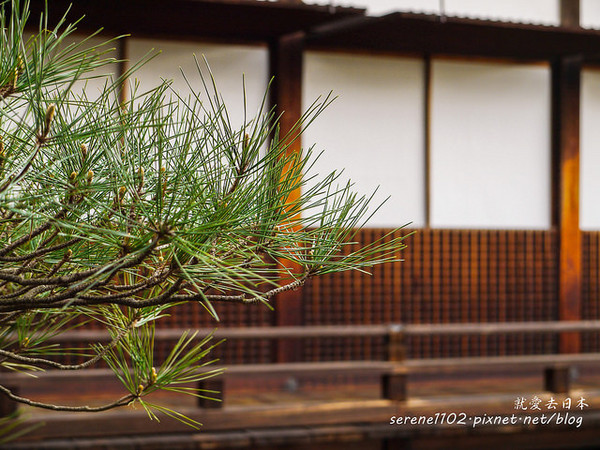
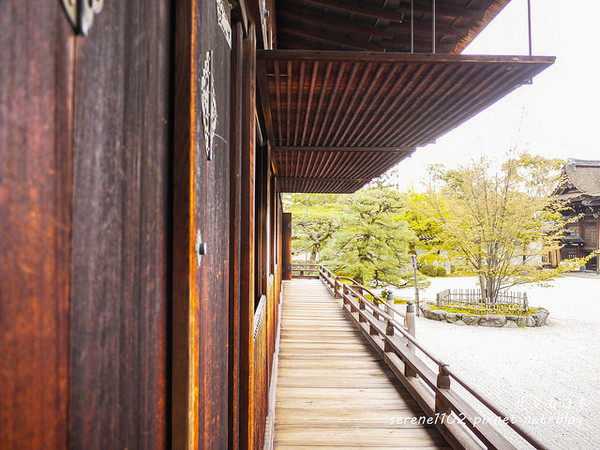
Perhaps because we came later, we were lucky to encounter almost no other visitors. This magnificent ancient temple felt as if it belonged solely to the solitary visitor from the upper right. Wandering around, one deeply senses the rare tranquility, comfort, and peace in Kyoto—normally bustling and noisy during cherry blossom season.
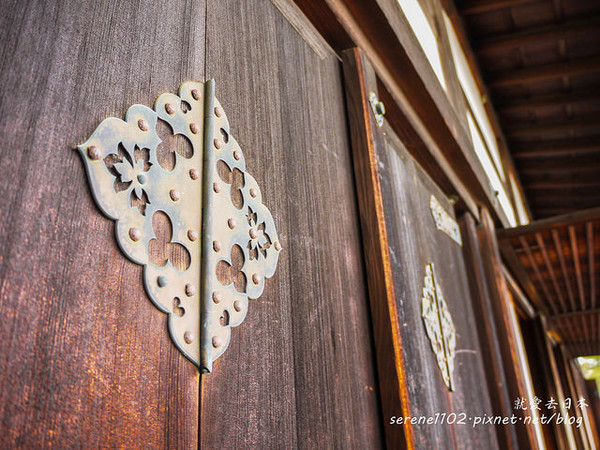

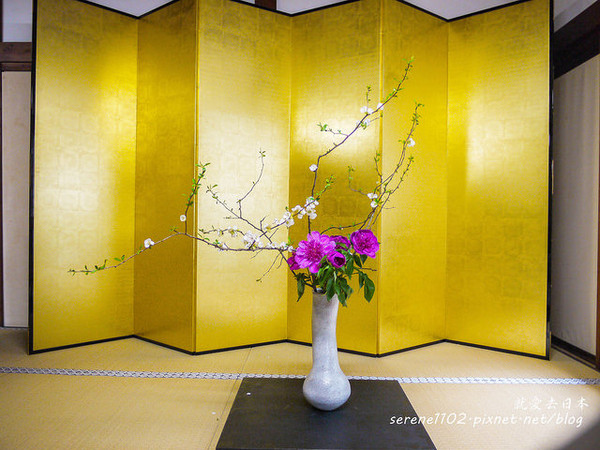
The ancient sliding doors are a highlight of the [Shinden], the central hall of the Goten and the site where ceremonies and festivals are held.
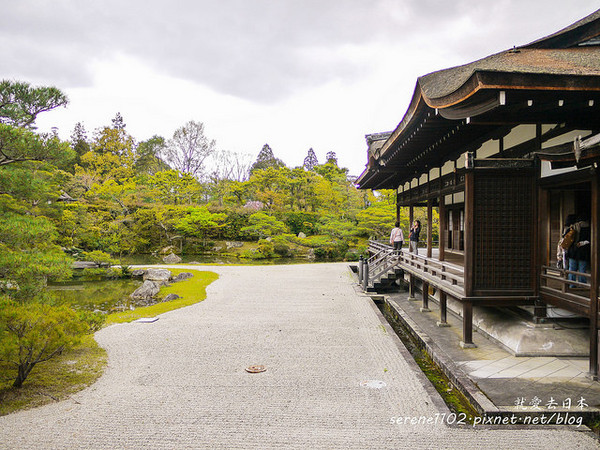
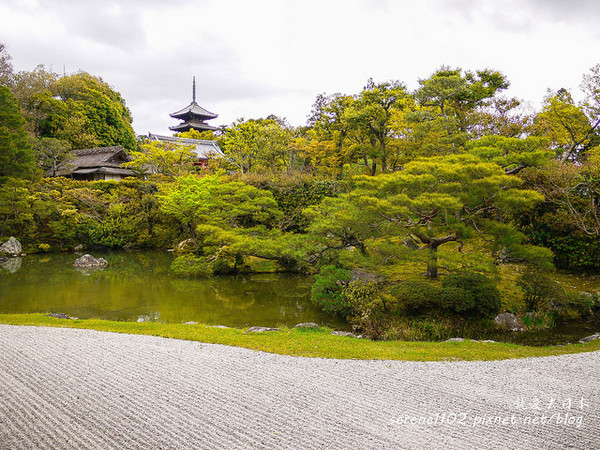
To the north of the Shinden lies another garden called the “North Garden.” Unlike the South Garden, it is an elegant garden with a pond, where from the left front, moving from left to right, you can see important cultural properties within the garden: the Hifuttei Pavilion, the middle gate outside the garden, and the five-story pagoda—all beautifully framed by meticulously maintained landscaping.
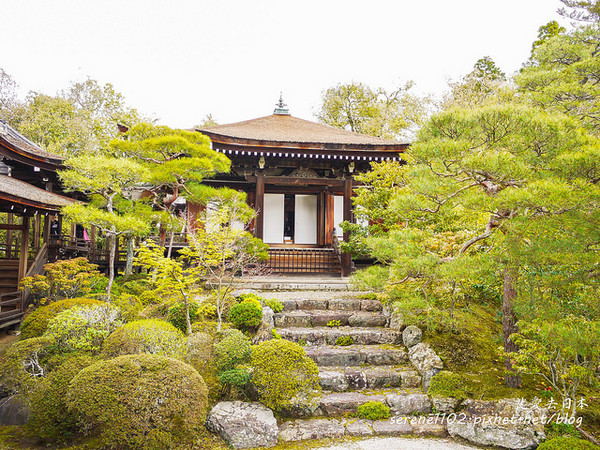
To the left front of the Shinden is the [Reimeiden], which houses an important statue of the bodhisattva: the Medicine Buddha.


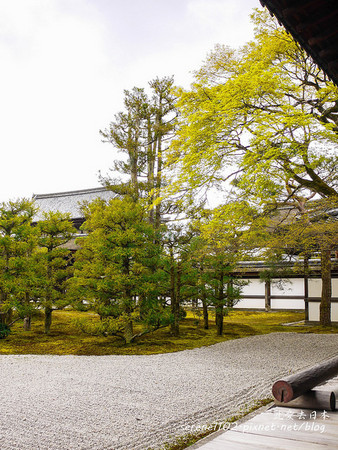
Strolling along the garden path to the other side of the garden and looking back at the Shinden, one sees unknown plants sprouting fresh green buds of spring. Though not flowers, they have their own graceful charm.

Here I also encountered maple leaves that are red all year round; but the tree behind this one is also a maple, so visiting in autumn would definitely be worthwhile (laughs).
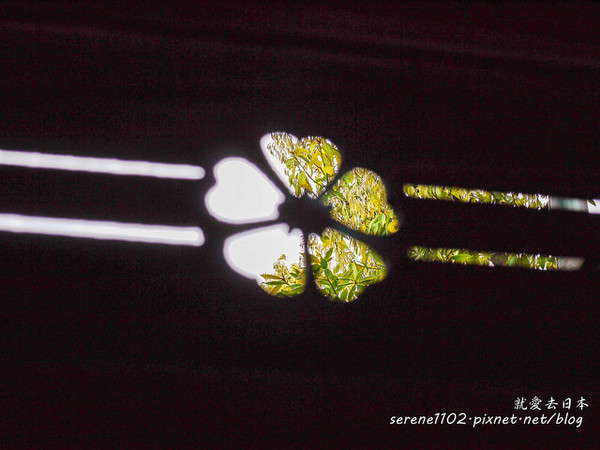
The upper right really loves this photo. Cherry blossoms that can be seen all year round...

Only after leaving did I see the double-petal cherry blossoms—I really came too late... even the famous Omuro Cherry Grove was missed. But then again, it adds to the desire to visit again.

The Omuro cherry blossom-themed wooden ornaments, made from boxwood, are uniquely available in three designs. Which one do you like, dear viewer? Take them all home with you.
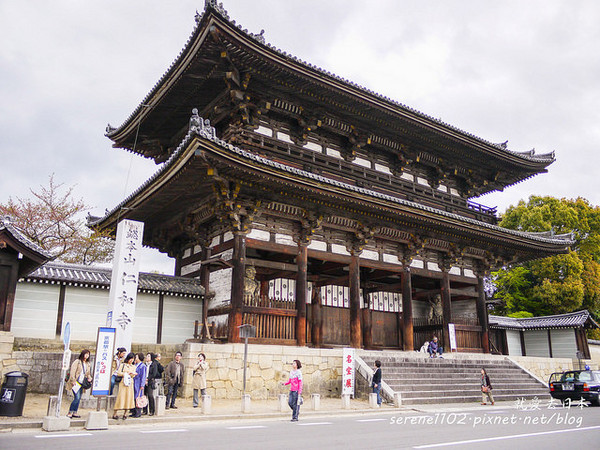

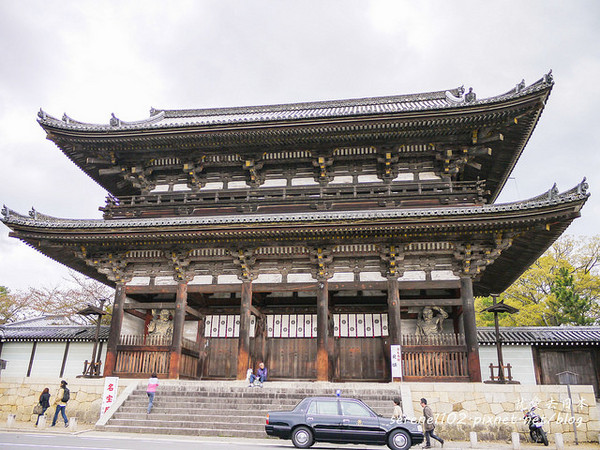
The main gate of Ninnaji Temple, the [Niomon Gate], is also an Important Cultural Property. Standing 18.7 meters tall, it features Niō guardian statues on either side and a pair of komainu (guardian lion-dogs) behind it. Temples built around the same period with traditional Heian-style architecture include the Sanmon Gate of Chionin and the Sanmon Gate of Nanzenji.
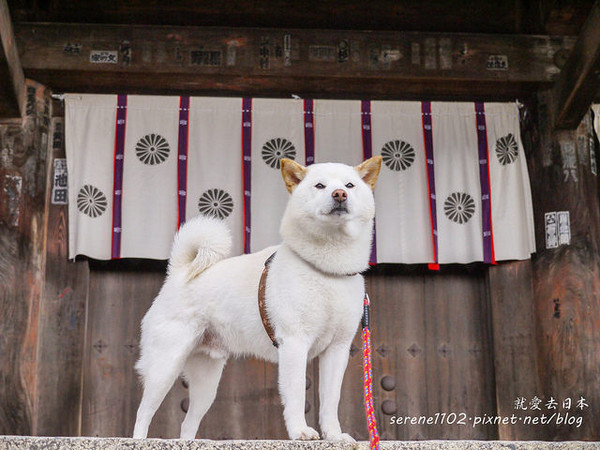
Look at the Akita dog standing in front of the gate—doesn’t it have an air of majesty fit for a ruler? An Akita dog really complements a shrine well.
[Ninnaji Temple]
http://www.ninnaji.or.jp/
33 Omuro Ouchi, Ukyo Ward, Kyoto, Kyoto Prefecture
Visiting Hours: 9:00–17:00 (March–November), 9:00–16:30 (December–February)
Admission: Free for the temple grounds / 500 yen for the Goten, 500 yen for the Relic Hall, 1000 yen for the special tea room viewing, 500 yen for the special Omuro Cherry Blossom entry fee during blooming season
Transportation: Take City Bus No. 10, 26, or 59 to “Omuro Ninnaji-mae,” or take the Randen (Keifuku Electric Railway) Kitano Line to “Omuro Ninnaji” and walk about 2 minutes
Upper-right 45-degree angle: A Japanese-style food travel diary by a girl
Love Going to Japan
Share
This article is published by HowToTrip. Sharing and reposting are welcome — please credit the source.
Article URL: https://www.howtotrip.net/views-14196
Related Articles
- Shaoxing's "Grandpa Gourd" hangs the gourds back up: "If there are too many people, we'll interact less — just take a quick look from afar"
- Chinese authorities announce "reciprocal adjustment" to Japan visa fees — single-entry visa jumps from 2,250 to 16,750 yen!
- The "health stones" carried by a traveler were found to have radiation levels exceeding safety limits by a thousand times, potentially endangering fellow passengers on the same flight. Customs issues warning!
- Shenzhen Airport Issues Late-Night Notice: Unidentified Aerial Object Detected, Causing Widespread Flight Delays!
- “They only said it cost money after I opened the box and washed it!” 200g of grapes sold for 60 yuan on a high-speed train—12306 responds!
- Can't buy an airline ticket? Denied exit? Blocked from boarding? A large number of Chinese tourists have mysteriously become "discredited individuals"
- Adverse weather and economic fluctuations impact Colombia's coffee market
- Beach bathing area responds to 2 yuan/30 seconds fee for freshwater foot rinsing: Clearly priced!
- Taking off with an improperly closed cabin door? Wing malfunction? Multiple flights made emergency returns mid-journey!
- Experience the gifts of nature! A countdown of the world’s ten most stunning coastlines