The Great Barrier Reef on land in Australia – The magnificent Mamu Rainforest Canopy Walkway
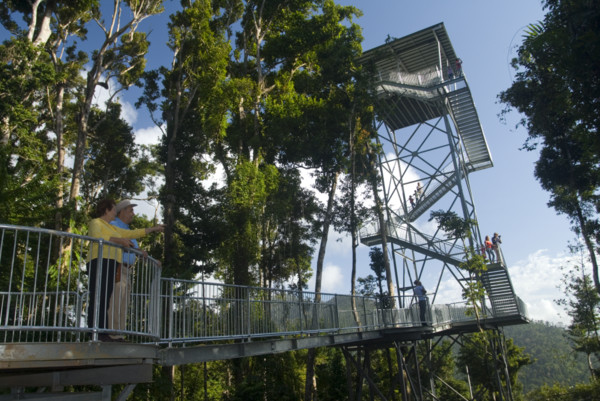
▲In Australia’s oldest tropical rainforest in Queensland, the UNESCO World Heritage site "Mamu Rainforest Canopy Walkway"
Text & Photos / Sharon Shen
The Mamu Rainforest Canopy Walkway is situated in Australia’s oldest tropical rainforest and is a UNESCO-recognized World Heritage site. It tells the inseparable history of Australia’s Indigenous people and the rainforest, showcasing its ecological processes and the delicate relationship between humans and nature. It is a rainforest with a past, a life, and a soul.
The Australian government invested tens of millions of Australian dollars in 2008 to build the Mamu Rainforest Canopy Walkway. Visitors can walk along cantilevered beams and elevated walkways to explore this close-to-hand tropical rainforest. They can also ascend Queensland’s highest observation deck to enjoy stunning rainforest vistas and have the chance to see wild cassowaries and a variety of rare flora and fauna. Visiting the Mamu Rainforest Canopy Walkway is like seeing the Great Barrier Reef on land – an absolute must-see attraction.
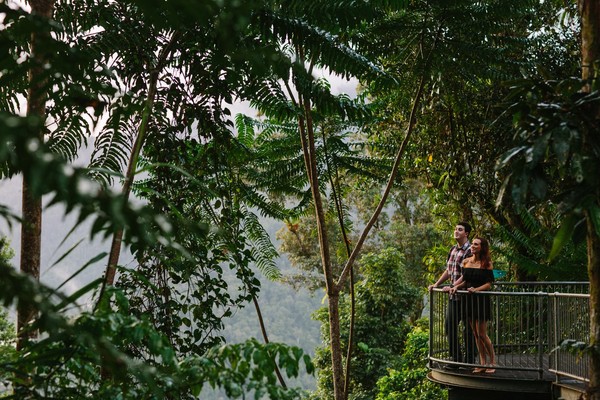
▲The Mamu Rainforest Canopy Walkway, where nature is within reach. (Photo / Screenshot fromthe Mamu Tropical Skywalk Facebook page)
Legend has it that 40,000 years ago, Australia’s Indigenous people began living on this land, maintaining a deep connection with it. They believed the land provided their food, culture, soul, and identity. Over time, Indigenous Australians divided their territories based on geographical features such as rivers and gorges, with different tribes inhabiting different areas. The Indigenous people managing the Mamu Rainforest belong to one of the Mamu clans – the "Waribarra" tribe. "Waribarra" means "people of the gorge."
In the early 1800s, Europeans invaded the Indigenous lands and flocked to the tropical rainforest due to its abundant natural resources. They logged the forest’s trees to gain wealth, and a century-long logging industry devastated the precious rainforest. By the 1970s, botanists discovered that this tropical rainforest was actually an ancient one over 100 million years old. Coupled with increasing conservation efforts, the United Nations listed 900,000 hectares of the rainforest as a World Heritage site in 1988. All flora and fauna in the rainforest, whether living or dead, are protected.
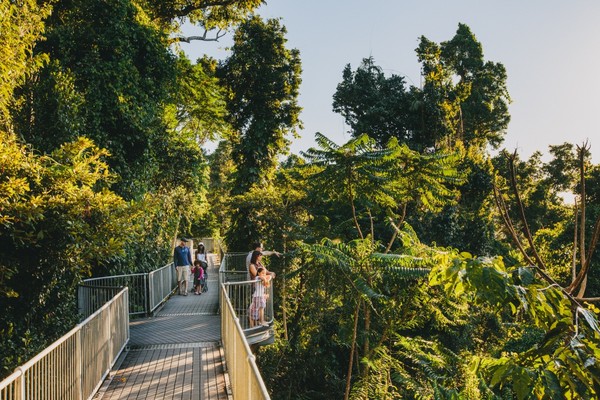
▲The "Mamu Rainforest Canopy Walkway" in Australia’s oldest tropical rainforest in Queensland
Although European invasion caused some damage to the rainforest, their role in developing North Queensland was undeniable. One of the most notable figures in the Mamu Rainforest is Christine Palmerston. In 1882, she pioneered a 90-kilometer mountain trail, the first white person to attempt this. She was also the first to try measuring the height of Queensland’s tallest mountain. Palmerston had exceptional navigation skills and a unique way of interacting with Indigenous people. Her writings from that time hold significant value for future anthropological research. The road leading to the Mamu Rainforest Canopy Walkway today is named after her – the Palmerston Highway.
Every year, tourists from around the world visit this Australia that blends seamlessly with nature. In 2006, the government planned to construct the Mamu Rainforest Canopy Walkway to allow visitors to gain a deeper understanding of this “Great Barrier Reef on land.” In March of the same year, Cyclone Larry, with winds exceeding 300 km/h, swept through this dragon-like rainforest. Although the cyclone caused considerable damage, it reduced the need for much manual clearing during construction and provided the best possible landscape for building the walkway. Great care was taken in the walkway’s construction plan to minimize the impact on the rainforest. For instance, the walkway’s platforms, edges, and seating were made from 900,000 fully recyclable plastic milk bottles. In 2008, the Mamu Rainforest Canopy Walkway officially opened to the public.
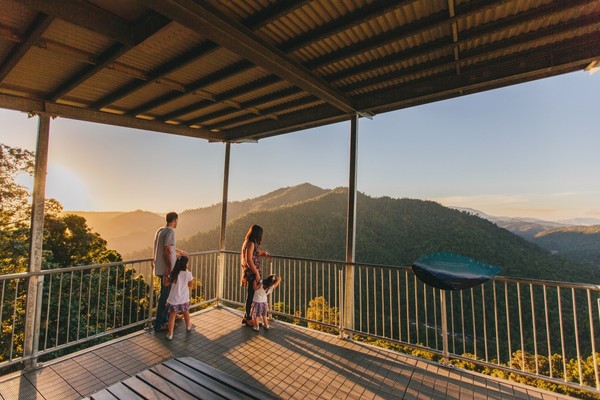
▲The "Mamu Rainforest Canopy Walkway" in Australia’s oldest tropical rainforest in Queensland
To help visitors better understand this rainforest treasure, the Mamu Rainforest Canopy Walkway offers audio guides in nine languages (including Chinese), allowing guests to learn about the Indigenous people – especially the history of the Mamu Rainforest, the ecological processes of the tropical rainforest, and other fascinating information – in their preferred language. Walk along the swaying cantilever beams, elevated walkways, and Queensland’s highest observation deck (37 meters) to explore the Mamu Rainforest and witness the grandeur of nature.
The Mamu Rainforest still belongs to the Mamu people. They believe that only by taking care of their rainforest will their spirits bless you. While enjoying the scenery, don’t forget that this is a precious land of Australia’s Indigenous people.
Share
This article is published by HowToTrip. Sharing and reposting are welcome — please credit the source.
Article URL: https://www.howtotrip.net/views-11880
Related Articles
- Shaoxing's "Grandpa Gourd" hangs the gourds back up: "If there are too many people, we'll interact less — just take a quick look from afar"
- Chinese authorities announce "reciprocal adjustment" to Japan visa fees — single-entry visa jumps from 2,250 to 16,750 yen!
- The "health stones" carried by a traveler were found to have radiation levels exceeding safety limits by a thousand times, potentially endangering fellow passengers on the same flight. Customs issues warning!
- Shenzhen Airport Issues Late-Night Notice: Unidentified Aerial Object Detected, Causing Widespread Flight Delays!
- “They only said it cost money after I opened the box and washed it!” 200g of grapes sold for 60 yuan on a high-speed train—12306 responds!
- Can't buy an airline ticket? Denied exit? Blocked from boarding? A large number of Chinese tourists have mysteriously become "discredited individuals"
- Adverse weather and economic fluctuations impact Colombia's coffee market
- Beach bathing area responds to 2 yuan/30 seconds fee for freshwater foot rinsing: Clearly priced!
- Taking off with an improperly closed cabin door? Wing malfunction? Multiple flights made emergency returns mid-journey!
- Experience the gifts of nature! A countdown of the world’s ten most stunning coastlines