Sheraton Revives Old Hong Kong Flavors – Century-Old Dish Honey-Glazed Money Chicken Makes a Comeback
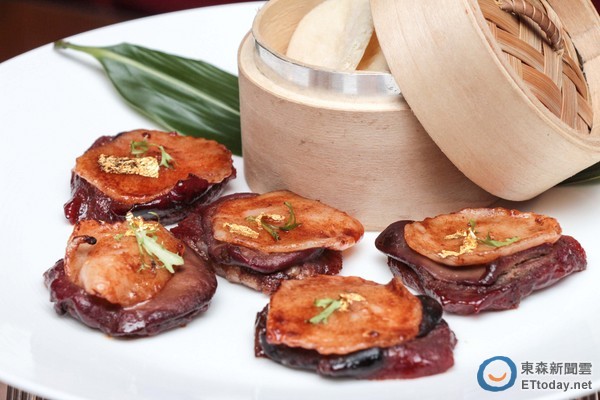
▲ The century-old dish “Honey-Glazed Money Chicken” is said to have originated 20–30 years ago in Hong Kong. During the post-war era of hardship, buying roasted meats was a luxury, so vendors began stringing together leftover pork and chicken liver, layering them and roasting them. Due to its resemblance to ancient copper coins, it was named “Money Chicken.”
Reported and photographed by Huang Shiyuan, Taipei
What does old Hong Kong taste like? Three chefs—Li Haosheng, Yang Huaguang, and Liang Hongbin—who grew up in Hong Kong at the Sheraton Taipei’s “Chen Garden” returned to the city to rediscover their childhood memories of classic Hong Kong flavors. Through their culinary skills, they have recreated several traditional dishes, among which the century-old “Honey-Glazed Money Chicken” has become extremely rare on the market due to its complex preparation process.
The century-old dish “Honey-Glazed Money Chicken” is said to have originated 20–30 years ago in Hong Kong. During the post-war era of hardship, buying roasted meats was a luxury, so vendors began stringing together leftover pork and chicken liver, layering them and roasting them. Due to its resemblance to ancient copper coins, it was named “Money Chicken.” To enhance the flavor of the roasted meat, Chef Yang Huaguang specially selected Iberian pork shoulder and chicken liver, along with ice meat (frozen fat that becomes semi-transparent), threading them together and slow-roasting them for about 50 minutes to create a layered and flavorful Money Chicken.
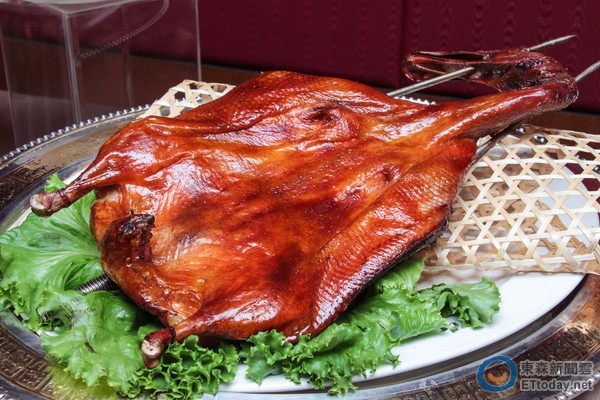
▲ Beijing-style Pipa Roast Duck differs from the typical Cantonese sliced roast duck. It uses Yilan Northern Duck, which has less fat. After being split in half and air-dried for 6 hours, it is then [rest of segment garbled—retain original symbols] roasted for 40 minutes, resulting in a crispy skin and juicy meat.
Other nostalgic classic dishes include the “Golden Phoenix Tail Prawn Skewers,” inspired by traditional British afternoon tea; the tender yet chewy “Thick Soup Braised Beef Tendon and Brisket”; the early Hong Kong street food favorite “Preserved Meat Lotus Root Meat Patty”; the crispy-skinned and tender “Beijing-style Pipa Roast Duck”; and the most iconic nostalgic dim sum, “Buddha’s Hand Pastry.” The Beijing-style Pipa Roast Duck, unlike the typical Cantonese sliced roast duck, uses Yilan Northern Duck, which has less fat. After being split in half and air-dried for 6 hours, it is then [rest of segment garbled—retain original symbols] roasted for 40 minutes, resulting in a crispy skin and juicy meat.
In addition, the three chefs have incorporated new elements into classic dishes. Examples include the “Spicy and Tangy Sichuan Pepper Shredded Duck with Dried Scallop and Fish Ball Soup,” evolved from the classic Cantonese “Double Happiness Shark Fin”; the “Lucky Goldfish Dumplings” that resemble swimming fish; the rich and savory “Cheese Seafood Bucket” blending creamy cheese with sweet seafood flavors; and the milky and fragrant “Custard Foil Gold Buns.” Each à la carte item is priced from NT$160, available from August 15 to August 31.

▲ The “Thick Soup Braised Beef Tendon and Brisket” features Taiwan Yellow Cattle rib meat, known for its firm texture and balanced fat-to-lean ratio. It is cooked with beef marrow bones, ginger, white pepper, and bay leaves, first simmered over low heat for two hours, then left to soak off the heat for another two hours. This process ensures the beef remains firm yet tender and flavorful, offering a chewy yet smooth texture.
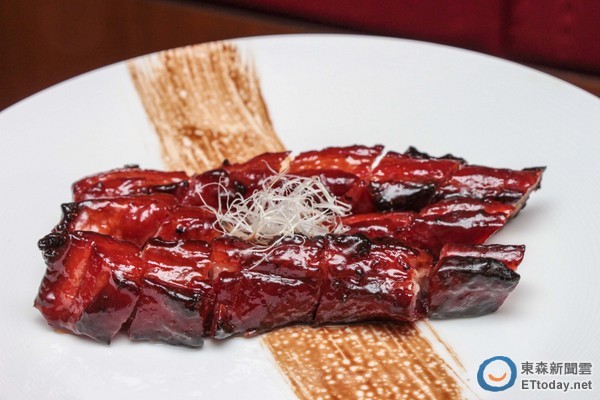
▲ Black Char Siu. Made with the belly section of black-haired pig, which is richer in fat and more aromatic, the chefs carefully trim off the top and bottom layers with more fat and use only the middle three layers. They marinate it for 30 minutes in a special char siu sauce made from sugar, soy sauce, oyster sauce, sesame paste, and sweet bean paste, then roast it over low heat at 120°C for 45 minutes. During roasting, maltose syrup is brushed on, and the heated fat gives the surface a charred black appearance—hence the name Black Char Siu.

▲ Ginger-Glazed Roasted Chicken Liver. The rare and precious pink chicken liver, which appears in only one out of every hundred chickens, becomes tender after roasting due to its rich fat content. The chef first marinates it in ginger and kaoliang liquor for one hour, then roasts it at a low heat of about 100°C for 30 minutes, and finally brushes it with maltose syrup and roasts it for an additional 5 minutes. The result is a silky, richly flavored dish that is fatty but not greasy.
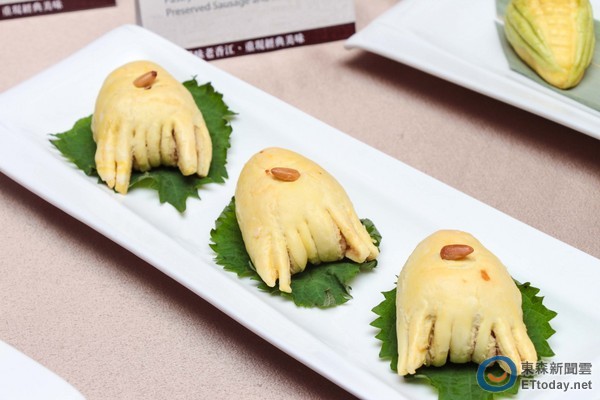
▲ Buddha’s Hand Pastry. The flaky pastry is made by layering oil dough and water dough, then filled with red bean paste, Chinese sausage, and savory meat floss. It is shaped into the form of a Buddha’s hand and baked at around 200°C for 12–15 minutes, giving the pastry a slightly crisp texture.

▲ Cute Lucky Goldfish Dumplings. To make traditional flavors more appealing to younger generations, the chefs hand-molded traditional shrimp dumplings into the shape of goldfish. The translucent dumpling wrappers are infused with carrot juice, then filled with grass shrimp and shrimp roe, and finally decorated with a dot of sesame seeds, bringing these adorable goldfish to life.

▲ Custard Foil Gold Buns. Crumbly pastry dough is wrapped around a lightly sweetened custard filling made from eggs, butter, coconut milk, and milk. The classic custard bun shape is creatively redesigned into an exquisitely crafted purse-like form.
Share
This article is published by HowToTrip. Sharing and reposting are welcome — please credit the source.
Article URL: https://www.howtotrip.net/views-10617
Related Articles
- Shaoxing's "Grandpa Gourd" hangs the gourds back up: "If there are too many people, we'll interact less — just take a quick look from afar"
- Chinese authorities announce "reciprocal adjustment" to Japan visa fees — single-entry visa jumps from 2,250 to 16,750 yen!
- The "health stones" carried by a traveler were found to have radiation levels exceeding safety limits by a thousand times, potentially endangering fellow passengers on the same flight. Customs issues warning!
- Shenzhen Airport Issues Late-Night Notice: Unidentified Aerial Object Detected, Causing Widespread Flight Delays!
- “They only said it cost money after I opened the box and washed it!” 200g of grapes sold for 60 yuan on a high-speed train—12306 responds!
- Can't buy an airline ticket? Denied exit? Blocked from boarding? A large number of Chinese tourists have mysteriously become "discredited individuals"
- Adverse weather and economic fluctuations impact Colombia's coffee market
- Beach bathing area responds to 2 yuan/30 seconds fee for freshwater foot rinsing: Clearly priced!
- Taking off with an improperly closed cabin door? Wing malfunction? Multiple flights made emergency returns mid-journey!
- Experience the gifts of nature! A countdown of the world’s ten most stunning coastlines