Different udon noodles to try out there — those from Inaniwa Yosuke are “thin”!
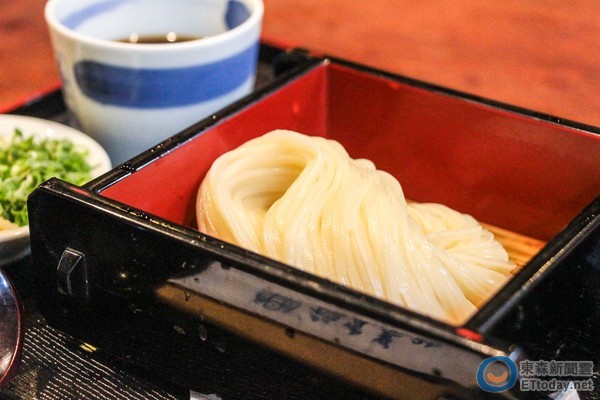
▲Inaniwa Yosuke offers various types of udon including cold, warm, mixed, and dipping styles, but the dipping style is considered the best way to enjoy it.
Reported and photographed by Huang Shiyuan, Taipei
In recent years, Japanese udon noodles have made major inroads into the Taiwanese market, with brands such as Mitane Seimenjo, Marugame Seimen, Inaho Udon, and Sanuki Udon. For most Taiwanese people, udon noodles conjure up images of thick, chewy strands. However, many may not know that Japan also produces thin, flat-style udon — yet it still retains that characteristic Q-texture and firm bite.
Sanuki udon from Kagawa Prefecture, Mizusawa udon from Gunma Prefecture, and Inaniwa udon from Akita Prefecture are known as Japan’s three great udon varieties. Taiwan is more familiar with Sanuki udon, while the other two remain relatively unknown. Inaniwa udon from Akita has a history of over 350 years and was once served as part of the feudal lords’ meals, only becoming widely known after the Meiji era. Inaniwa Yosuke is a well-known Japanese udon shop specializing in Inaniwa udon, now in its 8th generation of succession, with a history spanning over 150 years. It also has two branches in Taiwan: one in Taipei and another in Wugong.
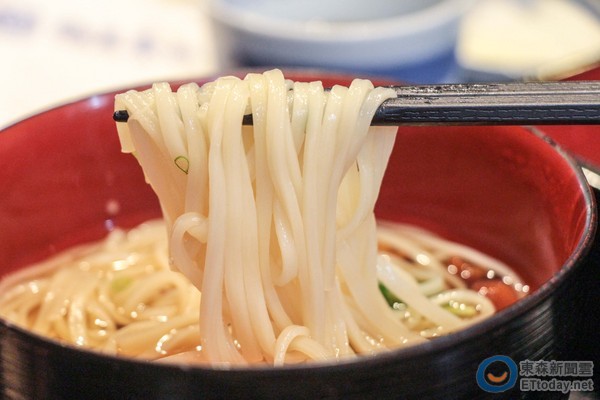
▲Inaniwa Yosuke’s warm udon.
The udon noodles at Inaniwa Yosuke differ from the thicker ones commonly seen in Taiwan. Their noodles are thin and flat, resembling regular home-style noodles in Taiwan, yet they still offer that springy and firm texture. This is largely due to the four-day handmade production process. On the first day, special flour is combined with salted water, then kneaded into dough. This is followed by resting, further kneading, another rest, and then rolling (shaping the dough into 3 cm-wide strips and coiling them into containers), and more resting.
On the second day, the rolled dough is continuously rolled and shaped as it’s wound onto two rods in a figure-eight pattern. It then undergoes further resting, flattening, another period of rest, stretching, and assisted drying. On the third day, it’s dried, cut, and sorted. By the fourth day, quality checks and packaging are completed.
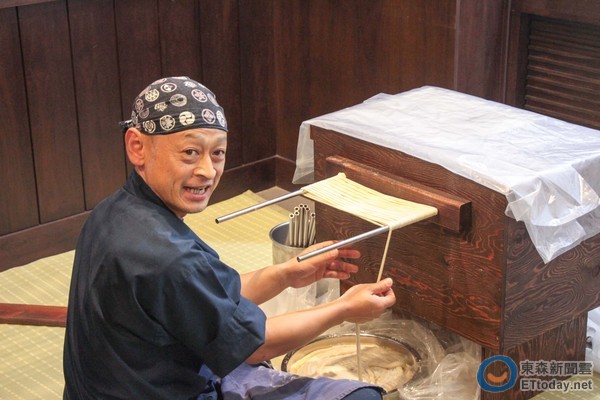
▲Inaniwa Yosuke’s udon is handmade, with the artisan currently in the “kneading and rolling” stage.
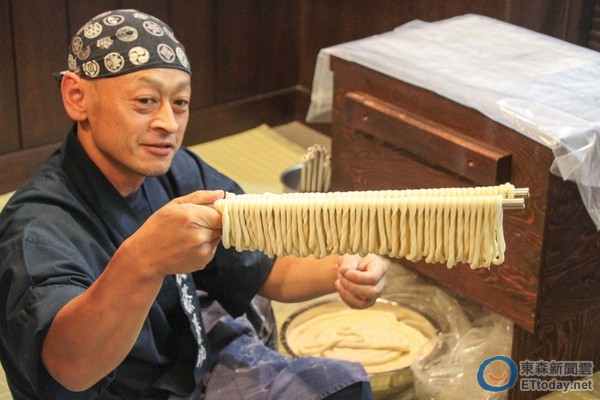
▲Even after the noodles are rolled, they go through additional resting.
The cooking process is similar to that of regular udon. The noodles are placed in a large pot of boiling water, and when they become semi-transparent, they are ready. After boiling, the noodles are rinsed with water to remove starch, left to sit for about 10 seconds, and then cooled in ice water to enhance their firmness. Inaniwa Yosuke offers a variety of udon options including cold, warm, mixed, and dipping styles, but the dipping style is considered the optimal way to enjoy it.
Taipei Branch
Address: 1F, No. 54, Songjiang Rd., Taipei City
Phone: 02-25415656
Wugong Branch
Address: 2F, No. 66, Wugong Rd., Xinzhuang District, New Taipei City (Crystal Crown Shopping Mall)
Phone: 02-25415656
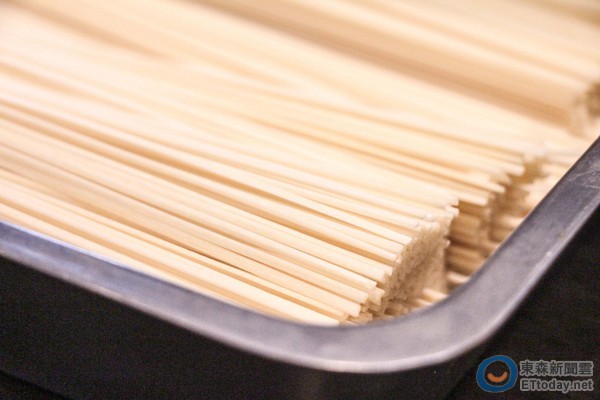
▲Inaniwa Yosuke’s noodles may be thin, but they’re definitely firm and chewy too.
Deliciousness all day long
Download the “ETtoday News Cloud APP” for the latest food updates →
iOS:https://goo.gl/rmIDdx
Android:https://goo.gl/XPe8Uj
Share
This article is published by HowToTrip. Sharing and reposting are welcome — please credit the source.
Article URL: https://www.howtotrip.net/views-10287
Related Articles
- Shaoxing's "Grandpa Gourd" hangs the gourds back up: "If there are too many people, we'll interact less — just take a quick look from afar"
- Chinese authorities announce "reciprocal adjustment" to Japan visa fees — single-entry visa jumps from 2,250 to 16,750 yen!
- The "health stones" carried by a traveler were found to have radiation levels exceeding safety limits by a thousand times, potentially endangering fellow passengers on the same flight. Customs issues warning!
- Shenzhen Airport Issues Late-Night Notice: Unidentified Aerial Object Detected, Causing Widespread Flight Delays!
- “They only said it cost money after I opened the box and washed it!” 200g of grapes sold for 60 yuan on a high-speed train—12306 responds!
- Can't buy an airline ticket? Denied exit? Blocked from boarding? A large number of Chinese tourists have mysteriously become "discredited individuals"
- Adverse weather and economic fluctuations impact Colombia's coffee market
- Beach bathing area responds to 2 yuan/30 seconds fee for freshwater foot rinsing: Clearly priced!
- Taking off with an improperly closed cabin door? Wing malfunction? Multiple flights made emergency returns mid-journey!
- Experience the gifts of nature! A countdown of the world’s ten most stunning coastlines