Expert Recommended!The Best Photography Spots in Florence for Stunning City Panoramas

Text and photos byPaperclip. Food & Photo Delights
The panoramic view of Florence’s cityscape, along with the Cathedral of Santa Maria del Fiore and the nearby Campanile di Giotto (Giotto’s Bell Tower), is what keeps travelers’ camera shutters clicking non-stop. Getting up close to photograph the brick-red dome of the cathedral or the colorful, pastel-hued Campanile di Giotto isn’t difficult at all — just queue up, buy a ticket, and climb the 400 steps of the tower diligently, and you’ll have your wish fulfilled. However, due to the angle of sunlight, if you plan to climb the Campanile di Giotto to frame the dome of the cathedral, it’s best to go in the afternoon to avoid backlighting. On the other hand, if you want to shoot the Campanile di Giotto itself, going in the morning is better.

(Shooting the cathedral from the Campanile di Giotto in the morning will result in backlighting. It's recommended to go in the afternoon.)
However, if you want to capture a full panoramic view of Florence’s cityscape, you’ll need to head to several hills around the city. The views from these elevated spots are absolutely breathtaking.
[Pitti Palace and Boboli Gardens]
The first great spot is the Pitti Palace on the south bank of the Arno River. Located near the Ponte Vecchio (Old Bridge), the Pitti Palace was built in 1458 as the residence of a banker (basically living in a palace!), and after several ownership changes, it is now one of Florence’s most important art museums.

At the back of the Pitti Palace lies the Giardino di Boboli (Boboli Gardens). Just exit the palace, climb up to the Boboli Gardens, and near the souvenir shops, you can see the Cathedral of Santa Maria del Fiore, the Campanile di Giotto, and the bell tower of Piazza della Signoria standing right before you.

(View of the Pitti Palace from the Boboli Gardens.)

(Near the back entrance of the Pitti Palace.)


[Forte Belvedere]
Next to the Boboli Gardens is the even higher elevated Forte Belvedere. In ancient times, this was a military stronghold situated at a high vantage point, but today it’s a popular spot for locals to stroll and take in the city views.

In summer, be sure to take sun protection measures at Forte Belvedere, as there is absolutely no shade and it gets extremely hot.
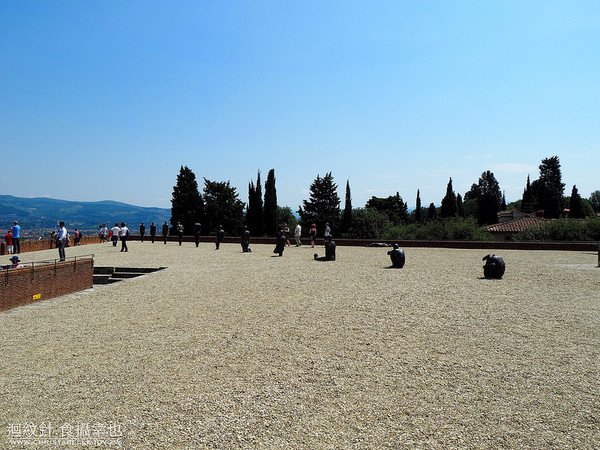 (Forte Belvedere features some intriguing human sculptures)
Due to the terrain, the panoramic city view here still has some limitations — the eastern side is partially blocked by trees. But it’s more than sufficient for photographing Florence’s key towers, and the clarity is excellent. It’s also recommended to come in the morning to avoid backlighting.
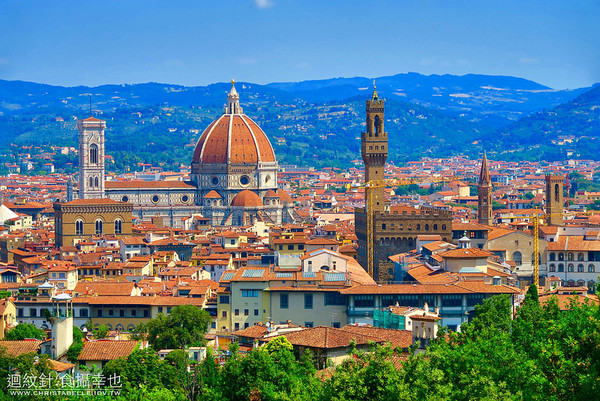
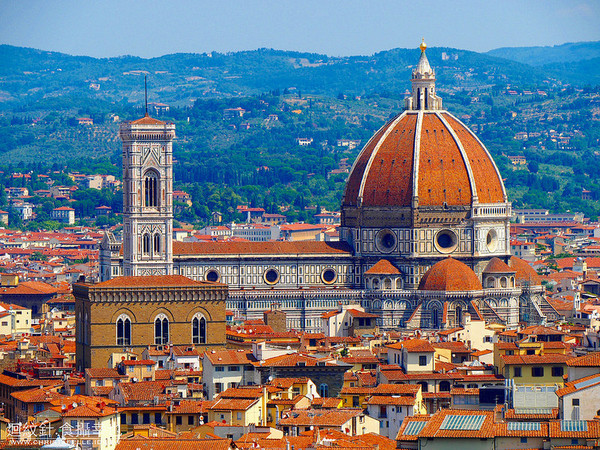
Santa Croce Church.
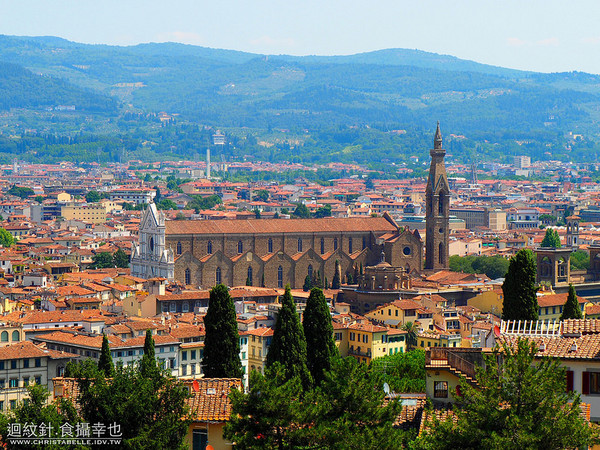
If you come directly from the Boboli Gardens, you can climb a short flight of steps from the nearest exit to reach this elevated area and enjoy a panoramic view of Florence. However, since the Boboli Gardens require an entry ticket, if you want to return later, just show your ticket stub to the staff at the entrance and you’ll be allowed back in.
[Piazzale Michelangelo and Abbey of San Miniato al Monte]
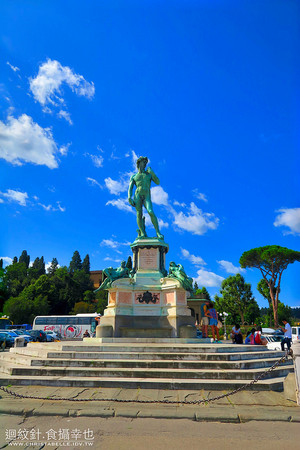
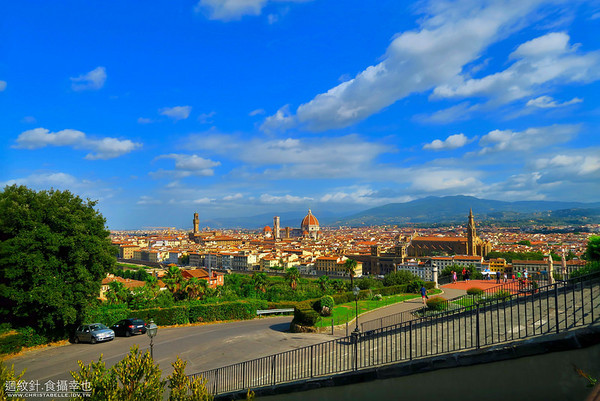
After visiting several hills, Piazzale Michelangelo still stands out as the best spot for capturing a panoramic view of Florence. Plus, with its large parking area for vehicles, it’s easily accessible — no wonder it’s always crowded with tourists.
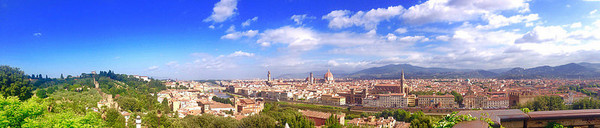
The city panorama you get from Piazzale Michelangelo offers the widest possible view, allowing you to take in the Ponte Vecchio, the Cathedral of Santa Maria del Fiore, the Campanile di Giotto, Piazza della Signoria, Santa Croce Church, and even Forte Belvedere.
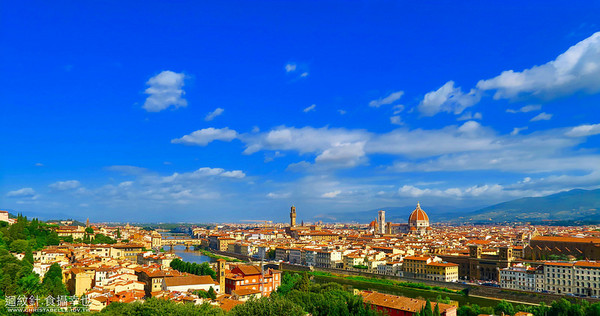
You can capture several bridges over the Arno River in a single shot. With good weather, anyone can become a photography master.
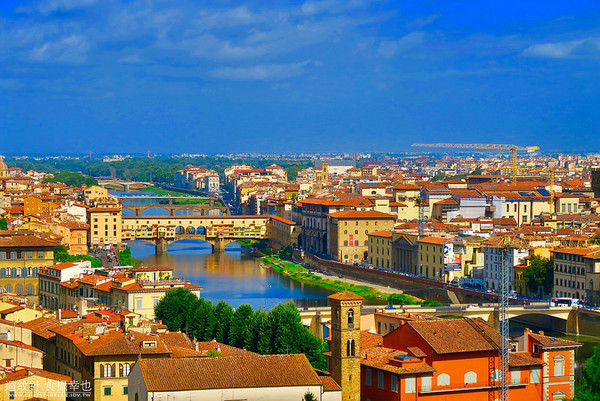
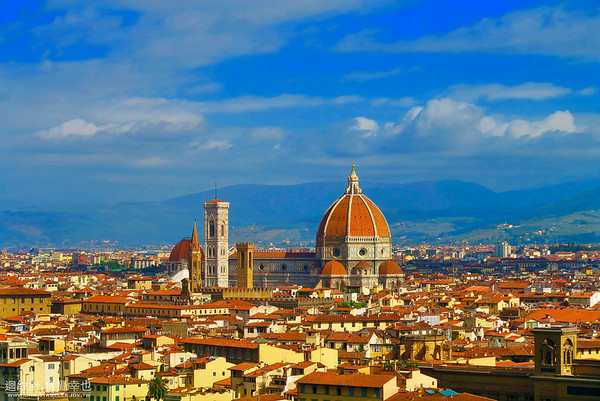
A wide panorama shot using an iPhone 5.
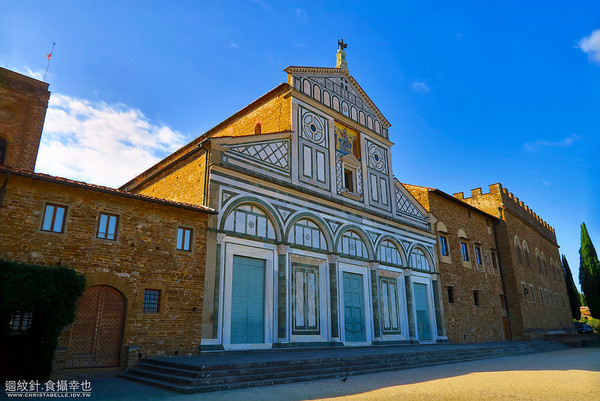
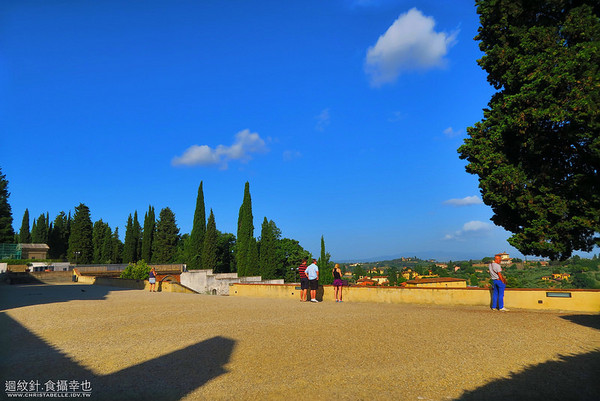
Another recommended spot is the Abbey of San Miniato al Monte, located right next to Piazzale Michelangelo. Though it’s only a five-minute walk away, it sees far fewer tourists. It’s a monastery with a cemetery at the back, not only serving as a spiritual refuge for Florentines but also offering a great vantage point for city views.
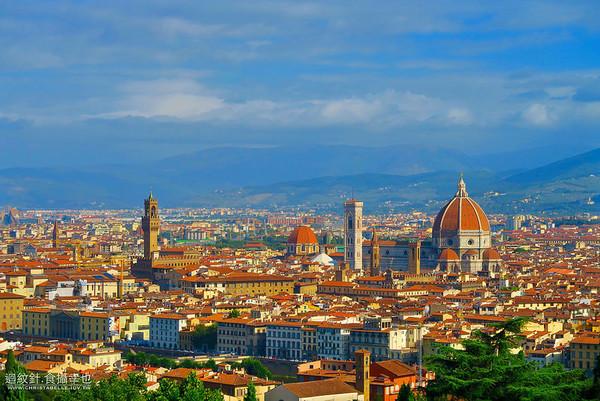
For capturing panoramas, besides a general wide-angle lens (a modest wide-angle is fine — around 12mm for DSLR or 24mm for digital cameras), it’s best to bring a telephoto lens to clearly and impressively capture the iconic buildings.
Paperclip 'Food & Photo Delights
Love should be timely, instant, and well-timed
Paperclip 'Food & Photo Delights Blog、Fan Club
Share
This article is published by HowToTrip. Sharing and reposting are welcome — please credit the source.
Article URL: https://www.howtotrip.net/views-10285
Related Articles
- Shaoxing's "Grandpa Gourd" hangs the gourds back up: "If there are too many people, we'll interact less — just take a quick look from afar"
- Chinese authorities announce "reciprocal adjustment" to Japan visa fees — single-entry visa jumps from 2,250 to 16,750 yen!
- The "health stones" carried by a traveler were found to have radiation levels exceeding safety limits by a thousand times, potentially endangering fellow passengers on the same flight. Customs issues warning!
- Shenzhen Airport Issues Late-Night Notice: Unidentified Aerial Object Detected, Causing Widespread Flight Delays!
- “They only said it cost money after I opened the box and washed it!” 200g of grapes sold for 60 yuan on a high-speed train—12306 responds!
- Can't buy an airline ticket? Denied exit? Blocked from boarding? A large number of Chinese tourists have mysteriously become "discredited individuals"
- Adverse weather and economic fluctuations impact Colombia's coffee market
- Beach bathing area responds to 2 yuan/30 seconds fee for freshwater foot rinsing: Clearly priced!
- Taking off with an improperly closed cabin door? Wing malfunction? Multiple flights made emergency returns mid-journey!
- Experience the gifts of nature! A countdown of the world’s ten most stunning coastlines