Dongxiao Red Historical Sites Cluster
Dongxiao Red Historical Sites Cluster
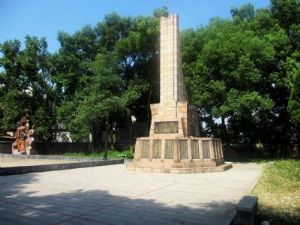
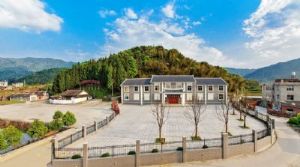
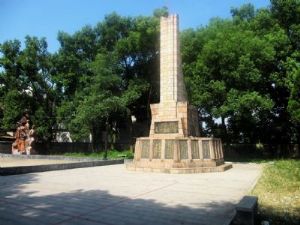
The Dongxiao Revolutionary Martyrs Monument was established in 1993 on the “Red Square” in Dongxiao to commemorate the 65th anniversary of the Hou Tian Uprising and the 55th anniversary of the northward anti-Japanese campaign of the Second Column of the New Fourth Army. It covers an area of 2,400 square meters.
Opened on November 14, 2010, it serves as a bond and bridge that inherits the kinship of all Longyan compatriots at home and abroad. It integrates the collection, display, research, and exchange of the history and culture of Longyan’s overseas Chinese, hometown culture, and Heluo culture. Currently, it houses a total of 965 photographs, 289 cultural relics, and 310 items such as flipbooks.
Tonggang Academy is located within Dongxiao Town Central Primary School. Built during the Qing Dynasty’s Qianlong era, it covers an area of 1,050 square meters. In the spring of 1921, Deng Zihui, Chen Ming, Zhang Duqi, and others held progressive reading clubs here. In September 1923, the first publication in western Fujian to promote Marxism-Leninism, the “Yan Sheng” newspaper, was founded here, making it a cradle for cultivating revolutionary intellectuals and exerting a profound and significant influence on the revolution in western Fujian.
Deng Zihui’s Former Residence, also known as Longde Hall, was built during the Qing Dynasty and was originally a three-courtyard, two-section earthen building. On August 17, 1896, Deng Zihui was born here. After joining the revolution, he led the establishment of the Poor and Landless Peasants’ Association of Dengcu Village here and directed the armed uprising of peasants in western Fujian. Between 1928 and 1930, it was burned down four times by the Nationalist Army. Since 1985, the people’s government has allocated funds multiple times to restore Deng Zihui’s Former Residence to its original appearance.
The former headquarters of the Second Column of the New Fourth Army, commonly known as Shifeng Residence, was built in the late Qing Dynasty. It is a single-story building with three courtyards and two wing rooms, covering an area of 1,400 square meters. In January 1938, the Red Army guerrillas, who had been conducting three-year guerrilla warfare, were reorganized into the Second Column of the newly formed Fourth Army of the National Revolutionary Army. Its headquarters and political department were stationed here. During their residence, Deng Zihui, Zhang Dingcheng, Tan Zhenlin, and others personally guided the anti-Japanese salvation movement and the struggle against die-hard forces in southwestern Fujian.
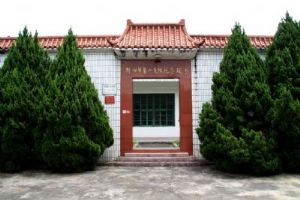
The Memorial Hall of the Second Column of the New Fourth Army is located next to Shifeng Residence. Built in August 1985, it covers an area of 850 square meters and introduces the heroic history of the Second Column of the New Fourth Army. It displays a total of 125 photographs and 47 cultural relics. The hall was officially opened in March 1998, with its name inscribed by the former Vice Chairman of the Standing Committee of the National People’s Congress, Chong.
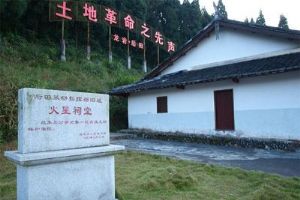
The former site of the Command Headquarters of the Hou Tian Uprising, the Huoxing Ancestral Hall, is a provincial-level cultural relics protection unit. Located in Hou Tian Village, Dongxiao, it covers an area of 500 square meters. On March 4, 1928, Luo Huaisheng, Guo Diren, Deng Zihui, and others from the Longyan County Committee of the CPC led the peasants of Hou Tian in an armed uprising. Here, they broke into grain storage, distributed rice, and burned land deeds and debt contracts, firing the first shot of the peasant armed uprising in Fujian.
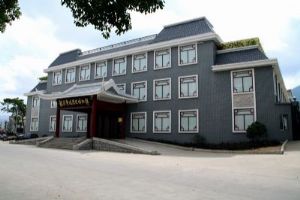
The Deng Zihui Memorial Hall officially opened to the public on December 20, 2013. Covering an area of over 3,000 square meters, the memorial hall is divided into two floors. The first floor features thematic exhibitions, with nine sections introducing Deng Zihui’s illustrious achievements. The second floor mainly displays the office, bedroom, and living room where Deng Zihui lived during his tenure as Vice Premier of the State Council.
(Image source: Longyan Xinluo District Tourism Bureau)
Source: Fujian Provincial Tourism Development Commission
Share
This article is published by HowToTrip. Sharing and reposting are welcome — please credit the source.
Article URL: https://www.howtotrip.net/travel-15785
Related Articles
- Shaoxing's "Grandpa Gourd" hangs the gourds back up: "If there are too many people, we'll interact less — just take a quick look from afar"
- Chinese authorities announce "reciprocal adjustment" to Japan visa fees — single-entry visa jumps from 2,250 to 16,750 yen!
- The "health stones" carried by a traveler were found to have radiation levels exceeding safety limits by a thousand times, potentially endangering fellow passengers on the same flight. Customs issues warning!
- Shenzhen Airport Issues Late-Night Notice: Unidentified Aerial Object Detected, Causing Widespread Flight Delays!
- “They only said it cost money after I opened the box and washed it!” 200g of grapes sold for 60 yuan on a high-speed train—12306 responds!
- Can't buy an airline ticket? Denied exit? Blocked from boarding? A large number of Chinese tourists have mysteriously become "discredited individuals"
- Adverse weather and economic fluctuations impact Colombia's coffee market
- Beach bathing area responds to 2 yuan/30 seconds fee for freshwater foot rinsing: Clearly priced!
- Taking off with an improperly closed cabin door? Wing malfunction? Multiple flights made emergency returns mid-journey!
- Experience the gifts of nature! A countdown of the world’s ten most stunning coastlines