Chongqing Baolin Museum
Chongqing Baolin Museum
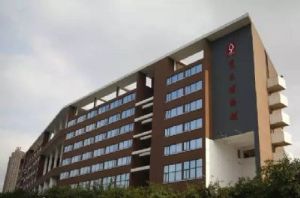
Baolin Museum adopts energy-saving and environmentally friendly design concepts, incorporating humanized and creative elements. It is particularly noteworthy to mention the museum's logo. The two characters "Baolin" signify "gathering treasures to form a forest." The main part of the graphic is derived from the engraved patterns on a tiger-head bronze bell (called "houyu") in the museum’s collection.
Logo of Chongqing Baolin Museum
Logo of Chongqing Baolin Museum
, known as the flower bud pattern, is a typical and common ancient Ba people’s pictographic symbol representing "humanity." The auxiliary graphics are the letters of "Baolin Museum" styled in the artistic tradition of Ba people’s pictographs. Together with the engraved flower bud patterns, they symbolize the museum’s focus on Bayu (Chongqing) cultural themes, as well as its philosophy of putting people first and “letting art touch life and collections enrich the soul.” The flower bud resembles a pure lotus bud, pointing upwards to signify new life, representing the rebirth and continuation of Ba culture here.
Collecting is both a form of cultural heritage and a spiritual asset. It reflects refined tastes as well as the progress of social culture. The exhibits are arranged according to the main categories of collected artifacts and presented through various display methods such as text and images, physical objects, and multimedia demonstrations. They are interpreted from an art appreciation perspective and displayed in a way that connects closely with everyday life.
The Baolin Museum boasts a rich collection, mainly reflected in three aspects:
· The widest range of historical periods covered
The collection spans from the Neolithic Age to modern times, featuring a large number of ancient artifacts of cultural value, as well as a significant number of contemporary artworks.
· Broad variety of categories
The collection includes pottery, bronzeware, jade artifacts, ceramics, rare ancient books, stone rubbing copies, bamboo, wood, ivory, and horn carvings, stone sculptures, calligraphy, and paintings.
· Many high-quality artifacts
The museum prioritizes high-quality pieces—without them, a collection lacks distinction. This is especially true for private museums. The Baolin Museum houses many exceptional items, such as the "Spiral-Patterned Bronze Spear," the "Qianlong Enamel Porcelain Pillow," the "Tibetan Text Manuscript from the Tang Dynasty," the "Calligraphy Manuscript," the "Yuan Dynasty Zhao Mengfu Gold-Inlaid Album," the "Wen Zhengming Landscape Scroll," the "Ming Dynasty Dong Qichang Calligraphy Handscroll," the "Western Jin Celadon Nipple Jar," the "Northern Dynasties Celadon Chicken-Head Ewer," the "Song Dynasty Purple-Glazed Spittoon," the "Wu Fangji’s Poetic Manuscript," the "Wang Baiyu’s Martyr Inscription in Oracle Bone Script," the "Revolutionary Document Commemorating One Year Since the Liberation of Chongqing," the "Han Dynasty Money Tree," the "Warring States Tiger-Head Bell," and the "Warring States Slim-Waisted Flat-Bottomed Ding Cauldron." These are all rare masterpieces. Among Chinese paintings and calligraphy, there are many works by renowned Qing Dynasty artists, and the modern and contemporary collection also includes pieces by notable artists. Some are displayed as permanent exhibits, while others are featured in temporary exhibitions on a non-regular basis—definitely worth keeping an eye on.
Share
This article is published by HowToTrip. Sharing and reposting are welcome — please credit the source.
Article URL: https://www.howtotrip.net/travel-11088
Related Articles
- Shaoxing's "Grandpa Gourd" hangs the gourds back up: "If there are too many people, we'll interact less — just take a quick look from afar"
- Chinese authorities announce "reciprocal adjustment" to Japan visa fees — single-entry visa jumps from 2,250 to 16,750 yen!
- The "health stones" carried by a traveler were found to have radiation levels exceeding safety limits by a thousand times, potentially endangering fellow passengers on the same flight. Customs issues warning!
- Shenzhen Airport Issues Late-Night Notice: Unidentified Aerial Object Detected, Causing Widespread Flight Delays!
- “They only said it cost money after I opened the box and washed it!” 200g of grapes sold for 60 yuan on a high-speed train—12306 responds!
- Can't buy an airline ticket? Denied exit? Blocked from boarding? A large number of Chinese tourists have mysteriously become "discredited individuals"
- Adverse weather and economic fluctuations impact Colombia's coffee market
- Beach bathing area responds to 2 yuan/30 seconds fee for freshwater foot rinsing: Clearly priced!
- Taking off with an improperly closed cabin door? Wing malfunction? Multiple flights made emergency returns mid-journey!
- Experience the gifts of nature! A countdown of the world’s ten most stunning coastlines