Sanping Village
Sanping Village
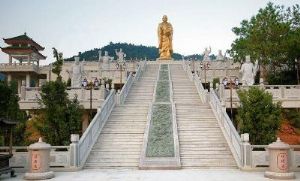
Sanping Village is home to the renowned thousand-year-old Siping Temple (a national 4A-level scenic spot). Legend has it that the temple was founded in the seventh year of the Xiantong era (866) during the Tang Dynasty by Zen Master Yang Yizhong. Its architecture features the artistic styles of the Tang and Song dynasties. Nearby the temple are eight scenic spots for visitors to explore: Turtle and Snake Peaks, Monk’s Pool, Tiger Run Spring, Immortal’s Pavilion, Attendant’s Pavilion, Longrui Waterfall, Mao’s Cave, and Tiger Forest. The temple is deeply revered by overseas Chinese, their relatives, compatriots from Hong Kong, Macao, and Taiwan, as well as Buddhist followers. The temple remains busy with incense offerings year-round and attracts a constant stream of visitors, becoming especially crowded during the Spring Festival.
Exiting the Siping Scenic Area, take an electric cart to see the achievements of Sanping Village's "prosperous and beautiful countryside" initiative. Along the clear Sanping Stream, you’ll find the village’s “three parallel developments”: a street dedicated to tourism souvenir shopping, a pedestrian greenway, and a slow-traffic lane. Step off the cart and walk along the riverside leisure landscape greenway, where you’ll encounter elegant blooms and swaying bamboo, creating a poetic atmosphere. The area cultivates over 18,000 acres of bamboo, along with 7,000 square meters of — as well as a large number of magnolia, orchid, and camellia flowers. For this reason, the village has specially established a garden for viewing field flowers. Additionally, the village has added a waterside park featuring exquisitely designed modern sculptures and various inscriptions promoting virtue, offering visitors a unique experience and inspiration.
In front of and behind the houses in Sanping Village, you’ll find lush vegetable plots and green spaces everywhere. In fact, to build a beautiful countryside, the village underwent comprehensive improvement. After the renovation, all available open spaces were turned into green areas, making use of every gap. Precious and high-quality native tree species account for over 80% of the plantings, achieving a 100% greening rate and forming a richly layered, seasonally diverse, and vivid green landscape. Regarding the overall village appearance, over 220 street-facing houses were given unified facades in a consistent style, while older houses were renovated according to the principle of “repairing the old as it was,” preserving the typical Southern Fujian residential style of “black tiles, white walls, and red windows.” This brings vitality to the quaint mountain village, making it well worth a visit.
Meanwhile, during the spring outing season, Sanping Village offers agritourism activities such as bamboo shoot digging and making Qingming cake for visitors. Amid the emerald-green bamboo forests, guests can not only enjoy the enchanting natural scenery but also grab a hoe and head into the grove to dig bamboo shoots themselves, experiencing the joys of rural life. They can even take the freshly dug bamboo shoots to a farmhouse to cook “firewood stove rice.”
In Sanping Village, urban visitors can fully embrace the role of a mountain villager, soaking in the freshness and simplicity of nature, and experiencing the leisurely pace of farm life and the pleasures of agricultural work.
Source: Fujian Provincial Department of Tourism Development
Share
This article is published by HowToTrip. Sharing and reposting are welcome — please credit the source.
Article URL: https://www.howtotrip.net/travel-10657
Related Articles
- Shaoxing's "Grandpa Gourd" hangs the gourds back up: "If there are too many people, we'll interact less — just take a quick look from afar"
- Chinese authorities announce "reciprocal adjustment" to Japan visa fees — single-entry visa jumps from 2,250 to 16,750 yen!
- The "health stones" carried by a traveler were found to have radiation levels exceeding safety limits by a thousand times, potentially endangering fellow passengers on the same flight. Customs issues warning!
- Shenzhen Airport Issues Late-Night Notice: Unidentified Aerial Object Detected, Causing Widespread Flight Delays!
- “They only said it cost money after I opened the box and washed it!” 200g of grapes sold for 60 yuan on a high-speed train—12306 responds!
- Can't buy an airline ticket? Denied exit? Blocked from boarding? A large number of Chinese tourists have mysteriously become "discredited individuals"
- Adverse weather and economic fluctuations impact Colombia's coffee market
- Beach bathing area responds to 2 yuan/30 seconds fee for freshwater foot rinsing: Clearly priced!
- Taking off with an improperly closed cabin door? Wing malfunction? Multiple flights made emergency returns mid-journey!
- Experience the gifts of nature! A countdown of the world’s ten most stunning coastlines