Cradle of the Republic Scenic Area
Cradle of the Republic Scenic Area
The Cradle of the Republic Scenic Area is a national scenic spot, a national AAAAA-level tourist attraction, a classic red tourism destination, and a patriotic education base.
The Ruijin Cradle of the Republic Scenic Area is located in Ruijin City, Ganzhou, Jiangxi Province, covering an area of over 4,550 acres. It consists of four major scenic zones: Yeping, Hongjing, the Second National Congress of the Chinese Soviet Republic (Second Congress), and the Chinese Soviet Republic Memorial Park (South and North Parks). It is a national patriotic education demonstration base and one of China’s classic red tourism destinations. In June 2012, the “State Council Several Opinions on Supporting the Revitalization and Development of Southern Jiangxi and Other Former Central Soviet Areas” provided policy support and a great opportunity for the development of red tourism in Ruijin. In July 2015, upon official approval by the National Tourism Administration, the Ruijin Cradle of the Republic Scenic Area became the seventh AAAAA-level tourist attraction in Jiangxi and the first in Ganzhou.
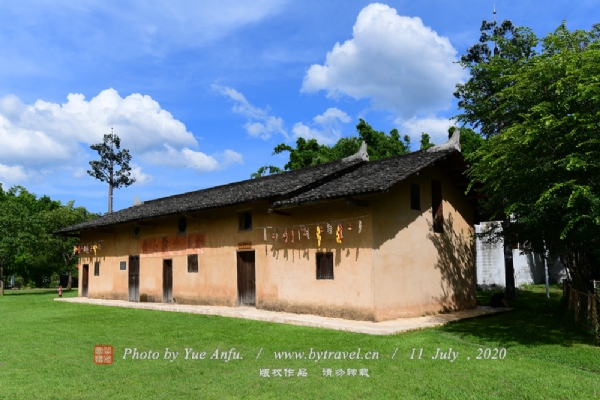
Yeping Scenic Zone is located 6 kilometers from the downtown area of Ruijin, covering an area of over 160 acres. It is one of the best-preserved revolutionary heritage site complexes in China. It includes 22 historical sites and memorial structures such as the former site of the Central Bureau of the Soviet Area, the former site of the Central Government, the Monument to the Red Army Martyrs, the Pavilion to the Red Army Martyrs, the Red Army Review Stand, the Gonglue Pavilion, and the Boxun Fort.
With winding paths through serene woods, ancient towering trees, lush greenery, and majestic ancestral halls, the scenic area boasts one of the best-preserved revolutionary heritage site complexes in China, with 22 historical sites and memorial buildings, 16 of which are national key cultural relics protection units. These former residences and sites silently recount the glorious chapters written by Ruijin, the Red Capital, in China’s revolutionary history. The First National Congress of the Chinese Soviet Republic was held in Yeping, solemnly proclaiming to the world the establishment of the Provisional Central Government of the Chinese Soviet Republic and the birth of the first nationwide red political power, with Comrade Mao Zedong elected as Chairman of the Provisional Central Government.
Here, thousand-year-old camphor trees whisper tales of past splendor, evoking a sense of empowerment that resonates from afar; here, red ancestral halls enact the classic transition from old regimes to new governance, a transformative joy that forms the profound legacy of the Red Capital.
Former Site of the First National Congress of the Chinese Soviet Republic (Former Site of the Provisional Central Government of the Chinese Soviet Republic): Originally the Xie Clan Ancestral Hall, this several-hundred-year-old structure was the birthplace and site of the Provisional Central Government of the Chinese Soviet Republic from November 1931 to April 1933.
On November 7, 1931, the First National Congress of the Chinese Soviet Republic was grandly convened here. Attending the congress were 610 delegates from Red Army units in base areas such as Western Fujian, Northeastern Jiangxi, Hunan-Jiangxi, Hunan-Hubei-Western Hubei, Qiongya, and the Central Soviet Area, as well as from the All-China Federation of Trade Unions and the National Seamen’s Federation in Kuomintang-controlled regions. The Central People’s Government Committee was the highest administrative body, with nine departments—Foreign Affairs, Military Affairs, Land, Internal Affairs, Finance, Education, Justice, Labor, and Workers’ and Peasants’ Inspection—and the State Political Security Bureau.
Former Site of the Central Bureau of the Chinese Soviet Area of the Communist Party of China: Located in Laocun Village, Yeping Township, Yeping County, Ruijin City, Jiangxi Province. The building faces southeast, is built with earth and wood, has a gable-and-hip roof, two halls and one courtyard, five bays wide, and covers an area of 219.17 square meters.
Former Site of the National Bank of the Chinese Soviet Republic: Located in Yeping Village, Yeping Township, Ruijin City. In 1932, the National Bank of the Chinese Soviet Republic was officially established in Ruijin, initiating the red financial endeavors under the leadership of the Communist Party of China and writing a magnificent chapter in red financial history.
Other historical sites and former residences in the scenic area include: the Central Bureau of the Chinese Soviet Area of the Communist Party of China, the former site of the Central Foreign Trade Bureau of the Chinese Soviet Republic, the former site of the State Political Security Bureau of the Chinese Soviet Republic, the former site of the Central Postal Bureau of the Chinese Soviet Republic, the former site of the Central Printing Plant of the Chinese Soviet Republic, the Red Army Review Stand, the Gonglue Pavilion, the Boxun Fort, the former site of the National Bank of the Chinese Soviet Republic, the former site of the Red Army Radio Corps, the former site of the Central Publishing Bureau, the former site of the All-China Federation of Trade Unions Executive Bureau in the Soviet Area, and more.
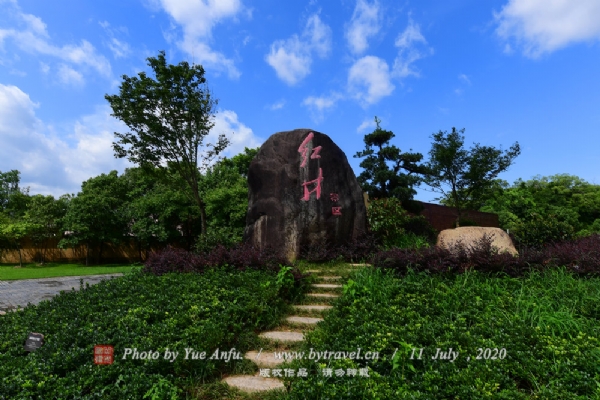
Hongjing Scenic Zone is 5 kilometers from downtown and served as the office location of the Provisional Central Government of the Chinese Soviet Republic from April 1933 to July 1934. Major attractions include the world-famous Hongjing Well, the former site of the Central Executive Committee (former residence of Chairman Mao), the former site of the Central People’s Government Committee, and the former sites of various central ministries.
Nestled against green hills, embraced by verdant fields, shaded by swaying trees, and exuding quiet simplicity. The scenic area contains 35 historical sites and former residences, 10 of which are national key cultural relics protection units. In April 1933, the central authorities relocated from Yeping to Shazhouba. Hongjing Scenic Zone features the Hongjing Well personally dug by Mao Zedong for local residents, extensive ministry ruins, and the newly built “Mass Line Square,” all set amid blooming gardens throughout the seasons.
During the Central Government’s stay in Shazhouba, the Soviet cause flourished, and it was also a period when Party and government cadres led soldiers and civilians in the Soviet Area to pioneer a series of great practices and experiments under harsh conditions. During his residence here, Chairman Mao carried out a series of Soviet political construction and investigative efforts, forming the early frameworks of Mao Zedong Thought such as “We Must Pay Attention to Economic Work,” “Be Concerned About the Masses, Pay Attention to Methods of Work,” “Our Economic Policy,” and “How to Analyze the Classes in the Countryside.” Every site stands as a testament to a party sharing weal and woe with the people, a sight both awe-inspiring and historically profound.
Hongjing Well: Located by a pond about 20 meters southeast of the former site of the Central Executive Committee of the Chinese Soviet Republic in Shazhouba Village. In April 1933, after Mao Zedong moved from Yeping to Shazhouba with the Provisional Central Government, he found the local residents had great difficulty accessing clean drinking water. To prevent them from drinking dirty pond water long-term, Mao personally investigated underground water sources. One September day, he led cadres, Red Army soldiers, and local residents to dig this well.
After the main force of the Red Army embarked on the Long March, the well was repeatedly filled in with sand and stones, but the people of Shazhouba fought tenaciously to protect it. In 1950, the people of Ruijin renovated the well in preparation for the arrival of the Central Southern Old Revolutionary Base Visiting Group and named it the “Hongjing Well,” erecting a stone tablet beside it inscribed with “Never forget those who dug the well when you drink the water; always think of Chairman Mao.” It is now a national key cultural relics protection unit.
From April 1933 to July 1934, the Central Executive Committee of the Chinese Soviet Republic was headquartered here, along with the former residences of Mao Zedong, He Shuheng, Xu Teli, and Xie Juezai. The structure is a traditional civilian house.
To the southwest of the former site stands an ancient camphor tree, under whose shade Mao Zedong often read newspapers and chatted with locals. The site was restored to its original appearance and opened to the public in 1963, and is now a national key cultural relics protection unit.
Other historical sites and former residences in the scenic area include: the former site of the Central People’s Government Committee, the former site of the Central Revolutionary Military Commission, the former site of the Central Bureau of the Chinese Soviet Republic, the former site of the Young Communist League Central Bureau of the Chinese Soviet Republic, the former site of the All-China Federation of Trade Unions Executive Bureau in the Soviet Area, the former site of the General Political Department of the Chinese Workers’ and Peasants’ Red Army, the former site of the Food Department of the Chinese Soviet Republic, the former site of the Finance Department of the Chinese Soviet Republic, the former site of the Audit Department of the Chinese Soviet Republic, the former site of the Land Department of the Chinese Soviet Republic, and the former site of the National Economy Department of the Chinese Soviet Republic.
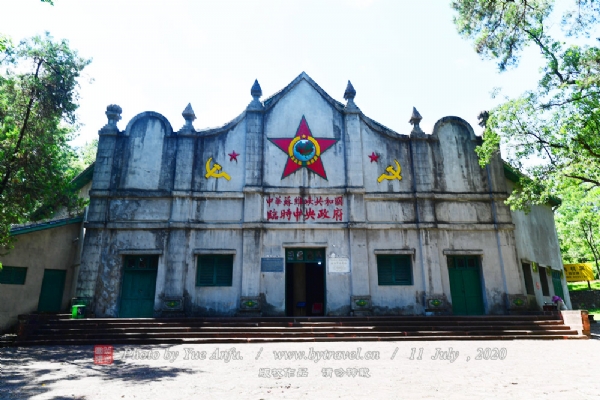
The Second Congress Scenic Zone is 5 kilometers from downtown. After the Provisional Central Government moved from Yeping to Shazhouba, the “Second National Congress” was held here. Major attractions include the Central Government Auditorium, air-raid shelters, the Meiyuan Poetry Garden, the former site of the Central Revolutionary Museum, the People’s Democracy Square, the former site of the People’s Congress, and the People’s Congress Exhibition Hall.
With rustling pines, the plum-covered Pavilion, winding paths, and a solemn auditorium, the scenic zone lies 1.5 kilometers northwest of the city in Shazhouba. It features the Central Government Auditorium of the Provisional Central Government of the Chinese Soviet Republic, which has a unique design resembling an upside-down Red Army octagonal cap from the sky. Known as the predecessor of the Beijing Great Hall of the People, it is also an iconic building of the Soviet Era. The Second National Congress of the Chinese Soviet Republic was held here, during which the national flag, national emblem, and military flag were established. Next to the auditorium is an air-raid shelter that could accommodate over 2,000 people. New attractions such as the Meiyuan Poetry Garden have been developed in the scenic area.
Central Government Auditorium: The auditorium faces south, covers an area of 1,500 square meters, and has an octagonal shape, resembling a Red Army octagonal cap when viewed from above. Above the entrance are 14 large characters reading “Provisional Central Government of the Chinese Soviet Republic,” calligraphed by Huang Yaguang, the “Soviet Literatus.” The auditorium has two floors, with a corridor-style upper level and stepped seating. The lower floor is semi-circular, and the entire hall can accommodate over 2,000 people.
From January 21 to February 1, 1934, the Second National Congress of the Chinese Soviet Republic was grandly convened here. There were 693 official delegates, 83 alternate delegates, and 1,500 observers. Mao Zedong delivered the opening address. During the congress, delegates heard reports from Mao on the work of the Central Executive Committee and the People’s Government over the previous two years. The essays “Be Concerned About the Masses, Pay Attention to Methods of Work” and “Our Economic Policy” in Volume One of Selected Works of Mao Zedong were excerpted from this report.
Former Site of the Central Revolutionary Museum: This was the first national museum founded under the leadership of the Communist Party of China. It was a typical Jiangnan-style civilian home, with the first room serving as the staff office and the others as exhibition spaces. Compared to modern museums, this one was extremely simple.
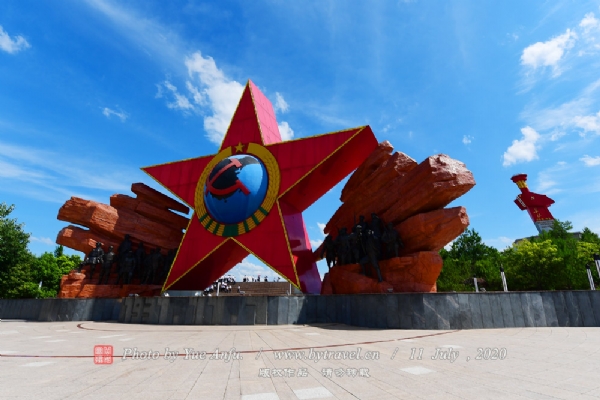
Chinese Soviet Republic Memorial Park Scenic Area: Located at Taxia Temple west of downtown, the park has a total investment of 200 million yuan and neighbors the Chinese Soviet Republic History Memorial Hall. Covering an area of 1,000 acres, it is divided into five sections: the Central Soviet Area Revolutionary Memorial Zone, Provincial Soviet Area Revolutionary Memorial Zones, Red Leisure Memorial Zone, and others.
Offering panoramic views, a river meandering like a jade belt, lush greenery, and a towering ancient pagoda. The scenic area is located west of the urban area and divided into South and North Parks. The South Park mainly features the Ruijin Revolutionary Martyrs Memorial Hall, the Red Army Martyrs Pavilion, the statue of Mao Sitao, the riverside landscape area, and the Longzhu Pagoda. The North Park is a large-scale red tourism park integrating revolutionary tradition education and immersive experiences, covering 400 acres.
Major attractions include the Central Revolutionary Base History Museum, the Red Star Music Plaza, bronze inscriptions of the Soviet Spirit, the Chinese Soviet Republic Memorial Tripod, the Forest of 100 Counties from Four Provinces, and sculptures representing 13 Soviet Areas: Central Soviet Area, Hunan-Jiangxi Soviet Area, Hunan-Hubei-Jiangxi Soviet Area, Fujian-Zhejiang-Jiangxi Soviet Area, Hubei-Henan-Anhui Soviet Area, Sichuan-Shaanxi Soviet Area, Hunan-Hubei-Western Hubei Soviet Area, Hunan-Hubei-Sichuan-Guizhou Soviet Area, Qiongya Soviet Area, Guangxi Left-Right River Soviet Area, Eastern Fujian Soviet Area, Northwest Soviet Area, and Hubei-Henan-Shaanxi Soviet Area. The Red Star sculpture and the Chinese Soviet Republic Memorial Tripod stand atop hilltops, highlighting the unique historical status of the Red Capital Ruijin.
Red Star Shining Over China: This includes three parts—the Red Star, bronze statues of figures, and rock formations. The Red Star is 19 meters high and 3.5 meters thick, with a steel frame inside and aluminum-plastic panels on the surface. The central spherical shape is part of the national emblem of the Chinese Soviet Republic. The bronze statues include 10 of notable figures and 8 of common people, with the figures of Mao Zedong, Ren Bishi, Zhang Wentian, Xiang Ying, Peng Dehuai, and Wang Jiaxiang standing 3 meters tall. The rock formation is 10 meters high, 4 meters wide, and 15 meters long, with a base 60 meters long and 1.5 meters high.
The Twenty-Eight-Character Spirit of the Soviet Area: On November 4, 2011, during an important speech at the symposium commemorating the 80th anniversary of the founding of the Central Revolutionary Base Area and the establishment of the Chinese Soviet Republic, members of the Standing Committee of the Political Bureau of the CPC Central Committee, the General Secretary of the CPC Central Committee, the Vice President of the State, and the Vice Chairman summarized the core essence of the Spirit of the Soviet Area as “Firm Belief, Seeking Truth from Facts, Serving the People Wholeheartedly, Integrity and Clean Governance, Hard Struggle, Striving for Excellence, and Selfless Dedication.” Each of the twenty-eight characters of the Spirit of the Soviet Area is 2.4 meters square, made of 3-millimeter-thick brass plate, with a border thickness of 33 centimeters. The font is bold, and the surface is treated with a fluorocarbon coating for anti-corrosion and anti-rust protection, ensuring no significant discoloration for 20 years.
The Chinese Soviet Commemorative Tripod: Located at the highest point of the entire Memorial Park, the tripod stands 11.07 meters tall, symbolizing November 7, 1931, the founding date of the Chinese Soviet Republic. The tripod is 8.9 meters wide, with a total weight of over 30 tons. The back of the tripod is inlaid with an inscription of over 500 characters. The base platform covers an area of 508 square meters, symbolizing the 5 years and 8 months that the government of the Chinese Soviet Republic was based in Ruijin, the Red Capital, making it an iconic landmark of Ruijin.
The Museum of the History of the Central Revolutionary Base Area: Located within the Chinese Soviet Memorial Park, formerly known as the Ruijin Memorial Hall of the Central Revolutionary Base Area, it is one of the first batch of 100 national patriotic education demonstration bases approved by the Publicity Department of the CPC Central Committee and one of the first national first-class museums. Approved by the General Office of the CPC Central Committee, the museum began renovation and expansion in 2004. In 2007, the new museum’s name was inscribed. The museum covers an area of 68 mu, with a construction area of 10,100 square meters, including 4,800 square meters of exhibition space.
The Ruijin Revolutionary Martyrs Memorial Hall: The memorial hall covers an area of 60,000 m², with an exhibition building area of 3,320 m² and an exhibition line 327 meters long. It includes a lobby, a memorial hall, five exhibition rooms (No. 1 to No. 5), and rest areas. The museum houses a list of 17,394 martyrs, displaying portraits, relics, and life stories of over 100 notable martyrs and generals, honoring their collective bravery, comforting their loyal spirits, enlightening future generations, and providing a place for visitors to pay respects. Since reopening in April 1986, nearly 2 million domestic and international tourists have visited to show reverence for the revolutionary leaders and martyrs, receive revolutionary tradition education, and offer flower baskets or flowers to these exemplary heroes.
Longzhu Tower: Located about 3,000 meters southwest of downtown Ruijin by the Min River. The tower gave rise to a temple, which in turn gave its name to the locality — the historical place name “Taxia Temple” (Tower Below Temple) has been in use ever since. Longzhu Tower is a typical water-mouth tower in Ruijin and serves as an important city landmark.
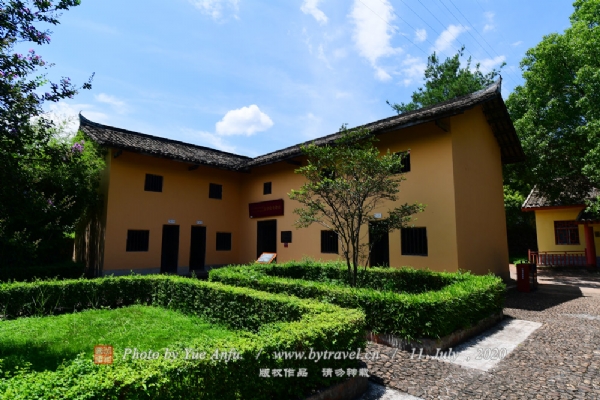
The Former Site Cluster of the Central Revolutionary Military Commission & the Central Soviet Military Culture Expo Park: Spanning Guanshan Village and Jinlong Village in Shazhouba Town, the project has a total investment of 50 million yuan and covers an area of 768 mu. It is a large-scale tourist attraction integrating red revolutionary tradition education, national defense military training, and sightseeing leisure, and also represents a new highlight in the city’s efforts to build a regional tourism hub and apply for national 5A-level scenic area status.
The Central Soviet Military Culture Expo Park project includes the already reconstructed sites of the former Central Politburo, the Military Commission, the Arsenal, the Propaganda Department, the Communist Youth League, the Sixth Plenary Session of the Fifth CPC Central Committee, and the former residence of Otto Braun (Li De).
The Central Soviet Military War Exhibition Hall: Located next to the former sites of the General Staff Department and the General Logistics Department, it covers an area of 20 mu with an estimated investment of 20 million yuan. The exhibition primarily uses modern audio, visual, and lighting technologies to reflect the various counter-“encirclement and suppression” campaigns of the Central Red Army and the close “fish-and-water” relationship between the military and civilians, along with displays of related historical facts and artifacts. The project features themed designs such as a sculpture wall of Red Capital generals, a group sculpture of major revolutionary historical events, a military product display area, a guerrilla warfare experience zone, and a Long March poetry and painting theme area.
The Relocated Site of the Former Central Red Army Arsenal General Factory: The new site is located southwest of the former site of the Central Revolutionary Military Commission in Jinlong Village, Shazhouba Town, Ruijin, covering an area of 8 mu. It replicates the original factory headquarters at a 1:1 scale, preserving the architectural style of two halls, one courtyard well, and four main rooms, with a construction area of approximately 2,428 square meters. The project follows the principles of “originating from history, restoring the original appearance, focusing on relocation with restoration as supplementary, maintaining moderate scale, and practicing strict economy.” Key parts of the original site were urgently restored and renovated, with some historical relics displayed or replicated, effectively recreating the historical ambiance.
The Former Site of the Central Revolutionary Military Commission: Abbreviated as the Central Revolutionary Military Commission (CRMC). Established in Ruijin on November 25, 1931, the CRMC was the highest military command organ of the Soviet Area. The commission included departments such as the General Staff Department, the General Mobilization and Armed Forces Department, the General Supply Department, the General Transport Department, the General Health Department, the Political Security Branch, and the Relief Committee. The restored General Staff and General Logistics sites retain the local Hakka architectural style, covering an area of over 40 mu with a total construction area of 4,500 square meters. Together with the former sites of the CRMC and the General Political Department, they form a cluster of military system sites, designated as key cultural relic protection units and listed as “Patriotic Education Bases” by both the state and the military.
The Former Site of Yunshi Mountain
The Long March Departure Site at Yunshi Mountain: Located 19 kilometers west of Ruijin City, it was the seat of the Provisional Central Government of the Chinese Soviet Republic and the departure point for the main forces of the First Front Red Army and the central authorities on the 25,000-li Long March. It is known as the “First Mountain of the Long March” and the “Departure Site of the Long March.”
Further Reading:
· Ninth Batch of National Scenic Areas
· 28th Batch of National 5A-Level Tourist Attractions (July 2015)
Share
This page is published by HowToTrip. Sharing and reposting are welcome — please credit the source.
Page URL: https://www.howtotrip.net/artgk34334
Related Travel Guides
- 上海花园洋房见证跨世纪繁华──瑞金宾馆
- 瑞金擂茶
- 江西小伙只身探古迹 被困大漠3天险丢命
- 赣南茶油
- 江西小伙只身新疆探古迹:被困大漠3天险丢命
- 金城武喜欢你场景上海武康大楼受注目
- 金城武喜欢你场景 上海武康大楼受注目
- 洲际酒店及度假村发布2019全新品牌宣传片
- 退休老人7年骑单车游遍22省
- 莫雄
- 台中自熬汤头300元锅物 还有自助吧、冰品吃到饱!
- 史家胡同在哪里 住过哪些名人? 一条胡同半个中国的说法
- 史家胡同
- 春节自驾回家 车友高呼伤不起
- 余登仁烈士故居
- 相约金城武、周冬雨 走进上海4个浪漫视角
- 江西男子7天骑行990公里回泉州上班
- 台湾水上乐园大火,重伤内地侨生今日搭乘国际SOS医疗专机返家 ...
- 爬到脚软也要去!这些登山步道 通往世外桃源
- 红领巾公园健走步道