Late-night Canteen!“Pure flavors buried deep in memory” Simple yet touching congee with light side dishes
Text & Photos / Excerpted from “Private Tastes of the Late Night,” written by Yang Zihui, published by Times Publishing
Even to this day, I still miss the congee my grandmother used to make. The reason it’s called congee rather than rice porridge is that the latter is made by boiling leftover cooked rice in water, whereas a good bowl of congee should be made from raw rice. It’s best to add enough water at the start to avoid having to keep topping it up during the process, which can make the rice soup bland, neither thick nor rich, and may even cause the grains to burst, leaving them less plump and round. The traditional method of cooking congee over a charcoal fire has an even more distinctive flavor—the rice grains are heated evenly, and the finished congee carries a faint hint of smoky charcoal aroma. It’s this long-lost ancient smoky scent that makes me especially nostalgic for my grandmother’s congee.
When I was a child, it was no longer an era of material scarcity, but my grandmother would still often make a pot of congee on Sunday mornings, served with a plate of stir-fried salted peanuts and pickled melon. The smooth and thick congee cooked over a charcoal fire didn’t need any lavish side dishes—just a sprinkle of salted, stir-fried peanuts was enough to deliver a savory and deeply satisfying flavor. The whole family would enjoy simple side dishes like pickled melon and fermented tofu, using chopsticks to pick up the plump peanuts and dip them into the congee. That scene is now over 20 years in the past, but for some reason, the taste memory remains exceptionally vivid. That long-lost, clean and pure fragrance of rice, so simple yet moving, and the crispy peanuts mixed into a bowl of white congee—the salt granules on the outside dissolving in the hot broth, adding a touch of saltiness to the otherwise plain congee. One crunchy, one soft and smooth, together forming an unforgettable and exquisite flavor.

Congee is truly a unique dish. From ancient times to the present, it has held an important place among both nobility and commoners. For a long time, it has also been closely tied to recuperation and wellness—not just for healing the body, but also for providing comfort and warmth. Near major hospitals in Taiwan, there are always shops selling fish soup and congee. In Korean tradition, congee is also commonly eaten as a post-surgery recuperative food, which is why there are many congee shops near Seoul’s Apgujeong, known as the “plastic surgery street.”
In Taiwan, if you’re craving congee, aside from making it at home with a rice cooker or clay pot, Xiao Pin Ya Chu (Elegant Little Kitchen) is also one of my favorite spots. Compared to the bustling congee and side dish street along Section 2 of Fuxing South Road, Xiao Pin Ya Chu feels tranquil and simple. If places like Xiao Li Zi and Wu Ming Zi are ideal for gathering with friends for a late-night feast, then Xiao Pin Ya Chu is the perfect place for enjoying solitude or sharing quiet moments with someone special. The restaurant lives up to its name—small, elegant, and tasteful.
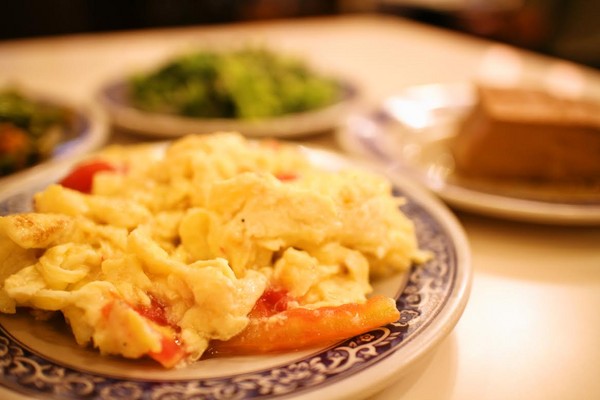
When hunger strikes late at night, I always find myself yearning for its silky, perfectly round white congee. The rice soup made from Chishang rice has a bright, glossy sheen and just the right balance—not too thick, not too thin. There’s also a dish of shiny, oily anchovy and amaranth—the slippery texture of the greens is incredibly tender and lovely. But what I love most is the tomato and egg stir-fry. The tomatoes and eggs cling tightly together, inseparable, and though it seems like a simple home-style dish, it actually requires quite refined technique. Just selecting the tomatoes is a careful process—they must not be overly ripe or mushy, and shouldn’t have too much gel. They need to be both tangy and fragrant while still being plump, so when stir-fried with the eggs, they turn out sweet, tangy, and silky-smooth. The worst version of tomato and egg is when it turns into a watery tomato-egg soup. Not only do the tomatoes release too much juice, but the soggy tomatoes and coarse, tough scrambled eggs just don’t mesh well—it’s simply awful.
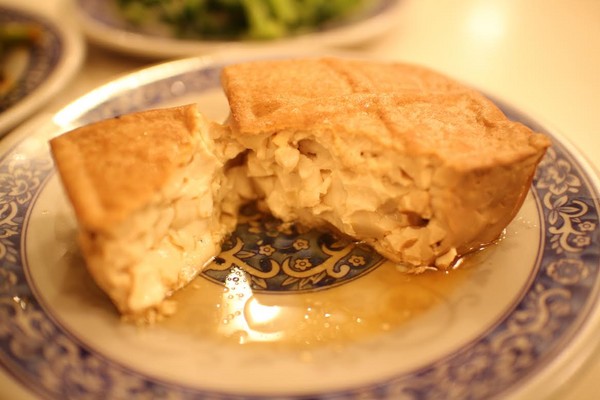
Other dishes, like soy-braised tofu, are also among my favorites. Made with just a clear soy sauce marinade, the square tofu is coated with an appetizing layer of brown sauce on the surface, while still retaining a slightly bean-white hue inside. The pores are distinct and well-seasoned, and its simple, unpretentious flavor is surprisingly memorable. When visiting late at night, the auntie behind the counter warmly serves guests plate after plate of small dishes. The somewhat aged tables and chairs are still spotlessly clean, giving off a sense of stability and reassurance.
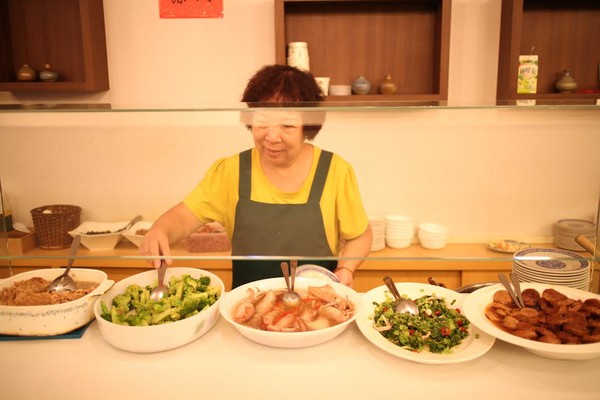
For some reason, Taiwanese congee and side dish shops often serve dishes that lean a bit too greasy. It’s as if, while emphasizing light, healthy eating, they just can’t let go of the rich, salty, and indulgent late-night food habits. Worried that plain congee might seem too boring or austere, they go overboard with the side dishes, trying to add layers and showcase the vibrant side of this humble cuisine. Thankfully, amid the sea of congee shops, there’s still the modest and refined Xiao Pin Ya Chu.
Modern people constantly seek sensory stimulation in their food, as if only richness, luxury, and extravagance can bring true satisfaction. The memory of that simple bowl of congee with peanuts may find it hard to resonate in today’s society.
#DATA
HOURS 18:00~05:00 (Closed Mondays)
ADDRESS No. 130, Zhongyuan Street, Zhongshan District, Taipei City
TEL 02-2592-9924
Deliciousness non-stop from morning to night
Download the “ETtoday News Cloud APP” for the latest food updates→
iOS:https://goo.gl/rmIDdx
Android:https://goo.gl/XPe8Uj
Share
This article is published by HowToTrip. Sharing and reposting are welcome — please credit the source.
Article URL: https://www.howtotrip.net/views-9603
Related Articles
- Shaoxing's "Grandpa Gourd" hangs the gourds back up: "If there are too many people, we'll interact less — just take a quick look from afar"
- Chinese authorities announce "reciprocal adjustment" to Japan visa fees — single-entry visa jumps from 2,250 to 16,750 yen!
- The "health stones" carried by a traveler were found to have radiation levels exceeding safety limits by a thousand times, potentially endangering fellow passengers on the same flight. Customs issues warning!
- Shenzhen Airport Issues Late-Night Notice: Unidentified Aerial Object Detected, Causing Widespread Flight Delays!
- “They only said it cost money after I opened the box and washed it!” 200g of grapes sold for 60 yuan on a high-speed train—12306 responds!
- Can't buy an airline ticket? Denied exit? Blocked from boarding? A large number of Chinese tourists have mysteriously become "discredited individuals"
- Adverse weather and economic fluctuations impact Colombia's coffee market
- Beach bathing area responds to 2 yuan/30 seconds fee for freshwater foot rinsing: Clearly priced!
- Taking off with an improperly closed cabin door? Wing malfunction? Multiple flights made emergency returns mid-journey!
- Experience the gifts of nature! A countdown of the world’s ten most stunning coastlines