Taipei Delicious Seafood Restaurant Guide: The VIP List of Hidden Gems from Five-Star Chefs

Text and Photos / Foodie Players Biweekly
As the sweltering summer bids farewell and the cool autumn arrives quietly in October, the blowing autumn wind also brings the news that seafood is at its plumpest. Surrounded by the sea on all sides and blessed with a gathering of seafood from around the world, Taiwan offers a bounty of marine delicacies. To learn how to enjoy seafood that is delicious, refined, and satisfying, let the usually picky and discerning five-star hotel chefs share their private recommendations with you.
New Southeast Seafood Cuisine: Plating as Stunning as a Painting
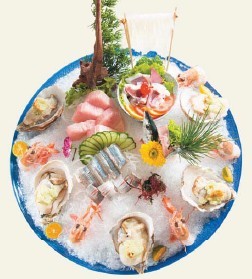
▲ [Sashimi Seafood Platter] The sashimi seafood platter combination depends entirely on the day’s catch. Pictured is a 5-person portion, with each person enjoying a French Gillardeau oyster, Penghu angle shrimp, Eastern Taiwan white bonito, Penghu squid, and Hokkaido Pacific saury. (Approx. NT$450 per person)
If you’re looking to try “quirky” seafood in Taipei, head to New Southeast. Not only are the prices reasonable, but the restaurant also has very high standards for seafood quality. They insist on personally selecting the catch at Keelung’s Kanaziding fish market at 2 AM every day before delivering it straight to the store, all to provide customers with the freshest ingredients.
Although New Southeast is a time-honored establishment, it constantly innovates with its ingredients, plating, and cooking methods. Its menu has evolved from traditional Taiwanese stir-fries to refined creative cuisine, always surprising regular customers. Zhu Jianyu, the newly crowned silver medalist at the Macau Global Culinary Masters and deputy head chef at New Southeast, is responsible for developing new dishes and giving classic ones a fresh twist.
The sashimi platter that arrives at your table will take your breath away, with a plating style as stunning as a painting. Following the trend of omakase-style dining, this Taiwanese seafood restaurant features rare French Gillardeau oysters—snow-white and plump. Take the first bite to enjoy its tenderness raw, with the flesh crisp and elastic on the palate. For the second bite, pair it with mustard and daikon. The oyster shells are even laser-engraved with the premium concave-shaped letter “G.” Next to the oysters are seasonal angle shrimp from Yilan—small, sweet, and slightly soft in texture.
Imported Australian black abalone, the size of a palm
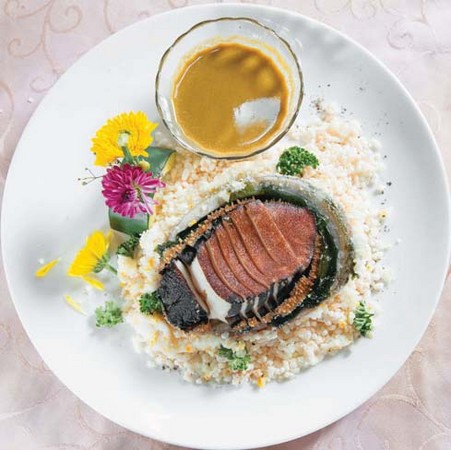
▲ [Salt-Grilled Kelp Black Abalone] The abalone is covered with kelp sprouts and then salt-grilled to lock in its sweetness and juices, resulting in a tender yet chewy texture. (NT$150 per liang, photo shows approx. NT$1,650)
The Pacific saury sashimi alone showcases New Southeast’s confidence in the catch they select. Autumn is the peak season for Pacific saury, but only those of exceptional freshness can be made into sashimi. Savor the unique flavor of the saury as it bursts in your mouth. There’s also white bonito sashimi, with delicate flesh and no fishy taste—definitely not inferior to blackfin tuna.
The black abalone, air-freighted from Australia and the size of a palm, is covered with kelp sprouts and salt-grilled. The abalone is soft, moist, and juicy. It’s recommended to first enjoy its natural flavor, or pair it with a sauce made from a blend of orange and citrus.
Autumn through winter is also the season for red throat fish. The overnight-dried preparation here differs from other restaurants. Deputy Head Chef Zhu Jianyu explains: “We aim to highlight the natural flavor by simply soaking the fish in salt and alcohol before air-drying. We replace excessive seasoning with subtraction—when the freshness is sufficient, delicious dishes can be made simply.” Indeed, the fish is tender and soft, and even more delicious when enhanced with a sprinkle of salt and pepper.
Giant seafood aquarium, as if bringing the fishing port to Taipei
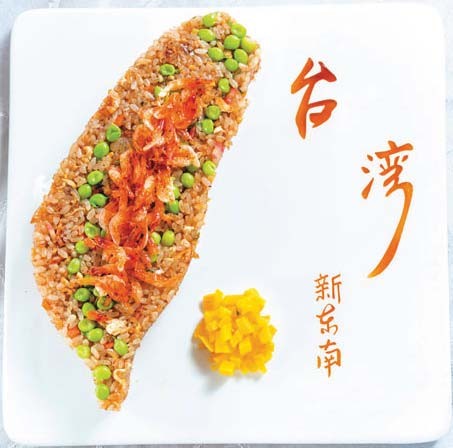
▲ [Sakura Shrimp Fried Rice] To highlight Taiwanese characteristics, the fried rice is presented in a Taiwan-inspired shape, with sakura shrimp symbolizing the mountains and sweet green peas representing the fields. (NT$240 per serving)
Sakura shrimp, one of the “Three Treasures of Donggang,” are of higher quality than those from Japan. To emphasize Taiwanese features, New Southeast not only adds sakura shrimp to enhance the aroma of the fried rice but also custom-ordered Taiwan-shaped porcelain plates that immediately catch the eye when served.
The large seafood aquarium at the entrance of New Southeast is like bringing an entire fishing port to Taipei—all the freshest catches are right here. In addition to must-try signature dishes like white pomfret rice noodle soup and soft-shell crab, there are also many secret menu items not listed. Dining here for gatherings or banquets is definitely a great choice.
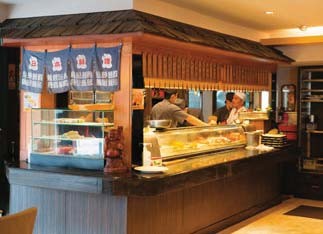
Address: No. 105, Section 1, Tingzhou Road, Zhongzheng District, Taipei City
Phone: (02) 2332-2898
Hours: 11:30–14:00, 17:00–24:00
Payment: Credit cards accepted (cash no 10% surcharge)
Goose Meat City Live Seafood: Fresh Local Flavors Served Straight to Your Table

▲ [Taiwanese Sweet Shrimp] Taiwanese sweet shrimp are sweet and delicious, suitable for both raw consumption and salt-grilling, but eating them raw best highlights their fresh flavor. (NT$400 per serving)
The neon lights grow more dazzling and colorful as night falls, with eye-catching signs lining the bustling, authentically Taiwanese seafood street of Liaoning Street—one that even Chef Mori frequents.
With a bright sign reading “Goose Meat City Live Seafood,” this over 20-year-old establishment originally attracted Chef Mori for its goose meat, but he soon discovered that its seafood is also a major highlight.
The most eye-catching feature of Goose Meat City Live Seafood is the huge live seafood tank at the entrance, filled with a dazzling array of fish species—some with names you might not even recognize—immediately whetting your appetite. The tank is always crowded with people vying to place their orders, as most of these seafood items come from Guishan Island and aren’t available every day.
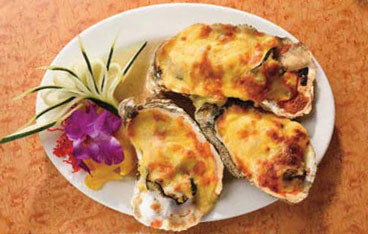
▲ [Charred Large Oysters] Oysters that can be eaten raw are prepared as char-grilled instead, adapting to the cooler autumn air. The result is a flavor that’s fresh with a hint of warmth, warming you up inside. (NT$240 per oyster)
Currently, the most recommended autumn delicacy is the Taiwanese sweet shrimp. These fat, edible sweet shrimp can be eaten raw or salt-grilled. Additionally, the delicately textured red throat and black throat fish are star species—if you skip them, you’re not truly enjoying the season. For those who prefer hearty bites, the shop also offers wild large oysters from Taiwan and Australia. In the gradually cooling autumn weather, char-grilling is a great option.
Chef Mori also enjoys seafood appetizers prepared in the style of drinking snacks, such as jellyfish skin salad, and “sea hare” (which resembles an octopus but has a softer texture)—a hidden gem that adds a unique touch to the dining experience.

Address: No. 77, Liaoning Street, Zhongshan District, Taipei City
Phone: (02) 2752-2142
Hours: 16:00–02:00
Card payment: Not accepted

Share
This article is published by HowToTrip. Sharing and reposting are welcome — please credit the source.
Article URL: https://www.howtotrip.net/views-9596
Related Articles
- Shaoxing's "Grandpa Gourd" hangs the gourds back up: "If there are too many people, we'll interact less — just take a quick look from afar"
- Chinese authorities announce "reciprocal adjustment" to Japan visa fees — single-entry visa jumps from 2,250 to 16,750 yen!
- The "health stones" carried by a traveler were found to have radiation levels exceeding safety limits by a thousand times, potentially endangering fellow passengers on the same flight. Customs issues warning!
- Shenzhen Airport Issues Late-Night Notice: Unidentified Aerial Object Detected, Causing Widespread Flight Delays!
- “They only said it cost money after I opened the box and washed it!” 200g of grapes sold for 60 yuan on a high-speed train—12306 responds!
- Can't buy an airline ticket? Denied exit? Blocked from boarding? A large number of Chinese tourists have mysteriously become "discredited individuals"
- Adverse weather and economic fluctuations impact Colombia's coffee market
- Beach bathing area responds to 2 yuan/30 seconds fee for freshwater foot rinsing: Clearly priced!
- Taking off with an improperly closed cabin door? Wing malfunction? Multiple flights made emergency returns mid-journey!
- Experience the gifts of nature! A countdown of the world’s ten most stunning coastlines