Hidden in an old alleyway full of traditional charm, sesame aroma wafts from Sesame Dan Dan Noodles.
Text & Photos byBuji
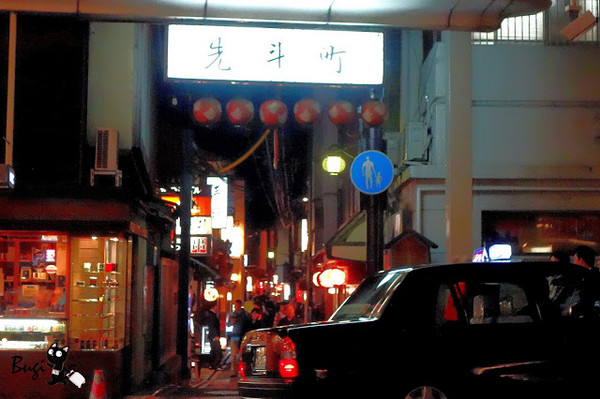
On my first night in Kyoto, I wandered aimlessly without any plans—just wanting to stroll and take in the sights of this city rich in World Heritage sites. Luckily, I stumbled upon “Shinbashi-dori.” This historic alley is packed with all kinds of restaurants. Izakayas, yakitori joints, sukiyaki places, unagi rice shops, sushi bars, and hot pot restaurants sit shoulder to shoulder. None are very big, featuring classic Japanese buildings and tight spaces. But the wide variety was overwhelming, making my eyes feast and my stomach rumble. After much indecision, I chose to eat “Sesame Dan Dan Noodles” at “Rokuden-ya” for dinner. My first ever experience with Japanese-style sesame dan dan noodles happened right here.
“Shinbashi-dori” sits adjacent to the Kamo River, located in Kyoto’s bustling downtown area. The classical atmosphere of the alleys contrasts intriguingly with the hustle and bustle of the modern streets just outside.
● Note: Those who want to learn more about “Shinbashi-dori” can refer to “A Traditional Japanese-Style Alley in Kyoto – “Shinbashi-dori” – A Great Spot to Find Late-Night Eateries”.
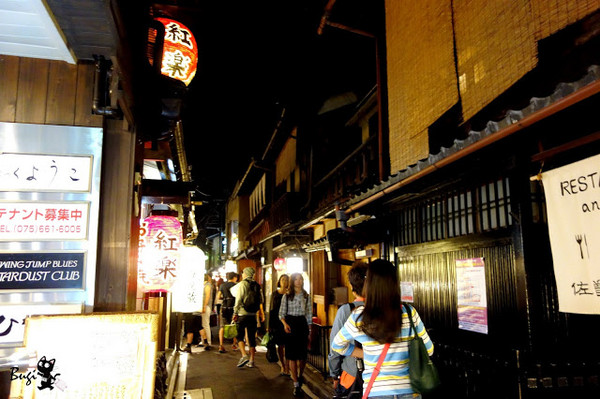
In this old street teeming with eateries, Buji was drawn to the large wooden signboard, traditional Japanese curtains, and transparent display window at the entrance of “Rokuden-ya”.
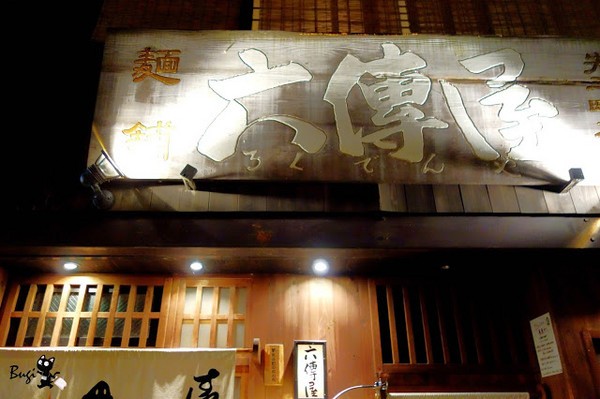
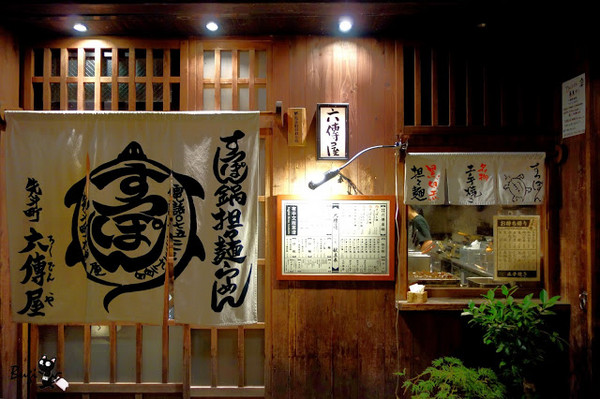
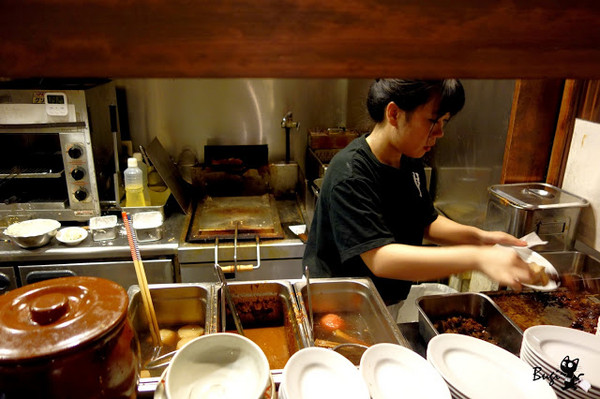
Peering into the display window, pots of tenderly braised snacks bobbed up and down in bubbling brown sauce, while wisps of steam wafted from the stoves—looking incredibly appetizing. A quick scan of the menu posted at the entrance revealed that it was primarily a noodle shop. But Dan Dan Noodles? I’d never tried Japanese Dan Dan Noodles before, and the sesame flavor especially piqued my curiosity. The price was reasonable too, so I thought, why not?
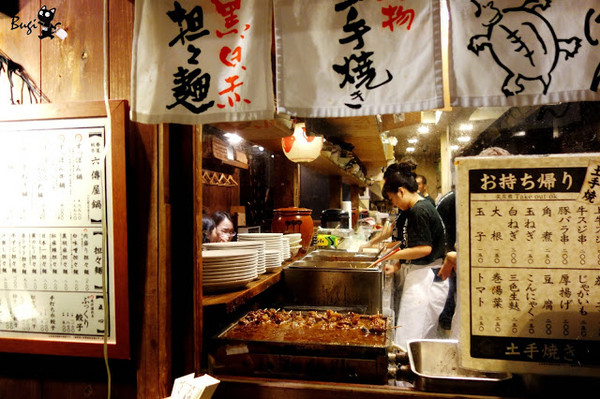
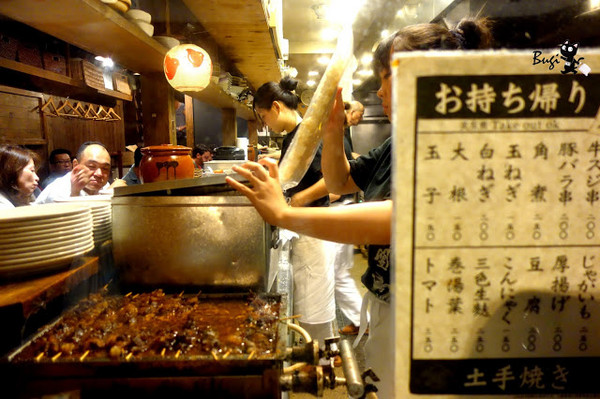
Lifting the curtain and pushing open the wooden door, I was greeted by what looked like a traditional Japanese canteen. The aroma of food and heat hit me right away. Rokuden-ya has dining space on two floors. The first floor has a row of counter-style seats facing the kitchen, so diners can watch the chefs prepare the food. The second floor requires you to take off your shoes.
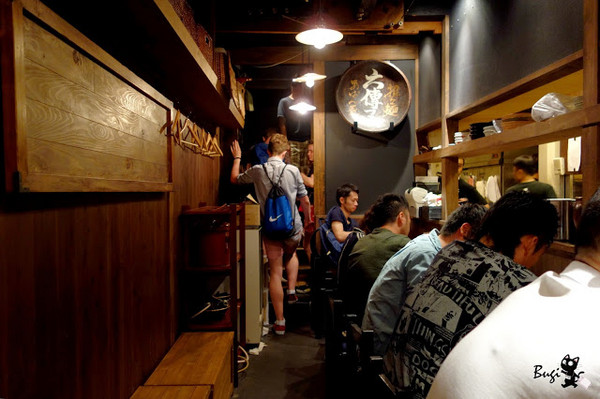
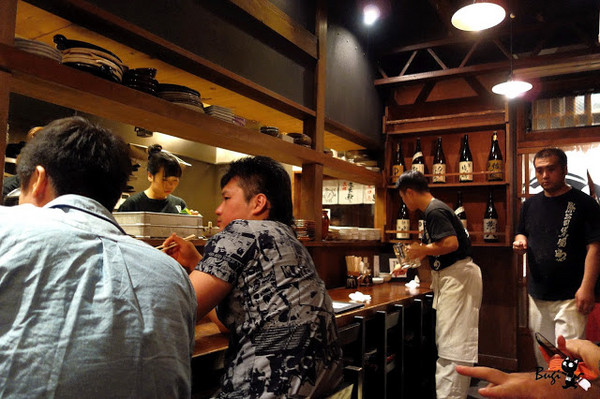
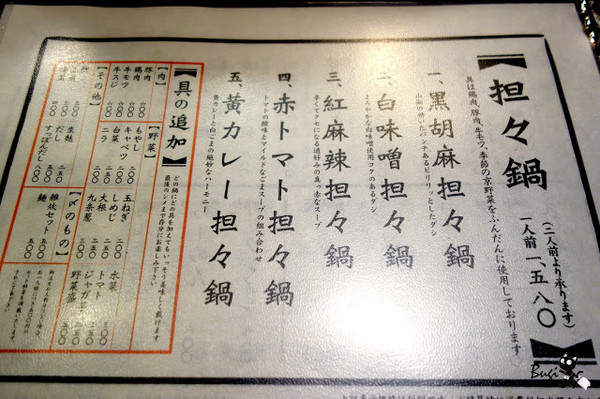
The place was pretty busy, and we waited about ten minutes before getting a seat at the non-shoe-removal counter on the first floor. As soon as we sat down, the staff handed us the menu. There were quite a few Dan Dan Noodle flavors, so we went for the “Black Sesame Dan Dan Noodles” and the “Japan No. 1 Spicy Dan Dan Noodles.”
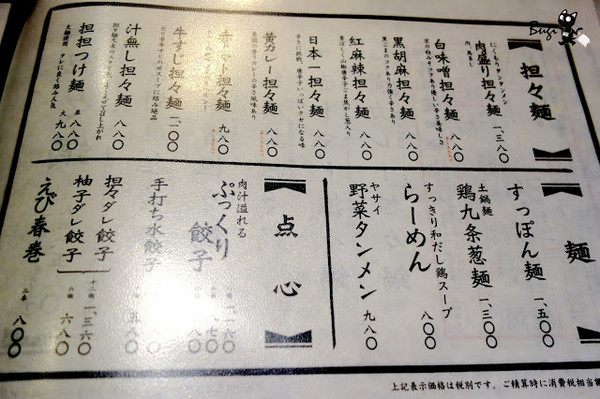
Sesame Dan Dan Noodles are the shop’s signature dish, so of course, we had to try them. My friend opted for the black sesame flavor, which seemed richer. And what’s the “Japan No. 1 Dan Dan Noodles”? With zero Japanese ability, Buji saw the Japanese description and figured it meant “Japan’s No. 1 Spicy Dan Dan Noodles.” It was touted as the “best-tasting in Japan,” and since Buji always loves adding chili sauce to noodles, he didn’t hesitate to order a bowl. Who knew that when the dish arrived, it would be such a shock—almost distressing... We’ll hold off on the details for now and reveal the surprise later.
Aside from Dan Dan Noodles, there are also other dishes available, such as fried rice, fried noodles, dumplings, Dan Dan hot pot, and various side dishes like the braised snack “Dote-yaki.” The shop also offers a Chinese menu, which you can ask the staff for directly.
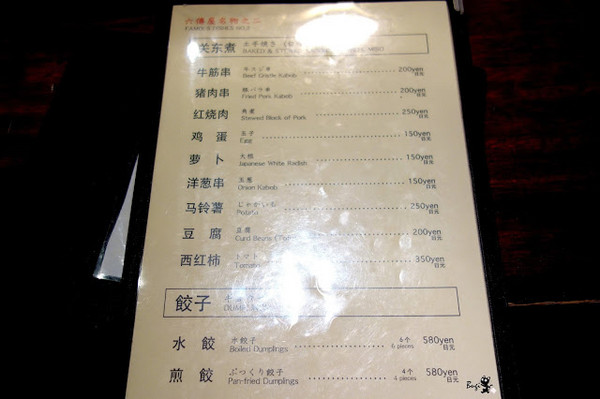
One reason Buji chose Rokuden-ya was because of the “Dote-yaki” spotted in the display window. So naturally, we had to order some. Dote-yaki is a dish where ingredients are slow-cooked in a miso-based sauce, so the brown sauce Buji saw in the window was actually thick miso paste.
While waiting for the food, Buji couldn’t stop staring at the Dote-yaki, feeling so excited.
First up was daikon (radish, ¥150).
The white radish was cooked until soft and tender, easily falling apart with chopsticks. In the mouth, besides the radish’s natural sweetness, there was also a rich miso flavor. The salty sauce had a hint of sweetness, and the juiciness of the radish balanced out any potential cloying effect from the prolonged sweetness. Delicious. The chopped green onions on top seemed almost free, piled on so thickly they nearly covered the radish’s surface—definitely a win for onion lovers.
Next came pork skewers (¥200), beef tendon skewers (¥200), and red braised pork (¥250).
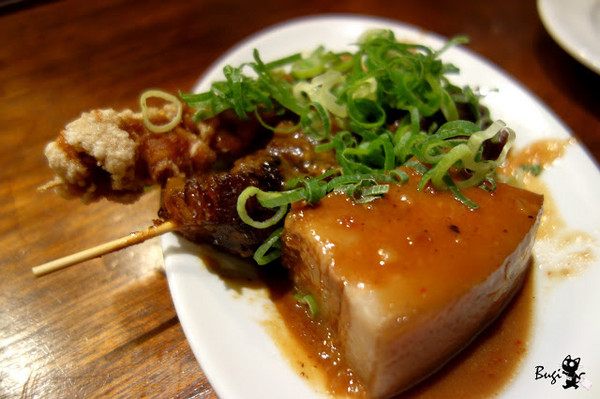
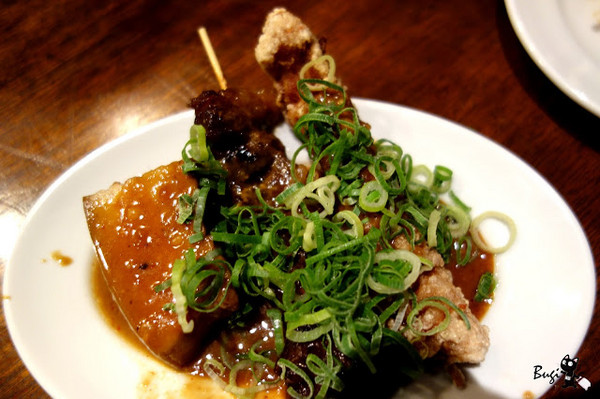
The pork skewers were the one on the far right in the photo above—a fried item. The exterior was crispy but not tough or dry—in fact, it was tender and just right. The pork wasn’t all lean meat but had some fat, making it semi-fatty. You could taste a bit of oil, and paired with the miso sauce, it was pretty good. But those who dislike fatty meat might want to think twice before ordering.
Then there was this pitch-black-looking beef tendon skewer, braised until fully soaked through—the miso sauce seemed to have penetrated the very soul of the beef tendon (a bit dramatic, sorry!). Though flavorful, the tendon remained elastic and easy to bite into, delivering a mouthful of gelatinous texture—super good for the skin. Highly recommended.
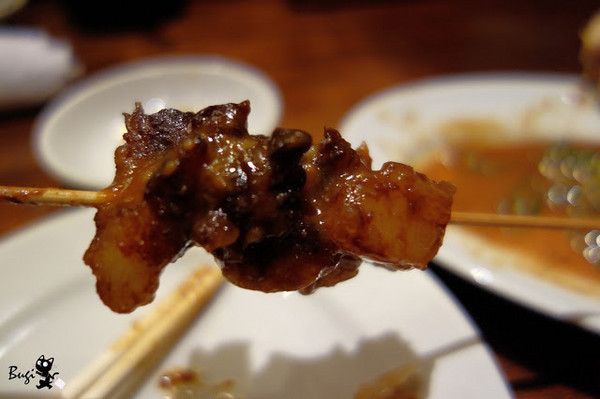
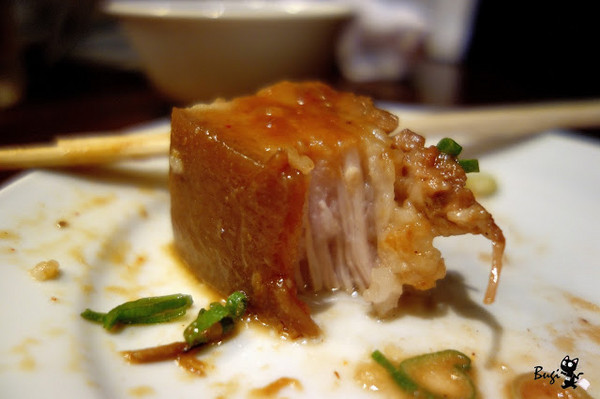
The red braised pork seemed like our version of pork belly, with a high fat content. Buji didn’t eat this one—the onion-loving friend finished it all himself. According to him, the sweet-and-salty miso paired with pork belly didn’t feel greasy, though it wasn’t particularly mind-blowing either.
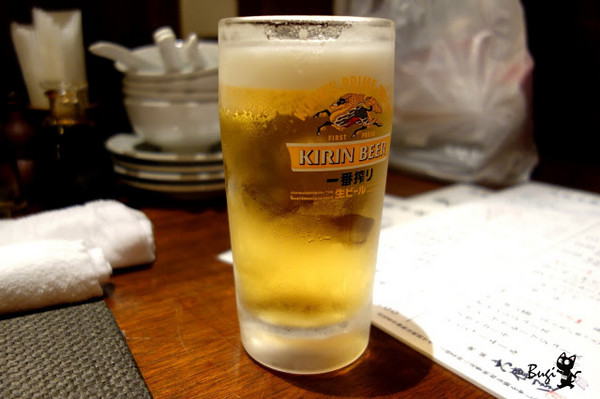
Braised snacks pair perfectly with a glass of draft beer—¥550. Of course, you can skip alcohol or drinks altogether; the shop provides free water.
● ETtoday News Cloud reminds you: Don’t drink and drive, don’t drive after drinking.
Just as we were finishing the Dote-yaki, as if the shop had timed it perfectly, they served the highlight of the meal—“Black Sesame Dan Dan Noodles” (¥880).
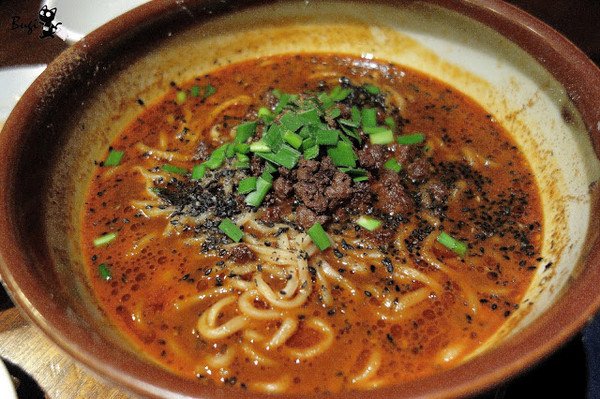
The moment the Black Sesame Dan Dan Noodles were placed on the table, the strong aroma of sesame hit us. A few green chopped leek pieces were sprinkled on top, adding some visual appeal to the noodles.
The soup base was quite rich, made by simmering black sesame, miso, and broth into a thick, viscous broth. In addition to visible black sesame grains, the dish was also topped with minced pork, pepper, and a touch of chili powder. The flavors were quite layered and had a slight spice level—but nothing most people wouldn’t be able to handle.
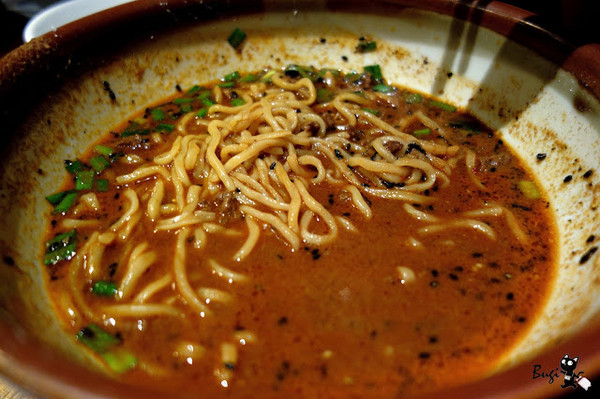
For Taiwanese palates, some might find the flavor of this bowl a bit strong and the soup slightly salty. But Buji felt it was an entirely new taste—something fresh and definitely worth trying.
Also, the noodles used were slightly thicker ramen noodles, offering a nice chewiness between the teeth, and they absorbed the rich broth well, becoming more enjoyable the more you ate. Finally, the last dish served was the ultimate challenge—the “Japan No. 1 Spicy Dan Dan Noodles” (¥880)—which made Buji’s jaw drop at first glance.
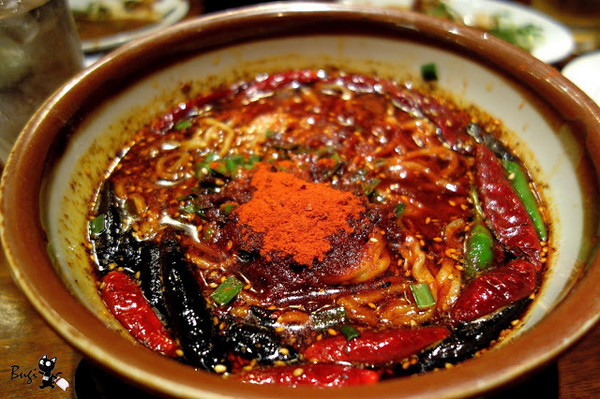
I originally thought that "Japan's No. 1 Spiciest Dan Dan Noodles" was named because the shop was proud to claim their spicy dan dan noodles were "the most delicious in Japan, ranked No. 1 in Japan." But when the dish was served, I realized I had misunderstood big time... Judging by the actual dish, it should be "Japan's No. 1 Spiciest~~ Dan Dan Noodles," rather than "Japan's No. 1~~ Spiciest Dan Dan Noodles"...
The name of this dish is ambiguous — where you place the pause changes the meaning entirely, turning it into two completely different bowls of noodles, ORZ... Seeing several whole bright red chilies, the vivid red broth, and a huge spoonful of chili powder, I was just stunned XD.
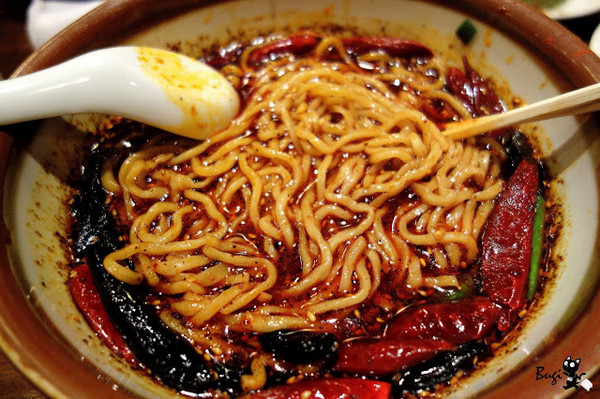
The noodles, like those in the black sesame dan dan noodles, are slightly thick hand-pulled noodles, but the entire broth is so wild I couldn’t even tell what I was drinking — all I could register was “spicy” and “scorching.” It’s probably just a regular sesame noodle base, but the spiciness is amped up who knows how many hundredfold.
Normally, I can handle a moderately spicy level of heat, but this explosive level of spice was completely beyond my tolerance. Although I wanted to finish the whole bowl, I threw in the towel after four or five bites. When I left, the bowl of spicy noodles was untouched, which made me feel a bit bad for the shop.
If you’re a super-duper spice lover, someone who regularly eats extremely spicy food and practically lives for heat, then go ahead and take on this bowl of "Japan's No. 1 Spiciest~~ Dan Dan Noodles." But if you usually stick to mild or moderately spicy food, I, Unrestrained, strongly advise against ordering this one — it’ll just end up being something you look at and admire before walking away...
※Location map of "Rokudenya" in Pontochō
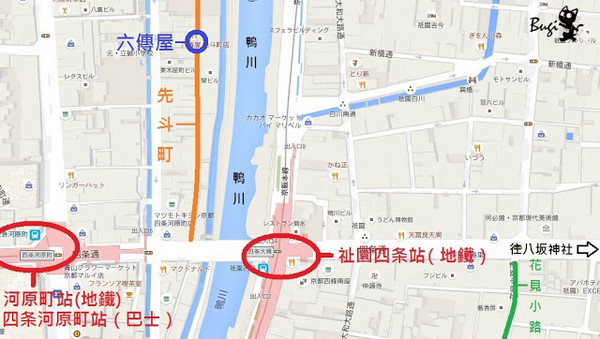
Address: 199, Shimozakuragi-chō, Nakagyō-ku, Kyoto. Once you arrive in Pontochō, just walk along the alley — it’s not hard to find.
Business hours: 11:30–15:00, 17:00–23:00.
How to get to Pontochō by subway:
1. Take the "Keihan Electric Railway" to "Gion-Shijō Station." Cross the Kamo River, and the first alley on your right is Pontochō.
2. Take the "Hankyu Railway" to "Kawaramachi Station." Walk toward the Kamo River, and you’ll find it on the left side near the river.
How to get to Pontochō by bus: You can take city bus "No. 4, 17, or 205" from "Platform A2" or "No. 5" from "Platform A1" in front of Kyoto Station to "Kawaramachi Station." Then walk toward the Kamo River and look for it on the left side near the river.
Want to see moreof Unrestrained’s solo travel experiences?
Welcome to joinUnrestrained’s Facebook fan pageandUnrestrained’s blog
Deliciousness non-stop from morning to night
Download the "ETtoday News Cloud APP" for quick access to the latest food news →
iOS:https://goo.gl/rmIDdx
Android:https://goo.gl/XPe8Uj
Share
This article is published by HowToTrip. Sharing and reposting are welcome — please credit the source.
Article URL: https://www.howtotrip.net/views-9156
Related Articles
- Shaoxing's "Grandpa Gourd" hangs the gourds back up: "If there are too many people, we'll interact less — just take a quick look from afar"
- Chinese authorities announce "reciprocal adjustment" to Japan visa fees — single-entry visa jumps from 2,250 to 16,750 yen!
- The "health stones" carried by a traveler were found to have radiation levels exceeding safety limits by a thousand times, potentially endangering fellow passengers on the same flight. Customs issues warning!
- Shenzhen Airport Issues Late-Night Notice: Unidentified Aerial Object Detected, Causing Widespread Flight Delays!
- “They only said it cost money after I opened the box and washed it!” 200g of grapes sold for 60 yuan on a high-speed train—12306 responds!
- Can't buy an airline ticket? Denied exit? Blocked from boarding? A large number of Chinese tourists have mysteriously become "discredited individuals"
- Adverse weather and economic fluctuations impact Colombia's coffee market
- Beach bathing area responds to 2 yuan/30 seconds fee for freshwater foot rinsing: Clearly priced!
- Taking off with an improperly closed cabin door? Wing malfunction? Multiple flights made emergency returns mid-journey!
- Experience the gifts of nature! A countdown of the world’s ten most stunning coastlines