Looking for late-night eats in Kyoto? Explore the quaint Japanese alleyway "Pontocho"

Text and photos byUnrestrained
In the evening, I started an aimless stroll from Kyoto Station, following the Kamo River until I reached the downtown area of Kyoto—"Gion-Shijo Station" and "Kawaramachi Station." While walking from the Kamo River toward Kawaramachi Station, my eyes accidentally caught sight of a narrow alleyway with a sign at the entrance that read "Pontocho." The lane was only about two meters wide, lined on both sides with various Japanese-style restaurants. It might have been mealtime because there was a steady flow of people inside. When I glimpsed this alley, the simple, traditional Japanese vibe contrasted sharply with the modern vibrancy outside. I was genuinely amazed, and driven by curiosity and delight, I immediately turned into it to explore further.

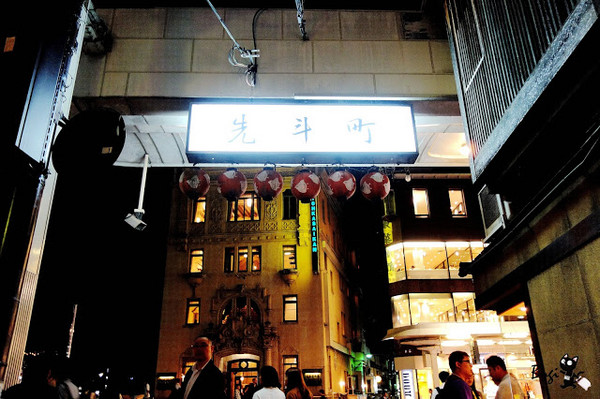
Pontocho was built during the Edo period and is a narrow alley about 500 meters long. It gained fame during the Meiji era for its many tea houses, restaurants, and kabuki performances, and is considered one of the "Five Great Hanamachi of Kyoto." However, geisha are rarely seen in the alley these days. No matter how much I looked, I couldn't spot a single geisha. With fewer pleasure-seeking guests, it has now become a great spot purely for dining and chatting.
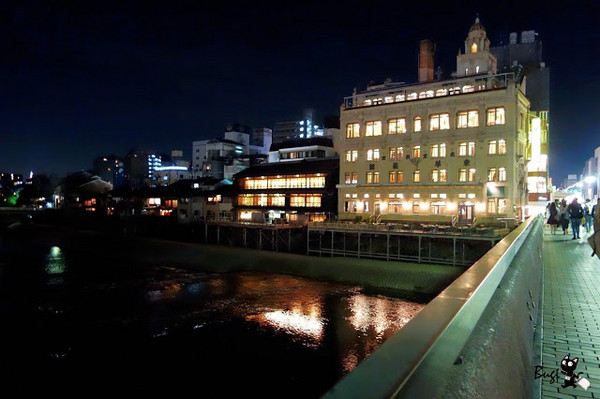
Pontocho is located alongside the Kamo River (pictured above), running parallel to it. Just outside the alley lies Kyoto’s busiest commercial district (pictured below), bustling with crowds.
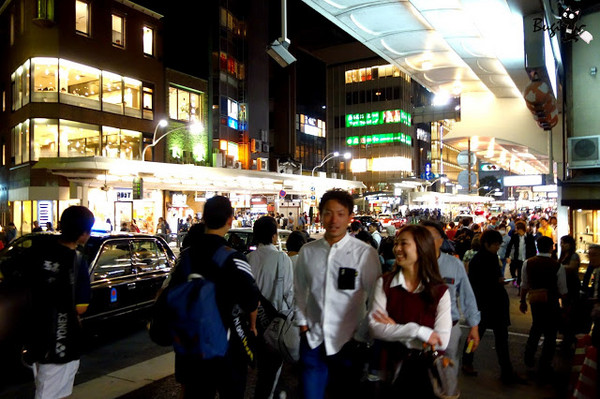
Some shops in Pontocho open around noon, but most begin lighting up after 5 p.m. and stay open until around 11 p.m. Compared to most Japanese establishments that close around 8 or 9 p.m., these are relatively late hours—making it also one of the choices for Kyoto locals looking for a late-night bite.

Along the alley, besides various Japanese cuisines and tea houses, there are also many izakayas, Western-style eateries, and yakitori shops. Prices range widely—from affordable options for the average person to exclusive and upscale private clubs.

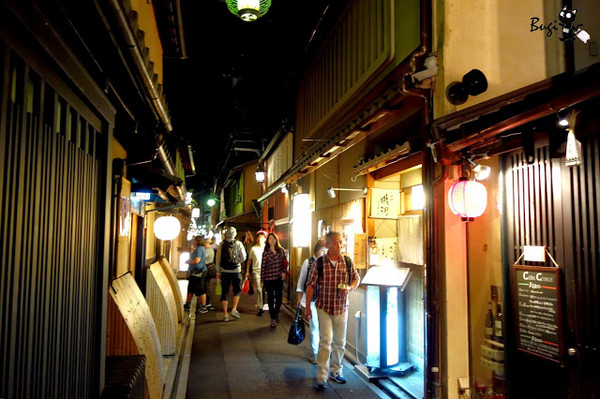
Each shop's decor exudes a rich wooden Japanese aesthetic. Every entrance hangs its own lantern, and even if you don’t step into any of the small eateries, simply walking along the stone-paved path and browsing the calligraphy-style signs on both sides gives you a taste of the unique, old-world charm of a traditional Japanese alley. Strolling here is quite an enjoyable experience.

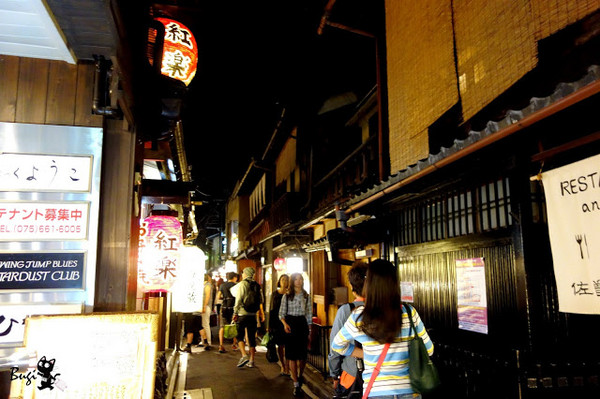

Since I visited Pontocho during dinner time, there were not only tourists but also plenty of local diners. If you visit closer to 10 or 11 p.m., when many shops have closed, the few remaining illuminated ones can feel just like the late-night diners in Japanese dramas. Perhaps next time, if I visit Pontocho a bit later, I’ll find my own late-night diner on those quieter, more serene stone streets.


※ Location map of Pontocho

Access by subway:
1. Take the "Keihan Electric Railway" to "Gion-Shijo Station." Cross the Kamo River, and the first alleyway on your right is Pontocho.
2. Take the "Hankyu Railway" to "Kawaramachi Station," walk toward the Kamo River, and you’ll find it on the left side near the river.
Access by bus: Take city bus "No. 4, 17, or 205" from "Platform A2" or "No. 5" from "Platform A1" in front of Kyoto Station to "Kawaramachi Sanjo Station." Walk toward the Kamo River, and you’ll find it on the left side near the river.
Want to see moreof Unrestrained’s independent travel experiences?
Welcome to joinUnrestrained’s fan pageandUnrestrained’s blog
Share
This article is published by HowToTrip. Sharing and reposting are welcome — please credit the source.
Article URL: https://www.howtotrip.net/views-9068
Related Articles
- Shaoxing's "Grandpa Gourd" hangs the gourds back up: "If there are too many people, we'll interact less — just take a quick look from afar"
- Chinese authorities announce "reciprocal adjustment" to Japan visa fees — single-entry visa jumps from 2,250 to 16,750 yen!
- The "health stones" carried by a traveler were found to have radiation levels exceeding safety limits by a thousand times, potentially endangering fellow passengers on the same flight. Customs issues warning!
- Shenzhen Airport Issues Late-Night Notice: Unidentified Aerial Object Detected, Causing Widespread Flight Delays!
- “They only said it cost money after I opened the box and washed it!” 200g of grapes sold for 60 yuan on a high-speed train—12306 responds!
- Can't buy an airline ticket? Denied exit? Blocked from boarding? A large number of Chinese tourists have mysteriously become "discredited individuals"
- Adverse weather and economic fluctuations impact Colombia's coffee market
- Beach bathing area responds to 2 yuan/30 seconds fee for freshwater foot rinsing: Clearly priced!
- Taking off with an improperly closed cabin door? Wing malfunction? Multiple flights made emergency returns mid-journey!
- Experience the gifts of nature! A countdown of the world’s ten most stunning coastlines