Ice cream and pudding paired with 150-year-old "Yamanoi Soy Sauce" – surprisingly with a caramel aroma
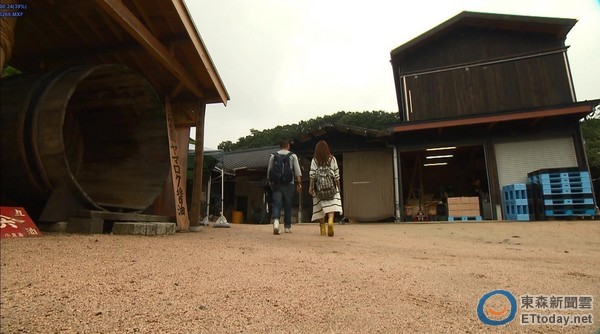
▲ On the journey to discover century-old soy sauce. (Photo provided by Eastern TV Travel, the same applies to all below)
Travel Center / Comprehensive Report
Yamanoi Soy SauceLocated on Shodoshima Island, its soy sauce is a famous local specialty with a 150-year history. It has been registered as a tangible cultural heritage by Japan's Agency for Cultural Affairs and is currently managed by the fifth-generation owner, Mr. Yasuo Yamamoto. For Mr. Yamamoto, soy sauce represents a precious, tangible traditional food culture—a commitment and responsibility passed down through generations. Therefore, he continues to use 100-year-old cedar barrels passed down in his family to brew the soy sauce. The resulting product boasts a rich, century-old flavor that is definitely worth trying.
Being allowed to visit this century-old soy sauce factory is a rare opportunity. All staff members must first remove dust from their bodies using a brush and put on aprons before entering—an attention to detail that contributes to the high quality of the soy sauce.
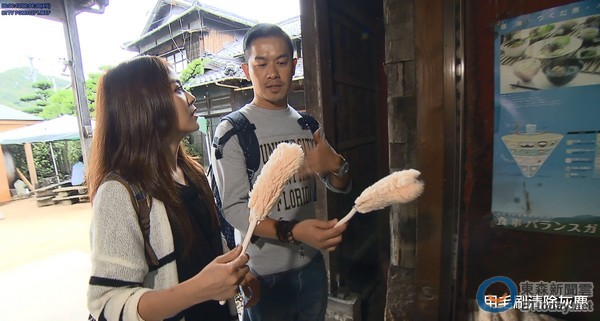
▲ Before entering the factory, you must brush off any dust on your body and stay clean to be allowed inside.
Upon entering Yamanoi’s key brewing facility, you’ll see massive, ancient wooden barrels housing the essential ingredients for soy sauce: soybeans, wheat, salt, and water. The soybeans and wheat must first be steamed, after which their specially made starter culture and other ingredients are added to the barrels. Interestingly, the most crucial fermentation microbes—such as yeast and lactic acid bacteria—are actually attached to the sides of the wooden barrels. Those white-looking wood particles are in fact vital microbes. And that’s not all: the surrounding beams and pillars of the brewery are also covered with precious natural microbes. When the ingredients are placed in the barrels, they naturally interact with airborne microbes, fermenting into top-grade soy sauce with a century-old flavor—one of the reasons why Yamanoi Soy Sauce is truly irreplaceable.
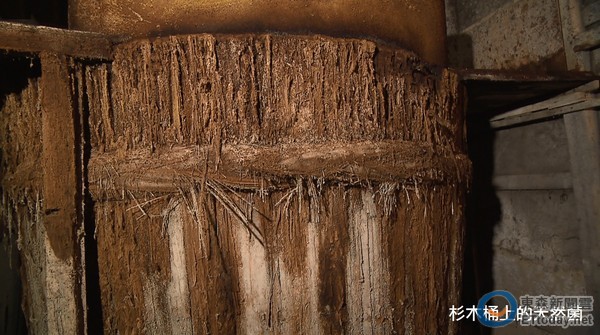
▲ The important microbes involved in the fermentation process attach to the barrel walls.

To allow the soy sauce ingredients to fully interact with the natural airborne microbes, during the two fermentation seasons in spring and summer, Mr. Yamamoto climbs onto the large barrels every day and stirs them continuously with a 3-meter-long wooden pole for at least 20 minutes. It’s an exhausting job. According to Mr. Yamamoto himself, stirring for 20 minutes a day over two consecutive months helped him lose 4 kilograms. And how long does the soy sauce need to ferment before it’s ready to eat? Mr. Yamamoto says it takes a full two years to fully mature. Wow—every drop of this soy sauce is hard-earned indeed.
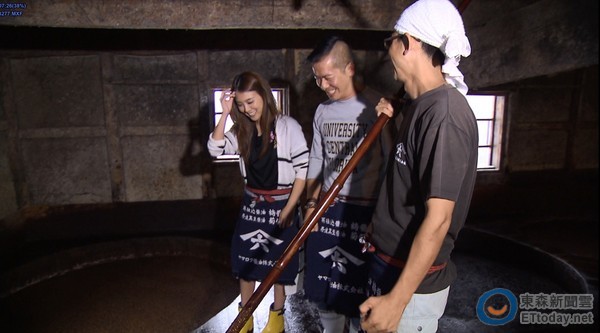
▲ Workers must stir the soy sauce continuously with a roller for twenty minutes per session, and repeat the process for several months.
The cedar barrels used for making soy sauce can each last up to 100 years, but the craft of making cedar barrels is nearly lost in Japan. To preserve this tradition, Mr. Yamamoto specially learned how to make them. These cedar barrels have a circumference of 1.8 meters and require at least three people working together to complete.
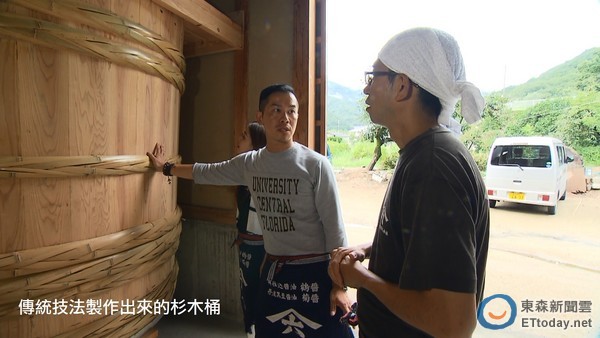
▲ Mr. Yamamoto specially learned how to make cedar barrels to produce this traditional vessel.
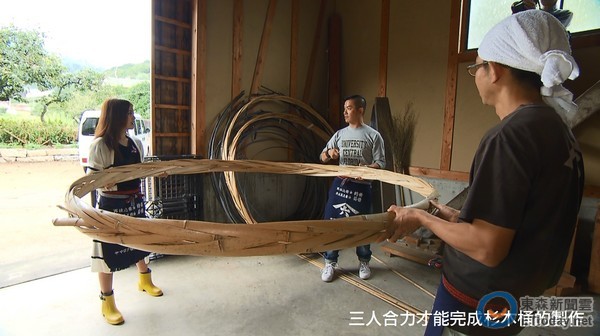
▲ The production of a cedar barrel requires the teamwork of three people; otherwise, it’s very difficult to complete.
So what does this painstakingly brewed soy sauce actually taste like? Mr. Yamamoto served us the delicious soy sauce in a surprising way—by adding it to ice cream and pudding. Sweet treats with soy sauce... doesn’t that sound strange? Yet, after trying it, we were amazed—the ice cream with Yamanoi Soy Sauce developed a caramel-like aroma, and the black beans on top were simply divine. It turns out that the original sweetness of food is the best kind.
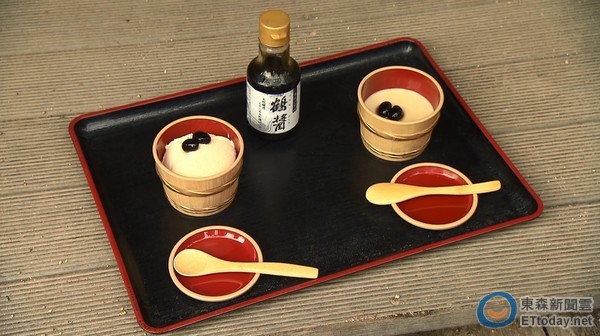
▲ Adding soy sauce to ice cream and pudding results in a surprisingly caramel-flavored dessert.
Yamanoi Soy Sauce Co., Ltd.
Address: 1607 Ayatabei, Shodoshima-cho, Shodo-gun, Kagawa Prefecture
Phone: (0879) 82-0666
Fax: (0879) 82-1293
Website:yama-roku.net/index.html
More detailed experiences------Eastern TV Travel Shikoku Tour Itinerary
More Japan travel options <<<<<<<<<<<<请前往《东森旅游玩乐志》
Share
This article is published by HowToTrip. Sharing and reposting are welcome — please credit the source.
Article URL: https://www.howtotrip.net/views-8818
Related Articles
- Shaoxing's "Grandpa Gourd" hangs the gourds back up: "If there are too many people, we'll interact less — just take a quick look from afar"
- Chinese authorities announce "reciprocal adjustment" to Japan visa fees — single-entry visa jumps from 2,250 to 16,750 yen!
- The "health stones" carried by a traveler were found to have radiation levels exceeding safety limits by a thousand times, potentially endangering fellow passengers on the same flight. Customs issues warning!
- Shenzhen Airport Issues Late-Night Notice: Unidentified Aerial Object Detected, Causing Widespread Flight Delays!
- “They only said it cost money after I opened the box and washed it!” 200g of grapes sold for 60 yuan on a high-speed train—12306 responds!
- Can't buy an airline ticket? Denied exit? Blocked from boarding? A large number of Chinese tourists have mysteriously become "discredited individuals"
- Adverse weather and economic fluctuations impact Colombia's coffee market
- Beach bathing area responds to 2 yuan/30 seconds fee for freshwater foot rinsing: Clearly priced!
- Taking off with an improperly closed cabin door? Wing malfunction? Multiple flights made emergency returns mid-journey!
- Experience the gifts of nature! A countdown of the world’s ten most stunning coastlines