Historic Houses Transformed into Literary Museums and Art Spaces: A Special Search for Japanese-Style Wooden Houses Across Taiwan

▲ Yilan Literature Museum. (Photo / Screenshot fromYilan Literature Museum)
Travel Center / Comprehensive Report
Many Japanese-style wooden houses still remain across Taiwan. After renovation, they have been reopened to life with new purposes—whether as literary museums, art spaces, or cafés. These nearly century-old buildings retain their unique charm. ETtoday ETToday Travel Cloud has compiled a list of several wooden house attractions for readers to explore. When you have the chance, why not visit these historic spots and collect experiences from Taiwan’s distinctive wooden architecture?
Yilan Literature Museum
A commercial featuring Takeshi Kaneshiro shot at the Yilan Literature Museum made the place wildly popular, attracting many visitors on a pilgrimage. In fact, the Yilan Literature Museum was formerly the residence of the principal of an old agricultural school. It was designated as a historic building in 2001, underwent restoration in 2004, and won the Executive Yuan’s “Fifth Public Construction Golden Quality Award.” It previously served as the Yilan Music Hall but has now been converted into a literature museum. After being re-planned by Yilan County Government, visitors can not only learn about the development of Lanyang literature, appreciate works by important local writers, but also enjoy a cup of tea within the historic walls.
Address: No. 19, Lane 2, County Government Second Road, Jiucheng South Road, Yilan City, Yilan County
Phone: 03-9324349
Opening Hours: Tuesday to Sunday, 9:00–17:00
Closed: Mondays, Lunar New Year’s Eve
Admission: Free
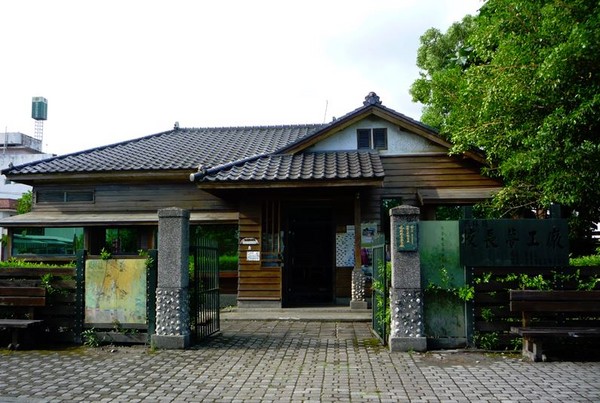
▲ Hualien Principals’ Dream Factory. (Photo / Screenshot fromCouncil for Cultural Affairs Local Culture and Arts Centers)
Hualien Principals’ Dream Factory
Built in the 18th year of the Republic of China (1929), the Principals’ Dream Factory is a Japanese-style wooden structure. Originally the “Fenglin Branch Office Chief’s Residence,” it later served as the dormitory for the principal of Fenglin Junior High School. After renovation, it was renamed the “Principals’ Dream Factory” in 2004. The space is an open reading venue, featuring graphic displays that cover the origin and purpose of the factory, a list of principals, storytelling by principals, and an introduction to the Character Respect Pavilion.
Address: No. 16, Minsheng Street, Fenglin Township, Hualien County
Opening Hours: Daily, 8:30–12:00, 13:30–17:00
Closed: Four days including the Dragon Boat Festival, Mid-Autumn Festival, and the day before and of Lunar New Year’s Eve
Phone: 03-8764779
Admission: Free
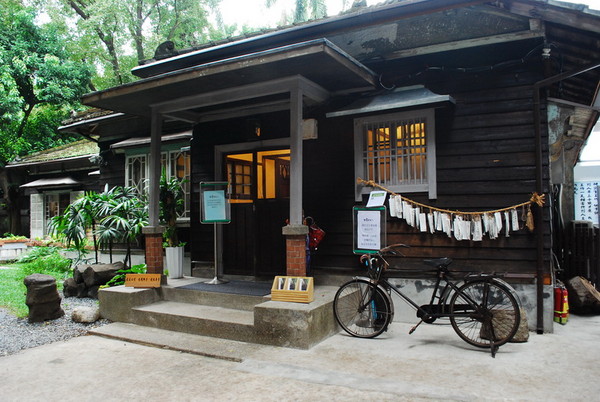
▲ Qingtian 76 Courtyard Brimming with Greenery, a Classic Japanese-Style Old House Full of Traditional Charm. (Photo / Provided by Dai Zuhui)
Taipei Qingtian 76
Undertaken by Golden Seeds, the revitalization project of the Taipei Municipal Historic Site “National Taiwan University Japanese-Style Dormitory – Former Residence of Ma Tingying” has repurposed the site as “Qingtian 76,” a platform for geological science education and appreciation of historic houses. The site regularly hosts free cultural tours, geological science activities, and lecture series.
Address: No. 6, Lane 7, Qingtian Street, Da’an District, Taipei City
Reservation for Guided Tours: 02-89787499
Service Hours: Monday to Friday, 9:30–17:30
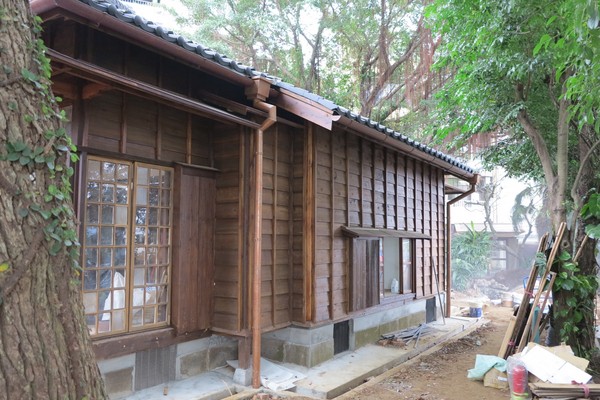
▲The Former Residence of Eikichi Tada. (Photo provided by New Taipei City Cultural Affairs Bureau)
Former Residence of Eikichi Tada, Tamsui’s Town Head
Located between Fort San Domingo and the Former British Consular Residences in Tamsui, the Former Residence of Eikichi Tada was the private home of Eikichi Tada, who served as the town head of Tamsui during the Japanese colonial period. Built in 1937 (Showa 12), it was designated as a county-level historic site in April 2005, making it the first Japanese-style residence in Tamsui to receive such recognition. It is said that Tada also applied for a private water supply, making his residence the first household in Tamsui—and in all of Taiwan—to be connected to running water.
Address: No. 19, Mackay St., Tamsui District, New Taipei City
Phone: 02-29603456
Related Reports:Get a Sneak Peek: Japan’s Historic “Former Residence of the Tamsui Town Head” Opens to the Public in Mid-2016

▲Taoyuan Daxi Wooden Art Museum – Butokuden (Photo fromTaoyuan Municipal Daxi Wooden Art Ecomuseum)
Taoyuan Daxi Wooden Art Museum
The first museum in Taoyuan, the “Taoyuan Municipal Daxi Wooden Art Ecomuseum,” officially opened on March 28 of last year. Among its facilities, the Butokuden and Building No. 1 both have nearly a century of history. The Butokuden was completed in 1935 (Showa 10). Before World War II, as Japan promoted militarism and the spirit of bushido, butokuden were built across the country for police officers and young people to practice judo and kendo. The term “budo” refers to the five virtues of kendo: justice, integrity, courage, courtesy, and honor.
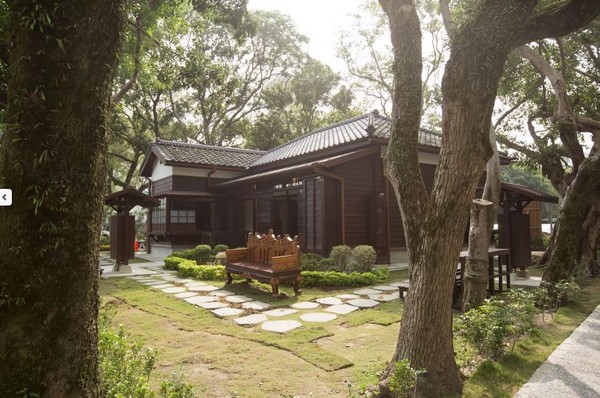
▲Taoyuan Daxi Wooden Art Museum – Building No. 1 (Photo fromTaoyuan Tourism Guide Network)
Building No. 1 was originally a Japanese-style dormitory for teachers at Daxi Elementary School. Constructed in the 1920s, this elevated single-story wooden building once served as the residence of the school’s principal. In 2007, the Japanese dormitories of Daxi Elementary School were registered as “historic buildings” of Taoyuan County. After being taken over by the cultural affairs bureau, it became the first restored and opened space of the “Daxi Wooden Art Ecomuseum,” hence earning the name Building No. 1.
Address: No. 35, Pujih Rd., Daxi District, Taoyuan City (Butokuden); No. 68, Zhongzheng Rd., Daxi District, Taoyuan City (Building No. 1)
Phone: 03-3888600
Opening Hours: Tuesday–Sunday 09:30–17:00
Closed: Mondays
Admission: Free
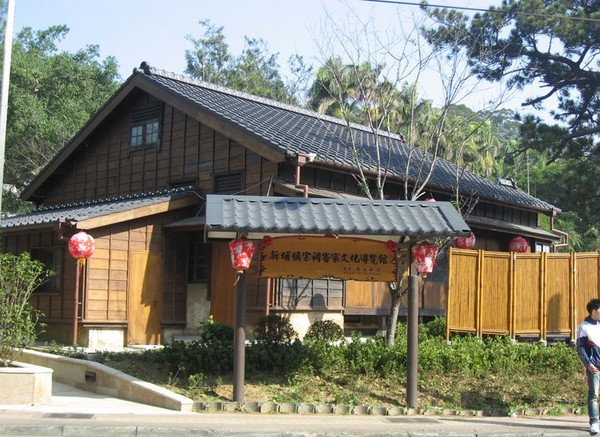
▲Hakka Culture Exhibition Hall at Xinzhu Xinpian Ancestral Halls. (Photo fromXinpian Ancestral Hall Museum)
Hakka Culture Exhibition Hall at Xinzhu Xinpian Ancestral Halls
The Hakka Culture Exhibition Hall at Xinzhu Xinpian Ancestral Halls is the only Japanese-style dormitory in Xinpian Township and was once the residence of the Xinpian Elementary School principal. The dormitory was built ten years before the establishment of the Republic of China. Even before Zhongzheng Road in Xinpian Township was constructed, this building had already been completed, newly built by the then-Japanese government to provide housing for successive principals of Xinpian Elementary School. It currently serves as the entrance station of the Xinpian Ancestral Hall Museum and as Xinpian’s tourism information center.
Address: No. 366, Zhongzheng Rd., Sizuo Li, Xinpian Township, Hsinchu County
Phone: 03-5883909
Opening Hours: Tuesday–Friday 08:30–12:00, 13:00–16:30
Saturday, Sunday 08:30–16:30
Closed: Mondays and national holidays (Spring Festival, Qingming Festival, Dragon Boat Festival, Mid-Autumn Festival) — closed all day.

▲Former Japanese dormitory complex of Shanjiao Elementary School in the late Japanese colonial period. (Photo / Reproduced fromCultural Heritage Administration)
Shanjiao Elementary School Japanese Dormitory Complex, Miaoli
The four Japanese-style dormitories of Shanjiao Elementary School were completed between 1937 (Showa 12) and 1941 (Showa 16). They originally served as housing for teachers. Over time, due to aging structures and dilapidated conditions, they faced the threat of demolition. Eventually, the government recognized the historical and cultural value of this Japanese colonial-era dormitory complex and decided to preserve and restore the old buildings. Around 2005, the Japanese dormitories were fully renovated, resulting in their renewed appearance today.
Address: No. 7, Lane 10, Jiushè Lǐ, Yuánlǐ Tówn, Miáolì Xiàn
Phone: 037-862100
Opening Hours: Open all day
Visiting Hours on Holidays for Japanese Dormitories: 09:00–12:00, 13:00–17:00
Admission: Free
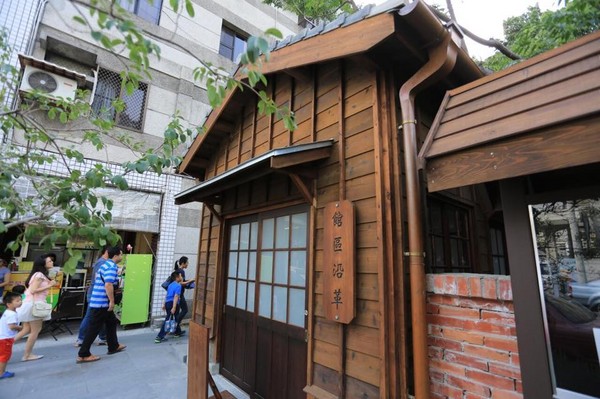
▲Taichung Literature Museum (Photo / Reproduced fromLin Chia-lung’s Facebook fan page)
Taichung Literature Museum
The site of Taichung Literature Park was formerly a group of historic Japanese colonial-era police dormitories. In 2014 (Taiwanese calendar year 103), the Taichung City Government undertook restoration work, creating a literature park and converting six of the dormitory buildings into the Taichung Literature Museum.
Address: No. 48, Leqún St., West District, Taichung City
Related Article:Reading Poetry Amidst Culture – Taichung’s First Literature Park Has Opened!

▲Chiayi Hinoki Life Village (Photo / Reproduced fromChiayi City Tourism Website)
Chiayi Hinoki Life Village
During the Japanese colonial period, Hinoki-chō was an official residential area established for forestry development in Alishan. Since most construction materials were made of Alishan hinoki (Japanese cypress), the entire area resembled a village of cypress wood, hence its name “Hinoki-chō” at the time, which was later renamed “Hinoki Village.”
Address: No. 1, Lín sēn E. Rd., East District, Chiayi City
Phone: 05-2761601
Opening Hours: Outdoor spaces open 24 hours; indoor exhibition halls: 10:00–18:00
Closed: Mondays
Share
This article is published by HowToTrip. Sharing and reposting are welcome — please credit the source.
Article URL: https://www.howtotrip.net/views-8753
Related Articles
- Shaoxing's "Grandpa Gourd" hangs the gourds back up: "If there are too many people, we'll interact less — just take a quick look from afar"
- Chinese authorities announce "reciprocal adjustment" to Japan visa fees — single-entry visa jumps from 2,250 to 16,750 yen!
- The "health stones" carried by a traveler were found to have radiation levels exceeding safety limits by a thousand times, potentially endangering fellow passengers on the same flight. Customs issues warning!
- Shenzhen Airport Issues Late-Night Notice: Unidentified Aerial Object Detected, Causing Widespread Flight Delays!
- “They only said it cost money after I opened the box and washed it!” 200g of grapes sold for 60 yuan on a high-speed train—12306 responds!
- Can't buy an airline ticket? Denied exit? Blocked from boarding? A large number of Chinese tourists have mysteriously become "discredited individuals"
- Adverse weather and economic fluctuations impact Colombia's coffee market
- Beach bathing area responds to 2 yuan/30 seconds fee for freshwater foot rinsing: Clearly priced!
- Taking off with an improperly closed cabin door? Wing malfunction? Multiple flights made emergency returns mid-journey!
- Experience the gifts of nature! A countdown of the world’s ten most stunning coastlines