Welcome to Hogwarts! Visit the “University of Washington,” Harry Potter’s library
Text & photos /Papa Seahorse
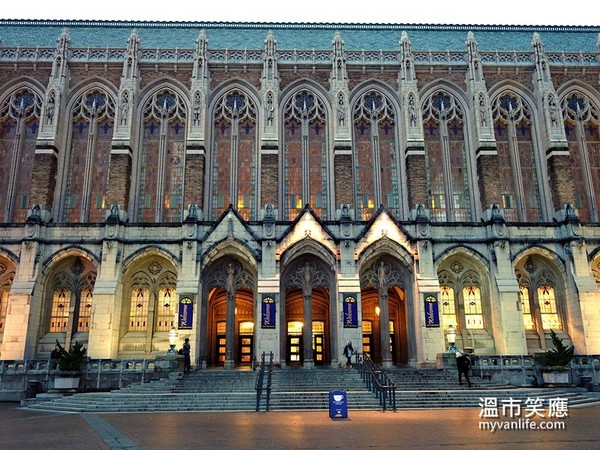
Located in Seattle, the University of Washington was founded in 1861 and is a historic institution. The campus is filled with classic, old-world architecture, making it feel as though you might encounter an ancient soul around every corner. Stop any student and ask: What’s the most famous building on your campus? Nine out of ten will reply: The library that looks like the school from Harry Potter!
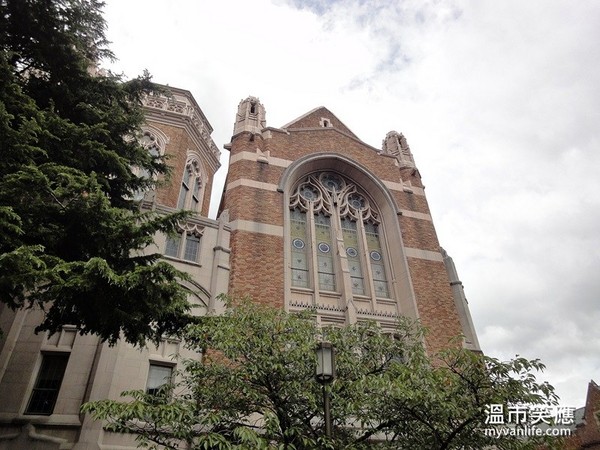
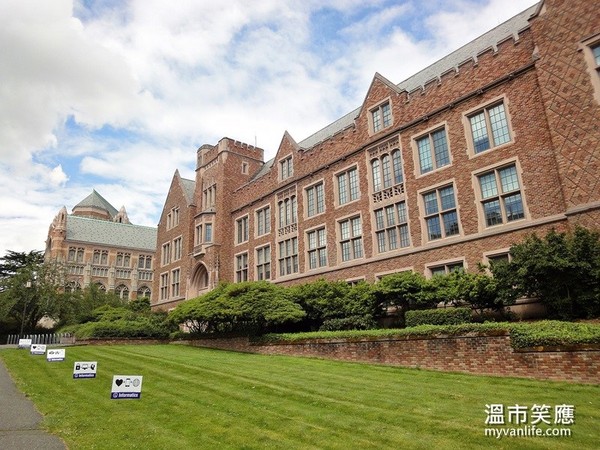
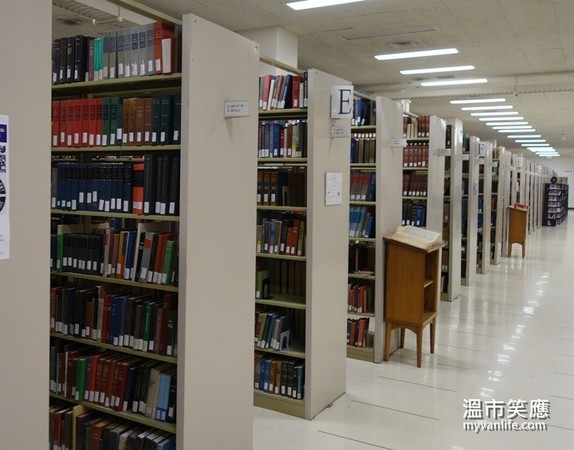
The renowned Suzzallo Library is the main library of the University of Washington and the largest among the university’s 19 libraries. The University of Washington ranks 12th in the United States in terms of book collection, with a total of six million volumes, 1.6 million of which are housed in Suzzallo Library. The name Suzzallo actually comes from the president of the University of Washington in the 1920s. Upon taking office in 1915, he was determined to create a library that would be “the soul of a university.” Construction began in 1923, and the first phase was completed three years later. Over the following decades, additional phases were built until the fourth phase was finished in 1990, completing the library’s current appearance.

Situated on what students at the University of Washington jokingly call the “Red Square,” an area paved with vintage red bricks, the Gothic architectural style of Suzzallo Library is unforgettable at first glance. The building itself is constructed from sandstone and precast stone, with a roof covered in slate, and large glass windows framed in lead and adorned with stained glass.
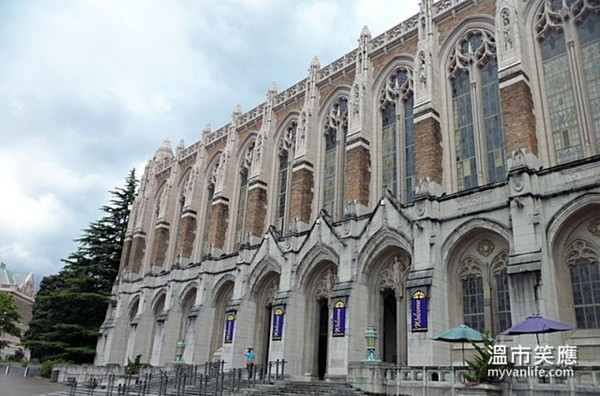
If you approach the library and take a close look at the front façade, you’ll see 18 terracotta figures standing on the buttresses. In 1923, the architects of the library selected 18 historical scientists, literary figures, or scholars—such as Plato, Shakespeare, Da Vinci, and Newton—to be honored with statues. Beneath the central archway of the library’s main entrance are three nude sculptures: two women and one man, representing the three purposes of scholarship: ‘Mastery,’ ‘Inspiration,’ and ‘Thought.’
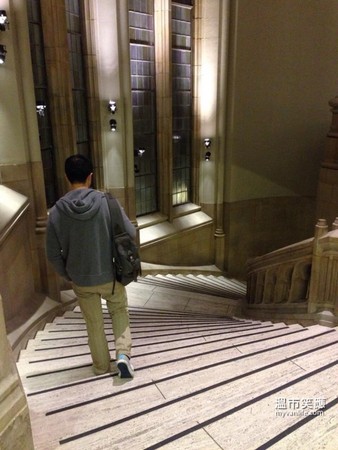
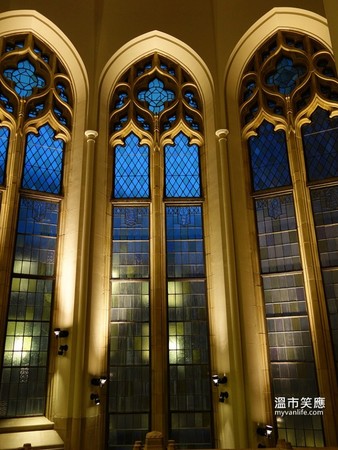
The library is bustling with students flowing through the rows of bookshelves and quietly sitting in reading rooms. While the books are certainly the treasures of this library, the reading room on the third floor is the highlight. Passing through the main entrance of the library and ascending the stone stairs on either side of the foyer, the solid stonework and towering glass windows transport you into the ambiance of a medieval castle. The stone banisters feel smooth to the touch—originally rough surfaces that have been polished over a century by countless students.
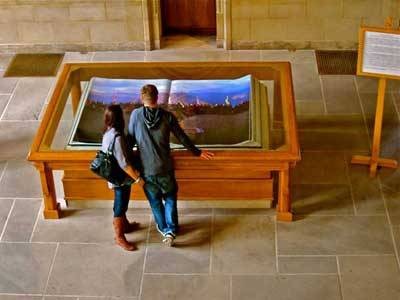
▲ One of the world’s largest books, the ‘Bhutan Portfolio.’ (Photo / Sourced from the internet)
At the top of the stone stairs is the Grand Stair Hall, a spacious stone chamber where the centerpiece is one of the world’s largest books, the ‘Bhutan Portfolio.’ To ensure its preservation, this book is turned once a month by staff with great care.
Passing through the two doors behind the Bhutan Portfolio is like stepping into “Hogwarts”—the most important space of this library.
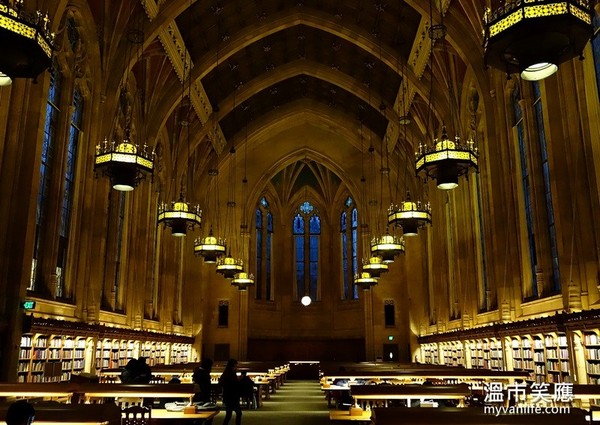
Standing in this reading room and looking up, goosebumps rise from your feet to the top of your head. The space spans 75 meters in length, 16 meters in width, and 20 meters in height—so vast it elicits a mental “WOW,” with the echo of the exclamation reverberating through the seven-story-high room. The ceiling is supported by arched stone beams, and church-like stained glass windows rise high to meet the roof beams, encircling the reading room. Enormous chandeliers hang from the ceiling, aligned in two straight rows that draw the eye from near to far, creating a visual impact.
Oak bookshelves line the walls like the legs of a giant, extending as far as the shelves reach, packed with paperback and hardcover books. Reading tables resembling church pews are lit with warm light, like greenhouse lamps nurturing those who come here to absorb knowledge. With the grandeur of a Hogwarts castle and the serenity of a church, the space also hosts numerous student groups studying or filming, as well as many tourists entering to admire and snap photos. Though the space bustles with movement, all voices are hushed—the vast room remains remarkably quiet.

We arrived just at sunset. The lighting in the reading room is soft and ambient, with light spilling upward from the bookshelves, gilding the massive space in golden hues. As the sun dips below the horizon and the sky remains un-darkened but blends blue and purple, a faint fluorescent blue reflects off the glass windows. The interplay of gold and blue traces the patterns of the lead-framed windows stroke by stroke—the delicate beauty of the designs is such that even Leonardo da Vinci in his prime might not have been able to surpass it.
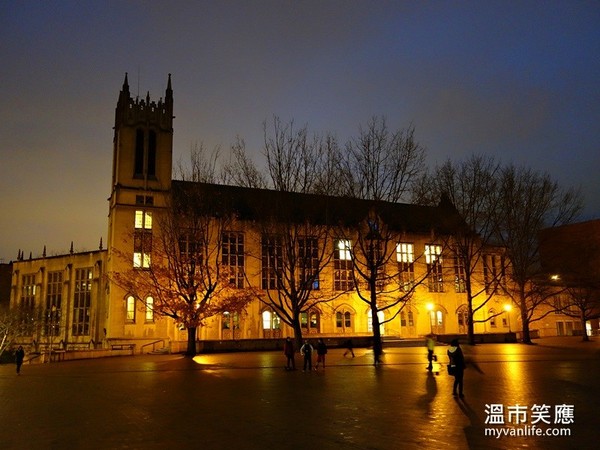

After lingering in the reading room for a long time, we found it hard to leave. When night fully fell and we stepped out of the library, the dazzling night view of Red Square left us spellbound. The square was alive with moving shadows, the dim yellow lights spilling across the ground like liquid mercury, while the dark eaves above still held a hint of blue in the fading light… “In books, there are houses of gold”—this is the best interpretation. To pursue knowledge in such a magnificent library, to immerse oneself in literature, also subtly elevates one’s aesthetic sensibility.
Suzzallo and Allen Library
https://www.lib.washington.edu/suzzallo
Papa Seahorse
A Gemini man with an air sign personality, he worked as a senior marketing and PR executive for a multinational corporation before the age of 45; after 45, he moved to Canada. Alongside his teenage sons, he plays the role of a father amidst the foreign springs of cherry blossoms, summers of sunshine, autumns of maple leaves, winters of rain and snow, while also documenting his observations of Vancouver.
Blog:Vancouver Laughs my.van.lifeFan Page:Papa Seahorse’s Vancouver Diary
Work and school are so boring, I really want to travel!
Download the “ETtoday News Cloud APP” and take a keyboard trip with us →
iOS:https://goo.gl/rmIDdx
Android:https://goo.gl/XPe8Uj
Share
This article is published by HowToTrip. Sharing and reposting are welcome — please credit the source.
Article URL: https://www.howtotrip.net/views-8452
Related Articles
- Shaoxing's "Grandpa Gourd" hangs the gourds back up: "If there are too many people, we'll interact less — just take a quick look from afar"
- Chinese authorities announce "reciprocal adjustment" to Japan visa fees — single-entry visa jumps from 2,250 to 16,750 yen!
- The "health stones" carried by a traveler were found to have radiation levels exceeding safety limits by a thousand times, potentially endangering fellow passengers on the same flight. Customs issues warning!
- Shenzhen Airport Issues Late-Night Notice: Unidentified Aerial Object Detected, Causing Widespread Flight Delays!
- “They only said it cost money after I opened the box and washed it!” 200g of grapes sold for 60 yuan on a high-speed train—12306 responds!
- Can't buy an airline ticket? Denied exit? Blocked from boarding? A large number of Chinese tourists have mysteriously become "discredited individuals"
- Adverse weather and economic fluctuations impact Colombia's coffee market
- Beach bathing area responds to 2 yuan/30 seconds fee for freshwater foot rinsing: Clearly priced!
- Taking off with an improperly closed cabin door? Wing malfunction? Multiple flights made emergency returns mid-journey!
- Experience the gifts of nature! A countdown of the world’s ten most stunning coastlines