Do you really understand what a low-cost carrier is? Read this to break through the misconceptions.
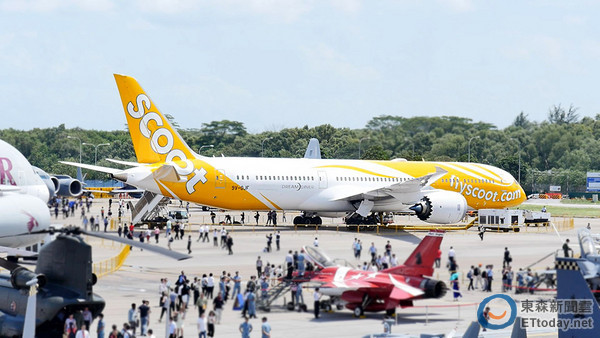
▲ Scoot operates the latest Boeing 787 aircraft. (Photo / Credit: Xie Tingting)
Text / Excerpted from"16 Smart Ways to Travel Abroad", Jimengfang
The English term for a low-cost airline isLow-cost Carrier(often abbreviated as LCC; other terms include Low-cost Airline or Budget Airline). It refers to an airline that reduces the range of services offered in order to lower its operating costs compared to traditional airlines, but the Chinese translation as “廉价航空” (literally “cheap airline”) can easily lead to misunderstandings.First, the word “cheap” may mislead people into thinking that all the services provided are discounted, including flight safety; second, it may also give the impression that ticket prices are always low when in fact, the airline’s operational costs are low, but the ticket prices are only cheap under certain conditions.
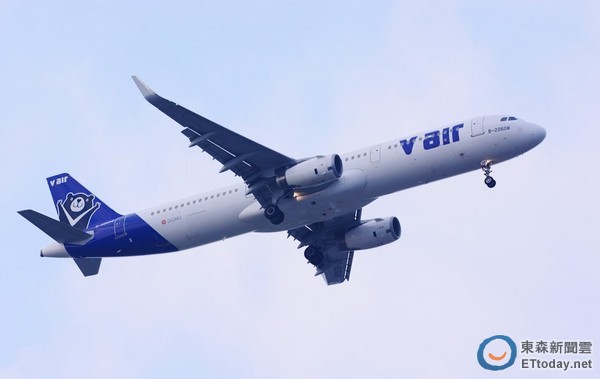
▲ The core value of low-cost carriers is user-pays — you only pay for what you use. (Photo / Provided by V Air, stock photo, schematic of a low-cost carrier)
A better measure would be cost-performance ratio (C/P value), and a fair comparison requires comparing similar things. Traditional airlines offer all-inclusive services, meaning that in addition to the ticket, they include free checked baggage, free meals, and various other services, regardless of whether passengers actually use them — one price covers everything. If you don’t check any luggage or don’t want a meal, you can’t get a refund.
But low-cost carriers break down the all-inclusive service and sell items separately, with the core concept being user-pays (you only pay extra for what you need).Their core product is the transportation service: getting passengers from point A to point B. If you want checked baggage, you pay extra; if you want a meal, you pay extra; if you want water, you pay extra. So, to put it simply, a low-cost carrier is like ordering from a Western restaurant where you only get à la carte main courses — the main course is naturally cheaper than a set meal, but there are no side salads, soup, bread, desserts, or fruit. If you want those extras, you have to pay more. As for flight safety, low-cost carriers meet the same standards as traditional airlines.
Low-cost carrier ticket prices are variable. Sometimes, for a simple round trip between two destinations, the price of a low-cost carrier ticket might even be higher than that of a traditional airline; however, if purchased during a promotion, you might even find tickets for 0 or 1 yuan (additional fees such as fuel surcharges, airport taxes, and war risk insurance apply).
Author of this articleHsu Tai-jung
Teaches tourism English at the Department of Foreign Languages and Literatures, National Chung Hsing University. Hosts a weekly “Travel English” segment on Taipei Broadcasting. Also a professional international tour guide, with 23 years of travel experience across five continents. In 2015, published “16 Smart Ways to Travel Abroad,” which topped multiple bestseller lists and was the best-selling travel book of the year at Eslite Bookstore.
Share
This article is published by HowToTrip. Sharing and reposting are welcome — please credit the source.
Article URL: https://www.howtotrip.net/views-8256
Related Articles
- Shaoxing's "Grandpa Gourd" hangs the gourds back up: "If there are too many people, we'll interact less — just take a quick look from afar"
- Chinese authorities announce "reciprocal adjustment" to Japan visa fees — single-entry visa jumps from 2,250 to 16,750 yen!
- The "health stones" carried by a traveler were found to have radiation levels exceeding safety limits by a thousand times, potentially endangering fellow passengers on the same flight. Customs issues warning!
- Shenzhen Airport Issues Late-Night Notice: Unidentified Aerial Object Detected, Causing Widespread Flight Delays!
- “They only said it cost money after I opened the box and washed it!” 200g of grapes sold for 60 yuan on a high-speed train—12306 responds!
- Can't buy an airline ticket? Denied exit? Blocked from boarding? A large number of Chinese tourists have mysteriously become "discredited individuals"
- Adverse weather and economic fluctuations impact Colombia's coffee market
- Beach bathing area responds to 2 yuan/30 seconds fee for freshwater foot rinsing: Clearly priced!
- Taking off with an improperly closed cabin door? Wing malfunction? Multiple flights made emergency returns mid-journey!
- Experience the gifts of nature! A countdown of the world’s ten most stunning coastlines