Ultimate "Travel Disruption Insurance" Cheat Sheet – Stop Yelling at Ground Staff
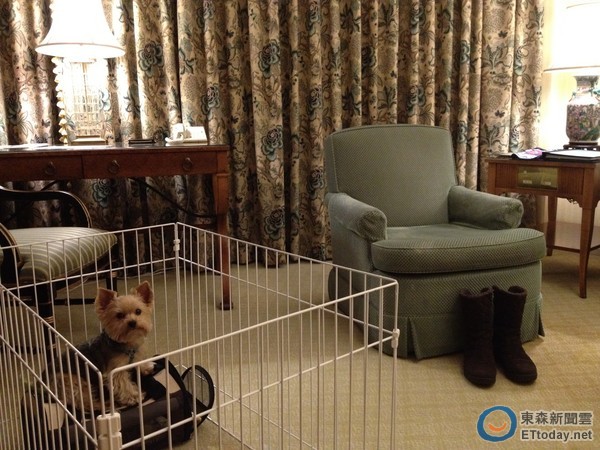
▲ Instead of losing your temper at the airport, consider checking into a comfortable hotel and waiting for your next flight in peace. After learning her flight was delayed to the next day, Megan checked in at Chinzanso, one of the few pet-friendly hotels in Tokyo where she stayed with her dog, Doddo. The accommodation costs were reimbursed through her travel disruption insurance.
Text and photos by Megan Ku
Do you recall how, during typhoon season, TV news often reports, 'Due to typhoon cancellations, hundreds of passengers are stranded at the airport, fuming with anger, shouting and cursing ground staff...' In such situations, no matter how much you berate the staff, the thunderstorms preventing takeoff won’t clear up instantly. Instead, the best course of action is to calm down, think about grabbing a good meal or finding a comfortable place to wait for your next flight.
Megan, who loves traveling with her dog, experienced flight delays three times out of five trips to Japan with her pet. The first delay was due to the captain allegedly having a fever—rumors also suggested a mechanical issue—pushing the flight to the next day. The second and third delays occurred because the airline oversold seats, forcing some passengers to wait for the next available flight. Megan never panicked or shouted for an impossible seat. Instead, she calmly left the airport, used her 'travel disruption insurance' to stay at a nice hotel, and waited patiently for her next flight.
'Travel disruption insurance' is a component of 'travel insurance.' Many people don’t realize that when they swipe their credit card to buy a flight ticket or pay for a tour, they often receive free 'travel insurance' from the credit card company.
International travel insurance can be divided into two categories based on how premiums are paid. The first is free.If you purchase a full-price flight ticket or over 80% of a tour package with a credit card, the card issuer will provide complimentary insurance. However, this type usually has limited coverage and stricter conditions—for example, the ticket or tour cost must exceed a certain amount to qualify.The second type requires payment.This involves buying comprehensive travel insurance directly from an insurer, which may include flight safety insurance, accident insurance, medical insurance, and disruption insurance.
When we see credit card companies offering travel insurance worth tens or even hundreds of millions, it usually refers to flight safety insurance that only pays out to beneficiaries if the plane crashes. Since you won’t benefit from this yourself, Megan doesn’t really care about the payout amount. Instead, she focuses more onwhether the policy includes 'accident insurance' and 'medical insurance,'the two most critical components.
Most credit card-provided 'accident insurance' only covers incidents involving public transportation. If you’re traveling independently, using a self-drive car or joining a local private tour, it won’t apply. Additionally, you might fall ill during your trip—such as catching a cold that turns into pneumonia or suffering severe dehydration from gastroenteritis. These fall under 'medical insurance,' which is typically not covered by free travel insurance. During her round-the-world trip, Megan witnessed an elderly man suffering a heart attack on a cruise ship crossing the Pacific. The ship had to change course, and he was evacuated via helicopter and small planes to A-Dak Island in the Aleutian Islands, then transferred to Alaska. The total cost amounted to NT$12 million, whichfalls under medical insurance and emergency medical evacuation—both excluded from free travel insurance.
Becausewhen you purchase a full-price flight ticket or over 80% of a tour package with a credit card (sometimes with a minimum spending requirement—if you’re flying budget airlines or purchasing very cheap tickets, always check in advance), the credit card company provides travel insurance that includes:

Travel disruption insurance covers many scenarios, such as flight delays, baggage delays/loss, hijacking (scary, right?), itinerary shortening, and travel document replacement.In cases of flight delays—whether due to weather (typhoons, earthquakes, or volcanic eruptions) or human factors (captain’s illness, aircraft malfunction, or emergency diversions due to sick passengers causing missed connections)—delays exceeding a certain duration (usually four to six hours) are eligible for claims under disruption insurance. However, some insurers do not cover delays caused by natural disasters or human-related issues, so always clarify before purchasing. (Natural disasters include typhoons, earthquakes, or volcanic eruptions; human-related issues include war, terrorist attacks, or airport strikes.)
What insurance have you actually purchased? Before traveling, always review the details—better safe than sorry. The essence of insurance is the peace of mind that comes from being prepared. Below, we’ll focus on flight delay compensation under travel disruption insurance.
Flight delay insurance is divided into two types based on claims: reimbursement-based or fixed-amount payouts.Most free travel insurance is reimbursement-based, meaning you must submit receipts to the insurer linked to your credit card, with payouts ranging from NT$7,000 to NT$20,000. Paid travel insurance often offers fixed-amount payouts—typically around NT$4,500 per delay. For connecting flights, the number of claims depends on the insurer’s policy.
How does it work in practice? Megan shares her real-life experience.
Before traveling, three steps are crucial:
First, when booking your flight, confirm which credit card offers the most comprehensive travel insurance. Paying in cash or buying tickets for friends won’t qualify you for free insurance.
Second, for any gaps, consider purchasing additional comprehensive travel insurance. If you plan high-risk activities abroad—like diving, skiing, or skydiving—opt for higher accident and medical coverage limits.
Third, use your smartphone to save digital copies of insurance policies and keep the insurer’s contact number as a note in your passport for emergencies.
Abroad, if your flight delay might exceed four to six hours—or even result in an overnight stay—stay calm and follow these three steps:
First, request a 'delay certificate' from the airline. It should state that your rescheduled flight is delayed by at least four to six hours compared to your original one.
Second, after the scheduled departure time, any additional expenses for food, clothing, accommodation, transportation, etc., caused by flight delays, must be documented with receipts. Even if it’s just buying a glass of milk, you need a receipt to claim insurance compensation.
Third, after returning to your home country, you can submit the original copies of the above receipts to the insurance company to claim reimbursement for actual expenses. For fixed-amount compensation policies, simply providing a flight delay certificate is enough to apply for a set payout.
A flight delay can be frustrating enough—don’t make it worse by joining an angry mob of passengers shouting at the airport. Megan suggests reviewing the reimbursable items covered under her travel inconvenience insurance to see what she can utilize. Typically, these include food, clothing, accommodation, and transportation.
Food:During the period from when your originally scheduled flight was supposed to depart until you actually board your new flight, necessary meals can be covered by the insurance. Some insurers set a maximum limit per meal, so pay attention to that. Alcoholic beverages or items that don’t seem like regular meals—such as snacks, desserts, or souvenirs—may cause disputes during claims, so it’s best to avoid them.
Clothing:If you’ve already checked in your luggage when the delay occurs, you may need essential clothing and toiletries during the wait. Receipts for these can also be submitted to the insurer for reimbursement.
Accommodation:Sometimes, delayed flights won’t depart until the next day—or even several days later (like during the Iceland volcanic eruption that disrupted European air traffic). If the delay is due to the airline’s scheduling issues, responsible carriers will typically offer complimentary accommodation. Recently, we often hear about budget airlines overbooking flights, leaving passengers delayed and without proper support. In such cases, you can use your travel inconvenience insurance to book a comfortable hotel and wait for your next flight with peace of mind.
Transportation:Due to the flight delay, you might need to take transportation—including taxis (remember to get receipts!)—to and from the airport and your temporary lodging. These costs can also be claimed. International call charges incurred to handle urgent matters may also be reimbursed.
Many travelers, used to joining group tours, are usually well taken care of by responsible tour guides even when flights are delayed, so they rarely use their travel insurance. Therefore, when traveling independently and unexpected situations arise, they’re often at a loss. After reading Megan’s experience, hopefully travelers will better understand their rights, prepare their insurance adequately, and ensure every part of their journey goes smoothly and safely.
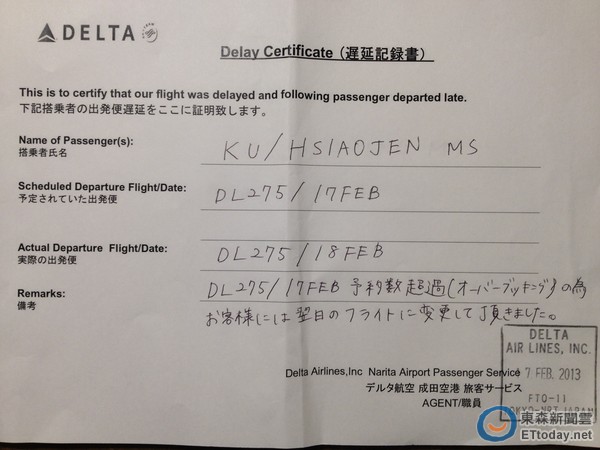
▲ When obtaining a flight delay certificate, confirm that the delay duration meets your insurer’s requirements. This certificate states that the actual departure was one full day (24 hours) later than scheduled—an exceedance of the 4-hour limit.
Share
This article is published by HowToTrip. Sharing and reposting are welcome — please credit the source.
Article URL: https://www.howtotrip.net/views-7709
Related Articles
- Shaoxing's "Grandpa Gourd" hangs the gourds back up: "If there are too many people, we'll interact less — just take a quick look from afar"
- Chinese authorities announce "reciprocal adjustment" to Japan visa fees — single-entry visa jumps from 2,250 to 16,750 yen!
- The "health stones" carried by a traveler were found to have radiation levels exceeding safety limits by a thousand times, potentially endangering fellow passengers on the same flight. Customs issues warning!
- Shenzhen Airport Issues Late-Night Notice: Unidentified Aerial Object Detected, Causing Widespread Flight Delays!
- “They only said it cost money after I opened the box and washed it!” 200g of grapes sold for 60 yuan on a high-speed train—12306 responds!
- Can't buy an airline ticket? Denied exit? Blocked from boarding? A large number of Chinese tourists have mysteriously become "discredited individuals"
- Adverse weather and economic fluctuations impact Colombia's coffee market
- Beach bathing area responds to 2 yuan/30 seconds fee for freshwater foot rinsing: Clearly priced!
- Taking off with an improperly closed cabin door? Wing malfunction? Multiple flights made emergency returns mid-journey!
- Experience the gifts of nature! A countdown of the world’s ten most stunning coastlines