Hokkaido Biei & Furano – Summer Travel Transportation Info Cheat Sheet!
Text & Photos by /Annie
I’ve recently been gathering travel info related to the Biei & Furano area. Two years ago, during my first trip to Biei, I did quite a bit of prep work. This time, I figured I’d organize some of that relevant information again, just in case I forget everything when I go looking for it again in my old age.
Back then, because I had the JR National Pass and was traveling alone, my main modes of transportation were trains, buses, and walking. The information in this article focuses mainly on public transport. Of course, driving around Hokkaido in the summer might be more convenient. Using my one-day Biei & Furano itinerary from back then as an example, since I stayed in Biei the day before, I didn’t have to spend time traveling from Sapporo.
Biei → (local train) → Naka-Furano → (walking) → Farm Tomita
Farm Tomita → (local train) → Mimanai
Mimanai → (Furano·Biei Slow Train) → Biei
Biei → Twinkle Bus Biei Line (Hill Route)
(1) About Transportation Tickets
First, let me introduce the Furano & Biei Area Pass issued by JR Hokkaido (pictured below). If you’re traveling from central Sapporo to the Furano & Biei area, it’s highly recommended to use this pass.
%JRA->(Furano·Biei Slow Train) -> Asahikawa
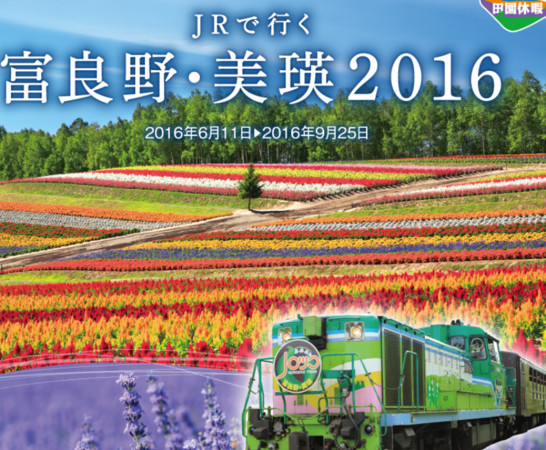
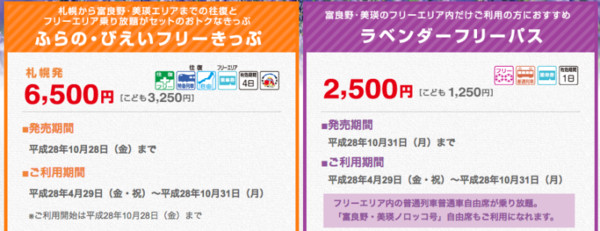
▲ This year’s tickets are divided into the Furano & Biei Set Ticket (left) and (2) the Lavender Pass (right)
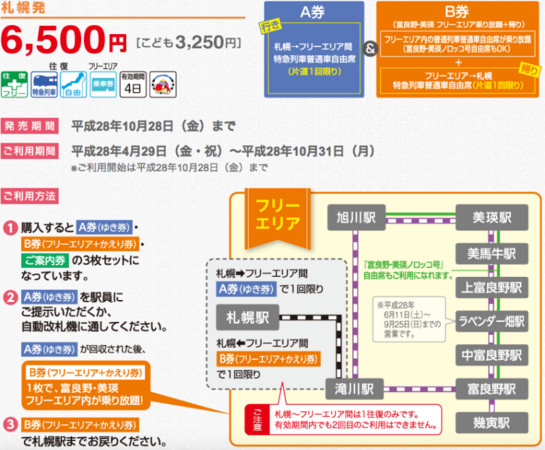
▲ (1) Furano & Biei Set Ticket
Validity: 4 days for 6,500 yen; Valid period: 2016/04/29 ~ 2016/10/31
Coverage: Round-trip on limited express trains between Sapporo and Takikawa (non-reserved seats), plus flexible use between Asahikawa and Furano
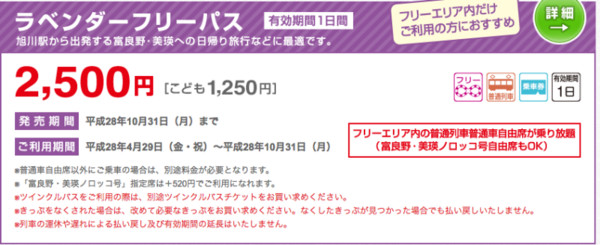
▲ (2) Lavender Pass
Validity: 1 day for 2,500 yen; Valid period: 2016/04/29 ~ 2016/10/31
Coverage: [Details omitted]
(2) About Getting to Attractions:
1. How to Get to Farm Tomita
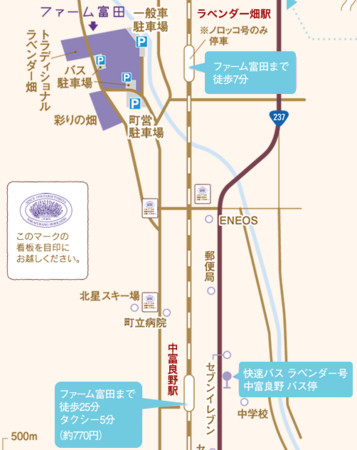
Farm Tomita, famous for its lavender, is closest to the seasonal JR station “Lavender Batake Station,” which is only available in summer and early autumn. The only train that stops here is the “Furano·Biei Slow Train,” which runs only in summer and early autumn. If you don’t catch the Furano·Biei Slow Train that stops at Lavender Batake Station, you’ll have to get off at the next station and walk for about 25 minutes. Alternatively, you can take a taxi from there, which takes about five minutes and costs around 770 yen.
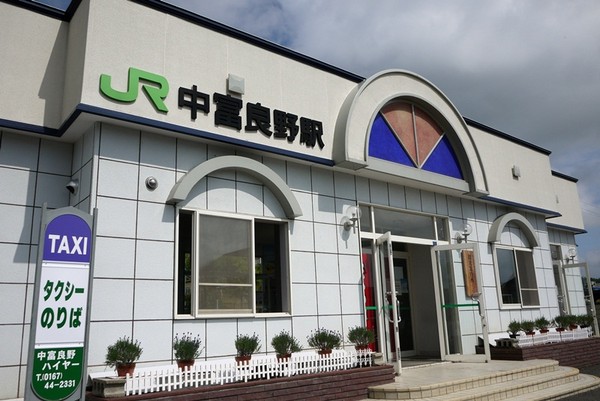
There’s a small tourist information center inside Naka-Furano Station. If you’re not sure how to get to Farm Tomita, the friendly staff there will gladly show you the way. Of course, if you don’t want to walk for 25 minutes in the scorching heat, you might consider taking a taxi from here. It’s a five-minute ride for about 770 yen.
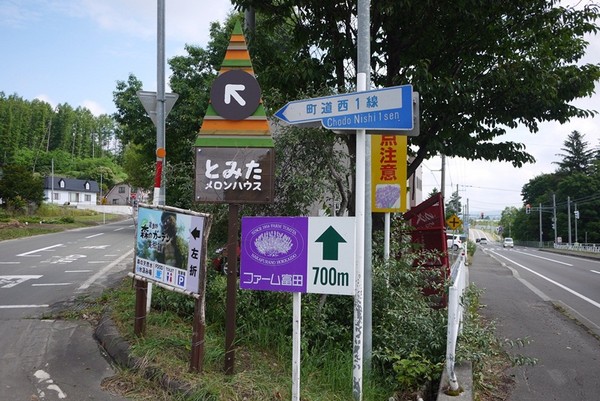
That time, I walked there and took a taxi back from Farm Tomita to Naka-Furano Station because it was close to noon and extremely hot. Trust me, Hokkaido in the summer is really hot. When you’re drenched in sweat from walking and see tour buses full of tourists speeding by, you’ll seriously consider flagging down a taxi right away.
2. How to Get to Blue Pond
The most convenient way to get to Blue Pond is by car. If you’re not driving, you can take a Dohoku Bus from Asahikawa or Biei, or choose the Twinkle Bus Biei Lavender Line.
(1) Dohoku Bus No. 39
You can board at either Asahikawa or Biei and get off at “Shirogane Blue Pond Entrance.” The ride from Asahikawa to Blue Pond takes about 80 minutes, and from Biei to Blue Pond takes about 30 minutes.
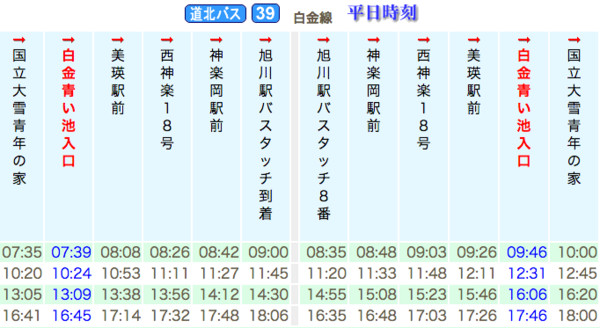
(2) Dohoku Bus No. 42
This bus only runs once a day — as you can probably tell, it’s highly unlikely you’ll be able to catch it.
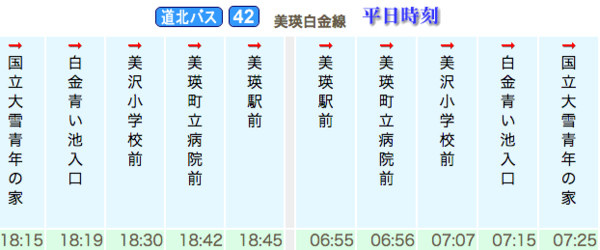
(3) Sightseeing Buses
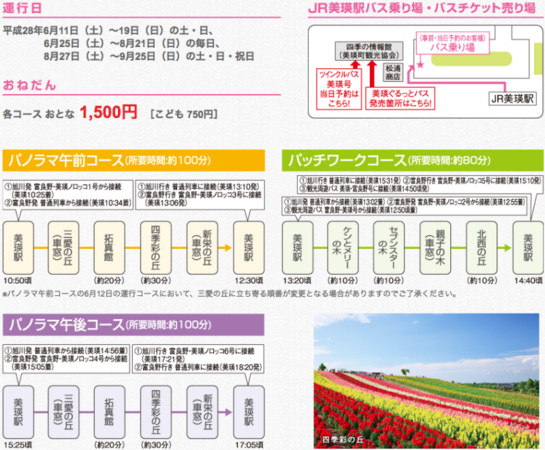
1. Biei Departure ~ Twinkle Bus Biei
For those traveling independently without a car and wishing to visit Biei’s famous sights, the Twinkle Bus is highly recommended. There are three routes to choose from, each priced at 1,500 yen. Most of the scenic spots are very photogenic, so it’s worth noting that reservations are required in advance for the Twinkle Bus.
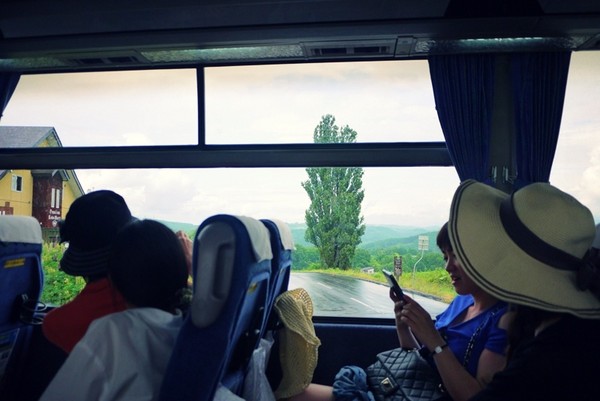
The Twinkle Bus operates similarly to regular sightseeing buses, with conductors on board who introduce each attraction one by one. When passing by certain well-known sights, the driver will slow down to allow passengers to take photos to their heart’s content. For travelers relying mainly on public transport, the Twinkle Bus is a great choice.
2. Furano Departure ~ Sightseeing Loop Bus Furano
A sightseeing bus operating in the Furano area, the Furano Loop Bus, like the Twinkle Bus, requires advance reservations. The fare is 3,000 yen.
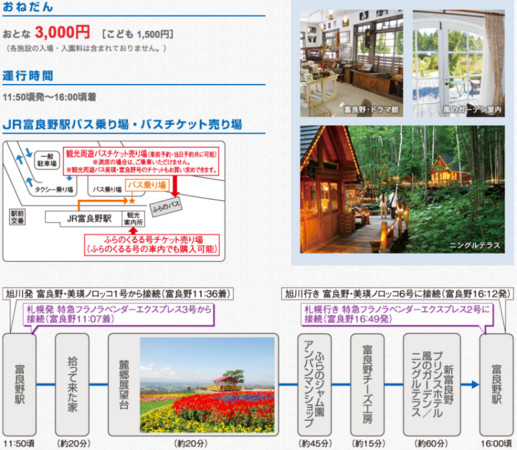
3. Biei ~ Furano<->Furano ~ Sightseeing Loop Bus Biei·Furano
A sightseeing bus running between Biei and Furano, priced at 2,500 yen. The route is relatively long and covers different areas, making it a bit more diverse compared to others.
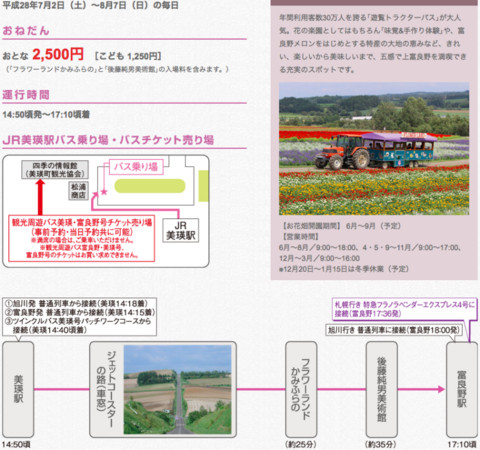
4. All-You-Can-Ride Bus “Kururu”
A summer-only sightseeing bus centered around JR Furano Station, available as either a one-day or two-day pass.
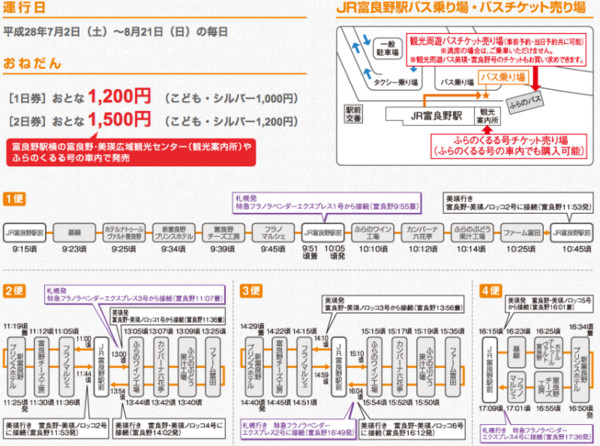
(4) Special Trains
1. Furano Lavender Train
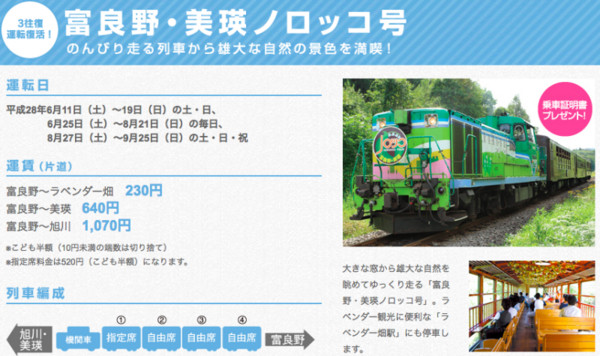
A special train that only runs during the summer.
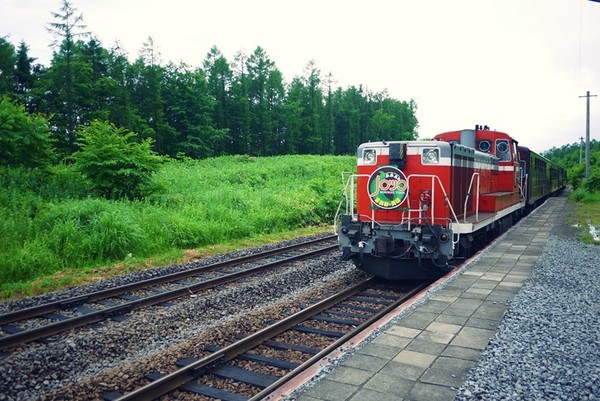
This special train’s most distinctive feature is that it stops closest to the Furano Lavender Farm.
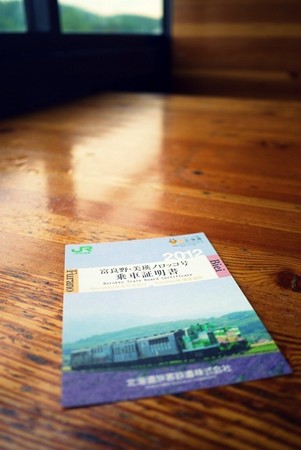
▲ Like many special trains, you’ll receive a commemorative ride certificate upon boarding.
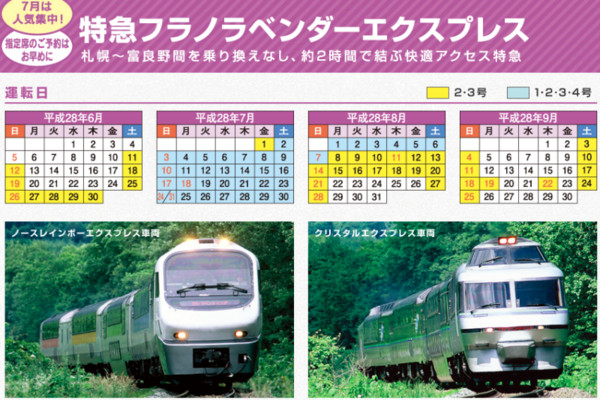
2. Limited Express Furano Lavender
Share
This article is published by HowToTrip. Sharing and reposting are welcome — please credit the source.
Article URL: https://www.howtotrip.net/views-6960
Related Articles
- Shaoxing's "Grandpa Gourd" hangs the gourds back up: "If there are too many people, we'll interact less — just take a quick look from afar"
- Chinese authorities announce "reciprocal adjustment" to Japan visa fees — single-entry visa jumps from 2,250 to 16,750 yen!
- The "health stones" carried by a traveler were found to have radiation levels exceeding safety limits by a thousand times, potentially endangering fellow passengers on the same flight. Customs issues warning!
- Shenzhen Airport Issues Late-Night Notice: Unidentified Aerial Object Detected, Causing Widespread Flight Delays!
- “They only said it cost money after I opened the box and washed it!” 200g of grapes sold for 60 yuan on a high-speed train—12306 responds!
- Can't buy an airline ticket? Denied exit? Blocked from boarding? A large number of Chinese tourists have mysteriously become "discredited individuals"
- Adverse weather and economic fluctuations impact Colombia's coffee market
- Beach bathing area responds to 2 yuan/30 seconds fee for freshwater foot rinsing: Clearly priced!
- Taking off with an improperly closed cabin door? Wing malfunction? Multiple flights made emergency returns mid-journey!
- Experience the gifts of nature! A countdown of the world’s ten most stunning coastlines