Tide-dependent alert: Visiting Jianguo Islet requires perfect timing — a submerged path emerges like Moses parting the Red Sea

▲ Visiting Jianguo Islet is "tide-dependent." (Photo / Reporter Ji Xiangru)
Reporter Li Yilin / Kinmen report
Kinmen is full of military heritage charm, but beyond the historic artillery forts, there's one must-see spectacle: "Jianguo Islet." Many have heard the biblical story of Moses parting the Red Sea, and reaching Jianguo Islet is somewhat similar — when the tide recedes, a stone path "emerges," allowing visitors to cross the intertidal zone and step onto the island.
Jianguo Islet is located at the mouth of the Wujian River in Kincheng Township, covering an area of about 500 square meters. It served as a strategic outpost connecting the southwestern coast of Kinmen Island and Lesser Kinmen, named for its symbolism of "a pillar of achievement."Locals also call Jianguo Islet "u蠓璧骸保?because during the Japanese occupation, wild boars would often sneak onto the islet to rest, making it their hiding place. After 1949, the government began constructing defensive fortifications to prevent Communist forces from entering through this area.
The islet still retains some historical military structures. (Image / Reporter Ji Xiangru)
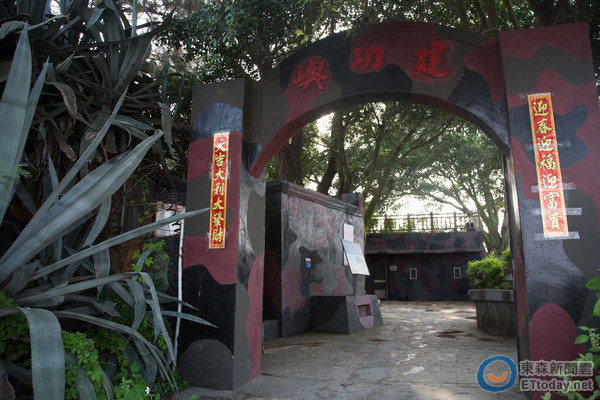
However, as cross-strait relations eased and military forces were reduced, Jianguo Islet is no longer garrisoned. It has now become a tourist attraction. The entrance to Jianguo Islet is rather unassuming, located on the slope opposite the Yanping Prince Shrine. If visitors aren't paying attention, they can easily miss it. Descend the slope, and you'll first see a stretch of beach and anti-landing stakes, then look to the left front to spot Jianguo Islet.
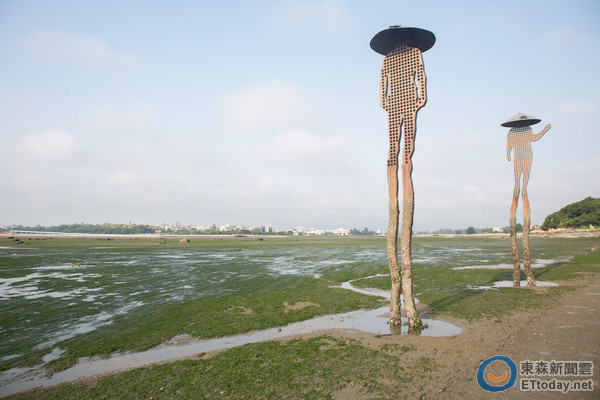
At high tide, the stone path connecting Jianguo Islet to Kinmen is completely submerged, making the islet appear like a solitary island in the sea.When the tide recedes, the stone path "emerges," and along the way, you can observe the wetland ecology of the intertidal zone and various seabirds. With luck, you might even spot the horseshoe crab, known as a "living fossil."
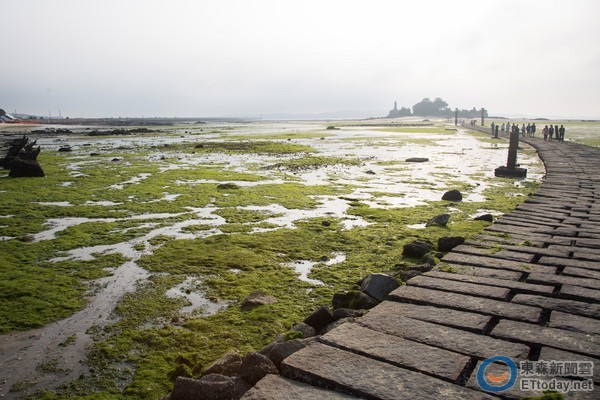
▲ The intertidal zone reveals rich marine life during low tide. (Image / Reporter Ji Xiangru)

▲ Horseshoe crabs are usually seen in pairs, hence nicknamed "couple fish." (Image / Reporter Ji Xiangru)
Upon reaching Jianguo Islet, visitors can seea 27-ton statue of Zheng Chenggong (Koxinga), a gift from Nan'an City, Fujian Province in 2009, carved from Quanzhou white granite. The battle robe of Zheng Chenggong features intricate carvings of clouds, dragons, and landscapes.It’s said that the direction he gazes toward is his hometown, Nan'an.
If visitors walk toward the seaside side, they’ll noticethe rocks are covered with fragments of glass — these were actually part of the defenses against Communist "frogmen" (special forces) attempting to land during the past.Later, the glass eroded, and the Kinmen government removed these hazardous materials to promote tourism. Still, the remaining traces make it easy to imagine how tense the cross-strait standoff once was.

▲ The massive statue of Zheng Chenggong on the islet looks imposing. (Image / Reporter Ji Xiangru)

▲ A closer look reveals small bits of glass still embedded in the concrete. (Image / Reporter Ji Xiangru)
Jianguo Islet is one of the best spots to watch the sunset in Kinmen — a must-visit if you travel there. Be sure to check the daily tide schedule in advance, as timing varies slightly, to avoid disappointment or being stranded on the islet. Also, be cautious of the slippery and muddy stone path to prevent falls.
Another popular sunset spot in Kinmen is Cihu Lake in the northwest, which is also the best place for winter migratory waterfowl viewing. It’s reportedthat Cihu Lake is connected to Shuangli Lake and was originally part of an inland sea. In the past, troops built a 550-meter-long Citi Embankment between Nanshan and Huxia, creating Kinmen’s largest saltwater lake,which remains connected to the sea.
On the western side of Cihu Lake liesa triangular fort, with fortifications at each of its three points. The surrounding area features bunkers nicknamed "underground cities," including barracks for soldiers. Though the triangular fort is now vacant due to eased cross-strait tensions and serves as a cultural landscape for bird conservation, remnants inside — such as slogans like "Safety Noncommissioned Officer Code" and "Shooting Discipline" — offer a glimpse into the lives of soldiers stationed there.

▲ The triangular fort's three-cornered design earns it the nickname "Triangle Castle." (Image / Reporter Ji Xiangru)


▲ Inside the "Triangle Castle," old slogans from past decades remain on the walls. (Image / Reporter Ji Xiangru)

Share
This article is published by HowToTrip. Sharing and reposting are welcome — please credit the source.
Article URL: https://www.howtotrip.net/views-6769
Related Articles
- Shaoxing's "Grandpa Gourd" hangs the gourds back up: "If there are too many people, we'll interact less — just take a quick look from afar"
- Chinese authorities announce "reciprocal adjustment" to Japan visa fees — single-entry visa jumps from 2,250 to 16,750 yen!
- The "health stones" carried by a traveler were found to have radiation levels exceeding safety limits by a thousand times, potentially endangering fellow passengers on the same flight. Customs issues warning!
- Shenzhen Airport Issues Late-Night Notice: Unidentified Aerial Object Detected, Causing Widespread Flight Delays!
- “They only said it cost money after I opened the box and washed it!” 200g of grapes sold for 60 yuan on a high-speed train—12306 responds!
- Can't buy an airline ticket? Denied exit? Blocked from boarding? A large number of Chinese tourists have mysteriously become "discredited individuals"
- Adverse weather and economic fluctuations impact Colombia's coffee market
- Beach bathing area responds to 2 yuan/30 seconds fee for freshwater foot rinsing: Clearly priced!
- Taking off with an improperly closed cabin door? Wing malfunction? Multiple flights made emergency returns mid-journey!
- Experience the gifts of nature! A countdown of the world’s ten most stunning coastlines