Is "More Legroom" Always Better for Airplane Seats? 12 Seats to Avoid
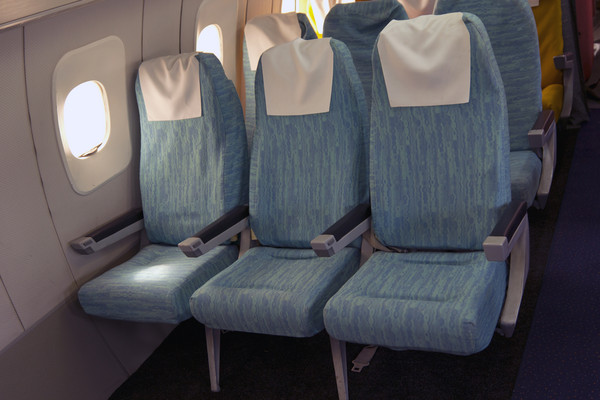
▲Airplane seat (Photo/Dazi/Illustration)
By Rita
Many people assume that the golden rule for choosing an airplane seat is "more legroom," but they often overlook other common issues—like seats that don’t recline, being too close to the restroom with unpleasant odors, and more. Smartertravel has compiled a list ofairplane seats you should avoid, and avoiding these seats next time you book could significantly boost your in-flight comfort.
1. Entertainment Box Seats
Long-haul flights usually have personal screens at each seat for entertainment, but the power boxes—dubbed "entertainment boxes"—are located under certain seats. You should avoid sitting directly behind these, as they can eat into both your luggage space and legroom.
2. Seats Other Than the Last Row
If you’re sensitive to being kicked in the back during rest, the only safe bet is to choose a seat in the last row.
3. Seats Near the Exit
If you're only looking for maximum legroom, exit-row seats seem great. But consider this: where do you put your carry-on? Usually just on the overhead bin. Also, without a tray table in front (the tray is typically built into the armrest), the seat width is reduced. Plus, air near exits tends to be colder.
4. Broken Seats
Some broken seats may stay fixed at an odd angle, or have faulty headphones or screens—that’s definitely not ideal.
5. Seats Near the Restroom
Other passengers walking to and from the restroom can disrupt your sleep, and then there's also the odor issue.
6. Gradually Shrinking Seats
Some planes have sections toward the back with only two seats per row, which might sound nice—but actually, those seats don’t recline properly due to a gap between the seat and the wall.
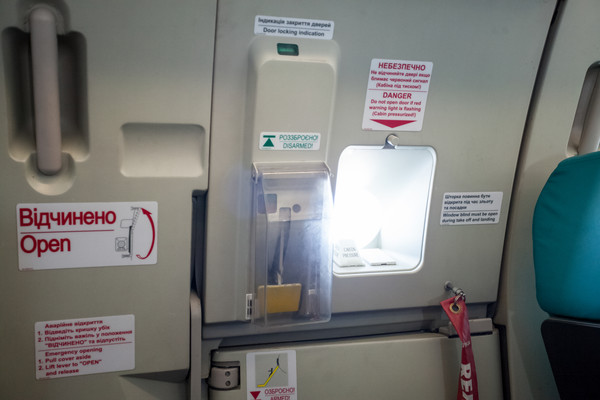
▲Seats near emergency exits have pros and cons (Photo/Dazi/Illustration)
7. Non-Full Window Seats
Some window seats give you a full view of the window, while others are shared between adjacent seats. These can cause complications—some passengers like to open the window for the view, while others prefer it closed to avoid UV rays, leading to awkward negotiations.
8. The Last Row
Common problems with the last row include being close to the restroom, non-reclining seats, and longer disembarkation times.
9. Transition Zones with Different Seat Configurations
In certain areas of the plane, the seating configuration may change—for example, from four seats per row to three, or from three to two. These zones can impact your legroom.
10. Seats in Front of Emergency Exits
These seats usually have limited recline.
11. Middle Seats
Being stuck in the middle is never comfortable, and the later you book, the higher the chance you’ll end up with one.
12. Partitioned Seats
Many people think that the partitioned seats in the first row are hands down the best spots in economy class, but they overlook the fact that there’s no under-seat space due to the lack of a seat in front, and having a wall right in front of you for the entire flight can actually be quite unpleasant.
Passengers have different needs when choosing seats, and the aforementioned disadvantages of these seats aren’t necessarily all negative. The best approach is to check the seat map on the airline’s official website and choose a spot where you’ll feel most comfortable.
★The image is a copyrighted photo provided exclusively to "ETtoday 东森新闻云" by 达志影像. No partial or full reproduction is permitted on any website, newspaper, or TV station without the permission of 达志影像.
Share
This article is published by HowToTrip. Sharing and reposting are welcome — please credit the source.
Article URL: https://www.howtotrip.net/views-6655
Related Articles
- Shaoxing's "Grandpa Gourd" hangs the gourds back up: "If there are too many people, we'll interact less — just take a quick look from afar"
- Chinese authorities announce "reciprocal adjustment" to Japan visa fees — single-entry visa jumps from 2,250 to 16,750 yen!
- The "health stones" carried by a traveler were found to have radiation levels exceeding safety limits by a thousand times, potentially endangering fellow passengers on the same flight. Customs issues warning!
- Shenzhen Airport Issues Late-Night Notice: Unidentified Aerial Object Detected, Causing Widespread Flight Delays!
- “They only said it cost money after I opened the box and washed it!” 200g of grapes sold for 60 yuan on a high-speed train—12306 responds!
- Can't buy an airline ticket? Denied exit? Blocked from boarding? A large number of Chinese tourists have mysteriously become "discredited individuals"
- Adverse weather and economic fluctuations impact Colombia's coffee market
- Beach bathing area responds to 2 yuan/30 seconds fee for freshwater foot rinsing: Clearly priced!
- Taking off with an improperly closed cabin door? Wing malfunction? Multiple flights made emergency returns mid-journey!
- Experience the gifts of nature! A countdown of the world’s ten most stunning coastlines