Explore Kumamoto & Experience Traditional Living in a Wooden Ryokan
Text & Photos / Joel Fukuzawa
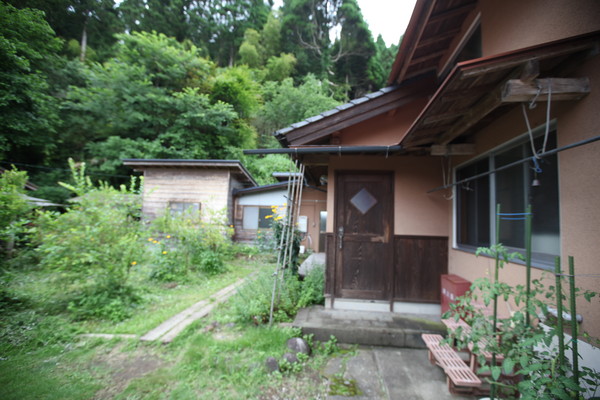
Many people have probably stayed at a ryokan or minshuku (Japanese guesthouse), whether it’s the pricey ones in Taiwan or the communal dormitory-style ones in Japan. But staying at a farm stay? That’s something both unique and refreshing. The owner of “Frogs Nearby,” Mizuhara Masazumi, worked at a rural local government office. Nineteen years ago, he and his wife purchased a plot of land in “Kokubuncho,” located at the border between Kumamoto and Oita prefectures, as a plan for their retirement life.

Nineteen years ago, opening a farm-style guesthouse wasn’t an easy task. If you thought that buying a piece of land and building a house was all it took, you’d seriously underestimate the resistance from local communities in Japan. In Japan, the more rural the area, the higher the resistance tends to be toward outsiders. If locals saw tourists constantly coming and going in their village, the more traditional residents would likely be driven crazy. So, Mizuhara, who had experience working in local government, came up with a clever solution. He placed shelves at the entrance of his farm stay, allowing villagers to freely put up their own produce for sale directly to guests staying on the property. This economic exchange, offering mutual benefit, made it an offer the villagers couldn’t refuse.
And that wasn’t all. Before officially opening for business, Mizuhara hadn’t even finalized his service or business model. So he hopped on a plane and went to Europe—where farm stays (or private lodgings) were relatively popular at the time—to conduct research. He traveled to Germany, Italy, the UK, and France, gathering inspiration from each. After his trip, he realized that the key to running a great guesthouse or farm stay isn’t copying others’ models, but extracting the essence, digesting it, and adapting it into something that plays to your own local strengths.
Back in Japan, he began reflecting on what his own strengths were—and what weaknesses he simply couldn’t overcome. He found that his farmhouse, nestled deep in the mountains, was surrounded by lush green hills, clear and sweet-flowing streams, and fresh, delicious fruits and vegetables. But he also had to contend with poor transportation (no direct bus access), lack of fresh meat or fish, and no exciting theme parks nearby.
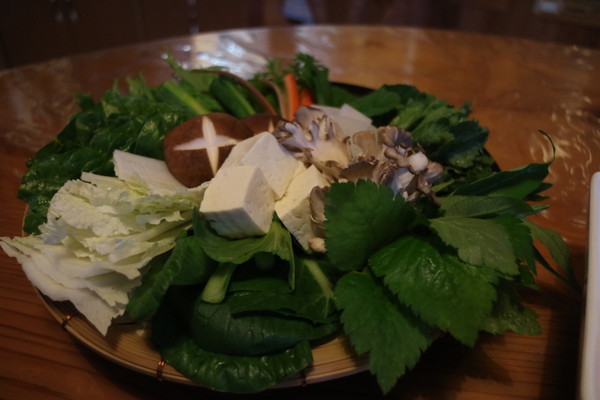
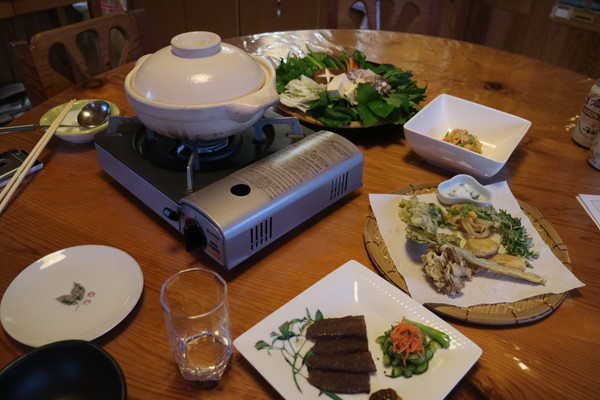
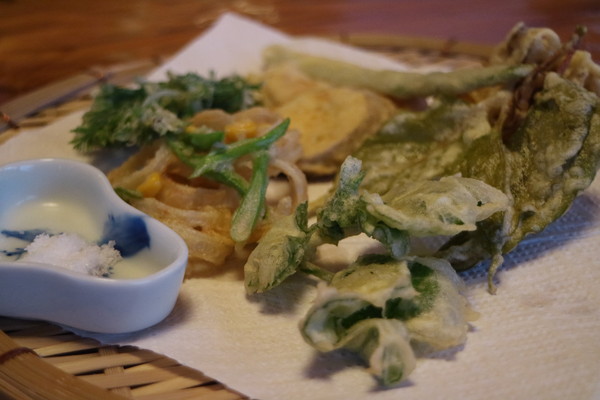
So he turned those weaknesses into strengths. At his farm stay, only self-grown vegetables and fruits are served for breakfast and dinner—yes, no fish or meat. Mizuhara’s wife humorously said, “We can’t guarantee the quality of meat or fish suppliers, and if something went wrong, I’d probably be really anxious.” But they don’t mind if meat-loving guests bring their own meat to cook hot pot. Mrs. Mizuhara’s hot pot is legendary—the broth is made from homemade miso, spices, and kelp from Hokkaido. Since the homegrown vegetables and mushrooms are naturally sweet, they don’t taste earthy when cooked. Paired with their own multigrain rice, it turns out a meat-free dinner can be incredibly delicious. Aside from hot pot, they also make tempura using vegetables and leaves picked that very day—crispy, tasty, and satisfying even without shrimp.
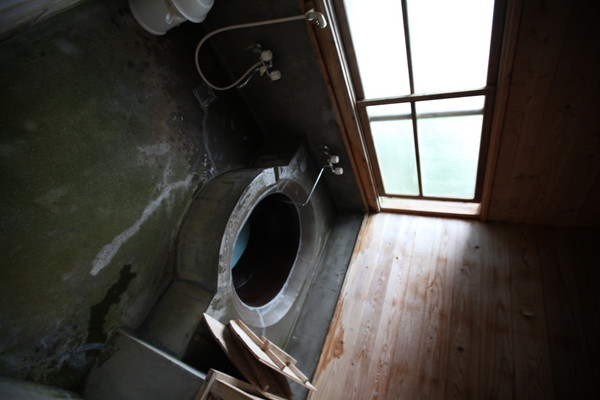
Beyond the delicious food, Mizuhara insists on keeping guests' and hosts' living spaces separate—even separating different groups of guests from one another. They currently have two guesthouses, each with its own living room, bedroom, kitchen, and bathroom. One unit can accommodate up to ten guests, but they avoid mixing guests in shared spaces. Mizuhara said that in Europe, respecting individual living space is very important. So if two separate groups come, they even eat separately. Mizuhara would rather work a bit harder than make his guests uncomfortable.
The only shared space is the bathroom. Mizuhara specially installed a traditional goemon-buro (iron tub), where guests can boil water with firewood underneath the tub to enjoy a truly authentic Japanese “onsen” (hot bath) experience. The goemon-buro is large enough for one person to fully submerge, which is very comfortable, as the water comes up to the neck. Open the window and you can enjoy views of the nearby green mountains—it’s the epitome of relaxation.
Summers here are lovely. Kids can lie in the clear mountain stream and let the rushing water flow over them, or go beetle-catching with Mizuhara at night. Mizuhara said he intentionally doesn’t put TVs in the rooms because he wants families here to truly engage in face-to-face interactions. Of course, the mobile signal here is also pretty unstable (oops). Winters here might see some snow, but it doesn’t hinder daily life or access. And winter brings a rich harvest of vegetables and fruits—plentiful ingredients for hearty, joyful meals.
At first glance, you might wonder what the rooms in Mizuhara’s farm stay are really like. But once you stay, you’ll genuinely appreciate how much thought and care the owner has put into every room, space, and detail. In contrast, many guesthouses in Taiwan try so hard to mimic foreign exteriors—but how much attention do they pay to interior details? Mizuhara once said something that struck me deeply: “If Taiwanese guesthouses don’t have any Taiwanese flavor, then why would foreigners want to stay there?” What is our “Taiwanese flavor”? Have we ever thought about it?
Frogs Nearby (さこんうえの蛙 / Sako-no-ue no Kaeru)
860-2403 Kumamoto Prefecture, Aso District, Minamikokubuncho, 4746-1
E-MAIL : sacon12@hotmail.co.jp
Share
This article is published by HowToTrip. Sharing and reposting are welcome — please credit the source.
Article URL: https://www.howtotrip.net/views-6342
Related Articles
- Shaoxing's "Grandpa Gourd" hangs the gourds back up: "If there are too many people, we'll interact less — just take a quick look from afar"
- Chinese authorities announce "reciprocal adjustment" to Japan visa fees — single-entry visa jumps from 2,250 to 16,750 yen!
- The "health stones" carried by a traveler were found to have radiation levels exceeding safety limits by a thousand times, potentially endangering fellow passengers on the same flight. Customs issues warning!
- Shenzhen Airport Issues Late-Night Notice: Unidentified Aerial Object Detected, Causing Widespread Flight Delays!
- “They only said it cost money after I opened the box and washed it!” 200g of grapes sold for 60 yuan on a high-speed train—12306 responds!
- Can't buy an airline ticket? Denied exit? Blocked from boarding? A large number of Chinese tourists have mysteriously become "discredited individuals"
- Adverse weather and economic fluctuations impact Colombia's coffee market
- Beach bathing area responds to 2 yuan/30 seconds fee for freshwater foot rinsing: Clearly priced!
- Taking off with an improperly closed cabin door? Wing malfunction? Multiple flights made emergency returns mid-journey!
- Experience the gifts of nature! A countdown of the world’s ten most stunning coastlines