"Artisan Soy Sauce" and "Aso's Sake" Hidden in Kumamoto’s Aso Takamori Old Street
Text and photos by Joel Fukuzawa
Located in Takamori Town, Aso District, Kumamoto Prefecture, this area has long been home to many captivating myths and relics due to its proximity to Takachiho, the birthplace of Japanese mythology. For example, the "Kusube Yoshimi Shrine," one of Japan’s three great descending shrines, is said to be dedicated to the fifth son of the sun goddess Amaterasu. Legend has it that as he walked along the stream, he came upon a pond inhabited by a large serpent that was troubling the villagers. The divine child drove the serpent away, allowing the residents to live in peace and prosperity.
Nearby Takamori also has a mountain called "Negoko-dake." This mountain is the oldest and easternmost of the Aso Five Peaks. In Japanese, "Negoko" sounds like "cat," and the shape of the mountain resembles an angry cat—hence its name. It has always been a challenging peak for climbers, but the highest peak, "Tengu Peak," has collapsed due to an earthquake and is currently off-limits.
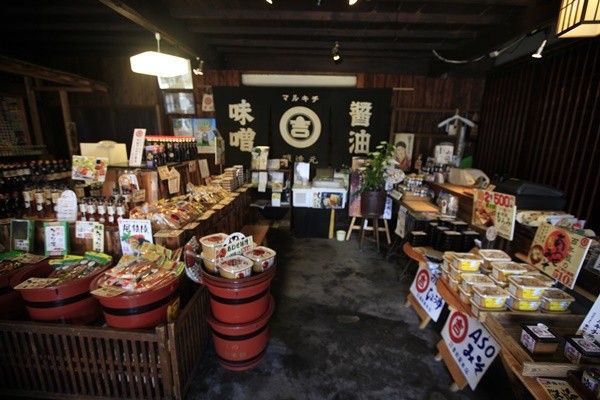
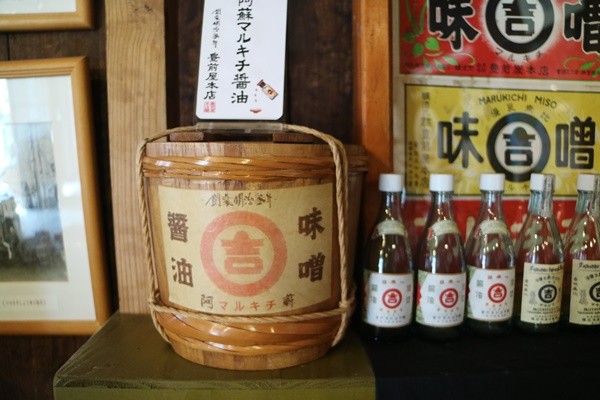
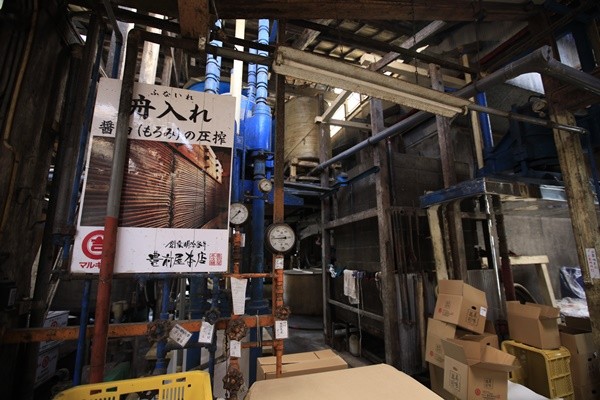
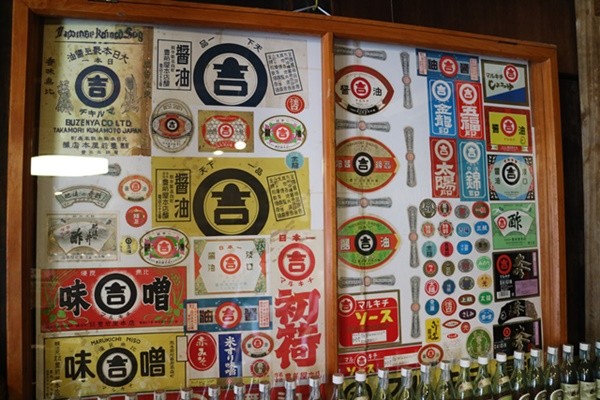
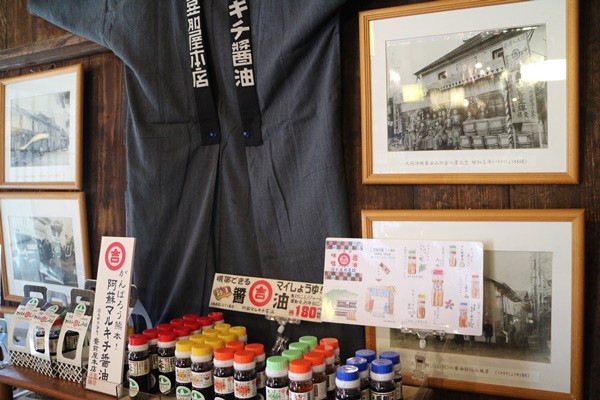
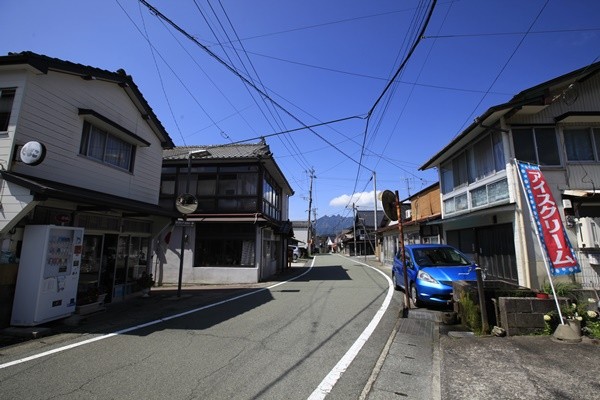
Aside from its natural scenery, there’s also the Takamori Springs Tunnel Park we introduced before—a project that was meant to bore through Negoko-dake but was halted after hitting a water source. A couple of decades ago, Takamori Town had a much larger population, and its water—crystal clear, sweet, and internationally certified as high-quality soft water—was highly prized. Many local specialties have emerged thanks to this water. For instance, in Yokomachi, the old street, there’s an old shop called "Buzenya Honpo" that specializes in making soy sauce and miso. Their product, "Aso Maruji Soy Sauce," has long been favored by renowned restaurants in Aso and Kumamoto.
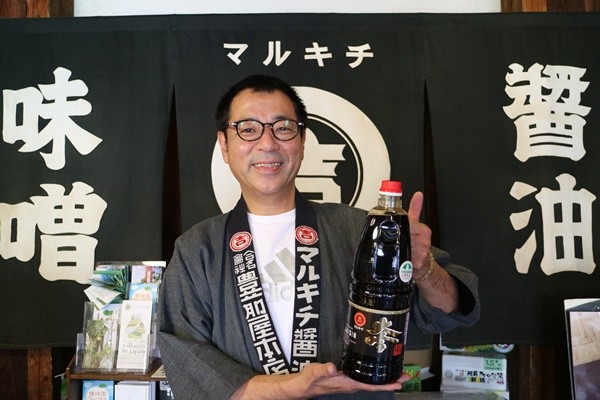
The current fifth-generation owner, Mitsunobu Kira, originally worked at a securities firm in Tokyo. After the burst of Japan’s economic bubble, he decided to leave the city and return to his rural roots to run this soy sauce and miso shop. Here, traditional artisans’ craftsmanship is preserved—from the timing of fermenting soy sauce in barrels, brewing, and opening the barrels, to the temperature control for storing miso—adhering to tradition while integrating new processes. The artisans here have deep expertise in fermentation. The former shop owner even issued a strict rule: “To make good soy sauce and miso, do not eat natto (fermented soybeans) in the workplace.” President Kira proudly showed me this “written decree” from the former owner and asked me if I knew why. When I shook my head, he laughed and said, “Because natto bacteria are the strongest among all fermentation microbes. If they get into the soy sauce or miso breweries, everything will be ruined.” It’s this kind of dedication that allows them to produce high-quality food and maintain traditional flavors across generations.
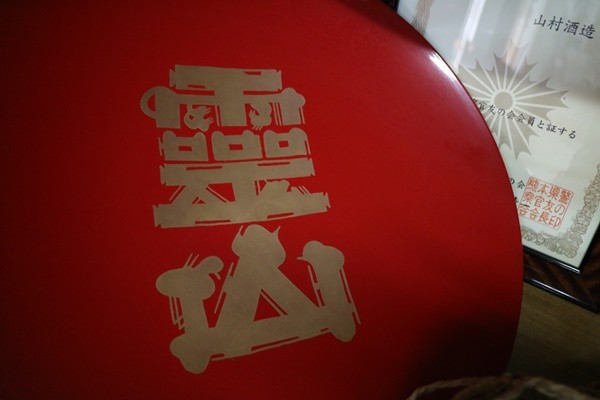
Another well-known name relying on water and fermentation is the "Reisen Sake Brewery," hailed as the representative of "Aso’s Sake." Reisen Sake Brewery has an even longer history than Buzenya Honpo. Its current president, Yorio Yamamura, is the 15th generation to lead the brewery. President Yamamura is a witty man who at first glance resembles a silver-haired old dandy, but he knows every detail about the brewery. The enamel fermentation tanks in the brewery are all marked with the year they were used and brewed—this is a key point for tax inspections by Japan’s National Tax Agency. Mr. Yamamura says, “We can’t afford to be careless about this.” In front of the distillery, he pointed to a somewhat shortened chimney and lamented, “This chimney used to be ten meters tall, but now it’s only half its height due to the earthquake.” Even so, the brewery continues its age-old cycle of planting rice in spring and summer, and brewing sake in autumn and winter. This rhythm has remained unchanged month after month, year after year, ever since the first year of the 15th generation.
Just like how President Kira of Buzenya Honpo took me to see their miso brewery, which has been in use since the Edo period. Stepping into the workshop felt cool. President Kira said, “The coolness you feel now is only half of what it used to be.” Puzzled, I asked, “Why?” He pointed to a corner of the workshop where a wall had collapsed, leaving only a blue tarp covering the exterior.
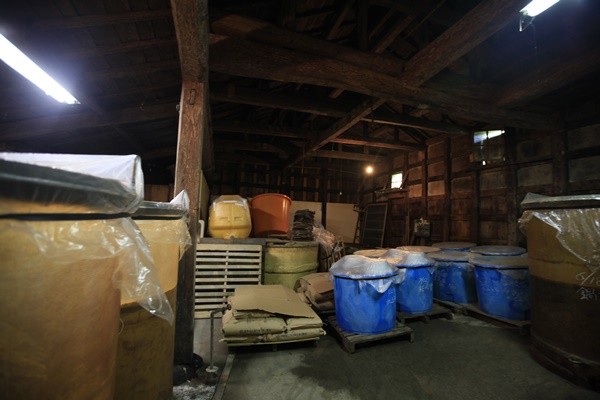
“That’s the damage from the earthquake. This warehouse, which has been around since the Edo period, was damaged in the quake.” “Then why not fix the wall right away?” President Kira replied, “The warehouse is just a place for business. All the construction workers are currently busy helping rebuild homes for disaster victims. We don’t want to compete with them.” It’s this kind of sentiment that gives Japanese towns their warm sense of community and mutual support. President Kira also happily told me, “You know, we used to just be called Buzenya Honpo, but that name didn’t tell people what we actually sold. Then last year I registered the name Aso Maruji Soy Sauce. With ‘Aso’ and ‘soy sauce’ in the name, people remember us better. Now, because of the earthquake, we can even use this name to raise funds for the community.” President Kira always believes that “a crisis is an opportunity,” and this reflects another touching aspect of the small-town spirit: eternal positive thinking.
Share
This article is published by HowToTrip. Sharing and reposting are welcome — please credit the source.
Article URL: https://www.howtotrip.net/views-6177
Related Articles
- Shaoxing's "Grandpa Gourd" hangs the gourds back up: "If there are too many people, we'll interact less — just take a quick look from afar"
- Chinese authorities announce "reciprocal adjustment" to Japan visa fees — single-entry visa jumps from 2,250 to 16,750 yen!
- The "health stones" carried by a traveler were found to have radiation levels exceeding safety limits by a thousand times, potentially endangering fellow passengers on the same flight. Customs issues warning!
- Shenzhen Airport Issues Late-Night Notice: Unidentified Aerial Object Detected, Causing Widespread Flight Delays!
- “They only said it cost money after I opened the box and washed it!” 200g of grapes sold for 60 yuan on a high-speed train—12306 responds!
- Can't buy an airline ticket? Denied exit? Blocked from boarding? A large number of Chinese tourists have mysteriously become "discredited individuals"
- Adverse weather and economic fluctuations impact Colombia's coffee market
- Beach bathing area responds to 2 yuan/30 seconds fee for freshwater foot rinsing: Clearly priced!
- Taking off with an improperly closed cabin door? Wing malfunction? Multiple flights made emergency returns mid-journey!
- Experience the gifts of nature! A countdown of the world’s ten most stunning coastlines