Top 10 Most Beautiful Ancient Towns in China — Must Visit at Least Once in Your Lifetime!
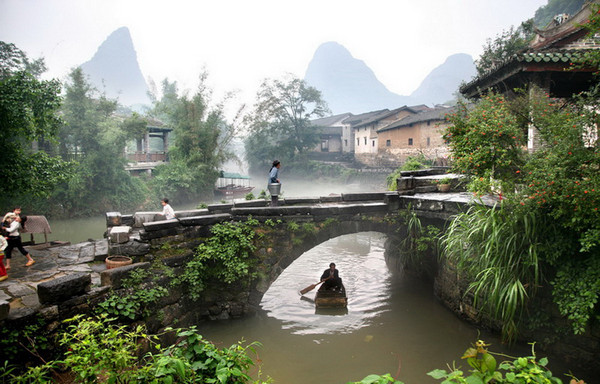
▲ Huangyao Ancient Town. (Photo / from Daguowang)
By Travel Center / Comprehensive Report
There are many ancient towns on the Chinese mainland. Recently, a list of the "Top 10 Most Beautiful Ancient Towns" has been circulating on Weibo. It is said to have been jointly recommended by independent travelers, selected based on factors such as cultural heritage, architectural style, and humanistic characteristics. Some netizens, after seeing the stunning photos, exclaimed, “I must visit at least once in my lifetime,” while others noted that these places are indeed beautiful because they’re not crowded — but added, “Just wait until tourist season.”
Topping the list isHuangyao Ancient Town. Located in Zhaoping County, Guangxi, about 200 kilometers from Guilin, Huangyao is a Ming and Qing dynasty town with over 900 years of history and culture. Situated along the lower reaches of the Li River, it is known as a “poetic homeland.” The ancient towncovers an area of one square kilometer and features typical karst landforms.
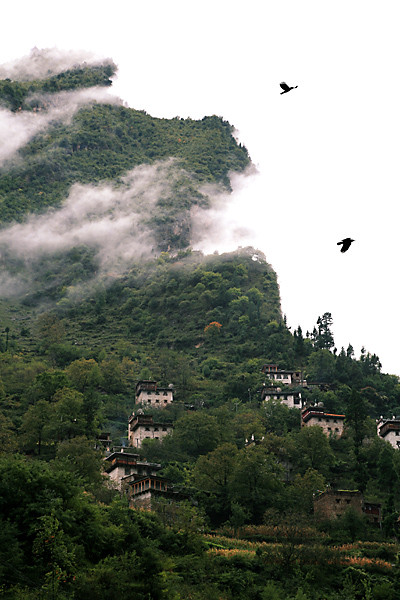
Second isDanba Tibetan Villages. Danba is located in the Garzê Tibetan Autonomous Prefecture in western Sichuan, where the Bayan Har Mountains, Qionglai Mountains, and other ranges converge. It is also the source or flow path of the Gesheka River, Maoniuriver, and the Dadu and Xiaojin Rivers. This area is alsohome to the highest concentration and largest number of ancient watchtowers in China, earning it the reputation of the “Kingdom of a Thousand Watchtowers”.(Image below / from Baidu Baike)
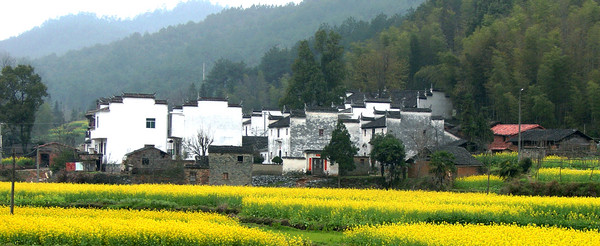
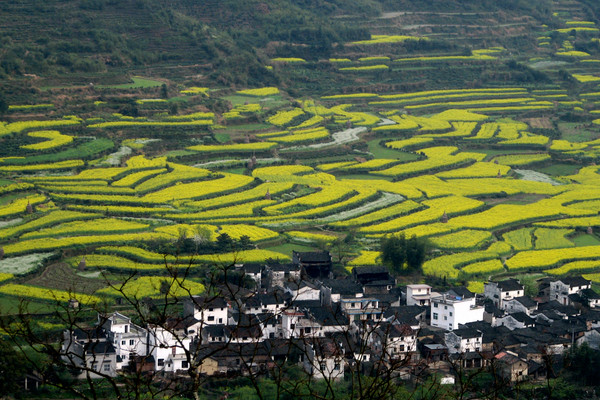
Third isWuyuan Ancient Town in Jiangxi. Here you can findperfectly preserved Ming and Qing dynasty architecture, along with idyllic pastoral scenery. Jiangling, located in the northeastern part of Wuyuan County, is a classic representation of Wuyuan’s pastoral landscapes, with terraced fields stacked in layers, varying in height, and creating a magnificent and majestic view. Renowned Hong Kong photographer Chen Fuli once shot a work titled "Heaven on Earth" themed around the Jiangling scenery, which won a gold award in an international photography competition.(Image below / from Jiangxi Tourism Cultural Resources Database and CFP)
Fourth isWuzhen, located in Tongxiang City, Zhejiang Province. It is one of the Six Ancient Towns of the Jiangnan region. The ancient east, west, south, and north streets, still retaining their old-world charm, intersect in a “cross” formation, forming a town layout of parallel river streets in a double grid pattern, with water and land adjacent to each other.Residential houses are built along the river, and the streets preserve a large number of Ming and Qing dynasty buildings, complemented by stone bridges over the water, reflecting the charm of a Jiangnan ancient town with its small bridges, flowing water, and classic old houses.(Image below / photo by reporter Li Yilin)
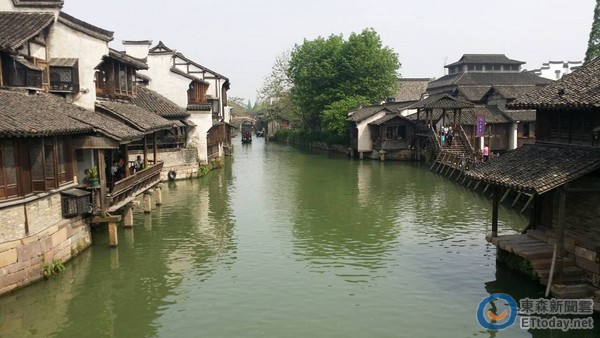
Fifth isZhouzhuang in JiangsuIt is located between Shanghai, Suzhou, and Hangzhou. The entire town is built along the river, with streets connected by bridges, grand mansions, high upturned eaves, riverside docks, covered walkways spanning the streets, bamboo fences among stones, and waterside pavilions by the river—a scene of quaint tranquility that is typical of the Jiangnan style of small bridges, flowing water, and quaint homes.(Image below / CFP)
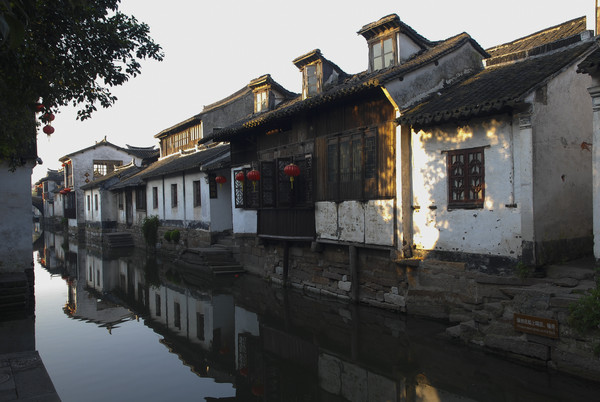
Sixth isTongli, Jiangsu, situated by Taihu Lake to the east of the ancient Grand Canal. Established during the Song Dynasty, it has a history of over 1,000 years. Tongli is one of the six most famous water towns in the Jiangnan region, covering an area of 33 hectares and surrounded by five lakes. Its layout is divided into seven islands by a network of rivers. The ancient town boasts beautiful scenery and is entirely encircled by water on its outskirts. It isthe earliest and the only ancient town in Jiangsu Province to have its entire area designated as a cultural relics protection unit.(Image below / CFP)
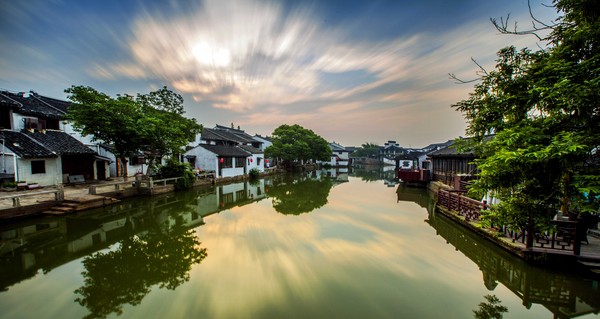
Seventh is Xitang in Zhejiang, an ancient town with a thousand-year cultural history. As early as the Spring and Autumn and Warring States periods, it was a border area between the states of Wu and Yue, hence the nicknames "Root of Wu, Corner of Yue" and "Home of Yue Corner." What sets Xitang apart from other water towns is thatits streets along the river all have covered corridors, so visitors can stroll without getting wet in the rain or being sunburned on sunny days.(Image below / CFP)
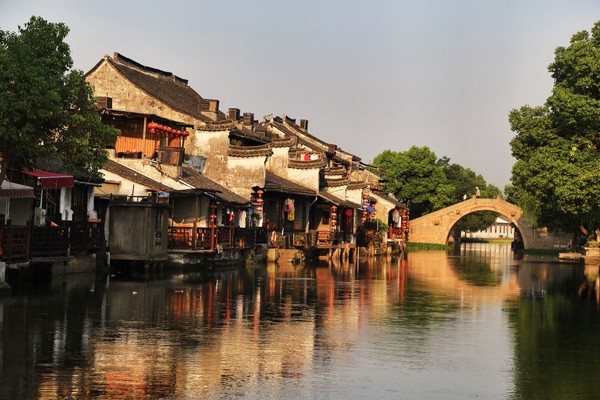
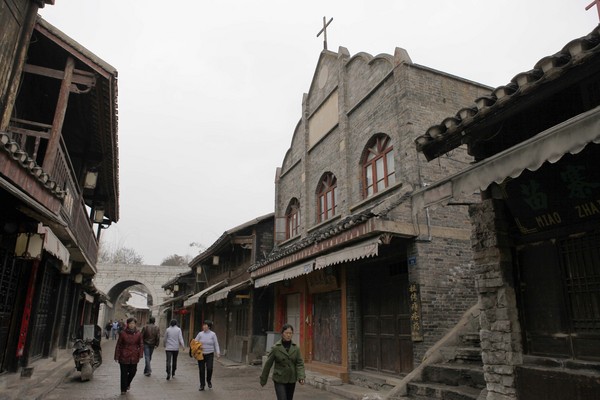
Eighth isQingyan Ancient Town in Guizhou, one of the four major ancient towns in Guizhou. Located in the southern suburbs of Guiyang, it was built in the 10th year of the Hongwu reign during the Ming Dynasty as a military fortress. The town features exquisitely designed and masterfully crafted ancient buildings from the Ming and Qing dynasties densely scattered throughout, interspersed with temples and pavilions adorned with painted beams, carved rafters, flying eaves, and upturned roofs.(Image below / CFP)
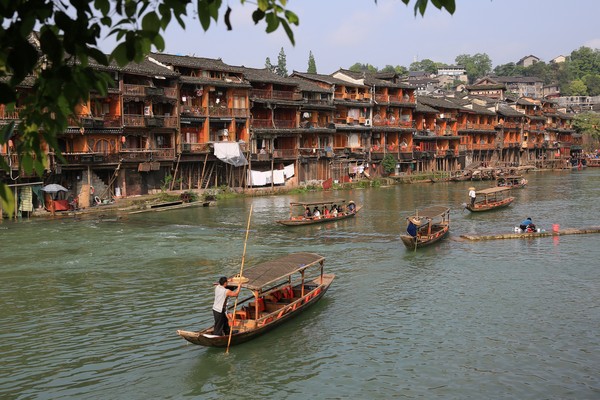
Ninth isFenghuang Ancient Town in Hunan. Fenghuang County is located in the western part of Hunan, within the Xiangxi Tujia and Miao Autonomous Prefecture, which has long been home to ethnic minorities. Fenghuang Ancient Town was established in the 43rd year of the Kangxi reign of the Qing Dynasty and has a history of 300 years. The town is most famous for itstraditional stilted houses, rich in Tujia ethnic flavor and full of rustic charm.(Image below / CFP)
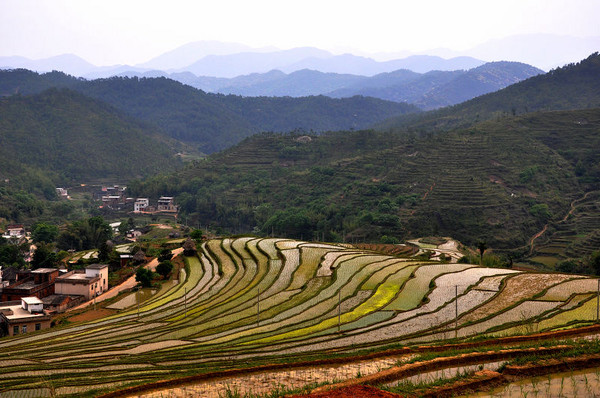
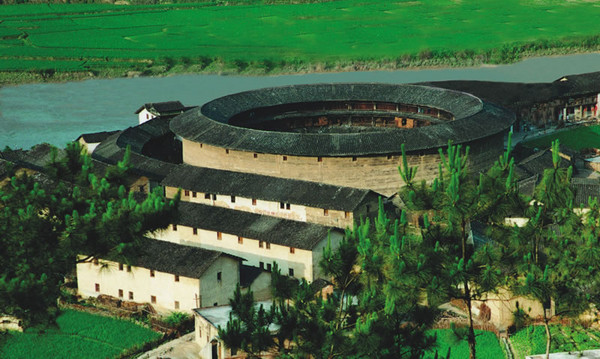
Tenth isDabu County in Guangdong. The local residents are predominantly Hakka people, and the county is well known in Guangdong as the "Hometown of Overseas Chinese," "Hometown of Culture," and "Hometown of Ceramics." Dabu boasts abundant natural and cultural landscapes, with picturesque mountainous surroundings. One of its main attractions, Wanfu Temple, built against a hillside, has a history of over 1,000 years and is one of the four ancient temples in the Han River water system.(Image below / From Baidu Baike)
Share
This article is published by HowToTrip. Sharing and reposting are welcome — please credit the source.
Article URL: https://www.howtotrip.net/views-6161
Related Articles
- Shaoxing's "Grandpa Gourd" hangs the gourds back up: "If there are too many people, we'll interact less — just take a quick look from afar"
- Chinese authorities announce "reciprocal adjustment" to Japan visa fees — single-entry visa jumps from 2,250 to 16,750 yen!
- The "health stones" carried by a traveler were found to have radiation levels exceeding safety limits by a thousand times, potentially endangering fellow passengers on the same flight. Customs issues warning!
- Shenzhen Airport Issues Late-Night Notice: Unidentified Aerial Object Detected, Causing Widespread Flight Delays!
- “They only said it cost money after I opened the box and washed it!” 200g of grapes sold for 60 yuan on a high-speed train—12306 responds!
- Can't buy an airline ticket? Denied exit? Blocked from boarding? A large number of Chinese tourists have mysteriously become "discredited individuals"
- Adverse weather and economic fluctuations impact Colombia's coffee market
- Beach bathing area responds to 2 yuan/30 seconds fee for freshwater foot rinsing: Clearly priced!
- Taking off with an improperly closed cabin door? Wing malfunction? Multiple flights made emergency returns mid-journey!
- Experience the gifts of nature! A countdown of the world’s ten most stunning coastlines