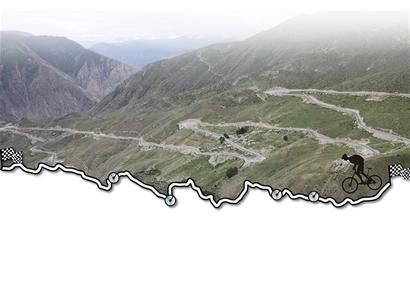
This road is called the Sichuan-Tibet Southern Highway, but among cyclists, it’s more affectionately known as Route 318.
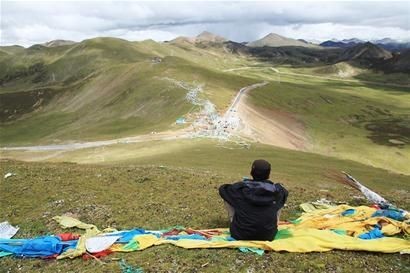
Along the way, there are dense forests, vast grasslands, and beautiful wildflowers; there are desolate rocky mountains, rivers roaring with mud and gravel, and sheer cliffs that seem to rush straight at you.
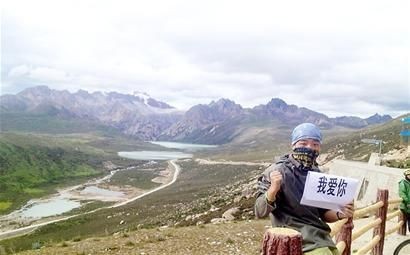
After 40 grueling days on the road, Wang Xiyang finally reached Lhasa on August 16.
There is a road where dense forests stretch as far as the eye can see, vast grasslands bloom with gorgeous wildflowers, and desolate rocky mountains tower over rivers roaring with mud and gravel alongside sheer cliffs. This road is the Sichuan-Tibet Southern Highway, lovingly called Route 318 by cyclists. Among those who ride, it’s known as a "road to the heavens" – if you haven’t managed to cycle to Lhasa in your lifetime, your riding journey is incomplete. With this belief in his heart, 17-year-old Wang Xiyang set off on July 6. After 40 grueling days on the road, he finally reached Lhasa on August 16.
The Departure – Telling His Parents He Was Going to Guizhou
“When my brother told me last year about cycling the Sichuan-Tibet route, I had already made plans with some friends to go to Qinghai Lake.” So for the past year, whenever Route 318 came up, he felt a pang of regret. “It’s a dream I had to fulfill.” This summer vacation, Wang Xiyang could no longer stay put. “Mom, I’m planning to go to Guizhou for a bit.” Though he said that, Wang Xiyang never actually set off for Guizhou. “I stopped by a nearby bike shop, and it turned out they were organizing a ride to Tibet.”
When he arrived in Xinduqiao, Wang Xiyang felt he should really let his parents know. “I sent my mom a text saying I was in Xinduqiao, planning to cycle to Lhasa. Don’t call me these next couple of days.” To his surprise, his mom simply replied, “Be safe.” And just like that, his guilt faded away.
Wang Xiyang says he wasn’t the only one keeping it from his family. “One teammate was only 16, and his parents actually drove all the way to Route 318 to find him – but after seeing he was okay, they left.”
The Unexpected – Riding Solo and Volunteering
Aside from frequent rain, Wang Xiyang’s ride went fairly smoothly. But on the road from Ranwu to Bomi, he ended up smashing his bicycle. “I had agreed with the group that I’d take a hitched ride to Bayi first.” Once in Bayi, Wang Xiyang fixed his bike while also looking for a hotel. That’s when his mom called to say she’d booked him a flight back to Chengdu from Lhasa in 20 days. “I was only three or five days’ ride away from Lhasa, but staying in Lhasa cost over 100 yuan a night, and I was almost out of money. I had to find a way to stay in Bayi longer.”
Wang Xiyang heard that the front desk clerk at his hotel was about to leave. “How about I work here for a few days as a volunteer? The boss said she was short-staffed once the clerk left.” So Wang Xiyang started volunteering while waiting for his teammates. “The boss said volunteering here doesn’t pay, but it includes food and lodging.” A short-term job began, and Wang Xiyang adapted quickly. “I mainly handled online orders and answered the phone.” After 14 days of volunteering, he hopped back on his bike and reached Lhasa three days later.
A Side Story – Stolen Gear Saved by an iPad
On the second night in Bayi, Wang Xiyang was woken up by a commotion. “Boss, my stuff is gone, it’s been stolen!” Wang Xiyang turned to look at his bed. “Oh no, my iPad is gone too.” Reaching into his pocket, he realized his money, ID, and bank cards had all been stolen – only his phone, tucked under his pillow, remained. “At that moment, I truly felt hopeless. But then I remembered my iPad was a 3G model with GPS tracking enabled.” So he pulled out his phone, opened the tracking app, and saw: “Ha, that dumb thief hadn’t turned off the iPad and was heading toward Lhasa along Route 318!”
Wang Xiyang hopped into a police car and chased after the thief toward Lhasa. “After we reported it, the police searched along Route 318.” Fortunately, by the time they reached the checkpoint, the thief had already been caught. “When I saw him, it was that guy from Guizhou I’d been chatting with yesterday!”
The police returned Wang Xiyang’s stolen belongings. “My iPad, wallet, DSLR, three iPhones that had been stolen from someone else, two other smartphones, and 1,400 yuan in cash. The total value was over 20,000 yuan.” Wang Xiyang said. “Back at the hostel, everyone said it was thanks to my iPad’s tracking. Heh.”
The Missed Ride – A Road He Had to Retrace
– A Conversation with Wang Xiyang
Reporter: Why did you want to ride Route 318?
Wang Xiyang: There’s a saying in the cycling community – if you haven’t ridden Route 318, you’re not really a cyclist. When you’re young, you should have dreams. The blue skies, white clouds, grasslands, and mountains of Route 318 were my dream.
Reporter: What’s different about Route 318 compared to other routes you’ve ridden?
Wang Xiyang: On Route 318, you have to cross countless high mountains, including two over 5,000 meters in altitude. It’s a test for both the body and the will.
Reporter: You’re still in high school. How did you cover the costs for the Sichuan-Tibet trip?
Wang Xiyang: I started planning back in October of last year, researching various travel guides online. I also asked friends who had gone two years prior, and then I started saving money. My weekly allowance was 200 yuan, and I cut down on meals to save 50 yuan a week – that’s 200 yuan a month. Plus Lunar New Year red envelope money. In the end, I saved around 6,000 yuan.
Reporter: Do you have any regrets about your Route 318 journey?
Wang Xiyang: I regret hitching a ride and missing a section of the road. I’ve always wanted to go back and complete that part.
Cyclist Interaction >>>
Cyclists Share Their Route 318 Riding Experiences
Featured Riders This Issue: Wu Xuechao (rode Route 318 in August 2012), Zhang Lili (rode Route 318 in July 2011)
Lighten Your Load
Wu Xuechao: Apart from essential clothing, medicine, etc., don’t bring too much gear—don’t overload yourself only to have to mail things back later. I strongly advise against bringing a DSLR camera; it’s heavy, and there’s often rain on Route 318, making it impractical. A compact or mirrorless camera is your best bet.
Having the Right Travel Companions Is Crucial
Wu Xuechao: It’s important to have a team that suits you. Keep the group small—3 to 5 people is ideal. Larger groups tend to lead to disagreements. I’ve witnessed several teams split up due to differences in personality, fitness levels, and lifestyle habits.
318 Cycling Handbook>>>
Four Must-See Spots: Xinduqiao, Litang, Ranwu, and Bayi
Photographer Xiao Woniu has cycled solo through eight western provinces of China and rode from Chengdu to Kathmandu, Nepal, in 2010. He recommends the four most worthwhile stops along the Route 318:
First Stop: Xinduqiao – The First Stop Into Tibet
It’s great for both photography and rest. You can visit Tagong Grassland to see Mount Yala and Tagong Monastery, which you can reach and return from in a day by bike.
Second Stop: Litang – The Highest City in the World
Located in Litang, the Changqingxiangke’er Monastery is a historic and grand temple.
Third Stop: Ranwu – The Pearl of the Plateau
Ranwu Lake is stunning at both dawn and dusk. You can also visit Lago Village, located deeper in Upper Ranwu Lake, to see the Laigu Glacier formed by six marine glaciers.
Fourth Stop: Bayi Town – The Jiangnan of Tibet
Every year from March to April, wildflowers bloom all over the mountains, creating a paradise-like scene. The nearby Nyingchi Forest Sea is also a breathtaking sight.
Quips from 318 Cyclists>>>
The Most Confident Statement:
Boss, add more rice please!
The Most Needed Profession:
Bicycle repair technician
The Most Needed Traffic Sign:
Traffic lights.