Reason to Drive There
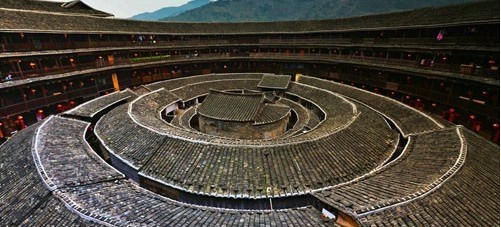
Fuzhou, where “mountains lie within the city and the city nestles among mountains,” has long been imbued with the spiritual essence of the hills, giving it a composed yet vibrant character. The ancient charm of bluestone-paved streets echoes through time, while misty, lush mountains and lakes create a serene ambiance. The tolling of ancient temple bells and the delight of local cuisine. What is Xiamen? You’ll only understand what a good life is when you come here: leisurely, handmade, and full of snacks — a chance to encounter cats and dogs with a touch of bourgeois charm. The prototype of the tulou was military camps, fortresses, and mountain strongholds built by Chen Yuanguang during the Tang Dynasty when he developed Zhangzhou. It emerged as a product of southern Fujian’s unique social environment, marked by “raiders from outside and internal strife.”
Impressions
Three Lanes and Seven Alleys — South Back Street — West Lake Park — Jinshan Temple — Drum Mountain — Gulangyu Island — Yueyue Garden — Round-the-Island Seaside Bathing Beach — Shuzhuang Garden — Piano Museum — Yuyuan Garden — Sunlight Rock — Zheng Chenggong Memorial Hall — Xiamen Underwater World — Nanputuo Temple — Xiamen University — Hulishan Fortress — Round-the-Island Road — Chengqi Building — Buddha Jumping Over the Wall — Jadeite Pearl Abalone — Ginger Duck — Satay Noodles — Flower Tea — Fuju Oranges — Gulangyu Pastries — Xiamen Pearl Embroidery
Three Lanes and Seven Alleys: A maze of lanes and alleys, with white walls and tiled roofs, and gracefully curved gables. The best time to visit is on a rainy day, walking along the bluestone paths — the sound of footsteps tells the stories of this place, and the figure that turns beneath a paper umbrella might just be your dream lover.
South Back Street: Historical records show that it has been a bustling market street since the Song Dynasty. It starts at the intersection of Yangqiao Road in the west and extends south to Jibi Road, spanning about 1,000 meters in total, serving as the central axis of the “Three Lanes and Seven Alleys” in Fuzhou.
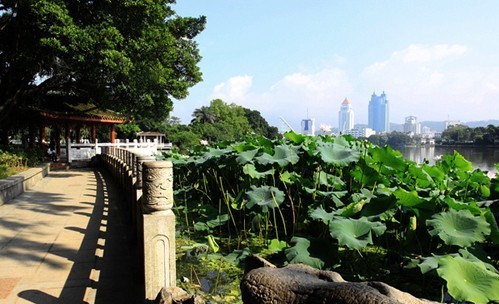
West Lake Park: In the 11th year of the Tang Dynasty's Zhenyuan era (795 AD), Observer Wang Chao expanded the South Lake. During the Five Dynasties period, King Wang Shenzhi of Min expanded the city and connected the West Lake with the South Lake, also linking them via a waterway to the Min River.
Jinshan Temple: As dusk falls and fishermen’s songs drift in, this temple has witnessed the turning of centuries and the shifting of landscapes over hundreds of years. Only the daily rising incense reminds people not to forget.
Drum Mountain: “Unaware of the wine in life before, I drink facing the rocks. Drunk, I reach a land of nowhere and sleep on the monks’ beds.” Drum Mountain boasts eighteen scenic spots, with secluded mountains and deep temples — a perfect place for relaxation and meditation.
Gulangyu Island: A cup of coffee, a serendipitous encounter — Gulangyu is just such a bourgeois island, facing the sea with spring blossoms.

Yueyue Garden: Where sea, sky, and mountain views blend into a magnificent natural painting, the stone statue of Zheng Chenggong stands tall, gazing toward Taiwan Island. The heroic spirit and patriotic passion of this national hero inspire deep respect.
Round-the-Island Seaside Bathing Beach: In summer and autumn, this place is packed with people, especially swimmers. The Gangzaihou swimming area features a gentle slope, fine and shallow sand, vast waters, clean seas, and a shore lined with trees — excellent conditions that attract not only summer swimmers but also many winter swimmers.
Shuzhuang Garden: Meticulously arranged, with the garden on the sea and the sea within the garden, it combines the delicate elegance of a Jiangnan courtyard with the majestic sight of seagulls soaring.
Piano Museum: To the sound of waves, dozens of antique pianos stand quietly in an elegantly atmospheric exhibition hall, drawing continuous admiration from visitors.
Yuyuan Garden: Also known as the Memorial Garden of Dr. Lin Qiaozhi. Built by the Xiamen government, Yuyuan Garden commemorates the outstanding daughter of Gulangyu and renowned medical scientist Dr. Lin Qiaozhi.
Sunlight Rock: “When you reach the summit, all mountains and seas appear small.” From high above, the views of Xiamen and Gulangyu stretch out before you. Zheng Chenggong Memorial Hall: Before leading his northern expedition, Zheng Chenggong trained his troops here, selecting generals and soldiers to form a formidable “Iron Army” of ten thousand men, which later became the main force in recovering Taiwan.
Xiamen Underwater World: Colorful live coral; endangered sea turtles; rare Australian sea dragons and seahorses; Amazonian piranhas and walruses. Nanputuo Temple: Visit this Buddhist shrine on the peaceful Xiamen Island, and don’t miss the chance to taste the famous vegetarian dishes of Nanputuo Temple.
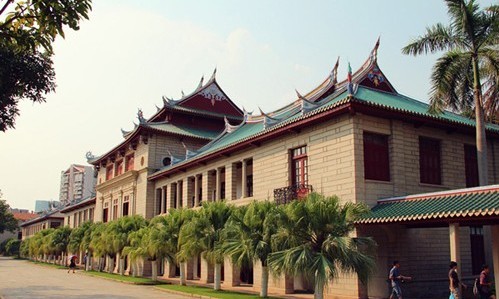
Xiamen University: Stroll through one of China’s most beautiful university campuses, where the feeling of youth brings you back to those green and vibrant years.
Hulishan Fortress: Just to see “the oldest and largest 19th-century coastal cannon still preserved in its original location in the world” is reason enough.
Round-the-Island Road: Rent a bicycle and ride at your own pace along the most beautiful marathon route, taking in the charming seaside scenery and enjoying the romantic moments of coconut breezes, ocean waves, and golden sunlight.
Chengqi Building: “Four stories high, four circles around, four hundred rooms up and down; circle within circle, enduring three hundred years of history.”
Buddha Jumping Over the Wall: A classic Fujian dish. Created by Zheng Chunfa of the Juchunyuan Restaurant, legend says that when several scholars asked for a fine dish, Zheng served them a pot he had created earlier. When the lid was lifted, the aroma filled the room, and the scholars were so impressed they composed a poem: “The pot opens, fragrance wafts afar, even the Buddha jumps the wall for the feast.” This dish is named after that story. It brings together a wide array of delicacies, using over 20 ingredients including shark fin, sea cucumber, chicken, tendon, scallops, mushrooms, abalone, bamboo shoots, and pigeon eggs.
Jadeite Pearl Abalone: A traditional Fuzhou delicacy. Made primarily with abalone and scallops, it is exquisitely crafted and resembles jade, hence the name. Abalone is the king of the eight delicacies, and scallops are one of the eight as well. This dish is nutritious, beautifully presented, delicious, and considered a fine banquet dish.
Ginger Duck: According to the Chinese Pharmacopoeia and the Chinese Herbal Medicine Canon, “ginger duck” was originally a royal dish, said to have been created by the famous Shang Dynasty physician Wu Zhong, later becoming popular among the people. Xiamen’s ginger duck uses red-feathered ducks, stir-fried with sesame oil before being braised with old ginger (mother ginger) and rice wine. The resulting dish is fragrant and savory, with a balance of spicy and sweet flavors, and offers benefits such as soothing the liver, moistening the lungs, nourishing the stomach and spleen, promoting circulation, and dispelling cold and phlegm.
Satay Noodles: Stir-fried noodles are a unique Xiamen specialty, originally created by the former “Quanfu Building” and “Shuangquan Restaurant.” Most people may never have heard of it, but it is truly one of Xiamen’s most iconic dishes — definitely made in Xiamen. Few outsiders have tried it because the preparation is extremely difficult, with the key lying in frying the noodles and the stir-frying technique — a slight misstep can make them too hard or too soft.
Flower Tea: Fuzhou flower tea has a long history, with large-scale production dating back to the Xianfeng era of the Qing Dynasty. Flower tea is made by blending high-quality roasted green tea with fragrant flowers through the scenting process. With both tea and blossoms shining, it is naturally elegant, with a refreshing and pleasant aroma, a mellow and distant flavor, and has long enjoyed a fine reputation. Depending on the types of flowers used, Fuzhou flower tea includes jasmine tea, magnolia tea, osmanthus tea, rose tea, pomelo flower tea, and more. Among these, jasmine tea is the finest, known for its strong, fresh, and long-lasting floral aroma, rich and fragrant tea broth, bright yellow-green color, and excellent infusability.
Fuju Oranges: The official fruit of Fuzhou, Fuju oranges are available around the Lunar New Year. With their bright red color, beautiful shape, and sweet juice, coupled with their homophonic association with “fortune” and “luck,” they are highly beloved. Fuju oranges are mainly grown along both banks of the lower Min River. In late autumn and early winter, the green trees along the riverbanks are dotted with clusters of red fruits, creating a colorful and splendid scene, often praised as the “Red Oranges of the Min River.”
Gulangyu Pastries: Pastries are a traditional food in Xiamen with a history of over a hundred years. They are made with exquisite ingredients and fine craftsmanship, using high-quality flour, lard, and premium mung beans. During preparation, the mung beans are steamed until soft, shelled, and finely ground. The pastry crust and filling are made with ample oil and kneaded to just the right consistency. When baking, care is taken to control the heat, achieving a golden exterior with a fully cooked interior that doesn’t release excess oil. The resulting pastries have a crispy, buttery crust and cool, sweet fillings.
Xiamen Bead Embroidery: Xiamen bead embroidery is known for its novel designs, luxurious appearance, and dazzling brilliance, featuring over a hundred varieties such as beaded slippers, beaded wall hangings, and beaded bags. These products are crafted using brightly colored, multifaceted glass beads and iridescent films, employing traditional embroidery techniques such as raised stitch, flat stitch, stringing, seed stitch, random stitch, vertical stitch, and layered patchwork to create bas-relief patterns. All-bead designs feature tightly packed, meticulous compositions, while half-bead designs are elegant, graceful, and refreshing to the eye.
Share
This article is published by HowToTrip. Sharing and reposting are welcome — please credit the source.
Article URL: https://www.howtotrip.net/views-58337