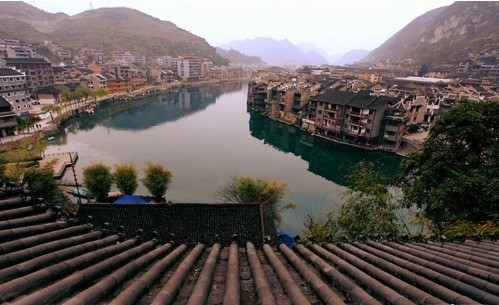
Reasons to Drive There
South of the Gui Mountains, capital of mountainous lands, city of forests — it is a one-of-a-kind summer retreat; with clusters of Jiaxiu Towers, street vendors selling snacks, and skyscrapers, it is truly the "Little Hong Kong" of Southwest China. Kaili is an ancient, magical, beautiful, and fertile green land. Its stunning natural scenery and rich ethnic culture leave visitors in awe. This ancient town, with over two thousand years of history, is built along the river and from afar resembles a Taiji diagram. It blends the cultural essences of Buddhism, Confucianism, and Taoism, with various ancient alleys, traditional houses, and old docks adding to its charm.
Impressions
Qianling Mountain — Jiaxiu Tower — Hongfeng Lake — Tianhe Pool — Qingyan — Huaxi — Xijiang — Jianhe — Qinglong Cave Ancient Architectural Complex — Wuyang River — Sour Soup Fish — Tofu Balls — Fried Spicy Miao Crab — Handwoven Cotton — Silver Jewelry — Guiyang Maojian Tea
Qianling Mountain: The beautiful “back garden” of Guiyang, where rolling mountains meet lakeside views. Climb to the summit for a panoramic view of the entire city.
Jiaxiu Tower: For centuries, scholars from the Ming and Qing dynasties have visited this site. The tower features numerous calligraphic stone carvings, and its night view is equally captivating, making it refined both inside and out.

Hongfeng Lake: A national scenic area in Guizhou, Hongfeng Lake is like a crystal-clear precious mirror embedded between Qingzhen and Pingba counties in central Guizhou.
Tianhe Pool: A miniature landscape of Guizhou’s karst scenery, offering a concentrated view of the province’s mountain and water beauty.
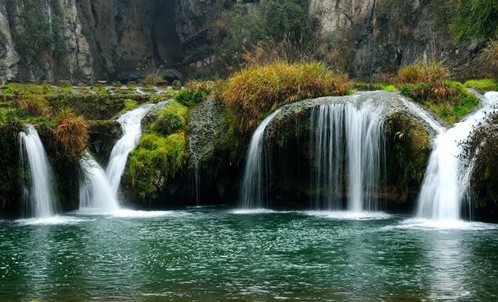
Qingyan: A small town well-preserved with Ming and Qing architectural layouts, it has long been a tranquil retreat for weary urbanites seeking to escape the hustle and bustle.
Huaxi: Real mountains and real waters are everywhere; Huaxi’s layout is even more natural. Ten miles of riverbanks shine like mirrors, with flower gardens and fields alternating every few steps.
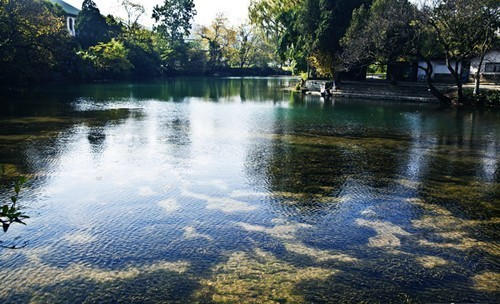
Xijiang: Breathtaking scenery and stunning architecture. Red houses blend seamlessly with green forests — just for this largest Miao village, the trip is worthwhile.
Jianhe: A beautiful small town located by the Qingshui River. The hot springs here have crystal-clear water that remains unchanged in spring and winter and never dries up in any season.
Qinglong Cave Ancient Architectural Complex: Nestled against green mountains and facing clear waters, the complex clings to cliffs and soars above the ground. With pavilions every five steps and towers every ten, its upturned eaves and carved beams are a marvel.
Wuyang River: Features roaring rapids and dangerous shoals, as well as serene lakes and expansive waters. The area is densely dotted with scenic spots, all strikingly beautiful.
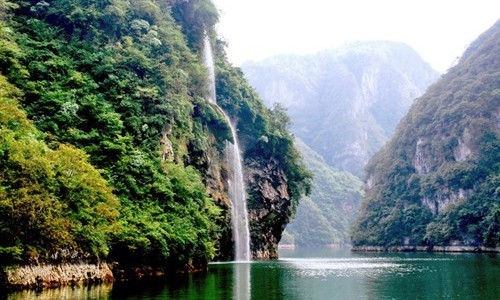
Sour Soup Fish: A unique dish of the Miao people, it bursts with a delicious sour flavor and spicy kick that whets the appetite. Typically, locally produced fermented chili peppers and a variety of nutritious Chinese herbs are combined with tomato acidity to brew a natural sour soup. Fresh fish is then added and simmered. The sour soup is made from boiled rice washing water and the best versions are white in color. Light sour soup is refreshingly tangy but slightly less rich, while red sour soup made with tomatoes adds even more depth. Adding bean sprouts, bamboo shoots, and wild onions as garnishes makes the flavor even more unique.
Tofu Balls: A distinctive snack from Guizhou, with Lei Family Tofu Balls being the most famous. These are primarily made from tofu, prepared mainly by soft-frying, and carry a home-style flavor. The golden, crisp outer shell encases a soft, silky tofu filling, creating a delightful contrast. Their preparation method is surprisingly ingenious. Paired with a mildly spicy dipping sauce made from pickled radish and yuxingcao (heartleaf houttuynia), the taste is refreshing and never gets tiresome even when eaten in large quantities.
Fried Spicy Miao Crab: An exceptionally unique dish. At first glance, the red glutinous rice-like pieces might be mistaken for lees. According to the chef, they are actually made by grinding glutinous rice flour, mixing it with chili peppers from Zunyi, and soaking the mixture in a vinegar jar for about two weeks to create the chili paste. Stir-frying this chili with crabs produces a more fragrant and rich taste, subtly aromatic yet bold, plump, and chewy.
Handwoven Cotton: A treasured craft of the Miao people in Guizhou, it enjoys a longstanding reputation. Made by using colored silk threads to weave intricate patterns through a labor-intensive process, the slightest mistake in the warp and weft is not allowed. Usually crafted into sashes for clothing decoration, these sashes feature various geometric patterns, as well as images of dragons, phoenixes, insects, fish, and auspicious phrases, all in vibrant, eye-catching colors. Some are woven solely with black and white threads, resulting in delicate, simple, and elegant designs.
Silver Jewelry: A unique ornament of the Miao and Dong peoples, worn mostly by women, though men wear some as well. For an unmarried girl, silver jewelry symbolizes not only beauty but also serves as a form of social currency in choosing a spouse. Parents spare no expense to adorn their daughters with silver, hoping for a good match. The Miao people’s love for silver jewelry is unmatched among China’s ethnic groups, and so is their craftsmanship. They regard silver jewelry as a symbol of beauty and wealth. Moreover, it is believed to ward off evil, ensure safety, and bring light. Men wear silver jewelry when going out to protect against misfortune and ensure a safe return. Silver Buddhist figurines pinned on children’s hats and clothes serve not only an aesthetic purpose but also carry the meaning of dispelling disasters, preventing illness, and safeguarding the child’s healthy growth. For women, wearing silver jewelry is also a symbol of good fortune.
Guiyang Maojian Tea: Guizhou tea has a unique flavor, with varieties such as Duyun Maojian, Zunyi Maofeng, and Guiyang Yang’ai Maofeng being the most famous. The suburbs of Guiyang are one of the main tea-producing areas in the province. Zhao Si Tea, produced in Zhao Si Village, Qiantao Township on the outskirts of the city, is a green tea processed by roasting and frying. It has a neat appearance without breakage, and when brewed, the tea has a yellow-green hue, a fragrant aroma, and a refreshing taste, earning it considerable renown. Legend has it that during the Qing Dynasty’s Kangxi reign, a scholar from Zhao Si Village presented Zhao Si Tea to the emperor, giving rise to the saying: “Taste Governor Zhou’s Zhao Si Tea, and its fragrance spreads ten miles inside and outside the palace.”
Share
This article is published by HowToTrip. Sharing and reposting are welcome — please credit the source.
Article URL: https://www.howtotrip.net/views-58274