Reasons to Drive Here
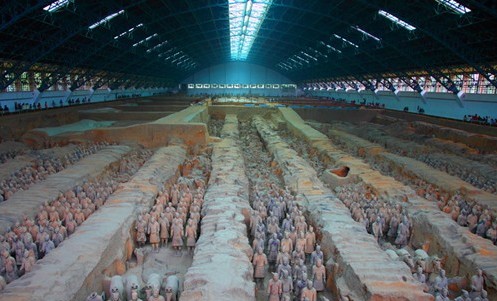
Historic city walls and the Terracotta Army that will absolutely delight your taste buds with a variety of delicious local cuisines. The imperial capital in the midst of bustling dust, the timeless city of common folk. The waters of the Yellow River come from the heavens: rushing and roaring — you can’t truly know the Yellow River without seeing the Hukou Waterfall ! In the revolutionary site of Yan’an, touch every piece of thick, solid loess, walk through the former residences and cave dwellings of the revolutionary pioneers, and then reflect — you’ll sense something you can’t find anywhere else. The rugged Loess Plateau, ancient walls, simple vernacular houses, semi-abandoned cave dwellings, and well-preserved wooden buildings appear one after another, making it impossible not to fall in love with this northern border city — Yulin.
Impressions
Ming City Wall — Stele Forest — Muslim Quarter — Shaanxi History Museum — Big Wild Goose Pagoda — Terracotta Army — Lishan Mountain — Huaqing Pool — Hukou Waterfall — Pagoda Hill — Zaoyuan — Yangjialing — Yan’an Revolutionary Memorial Hall — Zhenbeitai — Red Stone Gorge — Baiyun Mountain — Li Zicheng’s Palace — Yangjiagou Revolutionary Site — Roujiamo — Lamb Pita Soaking Bread — Biangbiang Noodles — Shaanxi Cold Noodles — Horse Hoof Pastry — Fried Soybean Milk — Tiger Head Pillow.
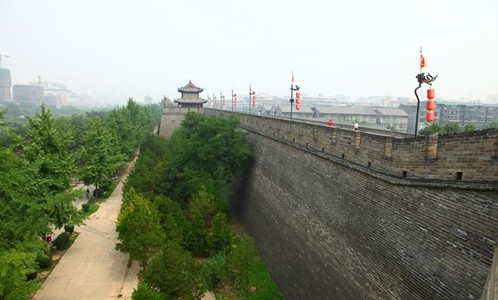
Ming City Wall: The best-preserved ancient city wall in China, standing firm as a mountain after a thousand years, witnessing the rise and fall of dynasties. Stele Forest: The Xi’an Stele Forest is the earliest and most abundant collection of ancient stone tablets in China, a cultural and artistic treasure trove where stone tablets stand like a forest, a spectacular sight. The Stele Forest Museum was built on this foundation along with other historical sites such as the Confucius Temple.
Muslim Quarter: Try lamb foam, mung bean cake, pork burger with juice, dried fruits, candied fruit… Sample special snacks, browse roadside shops, and through the vicissitudes of history, the once prosperous scenes remain.
Shaanxi History Museum: The pearl of the ancient capital, the treasure house of China, encompassing the grandeur of thirteen dynasties in Chinese history, “Give me one day, I’ll give you ten thousand years.” Big Wild Goose Pagoda: Climb to the top, lean on the railing, and take in the full view of Chang’an.
Terracotta Army: The massive scale, majestic presence, and exquisite craftsmanship make each terracotta warrior seem to bring the grandeur of war back to life.
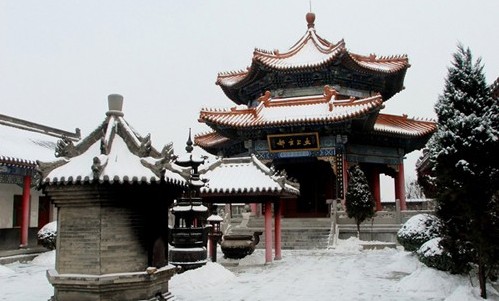
Lishan Mountain: In the Zhou dynasty there was the “Beacon Fire Mockery of the Lords,” in the Tang dynasty the “Imperial Bath at Huaqing Pool.” Lishan Mountain has witnessed the romantic tales of ancient emperors. And the Memorial Pavilion of the Xi’an Incident adds a sense of the war’s might and grandeur to this romantic love spot.
Huaqing Pool: “In the cold of spring, she was granted a bath at Huaqing Pool; the smooth hot spring water washed her smooth skin.” It’s not only beautifully scenic but also gains legendary status through the story of Yang Guifei and Emperor Xuanzong of Tang.
Hukou Waterfall: Located on the border of Shaanxi and Shanxi, the Hukou Waterfall is the world’s largest yellow waterfall, and its surging momentum is a symbol of the spirit of the Chinese nation.
Pagoda Hill: The symbol of Yan’an, an emblem of the revolutionary holy land. Climb to the top for a panoramic view of the whole city.
Zaoyuan: The “Zhongnanhai” of the revolutionary era, Zaoyuan contains the “Happy Canal” built at the time and the former residences of Mao Zedong and others.
Yangjialing: This is where leaders such as Mao Zedong, Zhu De, Zhou Enlai, and Liu Shaoqi lived at the time.
Yan’an Revolutionary Memorial Hall: Vividly and realistically recreates the glorious achievements of the older generation of revolutionaries living in cave dwellings, eating millet, and driving out the Japanese invaders in Yan’an.
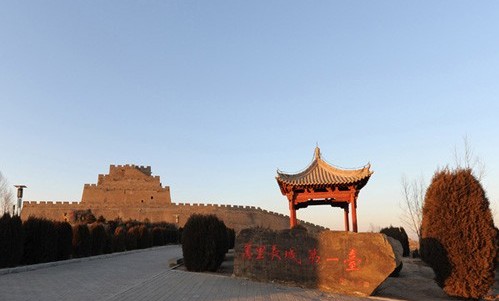
Zhenbeitai: Zhenbeitai sits atop a mountain and commands a strategic high point, controlling the north-south throat and locking the key pass of the Great Wall, known as the “First Tower of the Great Wall.”
Red Stone Gorge: Red cliffs stand opposite each other, willows provide shade, the Great Wall runs through the gorge, and the Yuxi River rushes ceaselessly, known as the “First Scenic Wonder of the Great Wall.”
Baiyun Mountain: A famous Taoist mountain, also called Cuoe Ridge. The mountain trends from northwest to southeast, majestically overlooking the west bank of the surging Yellow River. The mountain is covered with lush pines and cypresses, with overlapping rocky peaks. In summer and autumn, white clouds often drift among them, appearing misty from afar. Known as the “Famous Scenic Spot of Guanxi.”
Li Zicheng’s Palace: In the 16th year of the Chongzhen reign of the Ming dynasty, after Li Zicheng established the Dashun Kingdom in Xi’an, he ordered the construction of a palace and ancestral tomb here, and the mountain is named after this.
Yangjiagou Revolutionary Site: Yangjiagou marks the triumphant point of the Shaanbei Campaign and the starting point of the journey from Shaanbei to national victory. It holds an important place in the history of the Chinese Communist Party and the Chinese revolution.
Roujiamo: Roujiamo is a famous snack originating from the ancient city of Xi’an, dating back to the Warring States period, and is known as the Chinese hamburger. Essentially, it’s a perfect combination of two foods: juiced meat and Baiji flatbread. Roujiamo combines juiced meat and Baiji bread, complementing each other to bring out the best of their flavors. Diners praise it as “fatty meat that isn’t greasy, lean meat without gristle full of oil, meat that melts without chewing, and lingering fragrance that stays long after eating.” Juiced meat has a long history, is famous both in China and abroad, and is deeply loved by people.
Lamb Pita Soaking Bread: A famous Shaanxi dish, especially well-known in Xi’an for its beef and lamb pita soaking bread. The meat broth is rich, fragrant, delicious, sticky, tender, and smooth. Drinking a small bowl of broth afterward enhances the lingering aftertaste. It’s a high-protein, high-fat, high-carbohydrate, high-energy food. Suitable to eat all year round, best in winter.
Biangbiang Noodles: A famous Shaanxi specialty, the whimsical and humorous “biang” character, with its winding strokes, summarizes the regional characteristics of Biangbiang noodles, the eater’s experience, the key points of the making process, ingredients, seasonings, and the hard work of the noodle makers, reflecting the bold and straightforward spirit of the people of Shaanxi, filled with both joy and hardship, showcasing the proud food culture of Shaanxi.
Shaanxi Cold Noodles: Xi’an cold noodles are a famous Shaanxi snack, with a unique flavor suitable for all ages. In recent years, they have spread beyond Shaanxi, gaining popularity nationwide and winning widespread acclaim. Also called “niangpi,” the noodles are made from carefully selected ingredients, with rigorous craftsmanship and flavorful seasoning. Known for being “white, thin, smooth, soft, chewy, and fragrant,” with a sour and spicy taste, cool and refreshing — perfect for summer. Now an important delicacy of West Guanzhong.
Horse Hoof Pastry: Named for its resemblance to a horse’s hoof, originally a premium pastry from Jia County given as gifts when visiting relatives and friends. Made from refined flour, pork lard, honey, and white sugar, it has a brownish-yellow color, clear layers, is crisp, flaky, sweet, and stays fresh for a long time. The Horse Hoof Pastry made by Master Gao Lianwang in Gaojia Alley, Fifth Lane, Lingyun Road, Jia County, is famously delicious. If you’re interested, you can go try some.
Fried Soybean Milk: A specialty snack from Yulin City, Shaanxi Province, made mainly from soy milk, hence the name Fried Soybean Milk. The characteristics of Yulin Fried Soybean Milk: golden in color, crispy outside and soft inside, melts in the mouth, sweet and delicious, with a rich bean aroma.
Tiger Head Pillow: A type of folk embroidery. The making method is similar to that of regular pillows, but the shape mimics a traditional tiger. These pillows are exquisitely sewn with unique patterns and designs.
Share
This article is published by HowToTrip. Sharing and reposting are welcome — please credit the source.
Article URL: https://www.howtotrip.net/views-58224