B
How to handle situations during self-driving
It’s widely believed that toll-free expressways are a great benefit, giving a sense of getting a good deal for self-drivers. But this is only true if there is no major traffic jam. As a matter of fact, one of the major events on the expressways in 2012 was the first toll-free National Day and Mid-Autumn Festival, which led to massive congestion across most of the country's expressways. According to reports, Guangdong transport authorities predict that, stimulated by the toll-free policy for small passenger vehicles, there will be a significant increase in self-driving trips during the holidays. During the seven-day Spring Festival holiday in 2013, the total vehicle flow in the province is expected to exceed 20 million, a 79% increase over last year’s Spring Festival. Therefore, for this year’s Spring Festival self-driving trips, the top priority is to avoid travel during peak hours to dodge congestion.
Transport experts suggest staggering your travel times. For example, the days immediately before the long holiday and up to the morning of New Year’s Eve are peak times for outbound traffic—try to avoid these if possible. Meanwhile, February 15th, the sixth day of the Lunar New Year and the last day of the Spring Festival holiday, is undoubtedly the peak day for post-holiday return traffic. To avoid jams, it’s best to steer clear if you can. Additionally, traffic flow varies greatly on different expressways. For instance, expressways like the Beijing-Zhuhai, Guangzhou-Shenzhen, and Guangzhou-Foshan highways may still experience congestion even outside of holiday periods. In contrast, newer expressways such as the Qingyuan-Lianzhou and Guangzhou-Heyuan highways tend to have lighter traffic. So choose your self-driving route wisely—if you encounter congestion, it’s best to take a detour to avoid being stuck in gridlock with no way out.
A full tank of gas filled up before departure can hardly suffice for a long journey, and some drivers choose to carry extra gasoline in their vehicles. However, experienced auto repair experts warn strongly against transporting private gasoline in your car, as it is very dangerous. They suggest filling up the tank whenever you see a gas station, rather than waiting for the low-fuel warning. If you’re stuck in expressway traffic, exit to the nearest gas station to refuel, then get back on the highway once you're fully topped up.
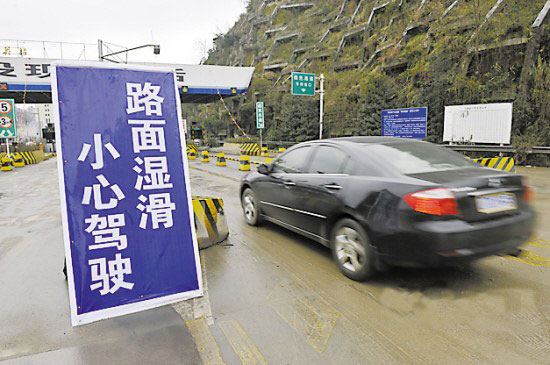
Experts remind us that the period around the Spring Festival is prone to extreme and harsh weather, especially rain and snow. Therefore, it’s crucial to monitor the weather forecast before and during your trip and try to avoid traveling in such adverse conditions. Also, different regions have varying weather characteristics—for example, in Hunan watch out for fog, and in Jiangxi be mindful of snow and frost. It’s best to avoid night driving in these provinces, as nighttime temperatures are low and roads are prone to frosting.
Holiday travel peaks also mean a higher likelihood of traffic accidents on expressways. If you’re involved in one, stay calm and handle it properly. For minor accidents, pull over and wait for traffic police to arrive. For major accidents, stay put and wait for the authorities. Place the warning triangle at least 200 meters away to ensure others have enough braking distance. One crucial point: never stand between two vehicles while handling an accident—it’s extremely dangerous due to the risk of secondary collisions.
Also, in cold weather, some people like to crank up the car heater, but doing so for extended periods can actually increase driver fatigue. Road-trippers recommend wearing more layers and keeping the cabin temperature below 20 degrees Celsius, which is more comfortable and safer.
For those keen on taking advantage of the toll-free offer, one thing to keep in mind is that if your vehicle passes through the toll station right at 24:00 on February 15th, you could easily exceed the time limit—even by a few seconds—and will be charged the toll as per regulations. If necessary, consider exiting the expressway early and re-entering after the cutoff time.
C
How to handle snowy and icy conditions
During a Spring Festival self-driving trip, one of the most challenging situations for Guangdong drivers—who usually have little experience driving in snow or ice—is encountering wintry weather.
Experienced road-trippers’ advice for driving in snowy or icy conditions is to avoid nighttime driving as much as possible. While on the road, maintain a safe following distance from the vehicle ahead. Most importantly, remember that the golden rule of driving on snow is to go slow: reduce speed gradually, brake gently, and slow down to around 10 km/h before turning, relying on inertia to make the turn. Never brake while turning—keep your foot off the brake and on the accelerator, but don’t press it. Only gently press the accelerator if traction is insufficient. Additionally, if there’s uncleared snow between lanes, avoid changing lanes or overtaking. If you must change lanes, reduce your speed and rely on inertia, controlling your speed and braking gently—preferably using intermittent light taps on the brake.
Also, don’t overlook certain details when driving in snowy conditions. Before setting off, check that tire pressure is adequate to maintain proper traction. When starting the car, let it idle and warm up for a few minutes. Inspect the wipers carefully—as visibility is often poor in snowy or rainy weather, the condition of your wipers directly affects your ability to see. Replace them if they’re not functioning well. If condensation forms on the windshield, promptly turn on the front and rear defrosters to ensure clear visibility, and stay alert by constantly scanning the road. When driving on expressways, be cautious of bridges, culverts, and other surfaces that may still be icy and slippery. On roads covered with white snow—due to high reflectivity—it’s advisable to wear driving sunglasses to protect your eyes. When parking, avoid stopping on snowy ground if possible. If you must park on a snowy downhill slope, ensure there’s enough space to drive out later, as shifting the vehicle forward or backward becomes very difficult.