“Who’s in such a rush, slicing through April’s spring light?” Really impatient—I woke up at 5 AM on the morning of April 4th, and when I left at 5:30, I thought I was being paranoid: “Over 100 kilometers, does it really take two hours?” But once I got on the Fourth Ring Road and saw groups of people gathering, I realized everyone was the same—“afraid of traffic jams, so leaving early.” The day before, we’d discussed on Feixin whether to take the Jingkai or the Jinggang Expressway. Old Zhang said, “The Jingkai is over 20 kilometers longer,” and between saving fuel or sleeping more, we chose “saving money is more important.” Unexpectedly, the usually congested “Uncle Du” (Dujia kou toll gate) was totally clear because it wasn’t charging that day—we zipped right through, which felt awesome.
I could vaguely see a girl sitting in the ticket booth—“Why aren’t they on holiday?” Old Zhang said, “Trucks don’t get a free pass.” Suddenly, something occurred to me… forgive my tangential thinking—it’s all the editor’s fault. “Every time an article is commissioned, there’s always a line: the word count must be at least XXX.” I have a habit of padding the word count. When I was in Japan, at the highway toll booths, I noticed that all the staff were elderly, over 60. This wasn’t exactly about giving the elderly meaningful work. During a national health check-up in Japan, it was found that “the infertility rate among highway toll workers was about 10% higher than average. Investigations revealed that car exhaust fumes, absorbed through the skin and respiratory system, led to lead accumulation, and since the lead primarily affects the reproductive system, the Japanese government later assigned only seniors without fertility issues to this job.” Our toll booths, on the other hand, are all staffed by young people, who reportedly earn quite a bit—I’m reminded of the phrase “drinking poison to quench thirst.”
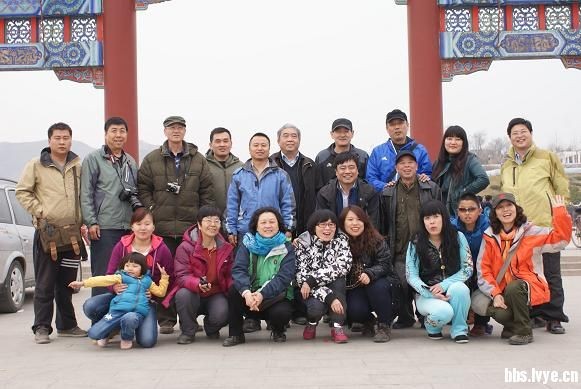
The traffic radio reported a seven-car pile-up on the Jingkai Expressway. I couldn’t help but chuckle a little mischievously, but before my laughter faded, our speed dropped: “There are two accidents on the Jinggang Expressway, currently being handled.” Then came more bad news one after another: “The Badaling Expressway is already jammed up to Madian Bridge…” Beijing’s roads are built in every direction, like a giant spiderweb, yet they still can’t handle the surging tide of 20 million people. Finally, we arrived at the designated meeting spot, “Langzhuo Service Area,” right on time. Success X2, Zhiweng X2, Jintao X2, Xiaosun X3, Xiangxiang X3, Liu Hong X2, Heige, Liuhong, Feiying, plus us—19 of us set off in high spirits for Yishui Lake. I’d been here once last summer, following some fishing enthusiasts. The water was rich with weeds, and while there were plenty of fish, they were all tiny, none bigger than a palm. I nearly had a heart attack cleaning them. The locals, though, hauled in nets full of fish over ten pounds each—I guess their gear and skills were just better.
This year, the water level was high, and the planned “movie set with the burning camp” had been flooded and dismantled, so there was nothing to see. We figured, “No loss.” No one had a strong idea of what we wanted to see—“As long as we escape Beijing’s smog, even just sitting around is fine.” Every time, Success Brother takes charge of organizing, planning the itinerary, and booking hotels, and we just tag along carefree. There’s an option to take a speedboat tour of the lake—10 people per boat for 240 yuan, and the entrance fee is 30 yuan per person, half-price for those over 60. Luckily, Heige had sent a text message the day before, so everyone with ID got the discount. Yishui Lake in April was still pretty cold. The speedboat driver, Brother An, was very dedicated, explaining that the lake is 40 meters deep and spans XX square kilometers, with attractions like the “Immortal’s Cave” and “Little Guilin.” My impression of Yishui Lake comes from history class as a kid: “In 227 BC, Jing Ke carried the map of Yan’s Guandong region and the head of Fan Wuji, heading to Qin to assassinate the King of Qin. Before departure, the prince and warriors all wore white clothes and hats to see Jing Ke off by the Yi River—a deeply tragic scene, since it was clearly a suicide mission. ‘The wind blows cold over the Yi River, the brave warrior leaves and never returns.’”
By the time we looped back around, it was almost noon. Though we’d brought food, the cold weather made us crave some hot soup. Brother An warmly invited us, “Come to my place, warm up a bit,” and immediately called his wife: “Turn on the air conditioner.” It was like a pillow appearing just as you’re falling asleep. We drove to his house. We ordered some greens and a pot of hot soup. He recommended, “We caught some big fish today, want to try some?” Success Brother asked for everyone’s opinion, and Zhiweng said, “No need to discuss this, you decide, we’ll eat whatever you give us.” Everyone slapped the table in agreement. Life experience tells us that “when there are lots of people, it’s best to decide collectively. Too much democracy, and half the people will go hungry and drop dead.” When the eight-pound braised fish was served, there was a cheer of “So delicious!” Sister-in-law An was very generous—she toasted the flatbreads we’d brought until they were fragrant, then stuffed them with scrambled eggs and greens. I felt like a little hand reached into my throat—I hadn’t even fully savored the taste before “swallowing” it down. I finished with the hot soup to round things out, feeling warm inside and out, and was struck with the sentiment, “Life is truly beautiful.”
After the meal, we stayed at the Sitong Yanqiao Hotel in Yixian County. It’s run by the power bureau, originally priced at 138 yuan, but Success Brother negotiated it down to 120, and breakfast was included—heck, unbeatable.
Liu Hong, Feiying, Xiangxiang, and I spotted a department store across the street. For women, seeing a shop without browsing is like a monkey seeing a banana and not eating it. At first, we thought, coming from an “international metropolis,” the stuff here in this “small place” must be pretty “parochial”—we were dismissive. But the mall was pretty deserted, with more salespeople than customers. No matter where we stopped, someone would come up and say, “Try this on.” It felt great to play the role of “God.” After window-shopping without buying, we felt the stares of disdain shooting into our backs like needles, so we quickly straightened up and seriously tried on clothes. Miss Liu used to work in fashion and had a sharp eye. There was a blue shirt with black sleeves hanging there that looked pretty ordinary, but she said it would suit me. Even though I thought the shirt was “pretty tacky,” I politely tried it on—and the effect was amazing, “It fits perfectly.” Xiangxiang tried on a piece of clothing we all thought looked nice and fit well, but Miss Liu felt the fabric and said, “The material’s no good, it pills easily.” Upon closer inspection, it already had pills. We left. There was one outfit that looked really flashy, but Miss Liu pointed out the big letters on the chest and said, “It ruins the look.” Another outfit I thought would suit Feiying, but Miss Liu said, “Her complexion needs bright colors—dark shades don’t bring her out.” After a round of shopping, I really learned a lot—it seems every trade has its tricks, and you can’t call yourself an “expert” without at least ten years under your belt.
Our wallets empty and arms loaded with bags, we headed off satisfied. In the afternoon, Brother and Wuyou and the others arrived, and we all set off for the “Jing Ke Pagoda,” just 2 kilometers away—not far. The four of us crammed into Zhiweng’s car, sticking to the principle of everyday folks: “Eat tofu pudding, drink at bars—save where you can, spend where you must.” It really wasn’t far; just a tap of the gas pedal and we were there. Hey, an unexpected surprise: “No entrance fee, and no parking fee either.”
The “Jing Ke Pagoda,” also known as the Shengta Yuan Pagoda, is located on Jingke Mountain west of Jingke Mountain Village in Yizhou Town. It’s a key cultural relic protection unit in Hebei Province. The ancient pagoda was first built in the third year of the Qianyou era of the Liao Dynasty, which is 1103 AD. It was renovated during the Ming Dynasty’s Wanli era, as well as the Qing Dynasty’s Kangxi and Qianlong eras. Stone tablets recording the renovations still stand beside the pagoda. To the east of the pagoda was once the Shengta Yuan Temple, though now only ruins remain. According to the county annals, the earthen mound to the west of the pagoda is Jing Ke’s symbolic tomb.
The people of Yixian are quite fortunate—the Jing Ke Pagoda sits in a huge plaza where young men rollerblade, girls fly kites, uncles and aunties dance in squares, and kids eat cotton candy—everyone finds what they like. The spry ones can even hike further up the mountain behind, winding endlessly—“spend as much or as little as you want,” earning a solid four-star recommendation. That night, we drank and ate, putting away four or five bottles of baijiu in the blink of an eye, then split off into groups for mahjong or idle chatter. But we’ll skip that part.
The next day, we went to Langya Mountain, 50 kilometers away. Earlier, Heige had sent a message: “Entrance fee is 57 yuan, 50 yuan online, and seniors get half off.” Thinking it wouldn’t be much cheaper, I didn’t buy in advance. But when we got to the gate, we found out the “entrance fee is 80 yuan, and the cable car is 70 yuan.” Compared to the Forbidden City, which costs 60 yuan and is way bigger and more impressive, many of these spots could be called “money pits.” Those with phones immediately tried to buy tickets online on the spot, but unfortunately, due to the high prices, vendors weren’t making any profit and weren’t offering the service—so we had no choice but to grudgingly buy tickets at the gate.
To be honest, Langya Mountain is truly beautiful. Online, it’s said that “Langshan’s Rivaling Beauty” is one of the ancient Ten Scenic Spots of Yizhou, often called the “Little Huangshan of the North.” But in April, you can’t see the mountains covered in lush pines and cypresses or the cascading streams and waterfalls. The zigzagging sheep trails are real, though—it took quite an effort to climb to the top. The cucumbers we’d lugged up were very popular, but there weren’t enough to go around.
On the way down, we browsed roadside stalls—buying local specialties is always part of the travel experience. There was an old man selling dried vegetables, and I thought it was odd: “Fresh veggies are so nutritious, why eat dried ones?” A middle-aged woman picked up two bundles of dried Chinese cabbage. I asked her how she cooked it, and she said blanching it first and then using it for dumplings was pretty tasty. She also bought two pounds of dried sweet potatoes, haggling fiercely before finally begrudgingly handing over the money. While the old man turned to give her change, she grabbed a handful of dried sweet potatoes and stuffed them into her son’s hands. The boy shrank back: “No, I don’t want them.” The woman asked for a big bag to carry the dried cabbage, but the old man searched for a while and said, “I don’t have one.” The woman then picked up the old man’s bag of dried cabbage and said, “I’ll just use this one.” The old man tried to protest, but someone nearby asked, “How much are the dried green beans per jin?” The woman took the opportunity to slip away. The old man sighed, “There’s still half a bag of greens in there, and she didn’t pay for it.” I bought dried eggplant, dried sweet potatoes, and dried persimmons—they tasted pretty good.
On the way home, a friend sent me a song written by Leslie Cheung’s manager, Anita Mui, for his first death anniversary: “Cigarette Burn.” “Who’s in such a rush, slicing through April’s time, birds and Farewell My Concubine shattered in the mirror, who carved your palm? The doting strokes drawn so long, so long, so long…” The curtain of life doesn’t close, the play doesn’t end, the cards are shuffled as usual, each reciting their lines. In his memory, commemorating the tenth anniversary of Leslie Cheung’s passing—I loved his performance in Farewell My Concubine.
Three hours later, we arrived home safely.
I could vaguely see a girl sitting in the ticket booth—“Why aren’t they on holiday?” Old Zhang said, “Trucks don’t get a free pass.” Suddenly, something occurred to me… forgive my tangential thinking—it’s all the editor’s fault. “Every time an article is commissioned, there’s always a line: the word count must be at least XXX.” I have a habit of padding the word count. When I was in Japan, at the highway toll booths, I noticed that all the staff were elderly, over 60. This wasn’t exactly about giving the elderly meaningful work. During a national health check-up in Japan, it was found that “the infertility rate among highway toll workers was about 10% higher than average. Investigations revealed that car exhaust fumes, absorbed through the skin and respiratory system, led to lead accumulation, and since the lead primarily affects the reproductive system, the Japanese government later assigned only seniors without fertility issues to this job.” Our toll booths, on the other hand, are all staffed by young people, who reportedly earn quite a bit—I’m reminded of the phrase “drinking poison to quench thirst.”
The traffic radio reported a seven-car pile-up on the Jingkai Expressway. I couldn’t help but chuckle a little mischievously, but before my laughter faded, our speed dropped: “There are two accidents on the Jinggang Expressway, currently being handled.” Then came more bad news one after another: “The Badaling Expressway is already jammed up to Madian Bridge…” Beijing’s roads are built in every direction, like a giant spiderweb, yet they still can’t handle the surging tide of 20 million people. Finally, we arrived at the designated meeting spot, “Langzhuo Service Area,” right on time. Success X2, Zhiweng X2, Jintao X2, Xiaosun X3, Xiangxiang X3, Liu Hong X2, Heige, Liuhong, Feiying, plus us—19 of us set off in high spirits for Yishui Lake. I’d been here once last summer, following some fishing enthusiasts. The water was rich with weeds, and while there were plenty of fish, they were all tiny, none bigger than a palm. I nearly had a heart attack cleaning them. The locals, though, hauled in nets full of fish over ten pounds each—I guess their gear and skills were just better.
This year, the water level was high, and the planned “movie set with the burning camp” had been flooded and dismantled, so there was nothing to see. We figured, “No loss.” No one had a strong idea of what we wanted to see—“As long as we escape Beijing’s smog, even just sitting around is fine.” Every time, Success Brother takes charge of organizing, planning the itinerary, and booking hotels, and we just tag along carefree. There’s an option to take a speedboat tour of the lake—10 people per boat for 240 yuan, and the entrance fee is 30 yuan per person, half-price for those over 60. Luckily, Heige had sent a text message the day before, so everyone with ID got the discount. Yishui Lake in April was still pretty cold. The speedboat driver, Brother An, was very dedicated, explaining that the lake is 40 meters deep and spans XX square kilometers, with attractions like the “Immortal’s Cave” and “Little Guilin.” My impression of Yishui Lake comes from history class as a kid: “In 227 BC, Jing Ke carried the map of Yan’s Guandong region and the head of Fan Wuji, heading to Qin to assassinate the King of Qin. Before departure, the prince and warriors all wore white clothes and hats to see Jing Ke off by the Yi River—a deeply tragic scene, since it was clearly a suicide mission. ‘The wind blows cold over the Yi River, the brave warrior leaves and never returns.’”
By the time we looped back around, it was almost noon. Though we’d brought food, the cold weather made us crave some hot soup. Brother An warmly invited us, “Come to my place, warm up a bit,” and immediately called his wife: “Turn on the air conditioner.” It was like a pillow appearing just as you’re falling asleep. We drove to his house. We ordered some greens and a pot of hot soup. He recommended, “We caught some big fish today, want to try some?” Success Brother asked for everyone’s opinion, and Zhiweng said, “No need to discuss this, you decide, we’ll eat whatever you give us.” Everyone slapped the table in agreement. Life experience tells us that “when there are lots of people, it’s best to decide collectively. Too much democracy, and half the people will go hungry and drop dead.” When the eight-pound braised fish was served, there was a cheer of “So delicious!” Sister-in-law An was very generous—she toasted the flatbreads we’d brought until they were fragrant, then stuffed them with scrambled eggs and greens. I felt like a little hand reached into my throat—I hadn’t even fully savored the taste before “swallowing” it down. I finished with the hot soup to round things out, feeling warm inside and out, and was struck with the sentiment, “Life is truly beautiful.”
After the meal, we stayed at the Sitong Yanqiao Hotel in Yixian County. It’s run by the power bureau, originally priced at 138 yuan, but Success Brother negotiated it down to 120, and breakfast was included—heck, unbeatable.
Liu Hong, Feiying, Xiangxiang, and I spotted a department store across the street. For women, seeing a shop without browsing is like a monkey seeing a banana and not eating it. At first, we thought, coming from an “international metropolis,” the stuff here in this “small place” must be pretty “parochial”—we were dismissive. But the mall was pretty deserted, with more salespeople than customers. No matter where we stopped, someone would come up and say, “Try this on.” It felt great to play the role of “God.” After window-shopping without buying, we felt the stares of disdain shooting into our backs like needles, so we quickly straightened up and seriously tried on clothes. Miss Liu used to work in fashion and had a sharp eye. There was a blue shirt with black sleeves hanging there that looked pretty ordinary, but she said it would suit me. Even though I thought the shirt was “pretty tacky,” I politely tried it on—and the effect was amazing, “It fits perfectly.” Xiangxiang tried on a piece of clothing we all thought looked nice and fit well, but Miss Liu felt the fabric and said, “The material’s no good, it pills easily.” Upon closer inspection, it already had pills. We left. There was one outfit that looked really flashy, but Miss Liu pointed out the big letters on the chest and said, “It ruins the look.” Another outfit I thought would suit Feiying, but Miss Liu said, “Her complexion needs bright colors—dark shades don’t bring her out.” After a round of shopping, I really learned a lot—it seems every trade has its tricks, and you can’t call yourself an “expert” without at least ten years under your belt.
Our wallets empty and arms loaded with bags, we headed off satisfied. In the afternoon, Brother and Wuyou and the others arrived, and we all set off for the “Jing Ke Pagoda,” just 2 kilometers away—not far. The four of us crammed into Zhiweng’s car, sticking to the principle of everyday folks: “Eat tofu pudding, drink at bars—save where you can, spend where you must.” It really wasn’t far; just a tap of the gas pedal and we were there. Hey, an unexpected surprise: “No entrance fee, and no parking fee either.”
The “Jing Ke Pagoda,” also known as the Shengta Yuan Pagoda, is located on Jingke Mountain west of Jingke Mountain Village in Yizhou Town. It’s a key cultural relic protection unit in Hebei Province. The ancient pagoda was first built in the third year of the Qianyou era of the Liao Dynasty, which is 1103 AD. It was renovated during the Ming Dynasty’s Wanli era, as well as the Qing Dynasty’s Kangxi and Qianlong eras. Stone tablets recording the renovations still stand beside the pagoda. To the east of the pagoda was once the Shengta Yuan Temple, though now only ruins remain. According to the county annals, the earthen mound to the west of the pagoda is Jing Ke’s symbolic tomb.
The people of Yixian are quite fortunate—the Jing Ke Pagoda sits in a huge plaza where young men rollerblade, girls fly kites, uncles and aunties dance in squares, and kids eat cotton candy—everyone finds what they like. The spry ones can even hike further up the mountain behind, winding endlessly—“spend as much or as little as you want,” earning a solid four-star recommendation. That night, we drank and ate, putting away four or five bottles of baijiu in the blink of an eye, then split off into groups for mahjong or idle chatter. But we’ll skip that part.
The next day, we went to Langya Mountain, 50 kilometers away. Earlier, Heige had sent a message: “Entrance fee is 57 yuan, 50 yuan online, and seniors get half off.” Thinking it wouldn’t be much cheaper, I didn’t buy in advance. But when we got to the gate, we found out the “entrance fee is 80 yuan, and the cable car is 70 yuan.” Compared to the Forbidden City, which costs 60 yuan and is way bigger and more impressive, many of these spots could be called “money pits.” Those with phones immediately tried to buy tickets online on the spot, but unfortunately, due to the high prices, vendors weren’t making any profit and weren’t offering the service—so we had no choice but to grudgingly buy tickets at the gate.
To be honest, Langya Mountain is truly beautiful. Online, it’s said that “Langshan’s Rivaling Beauty” is one of the ancient Ten Scenic Spots of Yizhou, often called the “Little Huangshan of the North.” But in April, you can’t see the mountains covered in lush pines and cypresses or the cascading streams and waterfalls. The zigzagging sheep trails are real, though—it took quite an effort to climb to the top. The cucumbers we’d lugged up were very popular, but there weren’t enough to go around.
On the way down, we browsed roadside stalls—buying local specialties is always part of the travel experience. There was an old man selling dried vegetables, and I thought it was odd: “Fresh veggies are so nutritious, why eat dried ones?” A middle-aged woman picked up two bundles of dried Chinese cabbage. I asked her how she cooked it, and she said blanching it first and then using it for dumplings was pretty tasty. She also bought two pounds of dried sweet potatoes, haggling fiercely before finally begrudgingly handing over the money. While the old man turned to give her change, she grabbed a handful of dried sweet potatoes and stuffed them into her son’s hands. The boy shrank back: “No, I don’t want them.” The woman asked for a big bag to carry the dried cabbage, but the old man searched for a while and said, “I don’t have one.” The woman then picked up the old man’s bag of dried cabbage and said, “I’ll just use this one.” The old man tried to protest, but someone nearby asked, “How much are the dried green beans per jin?” The woman took the opportunity to slip away. The old man sighed, “There’s still half a bag of greens in there, and she didn’t pay for it.” I bought dried eggplant, dried sweet potatoes, and dried persimmons—they tasted pretty good.
On the way home, a friend sent me a song written by Leslie Cheung’s manager, Anita Mui, for his first death anniversary: “Cigarette Burn.” “Who’s in such a rush, slicing through April’s time, birds and Farewell My Concubine shattered in the mirror, who carved your palm? The doting strokes drawn so long, so long, so long…” The curtain of life doesn’t close, the play doesn’t end, the cards are shuffled as usual, each reciting their lines. In his memory, commemorating the tenth anniversary of Leslie Cheung’s passing—I loved his performance in Farewell My Concubine.
Three hours later, we arrived home safely.