Authentic Hong Kong street food favorites: Q-textured and silky cheung fun, smooth and tender brown sugar tofu pudding
Text and photos byXiaosheng’s Wandering Journey
Silky and Q-textured cheung fun—I never expected such an ordinary dish to have such an unexpectedly delightful flavor. The cheung fun from this Sham Shui Po spot truly has its own unique charm.
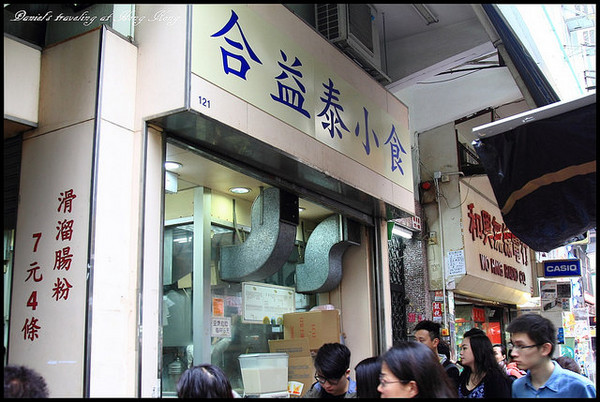
Sham Shui Po is one of Hong Kong’s oldest districts, and while you can feel the city’s vibrant energy here, most of the famous snacks are typically found in the main commercial areas. That’s also why Sham Shui Po attracts many locals looking for more traditional eats.
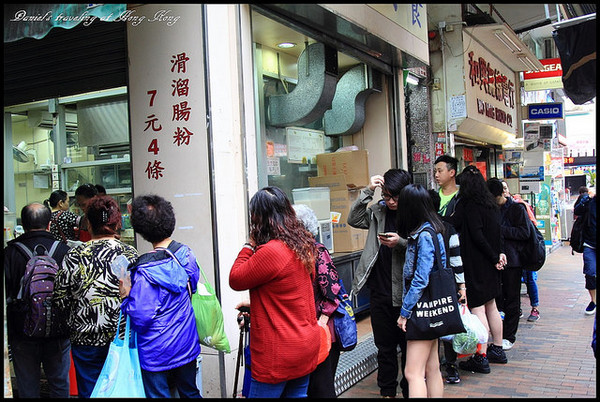
This time in Sham Shui Po, I discovered another hidden gem of Cantonese cuisine—cheung fun. We arrived around 11 a.m., not too early, but still in the heart of the bustling district. The shop is tucked away on a side street, and once you step inside, you’ll find it’s already open for business. It’s a small place, but it’s one of the go-to spots for locals. Though the space isn’t large, there were quite a few people during our visit, which shows just how popular this place is. From this, you can tell that they serve some seriously delicious food.

The shop isn’t very spacious, but there are quite a few seats, making the space between them quite tight. The place is always packed, so it’s pretty common to end up sharing a table with strangers in Hong Kong.
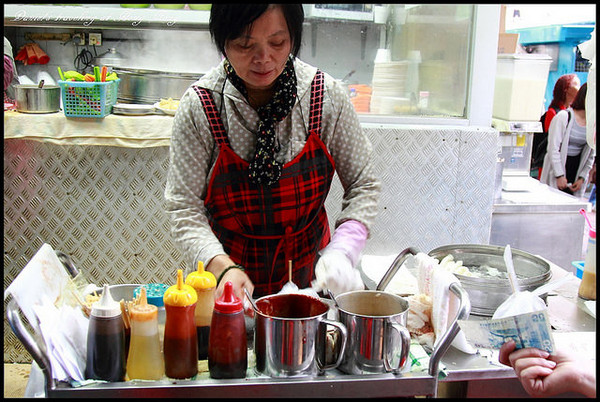
Many people come specifically for their signature cheung fun, which is why Heyi Tai Snacks has set up a cheung fun stall right outside the store to make it convenient for takeout customers. The long line outside is mostly people waiting just to grab some cheung fun to go.
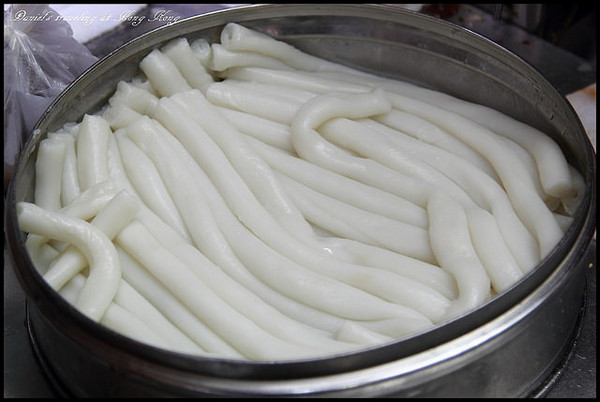
Here comes the freshly steamed cheung fun. Seeing the steamed rolls at the takeout area made me a bit curious—because in Taiwanese-style Cantonese restaurants, cheung fun usually comes wrapped with fillings like char siu or pork liver. But here... it’s just plain cheung fun, XD. As someone who enjoys variety, I was a bit skeptical about this seemingly plain dish. I couldn’t help but wonder what made it so special—otherwise, why would so many people be lining up for it?
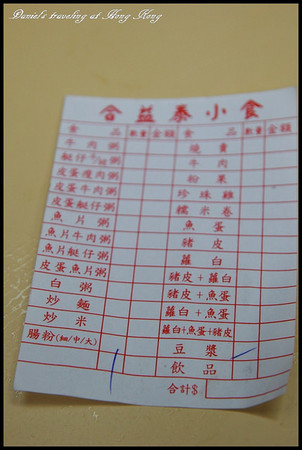
After taking a closer look at the menu, I realized they actually offer quite a few items. Congee is also a popular choice, but with so many delicious foods in Hong Kong still left for me to try, I decided to just get the cheung fun this time. Unless I’m with friends next time, I’ll probably stick to just the cheung fun.
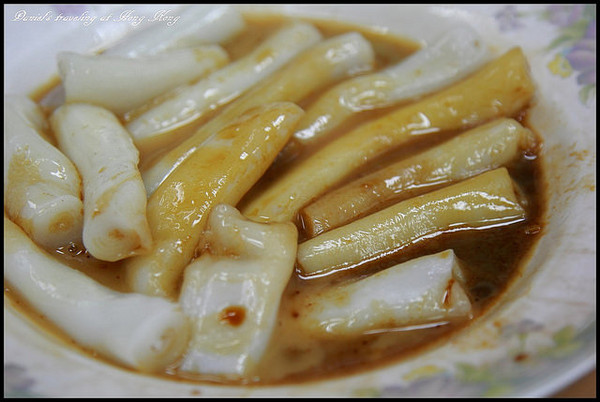
Cheung fun (7 HKD / 4 pieces)
At 7 HKD for 4 pieces, the price is extremely affordable by Hong Kong snack standards. In Hong Kong, even a drink or a small snack usually starts at 17 HKD (except for pineapple buns, XD). When the cheung fun was served, there was a layer of peanut sauce underneath—it looked tasty, but felt a bit plain.

Just as I was almost finished with my cheung fun, I noticed how the locals at the next table were eating theirs—and then it hit me... apparently, cheung fun isn’t meant to be eaten this way. You’re supposed to sprinkle sesame seeds on top and drizzle it with their special chili sauce to get the full experience. No wonder I found it so bland, XD.
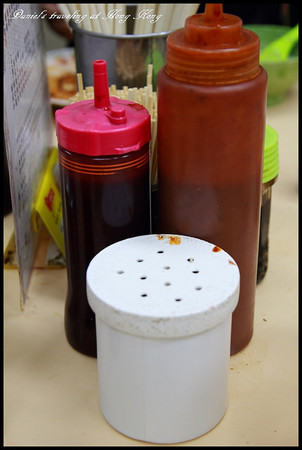
The chili sauce and sesame seeds on the table are essential condiments for the cheung fun. Don’t make the same mistake I did—don’t forget to add them until the very end.
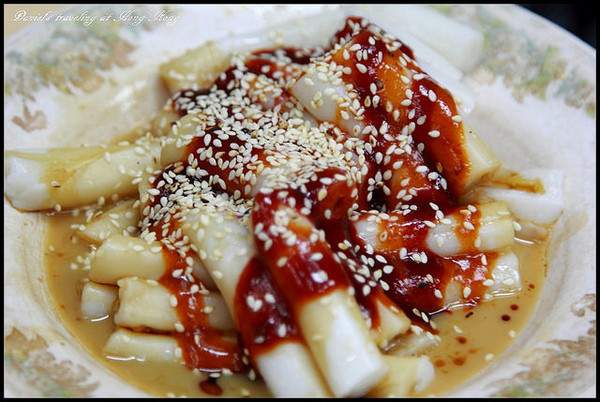
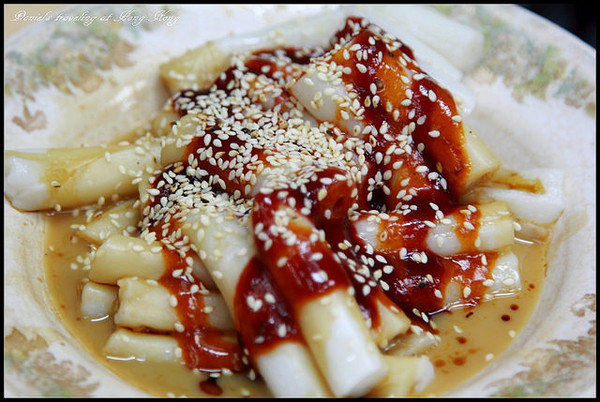
The final plate of cheung fun was the one I got the Hong Kong auntie next to me to take a picture of after she teased me. And sure enough, the fully dressed version looks completely different. Although Heyi Tai’s cheung fun doesn’t have any fillings, the cheung fun itself has a good thickness, and it’s incredibly Q-textured and silky-smooth—very different from the soft and mushy texture I’m used to. No wonder this cheung fun draws so many people in. Even without the chili sauce and sesame, the flavor was already quite enticing. With the added aroma of sesame and the slight saltiness and spiciness from the chili sauce, it’s simply unforgettable. After eating this, I doubt any other cheung fun will impress me as much.
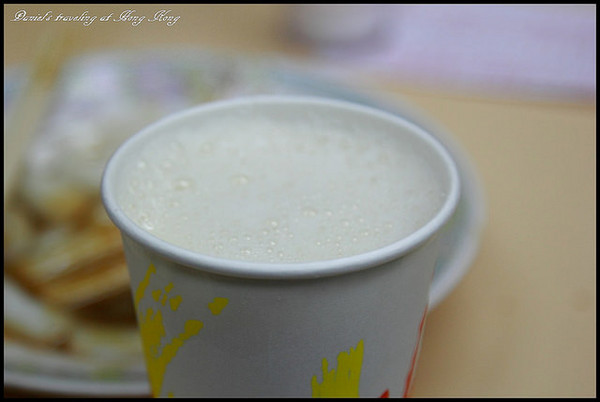
Soy Milk (6 HKD)
Since the weather in December was a bit chilly, I ordered a cup of hot soy milk to warm up. The taste is similar to what you’d get in Taiwan—not too sweet—and it pairs really well with the cheung fun.
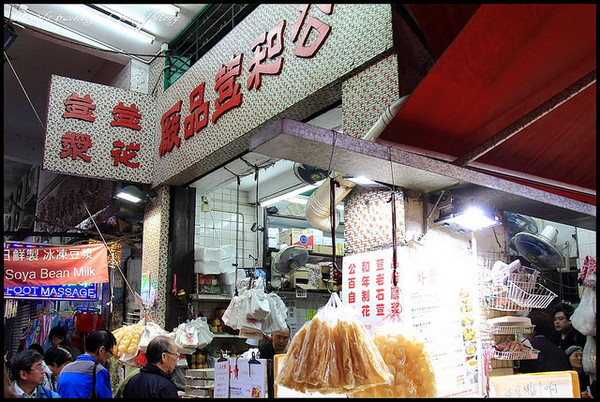
The next stop is Gong Wo Tofu Factory. Gong Wo Tofu Factory is located just next door to Heyi Tai Snacks on Pei Ho Street—the two spots aren’t far apart. They specialize in bean-based products—mainly soy milk and tofu pudding. But I came here specifically because a friend told me their tofu pudding is amazing, so I came to check it out. As for soy milk, I’d already had some at Heyi Tai, so I skipped it this time.

The exterior of Gong Wo Tofu Factory is very... retro. The busy environment perfectly reflects the fast-paced rhythm of Hong Kong. One interesting thing is the wooden basket hanging on the left side by the owner—take a guess what it’s for......................... It’s actually used for collecting money. The busy owner doesn’t even have time to put the money away properly, just tossing it straight into the basket and moving on. I couldn’t help but wonder if they’re not worried about the money falling out, XD.

The retro and narrow shopfront has walls adorned with various foods sold by the store. It’s a bit messy, but it has a certain charm—almost like some of those old-school shops in Tainan that have a similarly casual vibe.
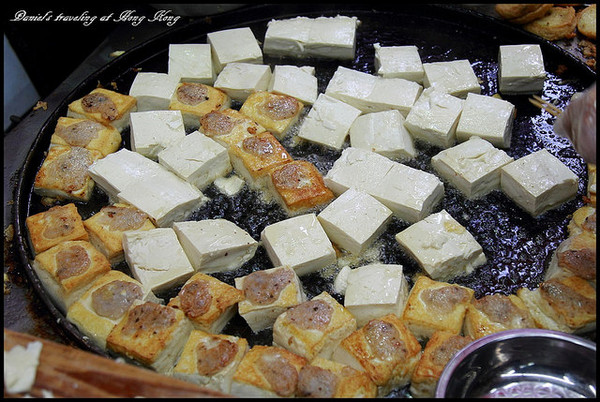
Only after finishing my meal did I realize Gong Wo also serves pan-fried tofu. The golden-brown crispy skin looked absolutely delicious, but unfortunately, I didn’t have any more room left in my stomach to try it.

Tofu Pudding (8 HKD)
At 8 HKD, the tofu pudding is also a relatively inexpensive dessert. The tofu pudding from Gong Wo Tofu Factory is delicate and silky, with a rich bean flavor. Though it doesn’t taste too different from the kind you’d find in Taiwan, the texture is noticeably distinct. The pudding only has a light sweetness, focusing mainly on the pure flavor of the beans. To me, it felt a bit plain.
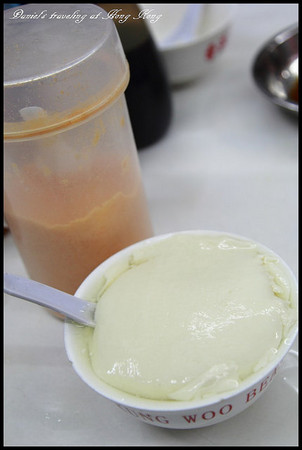
However, there’s a mysterious jar on the table filled with yellow powder—it turns out to be brown sugar powder. To enhance the flavor of the tofu pudding, you’re supposed to sprinkle this brown sugar powder on top, and you can adjust the sweetness to your liking.
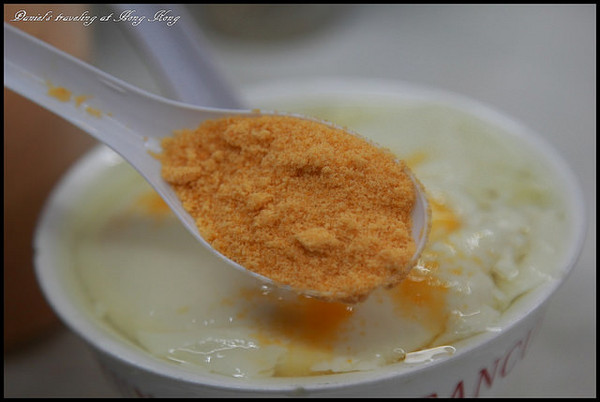
This is the brown sugar powder, refined from cane sugar. It’s rare to see this kind of sugar powder—it’s quite different from the sugar used in Taiwan. Once added, it boosts the sweetness and really highlights the flavor of the tofu pudding.
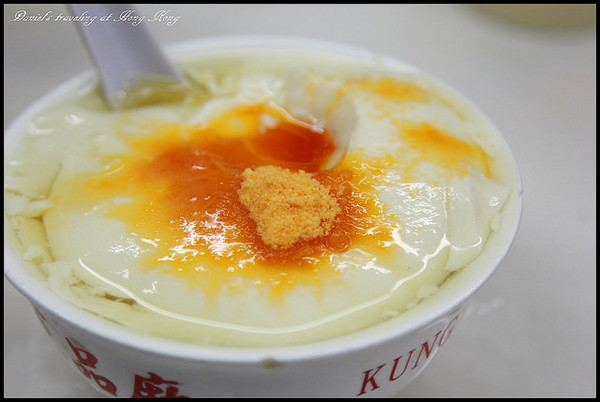
When the brown sugar is sprinkled on, it starts to melt—but if you eat it while it’s only halfway melted, the fine sugar makes a satisfying crunch sound. Eating it in that semi-melted state gives an especially unique texture. The brown sugar is also incredibly fragrant, and it pairs wonderfully with the tofu pudding. The special texture and flavor had me unconsciously adding quite a lot of the powder, XD.
This trip to Sham Shui Po turned out to be an unexpectedly great food adventure. The prices are also very reasonable, especially for the quality of the food. Especially the cheung fun and tofu pudding—they’re so memorable that they might just inspire me to plan another trip to Sham Shui Po soon. Who knows, maybe next time I’ll explore even more of the delicious eats this district has to offer.
Heyi Tai Snacks
Address: 21 Pei Ho Street, Sham Shui Po, Hong Kong
Phone: +852 2720 0239
Business hours: 06:00–20:30
Wo Hop Soy Products Factory
Address: 18 Po Yip Street, Sham Shui Po, Hong Kong
Phone: +852 9251 9579
Business hours: 07:00–21:00
Xiao Sheng’s Wandering Journey
Every journey, every trek is about the search—even if I’m not sure what I’m searching for—but in the end, what I gain often exceeds my imagination. That’s why my wandering journey will keep going on and on.
Share
This article is published by HowToTrip. Sharing and reposting are welcome — please credit the source.
Article URL: https://www.howtotrip.net/views-5634
Related Articles
- Shaoxing's "Grandpa Gourd" hangs the gourds back up: "If there are too many people, we'll interact less — just take a quick look from afar"
- Chinese authorities announce "reciprocal adjustment" to Japan visa fees — single-entry visa jumps from 2,250 to 16,750 yen!
- The "health stones" carried by a traveler were found to have radiation levels exceeding safety limits by a thousand times, potentially endangering fellow passengers on the same flight. Customs issues warning!
- Shenzhen Airport Issues Late-Night Notice: Unidentified Aerial Object Detected, Causing Widespread Flight Delays!
- “They only said it cost money after I opened the box and washed it!” 200g of grapes sold for 60 yuan on a high-speed train—12306 responds!
- Can't buy an airline ticket? Denied exit? Blocked from boarding? A large number of Chinese tourists have mysteriously become "discredited individuals"
- Adverse weather and economic fluctuations impact Colombia's coffee market
- Beach bathing area responds to 2 yuan/30 seconds fee for freshwater foot rinsing: Clearly priced!
- Taking off with an improperly closed cabin door? Wing malfunction? Multiple flights made emergency returns mid-journey!
- Experience the gifts of nature! A countdown of the world’s ten most stunning coastlines