A Century-Old Kyoto Machiya Gem: Historic Royal-Grade "Soba Noodles"
Text and photos by Chen Shala
Walking through the streets of Kyoto, you’ll often see signs for "Imperial Confectionery," and more specifically, some may indicate they are the "Imperial Confectionery of XX Temple." The term "imperial" here is akin to being the “exclusive partner of the Rio Olympics” or the “sole sponsor of the XX Cup.”
Gaining the title of "imperial" isn’t easy. For instance, the renowned imperial purveyor of sweets, Kawabata Doki, has held this honor since the early 16th century. The founder, Wataru Susumu, sympathized with the impoverished Imperial Family after years of war and gave up his samurai status to open a mochi (rice cake) shop. From then on, he supplied sweets to the Imperial Palace every day. It’s said that the small side gate next to the current southern gate (Kenreimon) of the Imperial Palace—known as the Kawabata Gate—was built specifically for the Kawabata family's use.
Among many such imperial confectioners, there’s an intriguing old shop that, while primarily a mochi maker, also hangs a sign reading “Imperial Soba Shop.” But it originally started as a mochi store, opening in 1465. That same year saw the Ōnin War, a conflict that deeply influenced the course of Japan’s pre-modern history. The shop began operating just after the war ended, making it a witness to turbulent yet formative times in Japanese history.
As for Honke Owariya, because of its location near the Imperial Palace, it has long received orders from the palace. Being a confectionery shop from the start, it also naturally catered to special orders from temples. After the Edo period, due to the 12th-generation owner’s deep faith in the Rinzai sect of Japanese Buddhism, Owariya’s soba noodles became a customary snack served during intermissions in various Zen Buddhist temple ceremonies.
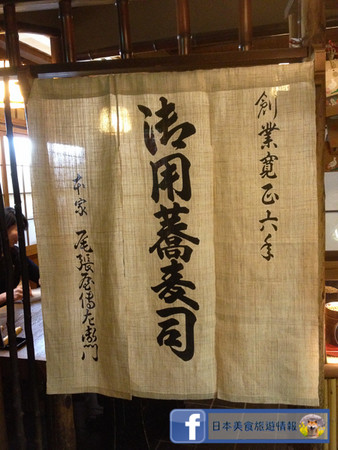
▲ The “Imperial Soba Shop” curtain, hung at the entrance, bears the inscription “Established in 1465.”
Although the saying goes “soba in the east, udon in the west,” Kyoto, the cultural heart of Japan, naturally has its own soba culture. Generally speaking, the division between eastern and western Japanese cuisine—or Japanese cuisine in general—can be attributed in part to water quality. Eastern Japan has harder water, while western Japan, especially Kyoto, boasts an abundance of soft, high-quality water.
The location of Honke Owariya happens to be above a source of particularly soft underground water. Even today, the shop draws water from a well more than 15 meters deep. Despite the high-grade soft water available, the shop insists on using water of consistent quality all year round. To complement this 10-degree soft water, Owariya’s dipping sauce differs from the thick soy sauce and sugar-based style common in eastern Japan. Instead, it adopts the methods of Kyoto cuisine, using ingredients like Rishiri kelp and dried bonito flakes to create a light, refined flavor that doesn’t rely heavily on soy sauce.
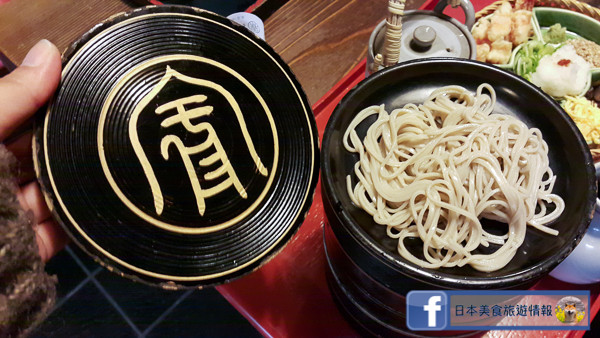
▲ Horai Soba, a special menu item at Honke Owariya. In addition to the basic condiments known as "yakumi" (see note), its use of luxurious Kyoto lacquerware by Shokunin Shoko is a standout feature.
Beyond the unique sauce, one of the best parts of dining in Kyoto is the exquisite tableware. Especially at historic shops like Honke Owariya, beyond the classic old exterior, the joy lies in appreciating the beautiful dishes carefully selected by the owner. Take the signature soba set “Horai Soba,” for example. In addition to using Kyoto lacquerware from Shoko for serving the noodles, my favorite part is the circular arrangement of small bowls filled with condiments. Five little bowls form a ring—some in celadon, others in yellow Seto ware—placed atop a bamboo basket. It’s truly unique.
Each condiment is served in its own bowl, keeping the flavors distinct. Unlike typical soba shops where noodles sit in a sieve and you add condiments as desired, here you enjoy the fun of combining different flavors. Of course, as with any proper soba meal, a sake cup and soup bowl are included. “Horai” means “abundance,” and true to its name, the Horai Soba set comes with everything in one go—a veritable treasure trove of soba accompaniments.
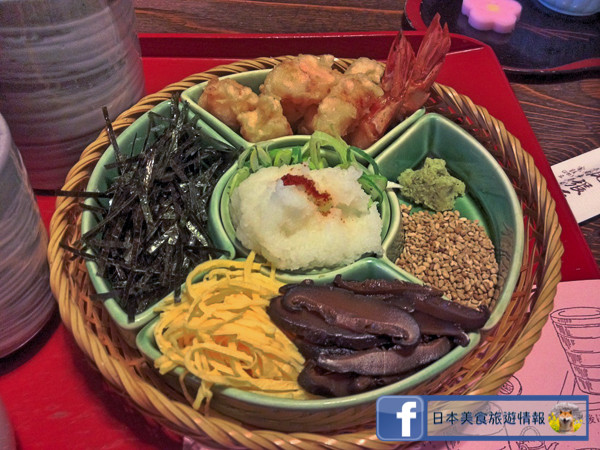
▲ The condiment set for “Horai Soba”—shiitake mushrooms, shredded egg, spicy radish paste, green onions, sesame seeds, wasabi, seaweed strips, and shrimp tempura.
Beyond the refined tableware, the word “Horai” in Horai Soba not only refers to the gathering of many famous soba condiments, but also carries symbolic meaning. Kyoto is famed for its gold leaf craftsmanship. In the past, when gold leaf artisans swept up leftover gold powder, they used soba flour to collect it before sifting it away. Thus, soba flour also came to symbolize wealth and prosperity. This is also one origin of the tradition of eating soba on New Year’s Eve (Ōmisoka) in Japan. Since the 14th-generation owner, Owariya has used the character “Horai” (treasure) on its curtains and tableware, making Horai Soba a true treasure of Kyoto’s soba culture. Be sure to give it a try.
With a history of 550 years, Honke Owariya is now gradually transitioning from the 15th to the 16th generation. Next time you’re near Karasuma-Oike Station, the intersection of two major Kyoto subway lines, take a detour into the alleyways to discover the enduring flavors of Kyoto’s historic soba tradition.
Note: Yakumi (やくみ) refers to aromatic seasonings added to dishes. In Western cuisine, these are herbs; in Japanese cuisine, they include Chinese medicinal ingredients like ginger and cassia bark. In soba shops, items like sesame seeds, wasabi, seaweed, and chili peppers fall under the yakumi category.
Honke Owariya Main Shop
Business Hours
11:00–19:00 (Last order 18:30)
Mochi sales from 09:00
Closed
January 1st and 2nd
Average Budget
600~2500Q?/span>
Reviews
Located within a five-minute walk from Kyoto Metro Kuramae-Ike Station, it’s tucked away in a lane but not hard to find. While soba is traditionally more associated with eastern Japan, the Kyoto version features a rich broth made from kelp, dried bonito, and local river fish—an essence of Kyoto soba culture. The dining environment is delightfully traditional, with the shop’s tableware and decor exuding classic Kyoto machiya charm. The prices are reasonable for soba shops. While it attracts many locals, it’s also popular with Western visitors. It’s a must-visit Kyoto century-old shop and one of my regular haunts.
By Chen Shala, Japanese Food Travel Info
A regular office worker by day, Chen Shala is a bookworm immersed in Japanese history and culture by night. He dislikes being called a “Kyoto expert” and prefers to think of himself as a lover of Kyoto’s culture and history. Known as Shala, he also goes by the nicknames “Salad Princess” and “Plump Raccoon.”
Japanese Food Travel Info Facebook Page
Japanese Food Travel Info Facebook Group
Share
This article is published by HowToTrip. Sharing and reposting are welcome — please credit the source.
Article URL: https://www.howtotrip.net/views-5548
Related Articles
- Shaoxing's "Grandpa Gourd" hangs the gourds back up: "If there are too many people, we'll interact less — just take a quick look from afar"
- Chinese authorities announce "reciprocal adjustment" to Japan visa fees — single-entry visa jumps from 2,250 to 16,750 yen!
- 旅客携带的“保健石”核辐射超标千倍,同机人员或遭殃!海关提醒!
- 深圳机场深夜通报!出现不明升空物,航班大面积延误!
- “拆盒洗了才说要钱!”高铁200克葡萄卖60元,12306回应!
- 买不了机票?出境被拒?登机被拦?一大波中国游客莫名成了“失信人”
- 不利天气和经济波动影响哥伦比亚咖啡市场
- 海边浴场回应冲脚淡水收费2元/30秒:明码标价!
- 舱门没关好就起飞?机翼出现问题?多个航班途中紧急折返!
- 感受大自然的馈赠!盘点世界十大唯美海岸线