The Fengyu Bridge in Chengyang Eight Villages brings blessings and happiness. "Sitting with the girls" lets you romance beautiful Dong women.
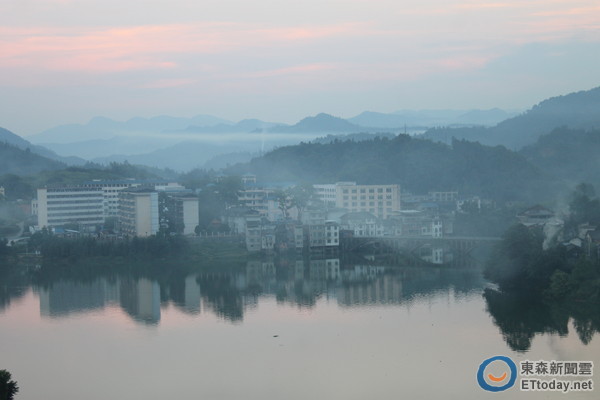
▲ Sanjiang Dong Autonomous County is picturesque like a poem. (Photo / Reporter Huang Weijia)
Reporter Huang Weijia / Reporting from Guangxi
"Guilin’s scenery is the best under heaven, but the Dong ethnic charm is found in Sanjiang." Sanjiang Dong Autonomous County is located in northern Guangxi, bordering Hunan and Guizhou provinces, covering a total area of 2,454 square kilometers. It is home to ethnic groups including the Dong, Miao, Yao, Zhuang, and Han, with a population of about 380,000, of which the Dong people account for 57%. In Sanjiang, wooden stilt-style architecture can be seen everywhere, with over 120 of the most distinctive Dong-style Fengyu Bridges and more than 200 drum towers, earning it the title "Hometown of Bridges and Towers in the World."
Fengyu Bridges, also known as Flower Bridges or Blessing Bridges, are composed of massive stone piers, wooden bridge structures, long corridors, and pavilions, using not a single iron nail. Instead, holes are drilled into the pillars and joined with mortise and tenon joints. The bridge decks are lined with railings and benches for resting, and the roofs are covered with sturdy tiles, forming a covered walkway. Built over streams, these bridges not only provide convenient transportation and shelter from wind and rain but are also used by locals for soul-calling rituals and praying for sick children. Newlyweds walking hand-in-hand from one end of the bridge to the other symbolizes enduring love after weathering life’s "storms."
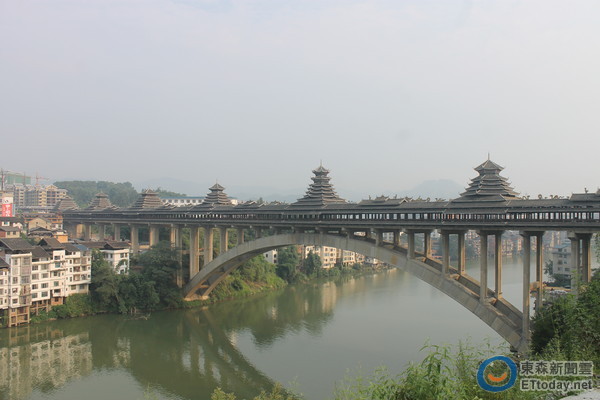
▲ The world’s longest and largest Sanjiang Fengyu Bridge spans the Xun River, combining a crescent-shaped single arch with distinctive Dong architectural features. (Photo / Reporter Huang Weijia)
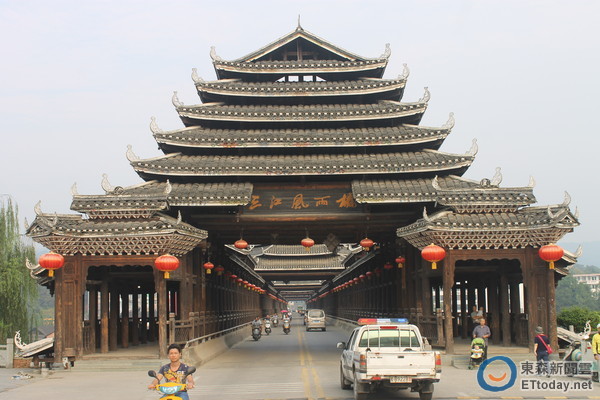
▲ The Sanjiang Fengyu Bridge was built by renowned Dong carpenter Yang Siyu and seven wooden construction teams totaling over 150 people. (Photo / Reporter Huang Weijia)
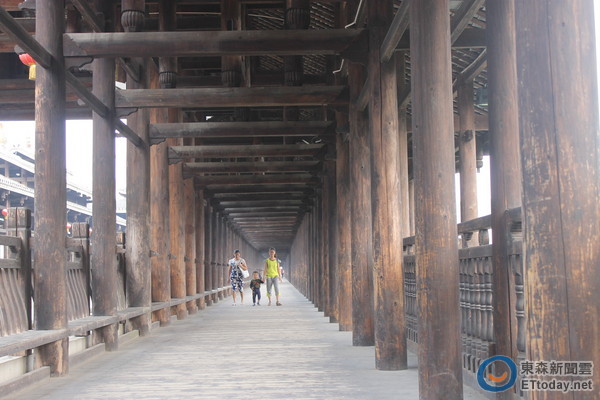
▲ The Sanjiang Fengyu Bridge is 398 meters long, featuring 284 bridge corridors and seven tower pavilions, each uniquely shaped—some four-sided, others six or eight-sided. (Photo / Reporter Huang Weijia)
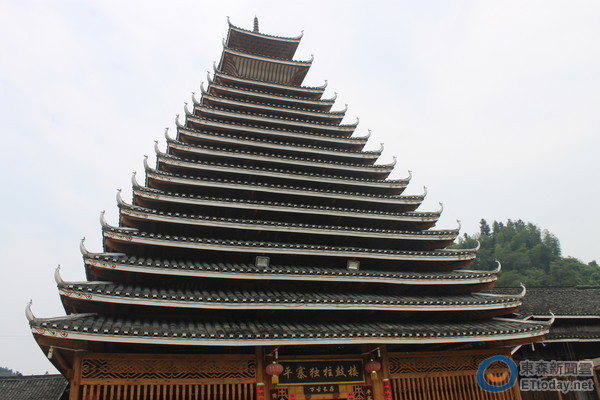
Drum towers are the tallest structures in Dong villages, situated at their centers and still serving as venues for rituals, meetings, gatherings, welcoming guests, and celebrations. In the past, animal-hide drums hung from the beams, not for entertainment but to summon villagers during emergencies when the "village head" (leader) would beat the drum from atop the tower. Additionally, in case of village fires, the drums were used to call for help from neighboring communities. The "No. 1 Drum Tower of the Dong Region," the Sanjiang Drum Tower, is located by the Xun River and was jointly constructed by Yang Siyu and others in November 2002 without blueprints. All materials were calculated mentally by Dong craftsmen. The tower stands 42.6 meters tall and covers an area of 600 square meters.
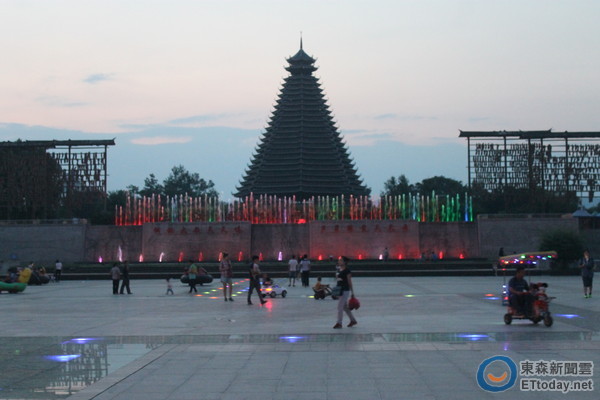
▲ The tower has 60 pillars standing on the ground. Excluding the top two floors, 25 layers of tiles are evenly spaced across the structure, forming a pyramid shape. (Photo / Reporter Huang Weijia)

Chengyang Eight Villages, known as the "Land of a Hundred Festivals," is 19 kilometers from Sanjiang County town and consists of eight contiguous Dong mountain villages: Ma’an, Pingzhai, Yanzhai, Pingtan, Dongzhai, Chengyang Dazhai, Pingpu, and Jichang, home to nearly 10,000 Dong people. The villages boast 2,000 stilted houses, eight drum towers, and five Fengyu Bridges. This vast expanse of traditional Dong settlements is surrounded by lush green mountains and trees, offering a serene environment where visitors can easily forget their worries—perfect for urban dwellers seeking stress relief. During Chinese New Year, every village is filled with joy and liveliness.
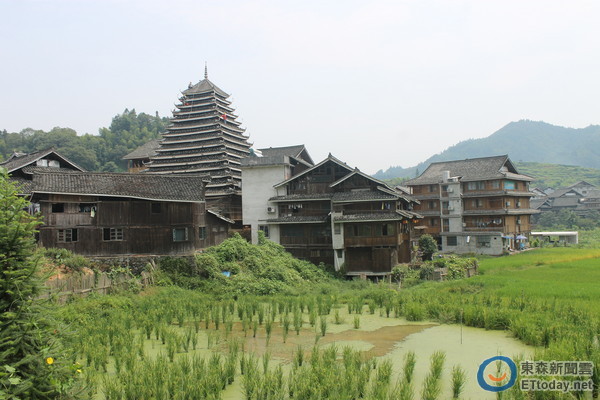
▲ The festive lanterns glow brightly in the center of the village. (Photo / Reporter Huang Weijia)
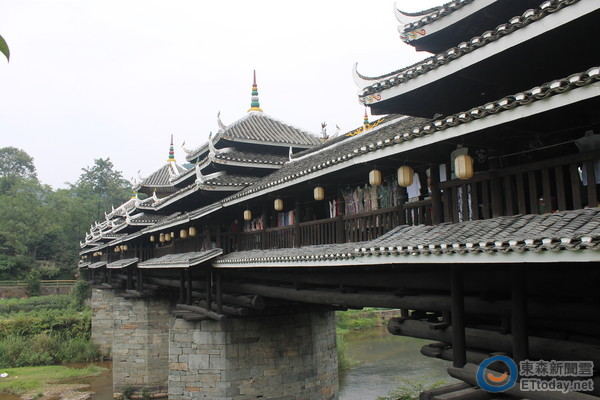
Chengyang Fengyu Bridge, also called Yongji Bridge or Panlong Bridge, was built in 1912 primarily from wood and stone, also without iron nails. The entire bridge is 77.76 meters long, 3.75 meters wide, and 10.6 meters high, featuring five polygonal tower pavilions with a majestic and captivating appearance. Beyond its transportation function, it symbolizes a "flying dragon encircling the village," bringing blessings and happiness.
Legend has it that a newlywed couple crossing the bridge were targeted by a river crab spirit who coveted the woman and swept her away in a whirlwind. The husband cried bitterly by the river, moving the underwater flower dragon, who was touched by his devotion and soared to rescue the woman, reuniting the couple. To commemorate the flower dragon, the small wooden bridge was rebuilt into a Fengyu Bridge, with carvings of the dragon on its pillars.

▲ The aged stone slabs beneath the bridge are smooth, polished by years of foot traffic, and are also a highlight of the scenic area. (Photo / Reporter Huang Weijia)
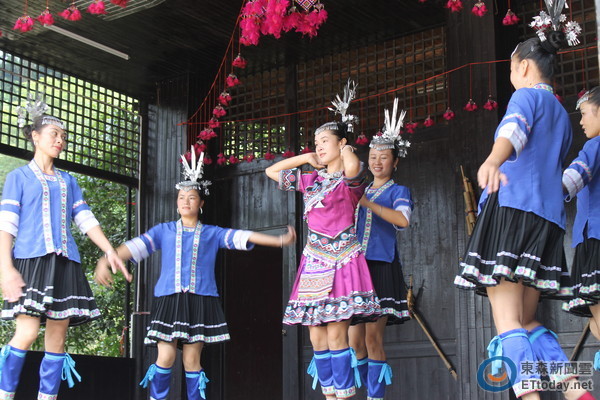
▲ Folk song and dance performances by Dong girls. (Photo / Reporter Huang Weijia)
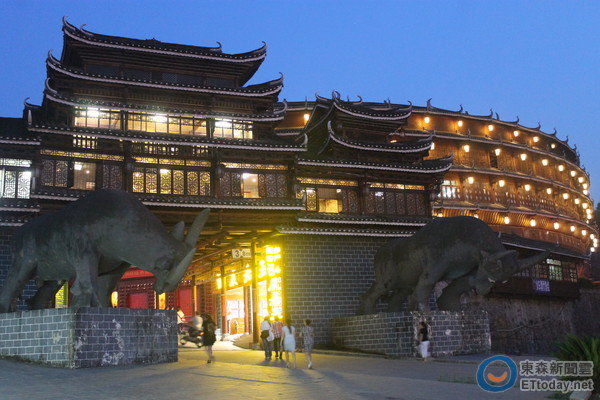
▲ "Sitting with the girls" is a traditional Dong and Miao courtship practice, and you can experience its charm at night in the "Dong Village Bird’s Nest" at China Dong City. (Photo / Reporter Huang Weijia)
First Watch: Courting the Girls
Courting the girls marks the beginning of marriage. Despite challenges like poor transportation, Dong youths would paddle bamboo rafts or carry oil lamps to girls' homes to profess their love.
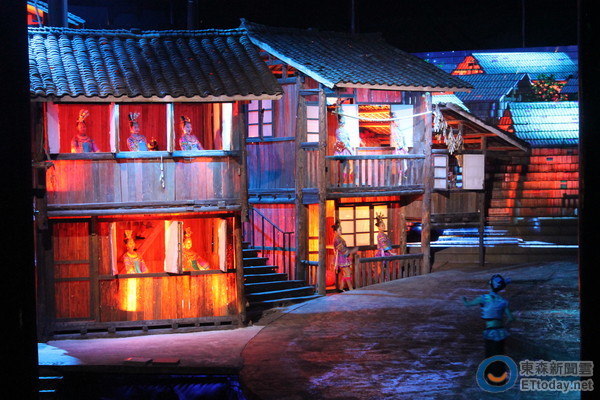
Second Watch: Teasing the Girls
Teasing the girls is both entertainment and a form of courtship. Dong girls gather to spin thread indoors while waiting for young men to sing and chat with them.
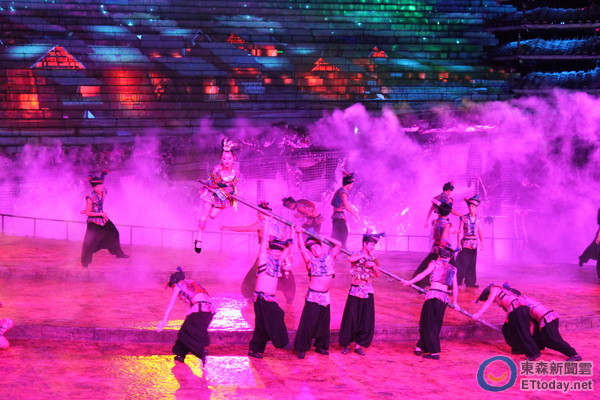
Third Watch: Sitting with the Girls
Sitting with the girls is an evolution of teasing, where young couples bond through games. When mutual affection blooms, pairs discreetly slip away to confess their feelings in secluded spots.
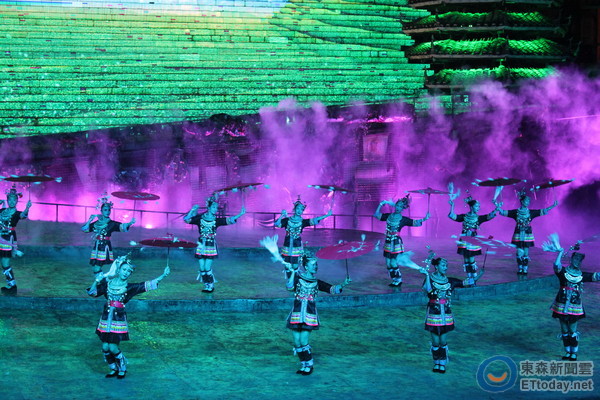
Fourth Watch: Dawn’s Joy
Adorned with silver jewelry and elegant attire, the bride, reluctant to leave her parents and friends as the sun rises, holds her groom’s hand to begin her new life. The next day brings a grand procession to her new home.
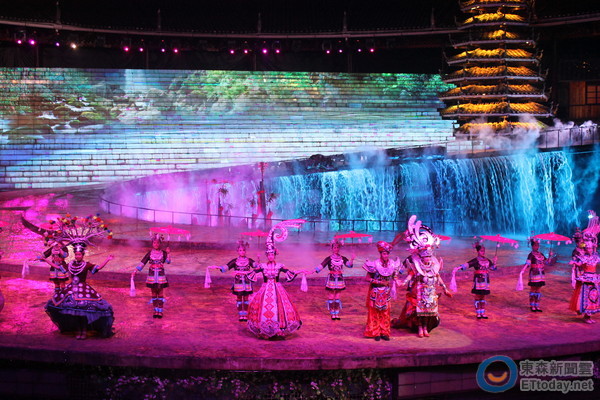
"Guilin’s scenery is the best under heaven, but beauty is found all over Guangxi." Visiting Guangxi without exploring beyond Guilin is a missed opportunity. Spend 8 days immersing yourself in the region’s ethnic culture. The "Taiwan-Guangxi New Alliance," after years of field research and collaboration with Guangxi’s tourism boards, has crafted a series of shopping-free, extra-cost-free premium experiences. Rediscover travel’s true essence and enjoy a unique journey.▲ Book your ethnic adventure now.
▲ Browse stunning photos of Guangxi’s landscapes.
Share
This article is published by HowToTrip. Sharing and reposting are welcome — please credit the source.
Article URL: https://www.howtotrip.net/views-5533
Related Articles
- Shaoxing's "Grandpa Gourd" hangs the gourds back up: "If there are too many people, we'll interact less — just take a quick look from afar"
- Chinese authorities announce "reciprocal adjustment" to Japan visa fees — single-entry visa jumps from 2,250 to 16,750 yen!
- 旅客携带的“保健石”核辐射超标千倍,同机人员或遭殃!海关提醒!
- 深圳机场深夜通报!出现不明升空物,航班大面积延误!
- “拆盒洗了才说要钱!”高铁200克葡萄卖60元,12306回应!
- 买不了机票?出境被拒?登机被拦?一大波中国游客莫名成了“失信人”
- 不利天气和经济波动影响哥伦比亚咖啡市场
- 海边浴场回应冲脚淡水收费2元/30秒:明码标价!
- 舱门没关好就起飞?机翼出现问题?多个航班途中紧急折返!
- 感受大自然的馈赠!盘点世界十大唯美海岸线