Five years ago, the same Nepalese elephant that once strangled a Chinese tourist with its trunk died last week due to malnutrition and exhaustion from overwork. On September 25, 2009, a couple in their 30s from Liaoning had just finished riding the elephant when the husband asked to take a photo with it. He stood in front of the elephant for a “close encounter,” but the animal, which had been walking for over two hours without food, suddenly became enraged. It wrapped its trunk around the man’s neck and twisted violently, causing him to suffocate on the spot. He died on the way to the hospital.

According to a message posted on the website of an organization called “Animals Nepal” on the 3rd, the 35-year-old elephant named Lakshmi, the largest in Sauraha, the site of Nepal’s famous Chitwan National Park tourist area, died of tuberculosis. The elephant came from India and had been rented by various local lodges before dying while still working in the jungle just days earlier.
Last week, another female elephant with the same name also died from illness and overwork. Animals Nepal said the 70-year-old elephant should have retired long ago. With most of its teeth gone, it showed signs of malnutrition and digestive issues. Its spine was severely infected due to years of heavy loads.
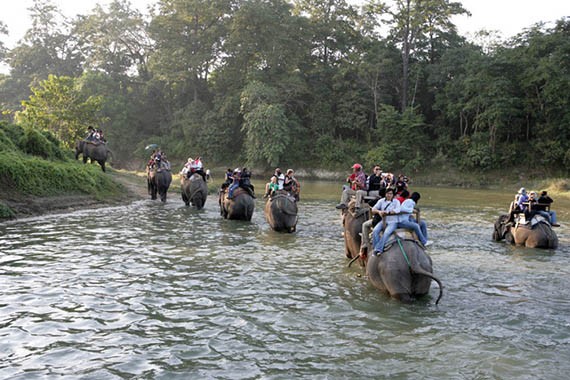
Before the deaths of these two elephants, the organization investigated the living conditions of 42 privately owned elephants used for jungle walk and safari services in Sauraha after receiving repeated reports of elephant abuse from tourists. The findings were shocking: four elephants were completely blind, six had tuberculosis, two were very young, and several were over 60 years old—but all were forced to work all day.
The investigative report titled “Elephants Are Not Machines” pointed out that 80% of the elephants were in poor condition: lacking freedom of movement, they were chained up whenever not working; they were often beaten violently, with more than 10 of the 42 elephants showing clear signs of abuse; their living quarters were substandard; their food was poor and meals irregular; and they worked excessively, sometimes carrying seven or eight passengers from morning to night on busy days.
The investigation also found that the treatment the mahouts received from their employers directly affected the elephants’ well-being; additionally, elephants that lived in groups were significantly healthier than those kept alone.
During my time working in Nepal, I visited Chitwan National Park several times to ride elephants. Though strong, carrying four adults, a mahout, and a howdah through the jungle for hours is no easy task. I witnessed mahouts frequently and harshly whipping the elephants under them.
Animals Nepal believes the deaths of the two elephants reveal systemic management issues in the jungle elephant trekking tourism sector. The profit-driven behavior of operators directly threatens the lives of both elephants and tourists. The report thus calls on elephant owners and relevant authorities to take immediate action to prevent further tragedies.