The three-day New Year’s holiday has arrived as scheduled, and the national tourism market is once again experiencing a "surge." Major scenic spots are packed, with many people even stuck in traffic. Travelers from the north are flocking to the warmer south, while many southern visitors and ski enthusiasts are heading for snowy destinations. A "Chinese-style migration" that spans the entire nation seems to be rehearsing for the upcoming Spring Festival travel rush.
"I originally wanted to take my parents out during the Spring Festival, but they felt they should spend the holiday at home." Mr. Lü, a busy office worker, took his parents to Hainan this New Year’s holiday: "I wanted to show some filial piety, but the group tour pace was so fast that my parents had a tough time."
The public is longing for resorts that offer more immersive experiences and are better suited for family time together. It is reported that the "New Wonder World International Resort," actively being developed by Zhonghong Co., Ltd. (stock code: 000979), will provide families with a "new place of interest."
The great human migration — a strange phenomenon in Chinese travel
Aside from the Spring Festival, there are several fixed periods of mass migration for Chinese people each year: whether it’s New Year’s Day, Labor Day, Mid-Autumn Festival, or especially the seven-day National Day holiday, major scenic spots across the country are often overwhelmed by crowds, and transportation systems face tremendous pressure. Long-suppressed travel demand erupts during these rare holidays.
Tourists who have been confined to their own cities for too long are eager to go somewhere new—to relieve work stress and discover fresh enjoyment. People from inland areas hope to see the vast ocean, flocking "southward like geese," turning popular beaches into crowded "dumpling pots"; meanwhile, sports enthusiasts prefer to head north in winter, leading to packed ski resorts and hot spring destinations. A hard-earned holiday that can’t be fully enjoyed has become a difficult challenge for Chinese travelers.
The root causes of this issue are twofold: first, China lacks a flexible and adaptable holiday system, causing the public to release their travel desires only during official holidays, resulting in sudden surges in tourist numbers and tight market supply; second, there is a shortage of high-quality tourist destinations, with public demand overly concentrated on 5A-level scenic spots, leading to large crowds flooding a small number of sites in a short time.
Government promotes flexible paid leave, with hopes for more holidays
The 2014 government work report and the State Council executive meeting on promoting tourism development both reiterated the "paid leave" system. Through reforms to the holiday system, a combination of "trading salary for leave," "trading leave for salary," and "paid leave" is being implemented. A more flexible and adaptable holiday system will fundamentally solve the problem of overly concentrated travel times. In September 2014, the Holiday Office, which had been in operation for 14 years, was disbanded, signaling the country’s intent to adjust its holiday economic model.
With the true implementation of the paid leave system, our future holidays will offer greater autonomy. Members of the public with vacation needs can choose their travel dates based on personal preferences, avoid peak periods, and also ease the market pressure during high seasons. If desired, one can even "trade salary for leave" to secure longer breaks, which are not only convenient for long-distance travel but also better suited for families wanting to travel with children or elderly members.
Beyond the inflexibility of the old holiday system, the traditional sightseeing model—rushing through attractions—can no longer keep up with people’s shift from "traveling" to "leisure vacations." For someone like Mr. Lü, who wants to spend the holiday traveling with family, the traditional holiday and travel models become even more of an obstacle.
Reject “rush-through tours”—Zhonghong’s “New Wonder World” creates a new vacation experience
The public is looking for more immersive experiences and resorts better suited for quality family time. It is reported that the "New Wonder World International Resort," actively being developed by Zhonghong Co., Ltd., will provide families with a "new place of interest." In reality, each family member has different vacation needs: younger generations seek thrills like amusement and sports; the elderly prefer health-focused leisure and wellness experiences; and some business professionals want to balance work with relaxation... The one common desire is to spend the holiday with family and enjoy vacation together.
"New Wonder World" starts with these needs, striving to create a resort where "togetherness meets individuality." By organically integrating diverse offerings such as theme parks, resort hotels, cultural theaters, children’s play zones, and wellness and retirement communities, the different needs of family members are met within one integrated destination. Kids can enjoy playful fun in the kids’ zone; moms can experience unique shopping; dads can hit the sports club after a business meeting; and the elderly can feel right at home in the wellness and retirement community. Living joyfully together brings families closer.
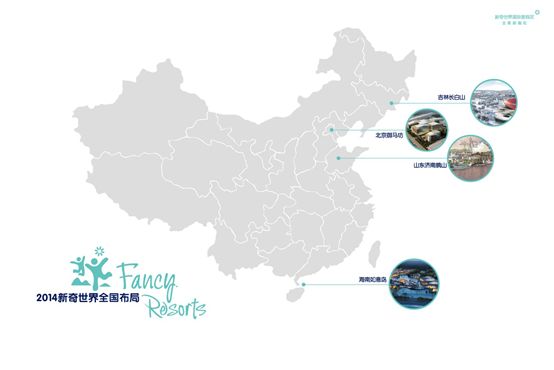
It is reported that Zhonghong’s "New Wonder World" has expanded nationwide, with multiple projects under its banner. Among them, the New Wonder World International Resort · Changbai Mountain project, located in the Changbai Mountain area, is set to launch soon. In the future, there’s no need to worry about exhausting travel—just return to your "New Wonder World" home when tired, and enjoy a truly relaxing, high-quality family vacation.
In the future, more flexible holidays and the ever-more-exciting "New Wonder World" will paint a warm, fun-filled vacation blueprint for families across China and around the world.