Xinhua News Agency, Lhasa, Jan. 8 (Special Report) — The latest statistics from Tingri County in Shigatse Prefecture, the hometown of Mount Everest in Tibet, show that in 2014, Mount Everest Base Camp received 59,100 visitors, a year-on-year increase of 6%, hitting a record high.
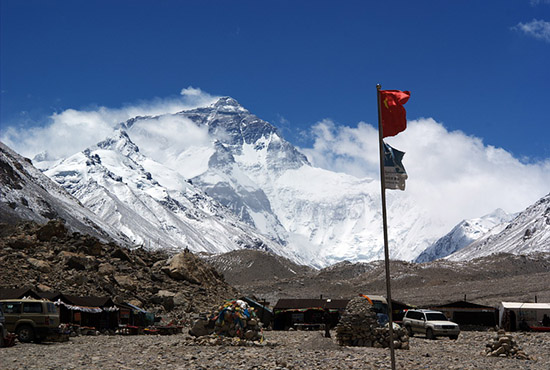
Wang Kun, the county head of Tingri, introduced that among the visitors to the Everest Base Camp last year were more than 7,600 foreign guests, mainly from Europe and America. The ticket revenue of the Everest Base Camp reached over 17 million yuan, up 4% compared with 2013.
Tingri County is located at the northern foot of the middle section of the Himalayas, at the base of Mount Everest, with an average altitude of 5,000 meters. The county boasts four peaks over 8,000 meters, including Mount Everest, and is known as the “Hometown of Mount Everest.”
Mount Everest is situated on the Himalayas along the border between China and Nepal. Perennially snow-capped and standing at 8,844.43 meters above sea level, it is the world’s highest peak. The northern slope of Everest lies within Tingri County in Tibet, while the southern slope is in Nepal. In Tibetan, “Mount Everest” or “Qomolangma” means “Goddess Mother of the World,” while in Nepali, it is called “Sagarmatha,” meaning “Goddess of the Sky.”
Wang Kun told reporters that in April 2014, electricity was brought to the Everest Base Camp. Additionally, an asphalt road connecting National Highway 318 to the Everest Base Camp is under construction and is expected to open to traffic in June this year. “Everest is a world-class tourist destination, a sacred place that people around the world long to visit. Now, with electricity and an asphalt road reaching the base camp, even more domestic and international tourists will be able to witness the magnificence of Everest and fulfill their long-held dreams,” said Wang Kun.
It is understood that the best mountaineering season on the northern slope of Everest is from late April to early June and from mid-September to early October. However, visiting the Everest Base Camp is possible all year round.
From November 2014 to the end of March 2015, Tibet launched its first “Winter Tour Tibet · Enjoy Everest” campaign, aiming to enhance the visibility of winter tourism around Everest.