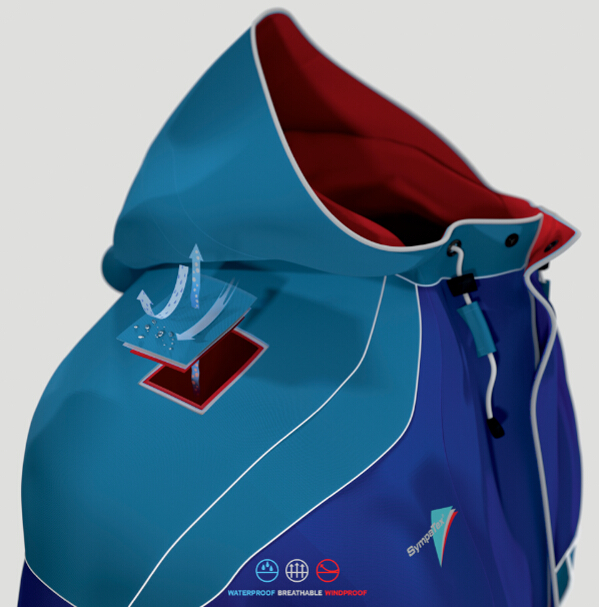
Introduction to the Performance of Sympatex Fabric
Published: 2026-09-25
👁 100 views
Last updated 2026-09-25 — The calculation of the waterproof performance of the membrane is based on the pressure at which the material begins to allow water to pass through it. According to the ISO 811 standard, the waterproof capability of the Sympatex membrane can exceed 45,000 mm, demonstrating superior waterproof performance. Compared to other membrane technologies, the non-porous, compact structure of the Sympatex membrane is engineered based on physical and chemical...
The calculation of the waterproof performance of the membrane is based on the pressure at which the material begins to allow water to pass through it. According to the ISO 811 standard, the waterproof capability of the Sympatex membrane can exceed 45,000 mm, demonstrating superior waterproof performance. Compared to other membrane technologies, the non-porous, compact structure of the Sympatex membrane is engineered based on physical and chemical principles. The hydrophilic (water-attracting) membrane absorbs moisture from the body and transports it to the outside through evaporation. Water vapor molecules are expelled outward along the hydrophilic molecular chains. The molecular structure of the Sympatex membrane (its hydrophilic components) swells with moisture, thereby facilitating the transport of water vapor and enabling rapid evaporation. This effect increases with rising temperature and humidity. Certified under the international ISO 11092 standard, the moisture vapor transmission rate (RET) of the SympaTex membrane can be as low as 0.5 or even lower, indicating excellent breathability. Additionally, according to the EU DIN EN ISO 9237 certification system, with zero liters of air passing through one square meter of Sympatex membrane per second, the Sympatex membrane is 100% windproof and prevents any decline in performance.
Share
This article is published by HowToTrip. Sharing and reposting are welcome — please credit the source.
Article URL: https://www.howtotrip.net/views-50989