"Since this short holiday is to commemorate the victory of the War of Resistance, we also wanted to choose a red tourism site that fits the occasion. After careful consideration, we finally picked Panshan." Facing the upcoming three-day short holiday, Ms. Wang, who lives in Beijing, had already made her travel plans early on and made red tourism her top priority. "It's quite convenient to get from Beijing to Jixian County now—you can take a direct train, and red tourism is also quite educational for kids."
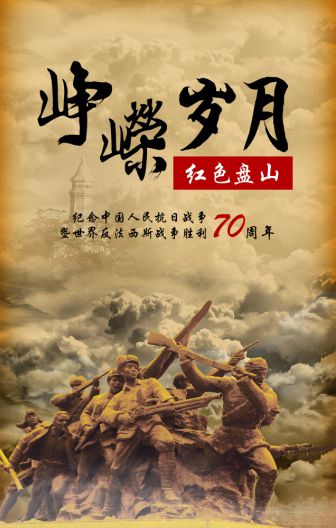
As Ms. Wang said, the抗战 short holiday has not only brought another travel peak but also sparked a wave of interest in red tourism. As one of the most famous red tourism sites in northern China, Panshan has been particularly popular among many travel enthusiasts. According to staff at Panshan, nearly 100 tickets for the short holiday period have already been sold, and tickets for the large-scale live-action performance "Tianxia・Panshan" have sold out more than half. In addition, Panshan has also created a small game themed around red tourism to build anticipation for the upcoming抗战 short holiday. By following the "Tianjin Panshan Scenic Area" WeChat public account, you can participate in the game.
In fact, Panshan’s red heritage has long been recognized by many travel enthusiasts. Historical records show that after the major anti-Japanese armed uprising in 1938, our army established an anti-Japanese base in Panshan, making full use of the area’s favorable terrain to engage in fierce battles with the Japanese army. In 28 key battles, including the ambush at Baicaowa, Panshan produced numerous revolutionary heroes such as Bao Sen and Tian Ye, leaving behind rich red tourism resources and valuable spiritual wealth for future generations.
It is worth mentioning that to commemorate the revolutionary martyrs who sacrificed their lives in the War of Resistance, in 1956, the Hebei Provincial Committee of the Communist Party of China and the provincial government decided to build the Jixian Panshan Martyrs' Cemetery that year, which was largely completed in 1957. Located at the southern foot of Panshan, the cemetery covers an area of 20 hectares and includes main structures such as the Martyrs' Memorial Tower, the Martyrs' Cemetery area, the Revolutionary Martyrs Memorial Hall, the Panshan Anti-Japanese Struggle Exhibition Hall, and the Martyrs' Columbarium. It is one of the most renowned martyrs' cemeteries in eastern Hebei.
Regarding the red tourism boom brought by this抗战 short holiday, a Panshan official stated: "The combination of red cultural landscapes and green natural scenery can not only offer visitors a unique travel experience but also allow them to learn more about revolutionary history, thereby gaining a better understanding of, respect for, and remembrance of history."
Introduction: A national scenic area and one of the first batch of national 5A-level tourist attractions—Panshan, once ranked alongside Mount Tai, Huangshan, West Lake, and the Forbidden City, was listed as one of China’s fifteen major scenic spots and is renowned both in China and abroad as the "First Mountain East of the Capital." Emperors and dignitaries throughout the dynasties have all competed to visit Panshan. Historical records show that emperors such as Emperor Wu of Wei, Emperor Taizong of Tang, Emperor Taizong of Liao, Emperor Shengzong of Liao, Emperor Shizong of Jin, and later Qing emperors such as Kangxi, Qianlong, Jiaqing, and Daoguang, as well as literary figures like Gao Shi, Xu Xiake, and Hong Sheng, all toured Panshan, leaving behind many relics, anecdotes, legends, and a wealth of cultural landmarks. Emperor Qianlong had a particular fondness for Panshan, visiting 32 times in his lifetime and composing 1,702 poems about it, exclaiming, "Had I known of Panshan, why would I have gone south of the Yangtze?"
Author: Emperor Shizong of Jin