
Protection Index
In addition to the brand name and product title, sunscreen packaging usually includes letters like SPF and PA. You can roughly understand SPF as indicating protection against UVB, and PA as indicating protection against UVA. In non-English-speaking countries, SPF may be an abbreviation in the local language, such as LSF (Lichtschutzfaktor) in Germany. SPF is the ratio of the Minimum Erythemal Dose (MED) with and without sunscreen applied, where MED refers to the amount of UV radiation required to cause reddening of the skin (dose = UV energy density × sun exposure time).Abroad, you can find sunscreens with SPF50 or even SPF100, but in China, the highest allowed label is SPF30+. For everyday activities like grocery shopping, there's no need to blindly seek high SPF values—products labeled SPF15–30 with PA+/++ are sufficient.
Water Resistance
If a sunscreen product is labeled “water resistant,” “Water Resistant,” or “Water Resistant (40 min),” it means that after applying the product to dry skin, going into water for 20 minutes, then air-drying without toweling off, and re-entering water for another 20 minutes before air-drying again (without toweling), the product will still maintain the labeled SPF value. If the SPF holds up after 80 minutes of water activity, the product may be labeled “super water resistant,” “Super Water Resistant,” or “Water Resistant (80 min).” Many countries do not allow the use of the term “waterproof” or “Waterproof.”
Physical Sunscreen
The back or side of a sunscreen bottle usually lists all ingredients, and in some regions, the names and concentrations of sun-filtering components are also indicated separately, such as “ZnO - 7%” (indicating 7% zinc oxide). Zinc oxide (ZnO) and titanium dioxide (TiO₂) are physical sunscreens widely used around the world. They work by reflecting and scattering UV rays on the skin’s surface to provide a shielding effect. If you have very sensitive skin, it’s recommended to choose a purely physical sunscreen to minimize skin irritation.
Chemical Sunscreen
Chemical sunscreens primarily work by having molecules absorb UV rays, thereby providing sun protection. There are dozens of types of chemical UV filters, and the types permitted vary from country to country, so the same sunscreen brand might have different formulations for different markets. In short, when traveling, choose a sunscreen with at least SPF30 and PA++; if you’re in areas with intense UV exposure, such as beaches or snowy regions, it’s advisable to opt for SPF30+/SPF50, PA+++, super water-resistant, and products that combine both physical and chemical sun protection.
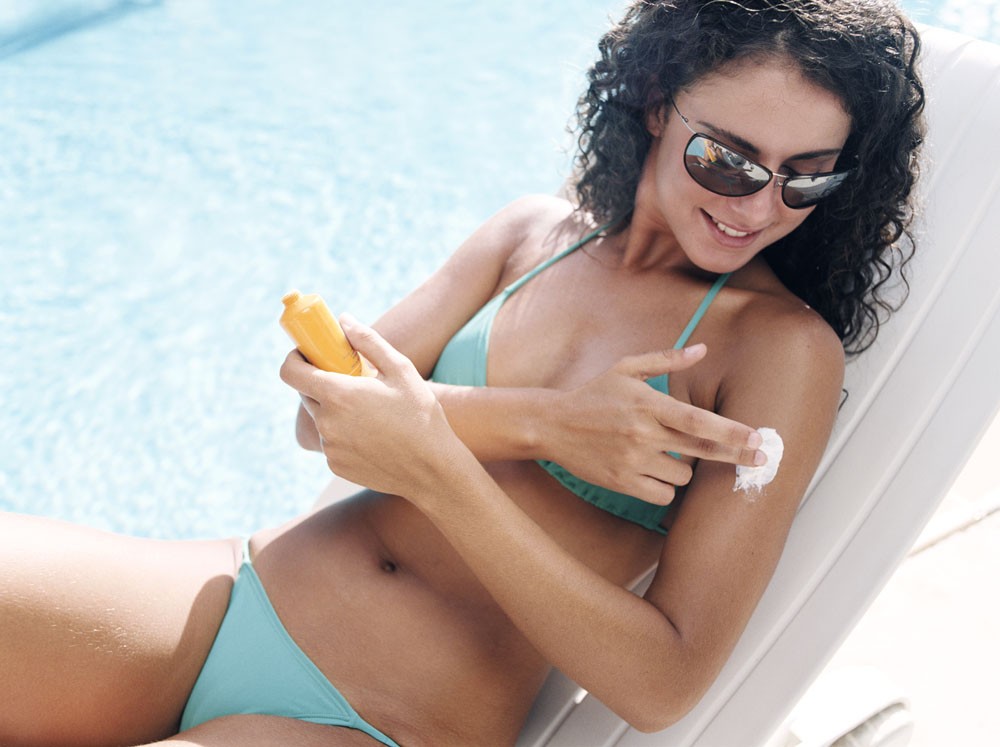
Sun protection isn’t just for the ladies—gentlemen, don’t be shy, learn how to protect your skin too~