Travel in a lodge room / Village lodges in Nepal: The legendary space of old windows
Text and photos by Ding Yi, excerpted from "Travel in a Lodge Room" published by Times Publishing
About Ding Yi
An avid enthusiast of design, writing, music, architecture, photography, and travel, Ding Yi has long been dedicated to in-depth journeys around the world, with footsteps in over fifty countries. Through the perspectives of various creators—musicians, writers, architects, painters, designers, poets, composers, and photographers—he discovers the subtle glow in the corners of lodges and detects unique flavors.
Dubbed by "Cheers" magazine as a “wildly diverse creative genius director,” he is also a columnist for "PLAY Tasteful Living" and has written advertising and design articles for "Brainstorm" magazine. Currently serving as the Executive Creative Director at Publicis Bangkok, his ten-year body of advertising work has garnered over two hundred international and local creative awards, with his pieces featured in major international creative award yearbooks and design magazines.
With about twenty minutes left before the plane’s descent, looking out the window on the right side of the cabin, one can catch a glimpse of the majestic, snow-capped Himalayas. The world’s highest peak, Mount Everest (also known as "Qomolangma" or "Sacred Mother Peak"), seems almost within reach.
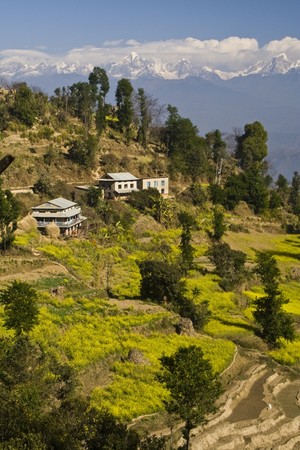
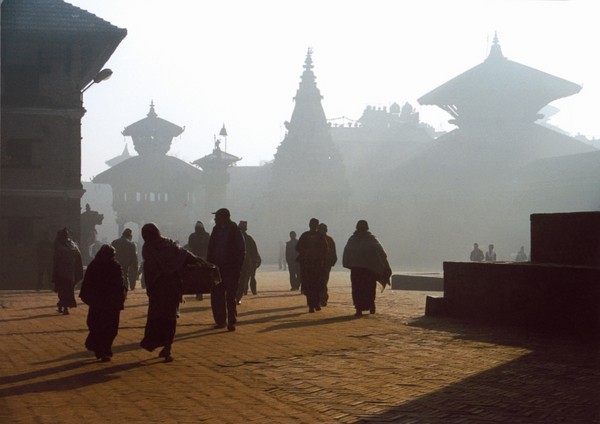
About thirty-five thousand feet below, stretches a vast expanse of crisscrossing, withered brown canyons. Legend has it that thousands of years ago, this was a large lake. When the bodhisattva Manjushri passed through, he split the mountains in two with his sword. The lake drained away, a basin valley emerged, and the civilization of Kathmandu gradually took shape. It’s hard to imagine that hidden within the narrow alleys of this quaint mountain city lies an authentically legendary lodge.

When speaking of Dwarika’s Village Lodge, one must mention its founder, Dwarika. Numerous anecdotes circulate, one of which tells how, during his morning run, he came upon a farmer dismantling a century-old wooden window, intending to use it as firewood. Unable to bear the thought of such an ancient wooden carving being destroyed, he bought the window to keep as a collector’s item. This collection went on for decades, and he spent his life’s savings amassing a backyard full of dusty, cobweb-covered wooden windows.
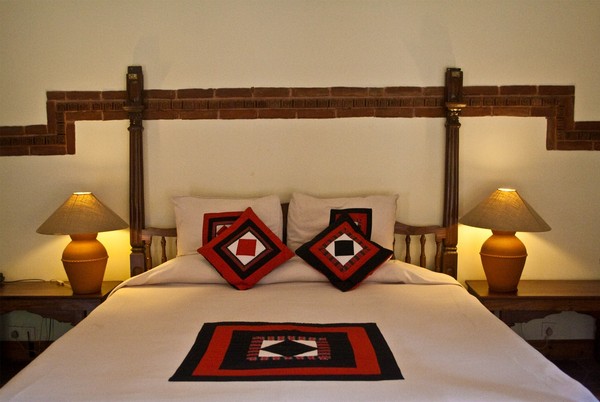
Eventually, facing financial constraints, Dwarika had to find another way. On a sudden impulse, he built a small lodge next to his home to accommodate backpackers from afar, earning a modest income. This small lodge became the precursor to Dwarika’s, established in 1977 with just three tiny rooms, all adorned with magnificent old windows featuring centuries-old carvings.
Locals may have shown little interest, but Western travelers flocked to it. The reputation of Dwarika’s Village Lodge quickly spread. Today, with seventy-nine suites, Dwarika’s is listed in "Hip Hotels of the World" and "Asia’s Legendary Hotels," welcoming travelers from all over who are passionate about antique heritage. With the profits from the lodge, Dwarika intensified his efforts to rescue old wooden windows on the brink of destruction—even door frames and beams were not spared.
Windows into Culture
Swiss geologist Toni Hagen once described Dwarika’s Village Lodge as: “A dreamlike place in South Asia, where you feel as though you’ve stepped back into the Middle Ages. Dwarika’s wise approach of using the hospitality industry to preserve local culture is commendable. It also shows that well-planned tourism does not destroy local culture but instead deepens grassroots awareness.”
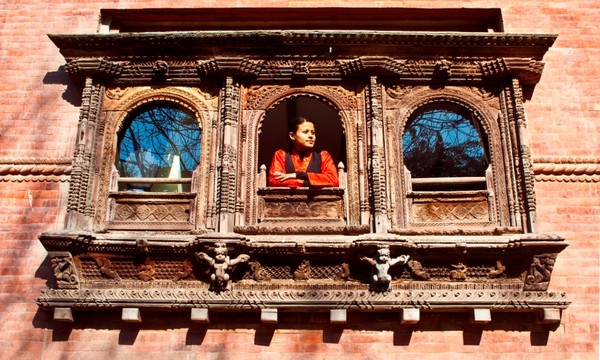
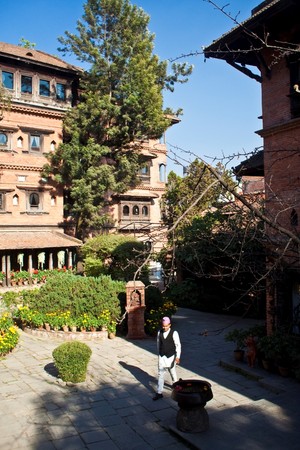
Upon arriving at Dwarika’s, the deep red brick wall outside the entrance immediately offers a sense of warmth, easing the tension of urban life. Running your fingers along the rough surface, you try to feel the unadorned, primal charm through your fingertips. Passing through an old, bald rectangular wooden door and walking past a lush night-blooming jasmine, you’re greeted by sturdy red-brick buildings of varying heights, some bright, some dim, tucked away in quiet corners, quietly serving the protagonists on the walls—the two hundred and twelve simple yet ornate, richly carved old wooden windows.
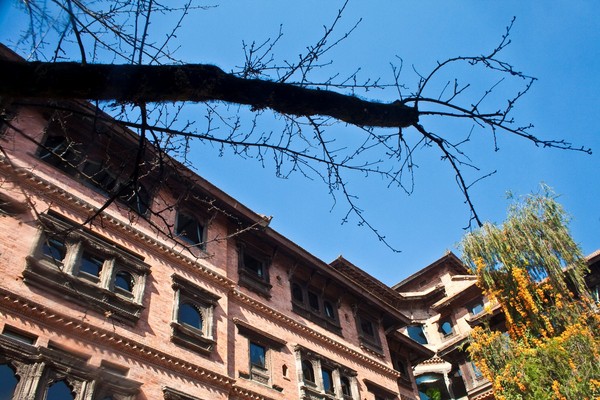
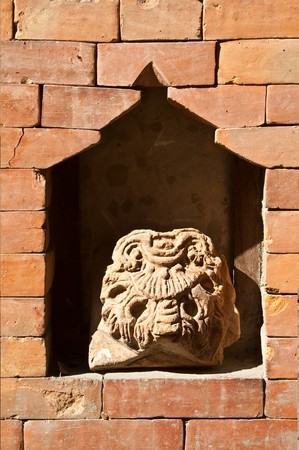
Windows are covered with deeply carved patterns of varying shades; symbols carved with pure dedication emerge subtly through the early winter sunlight filtering through the cracks in the aged wood. The light seems to pass through layers of century-old tree rings, as if breathing life into withered timber—suddenly, every window comes alive. One eight-hundred-year-old window, once split in half by a dying old man to bequeath to his two sons, was painstakingly tracked down by Dwarika over twenty-one years before the two halves, once scattered east and west, were reunited. This window has now become a focal point that travelers pause to admire in the courtyard, even captivating U.S. Secretary of State Hillary Clinton.
Thoughtful Design in Every Aspect of Living
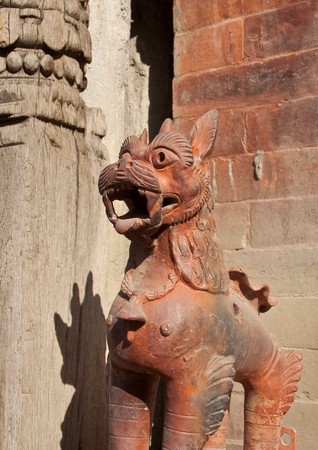

Before checking in, take a seat on the sofa by the lobby fireplace to admire the exquisite woodcarving craftsmanship of the Newar people. All wooden furniture and furnishings in the lodge are handcrafted by master artisans. Another of Dwarika’s innovations is his own woodcarving workshop, where craftsmen make up one-third of the hotel staff. Any damaged wooden artifacts brought to Dwarika’s can regain their former glory within months. In addition to restoring lodge relics and preserving traditional woodcarving skills, the workshop has also trained a new generation of highly skilled young master craftsmen, paving a longer and brighter future for Nepal’s woodcarving culture.

The sofa I’m sitting on is adorned with handmade embroidered pillows from Bhaktapur, while the carpet beneath features a clever design inspired by Dutch graphic artist M.C. Escher’s famous 1938 work "Sky and Water." This pairing of sky and water symbolizes the harmonious union of earth, water, wind, and fire in natural space. Such thoughtful details can be found everywhere in Dwarika’s Village Lodge.
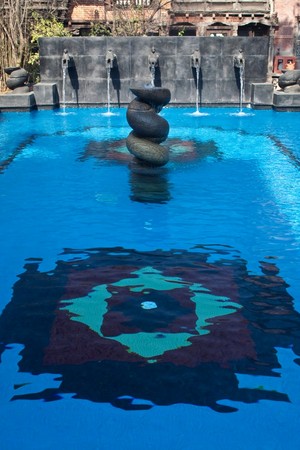
Another exquisite creation is the modern pool in the back courtyard, boldly modeled after the noble design of royal bathhouses from the fifth-century Patan dynasty. A gray granite-carved Naga dragon emerges from the center of the pool, with water cascading from its mouth onto the mandala pattern at the bottom, creating ripples that blur the line between illusion and reality. Coupled with ancient underground stone water channels, it offers a truly regal experience. No wonder it attracted the presence of Britain’s Prince Charles at its opening.
Cultural Traditions at the Dining Table
Dwarika once said: “The preservation of culture is vitally linked to the rise and fall of a nation, even a country.” While preserving the architectural beauty of the red-brick buildings and their cultural heritage, modern conveniences have also been integrated. For travelers seeking comfort and stylish ambience, Dwarika’s may be the best place to experience Nepal’s historic homes.
In addition to the physical elements, Dwarika’s also showcases the essence of local customs and traditions in its service details. Guests dining at Krishnarpan restaurant will witness the server demonstrate a small ritual: placing a bit of food in a small bowl as an offering to the gods. This is a Nepalese custom of expressing gratitude to the earth and deities before enjoying a meal—a wonderful dining etiquette, in my opinion.
My spiritual guru, the venerable Lama Zopa Rinpoche from Kopan Monastery atop Boudhanath Stupa, once shared with me an insightful idea: when eating, if done with the mindset of benefiting all beings, every bite becomes a practice toward attaining supreme bodhicitta; every mouthful brings boundless merit. This philosophy aligns perfectly with Krishnarpan’s ethos, which explains why even Bhutan’s Queen, a practitioner of Vajrayana Buddhism, has visited to personally experience Nepal’s deeply rooted dining traditions.
Urgent Mission to Rescue Local Culture
The great British writer Oscar Wilde once said: “Memory is the diary that we all carry about with us.” For Dwarika’s seventy-eight-year-old widow, Ms. Amica, aren’t those time-worn windows just like diaries filled with cultural memories?
On the eve of leaving Dwarika’s Village Lodge, I sipped tea in a chair under the old window, with Norwegian writer and pianist Ketil Bjørnstad’s music playing on my iPod. This multi-talented artist, upon hearing that his beloved Rosenborg Studio was about to be demolished, flew hurriedly from Paris to Oslo just to record a commemorative album. Unexpectedly, this album ended up saving Rosenborg Studio from demolition.
[Dwarika’s Village Hotel]
Address: P.O.Box-459, Battisputali, Kathmandu, NEPAL
Phone: +977-1-4479488/4470770
Email: info@dwarikas.com
Website http://www.dwarikas.com/
Visit date January 2010
Room number Heritage Suite
Share
This article is published by HowToTrip. Sharing and reposting are welcome — please credit the source.
Article URL: https://www.howtotrip.net/views-29410
Related Articles
- Shaoxing's "Grandpa Gourd" hangs the gourds back up: "If there are too many people, we'll interact less — just take a quick look from afar"
- Chinese authorities announce "reciprocal adjustment" to Japan visa fees — single-entry visa jumps from 2,250 to 16,750 yen!
- The "health stones" carried by a traveler were found to have radiation levels exceeding safety limits by a thousand times, potentially endangering fellow passengers on the same flight. Customs issues warning!
- Shenzhen Airport Issues Late-Night Notice: Unidentified Aerial Object Detected, Causing Widespread Flight Delays!
- “They only said it cost money after I opened the box and washed it!” 200g of grapes sold for 60 yuan on a high-speed train—12306 responds!
- Can't buy an airline ticket? Denied exit? Blocked from boarding? A large number of Chinese tourists have mysteriously become "discredited individuals"
- Adverse weather and economic fluctuations impact Colombia's coffee market
- Beach bathing area responds to 2 yuan/30 seconds fee for freshwater foot rinsing: Clearly priced!
- Taking off with an improperly closed cabin door? Wing malfunction? Multiple flights made emergency returns mid-journey!
- Experience the gifts of nature! A countdown of the world’s ten most stunning coastlines