Snow Country specialty: climbing out the window in the morning & dozing off at work
Text & Photos / Lee An-jun
"Dad, what does snow look like? I really want to see it!" Over 30 years ago, when I was only 8, my dad heard my New Year's wish. One day, he took me up to Hehuanshan. With no car and no money, we traveled station by station from Banqiao to Nantou, then took a bus to Qingjing. After walking a bit and starting to climb the stone steps, we were already sweating profusely. All we could see on the ground were dirty patches of scattered snowflakes. "Sweetheart, we’re almost at the top, keep going, you’ll see the snow soon." But we were too tired to make it to the summit. "Come on, let’s go home. Dad will show you some snow!" We turned around and trudged back down the mountain. Exhausted, we finally got home. My dad opened the fridge’s freezer, scraped the frost off, and placed it in a bowl. "This is snow. Let’s build a little snowman together."
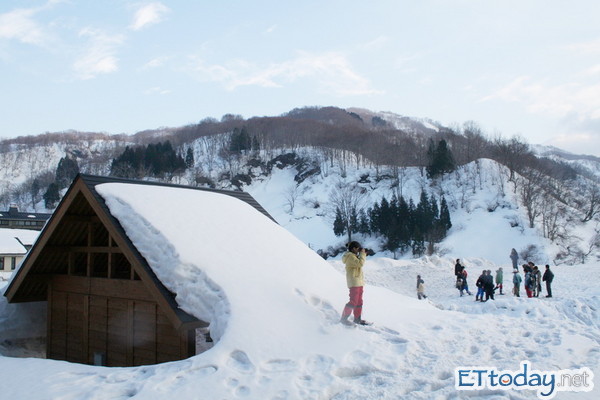
▲Snowdrifts pile up two stories high. Without proper snow preparedness, people often have to use small staircases at windows to get in and out.
For those who’ve never seen snow but are curious about what it looks like—you don’t need to open your freezer. These days, refrigerators are well-insulated and don’t frost up, so you can’t make fake snow at home. But I doubt anyone would bother with that silly “fake snow” trick. Living standards have improved, and traveling abroad is easy. If you want to see or play in the snow, just spend a bit of money—South Korea has snow, Japan has snow—it’s not hard to find.
Taiwan is basically a snow-free country, aside from a few mountainous areas. Japanese friends watching us having fun are of course happy, but they’re also
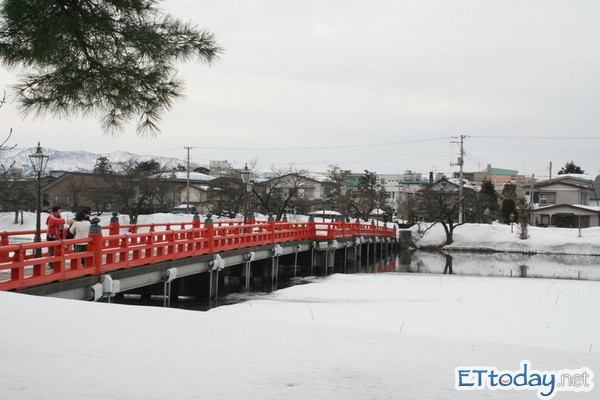
▲The white snow is beautifully accented by the large red bridge.
Yuetsu resident Hideki Wakayama says that office workers here typically wake up at 5:30 a.m. every day to shovel snow for 40 minutes. After arriving at work, they park their cars. Then the snow keeps falling heavily, and by the time they finish work in the evening, their cars have completely disappeared. So, they go back to the original parking spot to shovel and search for their vehicles. Sometimes they head in the wrong direction and find someone else’s car instead, so they have to start all over again. Eventually, when they find their car and drive home, the parking space is once again covered in snow, so the morning routine starts all over. On average, he shovels snow three times a day. “You get so little sleep in the winter that you end up dozing off at work.”
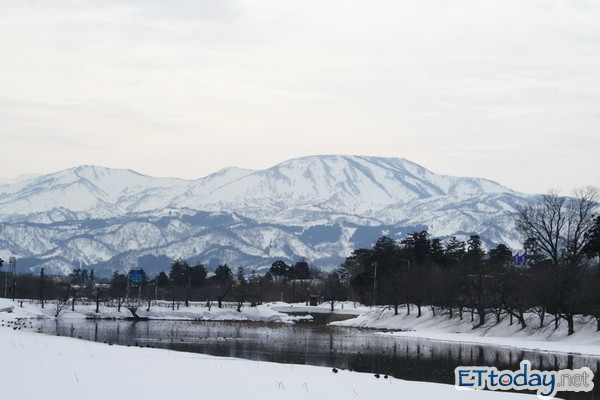
▲Mountains, rivers, and snow create a beautiful scene that delights travelers, but for residents, it’s actually quite tough.
As for delicate young women, what should they do? “Of course, the same thing. They wear skirts and snow boots to shovel snow, then change into high heels when they get to the office,” says Hideki Wakayama. He adds that the men here are quite helpful—regardless of a woman’s appearance, whether she’s slim or plump, pretty or plain, if she needs help, most men in Yuetsu are willing to lend a hand. “There are fewer overweight people in the Snow Country, probably because they do more physical labor,” says Wakayama. As a child, he excitedly rolled around in the snow and built snowmen, while the adults around him were frantically shoveling. He learned at a very young age that this was an inescapable fate once he grew up.
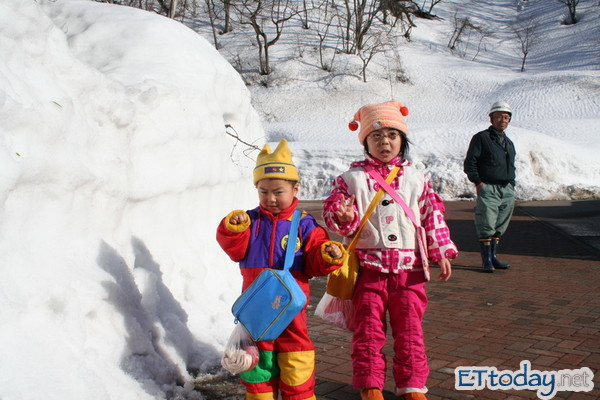
▲With the grandchildren of Setsuji SetaThey’re still young, so they just play in the snow. When they grow up, they’ll understand how hard it is for adults.
Residents and snow have become “good friends.” Just by listening to the “sound” of the snowfall, they can predict the snow accumulation for the next day. “If the wind is strong and the snowfall heavy, with a whooshing sound coming into the house, it means the wind is scattering the snowflakes, so the snow accumulation is relatively lighter. But if it’s completely silent, that’s terrible—it means there’s no wind, and the snowflakes are falling straight down, resulting in deep snow. The houses are buried in snow, which has an insulating effect, making it eerily quiet.” If snowflakes fall straight down all night, the first floor of residential homes can almost be completely buried. Therefore, every household has windows and ladders on the second floor, providing a way to “climb out” if the snow covers the lower level.
Setsuji Seta is the chairman of the “Echigo Mountain Village Culture Village.” He is a native of the area, working as a carpenter in the summer and shoveling snow in the winter. He shovels for 13 hours a day. “The elderly here can leisurely drink tea and chat, but I’m out here shoveling snow every day, and I always have dark circles under my eyes.” He shovels tirelessly and professionally, and city hall employees often have to ask him to step in personally.
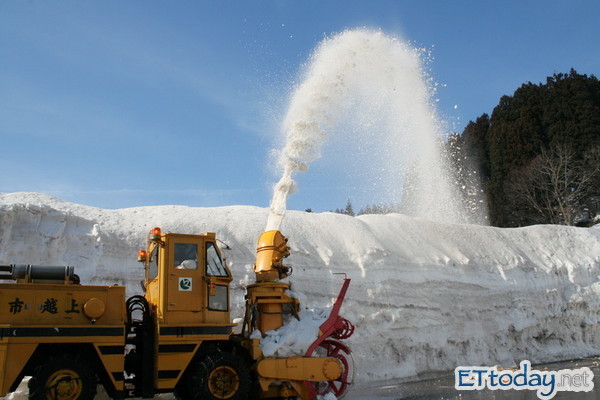
▲People in snowy regions rely on snowplows to clear the roads; otherwise, it’s simply impossible to go out to work.
Young people in Yuetsu often frown when talking about the inconvenience caused by the snow, but an elderly man says, “The plants here hibernate (buried in snow) and only sprout in spring. But plants in Taiwan sprout all year round—it must be tough being a plant in Taiwan.” People in snowy regions endure a tough life in winter, but they always manage to keep things humorous, filling their lives with fun.
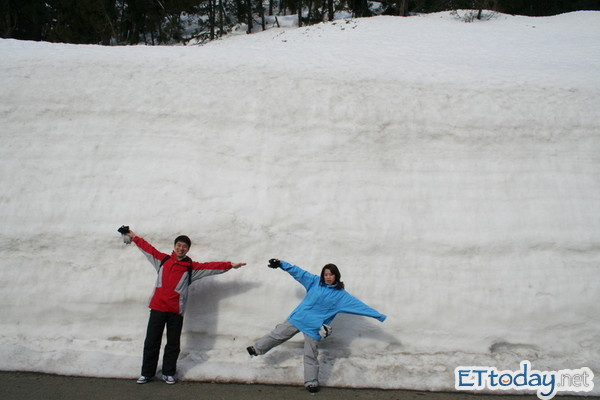
▲Wow, snow walls several stories high!
Share
This article is published by HowToTrip. Sharing and reposting are welcome — please credit the source.
Article URL: https://www.howtotrip.net/views-29330
Related Articles
- Shaoxing's "Grandpa Gourd" hangs the gourds back up: "If there are too many people, we'll interact less — just take a quick look from afar"
- Chinese authorities announce "reciprocal adjustment" to Japan visa fees — single-entry visa jumps from 2,250 to 16,750 yen!
- The "health stones" carried by a traveler were found to have radiation levels exceeding safety limits by a thousand times, potentially endangering fellow passengers on the same flight. Customs issues warning!
- Shenzhen Airport Issues Late-Night Notice: Unidentified Aerial Object Detected, Causing Widespread Flight Delays!
- “They only said it cost money after I opened the box and washed it!” 200g of grapes sold for 60 yuan on a high-speed train—12306 responds!
- Can't buy an airline ticket? Denied exit? Blocked from boarding? A large number of Chinese tourists have mysteriously become "discredited individuals"
- Adverse weather and economic fluctuations impact Colombia's coffee market
- Beach bathing area responds to 2 yuan/30 seconds fee for freshwater foot rinsing: Clearly priced!
- Taking off with an improperly closed cabin door? Wing malfunction? Multiple flights made emergency returns mid-journey!
- Experience the gifts of nature! A countdown of the world’s ten most stunning coastlines