Stay overnight at a shrine / Savor mountain vegetables and mushrooms in Tokyo’s suburbs — the treasures of Hōju-kan
Photos & Text by uQ Nakashima Hiroshi / Excerpted fromOwl Publishing’s "Stay Overnight at a Shrine"
A sacred peak home to over twenty shukubō
The JR Chūō Line, which extends due west from Shinjuku, becomes the Ōme Line from Tachikawa Station heading northwest, and the scenery suddenly takes on a distinctly mountainous character.
After getting off at Mitake Station, the seventh station after Ōme, you’ll see some people strolling toward Mitake Gorge, while others, hiking toward Mount Mitake, head in different directions—north and south.
To reach Mount Mitake, take a bus from the station for about ten minutes to the Mitake Ropeway’s Kōshin-guchi Station. From there, some continue on a one-hour hike to the summit. Most of these hikers are worshippers coming to pay their respects.
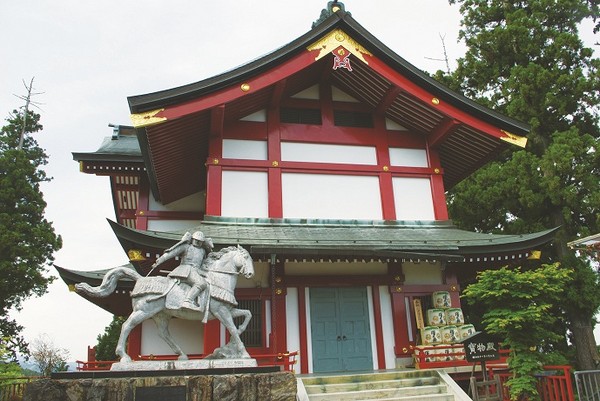
The ropeway from Mitake Station to the mountaintop takes about twenty to thirty minutes. Walking up the cool, serene forest path, you’ll see an inverted triangular mountain rising across the valley and rows of red houses dotting the left slope. These are the shrines of Musashi-Mitake Shrine and the over twenty shukubō offering lodging for worshippers.
As the mountain path becomes a gentle uphill slope, you soon enter the Shugendō settlement, densely clustered with shukubō. Some have grand, imposing nagayamon gates, while others feature thatched roofs thick with moss—each with its own unique style. Strolling along and admiring the distinctive shukubō is a true delight. At the end of the settlement stands an ancient tree with undeniable historical significance, growing from the hillside. This is the Jindai Keyaki (Jindai meaning mythological age), designated as a “National Natural Monument.” Said to have stood here since the mythological age of Japan’s hero Yamato Takeru, it is recognized as a symbol of Mount Mitake, estimated to be around 600 years old. This giant tree stands 30 meters tall with a trunk circumference of 8.2 meters.
Climbing further from the Jindai Keyaki, you’ll find a row of souvenir shops. Right ahead is the large torii gate, and stone steps leading up to the Zuijin Gate. After climbing around 330 stone steps, you’ll reach the worship hall (haiden), offering hall (heiden), and main hall (honden) of Musashi-Mitake Shrine. Further inside are several sessha and massha (auxiliary shrines—see p.16 for a diagram of the shrine grounds). The shrine sits atop Mount Mitake at an elevation of 929 meters. From the front of the worship hall, you can overlook the Tama region, and on a clear day, even catch a glimpse of the nightscapes of Tokyo and Yokohama, or the sunrise on New Year’s Day.
Savoring the wild flavors of mountain vegetables and mushrooms in Tokyo’s suburbs
Seeing the name “Mount Mitake” might make you wonder how it relates to the famous Mount Mitake in Nagano Prefecture’s Kiso region. In fact, both Mitakes mean “revered, tall, great mountain,” originally referring to Mount Kinpusen in Yoshino, Nara Prefecture. Later, as the faith spread, the term came to denote any revered high mountain, eventually becoming associated with this area.
Among them, Hōju-kan is located near the end of the Shugendō settlement, its roof so exquisitely maintained that it compels passersby to pause and admire. At first glance, it looks thatched, but it’s actually covered with “tiger roofing”—a traditional technique using overlapping layers of cypress and cedar bark, characteristic of the Okutama (northwestern Tokyo) to Chichibu (Saitama Prefecture) region. The inn also features a genkan (entrance hall) with a striking display of locally sourced produce, including wild vegetables and mushrooms. The genkan isn’t just for show—it’s where guests can chat with the owners and learn about the inn’s history. According to an old article, parts of the current structure were built around 60 years ago using materials from a former building.
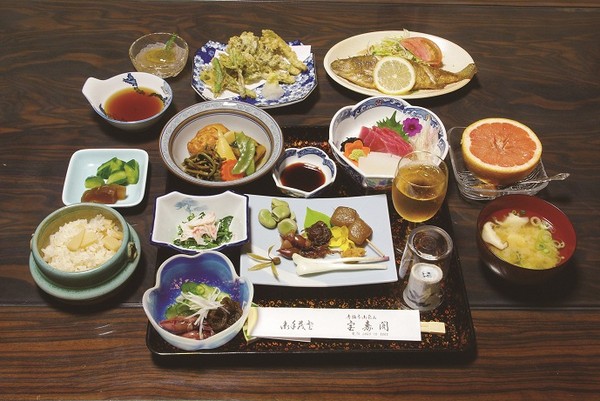
The current owner of Hōju-kan is Baba Tōetsu, an ordained Shugendō priest and the 18th-generation successor to Musashi-Mitake Shrine. The meals served here rely on ingredients sourced locally from Okutama, especially mountain vegetables and mushrooms, which Owner Baba often picks himself in the mountains. You might even hear unique phrases like, “Before heading into the mountains to pick mushrooms, you should scatter some sake and salt first”—words you’d only hear from someone deeply connected to the spiritual traditions.
Common dishes include mountain vegetables like yamaimo, tara no me, aburana, warabi, and norobō, prepared as tempura or salads. The inn’s specialty, without a doubt, is homemade soba noodles. The simple yet beautifully presented dishes crafted by the owners may seem like home cooking, but the rustic, unforgettable flavors speak for themselves.
Listening to birdsong amid greenery
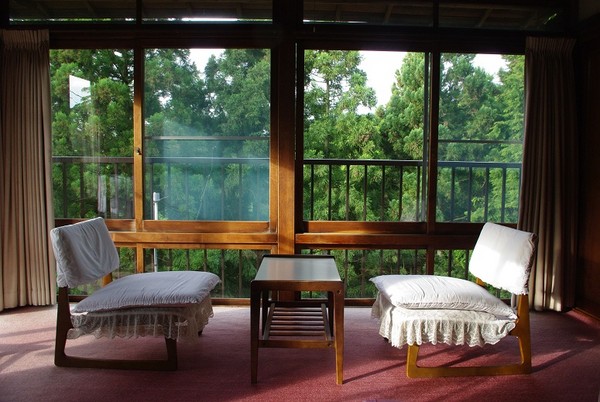
Guests staying overnight at a shukubō on Mount Mitake can join the Mitake Shrine’s Nichū-sai (daily prayer ceremony) starting at 7:00 AM (admission: ¥500). This daily ritual offers a moment of peace as you receive a purification blessing (harae) and offer a tamagushi (sacred branch) in the early morning shrine hall.
The worship and offering hall where prayers are conducted is a Gongen-zukuri-style building constructed in 1700 (Genroku 13). Its vermilion-painted worship hall boasts vivid colors, and the aisle (hōhai) features intricate carvings. The building was renovated during the Tenpō era and had its roof replaced from cypress bark to copper sheeting in the mid-Meiji period. The honden (main hall), built in 1877 (Meiji 10) in the Shinmei-zukuri style, enshrines the deities Kamimusuhi-no-Kami, Ōkuninushi-no-Kami, Sukunabikona-no-Kami, Yamato Takeru, and Hondawake-no-Kami (Emperor Ankō).
Behind and to the right of the main hall is the black-lacquered Tōshogū Shrine, dedicated to the deity of all Ichinomiya (provincial shrines) across Japan. Constructed before 1511 (Eishō 8), this building once served as the main hall. Within the tamagaki enclosure, there is also the Ōkami Daimyōjin Shrine, dedicated to the wolves associated with Mitake Shrine, and the site of the Ta-ura ritual, where deer bones are roasted to divine a bountiful harvest.
The shrine’s treasure hall displays some of the most precious sacred artifacts in Tokyo, truly a sight to behold.
After attending the Nichū-sai and enjoying breakfast at Hōju-kan, you’ll feel especially relaxed. From amidst the greenery, you can hear birdsong, soon losing yourself in the sounds. Having spent a night on Mount Mitake, don’t just turn back—venture further to the inner shrine dedicated to Yamato Takeru, the Otoko-gu Shrine (at 1,077 meters), or explore the crystal-clear stream and stunning rock garden.
[Hōju-kan]
Address: 1610 Mitakeyama, Ōme, Tokyo 198-0175
Phone: 0428-78-8448 FAX: 0428-78-9727
Access: Take the bus bound for “Ropeway-shita” from Mitake Station on the JR Ōme Line and get off at the terminal. Walk from “Kōshin-guchi Station” to “Otoko-gu Shrine,” a 10-minute walk.
Accommodation: ¥8,500–¥11,500 per night, including two meals (for two or more people, tax included). Group stays and Circle Plan discounts available.
Share
This article is published by HowToTrip. Sharing and reposting are welcome — please credit the source.
Article URL: https://www.howtotrip.net/views-29321
Related Articles
- Shaoxing's "Grandpa Gourd" hangs the gourds back up: "If there are too many people, we'll interact less — just take a quick look from afar"
- Chinese authorities announce "reciprocal adjustment" to Japan visa fees — single-entry visa jumps from 2,250 to 16,750 yen!
- The "health stones" carried by a traveler were found to have radiation levels exceeding safety limits by a thousand times, potentially endangering fellow passengers on the same flight. Customs issues warning!
- Shenzhen Airport Issues Late-Night Notice: Unidentified Aerial Object Detected, Causing Widespread Flight Delays!
- “They only said it cost money after I opened the box and washed it!” 200g of grapes sold for 60 yuan on a high-speed train—12306 responds!
- Can't buy an airline ticket? Denied exit? Blocked from boarding? A large number of Chinese tourists have mysteriously become "discredited individuals"
- Adverse weather and economic fluctuations impact Colombia's coffee market
- Beach bathing area responds to 2 yuan/30 seconds fee for freshwater foot rinsing: Clearly priced!
- Taking off with an improperly closed cabin door? Wing malfunction? Multiple flights made emergency returns mid-journey!
- Experience the gifts of nature! A countdown of the world’s ten most stunning coastlines