Heartbreaking: The "Survivors on the Golden Brick" of Huaguang Community: Government, do you hate us?
Reported and photographed by You T-Ru / Taipei
"The owner of Shengyuan Soy Milk, we all called her Mother Pan. After her child’s account was frozen, the government pressured her to demolish the house herself. But after the demolition, Mother Pan could not endure the relentless pressure and passed away on January 9th—this is the first case of the government driving someone to death." At Huaguang Community in downtown Taipei, local resident Mr. Li led a group of "outsiders" during their weekly "community walk" activity. Standing in front of Shengyuan Soy Milk, Mother Pan’s former home, he shared stories about the community.
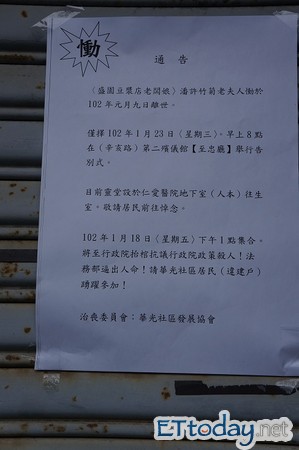
▲Announcement for Mother Pan’s memorial service.
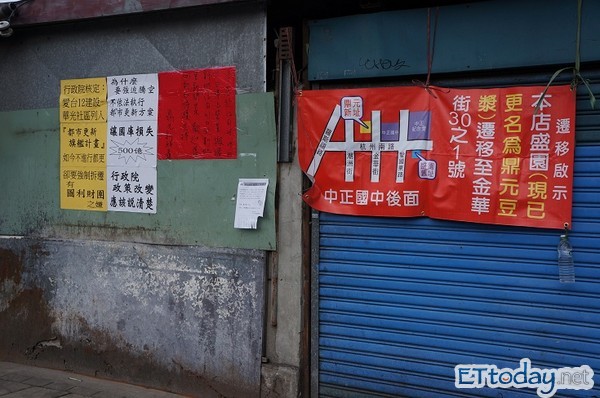
▲Announcement for Shengyuan Soy Milk relocation.
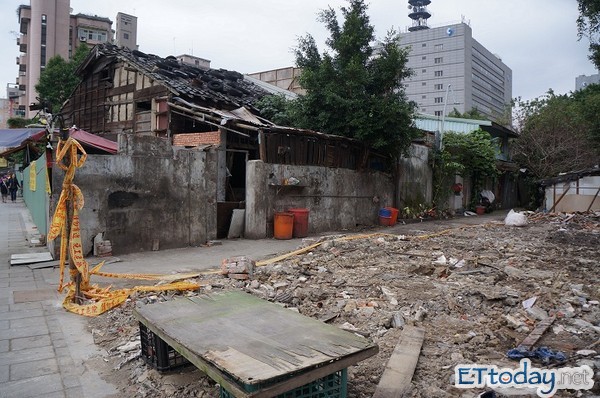
▲On Hangzhou South Road, it’s easy to see scenes like this one of rubble and ruins.
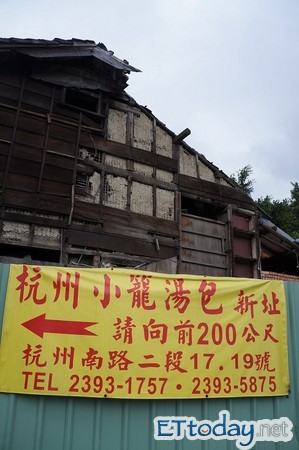
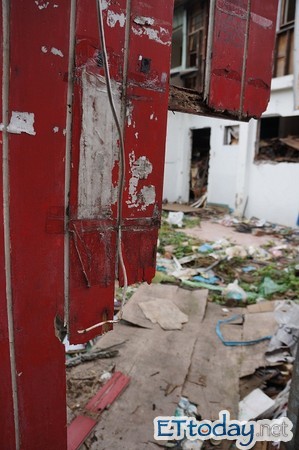
▲A famous Taipei city-center eatery, the Hangzhou Soup Dumpling building, has nearly a hundred years of history. The bamboo used inside—replacing today’s steel reinforcement—shows its age. Now it too has been relocated, leaving behind a ruin.
"Mother Pan told us at the time: 'I’m already over 70, but I have nothing to leave my children, only a pile of debt.'" The appearance of Shengyuan Soy Milk is gone, with just a sheet of tin covering the entrance, strewn with debris in front. This is the typical state of the surviving "people on the golden brick."
The "golden brick" refers to the Hangzhou South Road area in downtown Taipei, now regarded by the government as prime development land—that is, the current site of Huaguang Community. The "survivors" are the original residents of Huaguang Community, some of whom moved with the Nationalist government to Taiwan, while others came northward in the 1960s and 1970s with the southern migration wave. With tacit approval from the government at the time, residents built houses near this former desolate prison land and settled there. Decades later, the government decided to reclaim this large "golden brick," and the first step was to tear down what looked like the decaying and unsightly parts on it—the "survivors."
In 2007, the Executive Yuan proposed the Four Golden Brick Projects, officially incorporating Huaguang Community into the national future development vision. The project at the time was named Taipei Wall Street, aiming to establish a financial management and digital communications center to generate high profits. After the plan was proposed, local residents were sued by the Ministry of Justice. Residents can be divided into three categories: legal dependents, illegal dependents, and illegal structures. The first category received demolition compensation and gradually moved away. Illegal dependents and those with illegal structures faced demands from the Ministry of Justice for restitution of unjust enrichment and self-demolition to return the land.
At present, the vast majority of residents have lost their cases or reached settlements with the Ministry of Justice. What awaits them are sums of unjust enrichment ranging from hundreds of thousands to tens of millions. Some residents, unable to bear the heavy economic and psychological pressure, have demolished their own homes and even used their life savings to compensate for the unjust enrichment. Those still living in the community must face the pressure of forced execution by the Ministry of Justice, with many having their accounts frozen—a tactic used by the Ministry to pressure them. These residents are the "survivors on the golden brick."
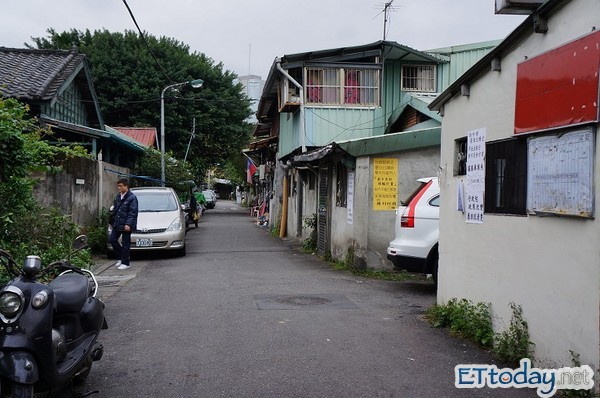
▲The Huaguang Community originally had 192 households; now only about 80 remain, the rest having moved away.
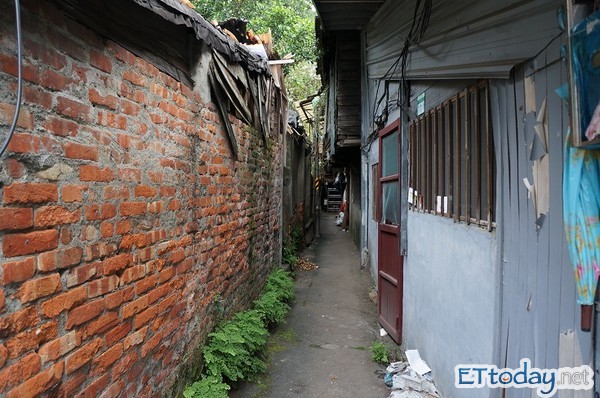
▲%Many modern buildings can be seen here, but most have already been demolished.
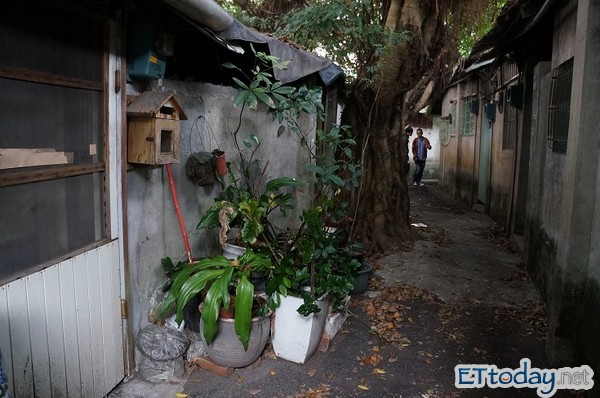
Besides Mother Pan, the "survivors" also include Uncle Yu, Yu Ciqin, 72 years old. Disabled by severe respiratory issues due to tuberculosis complications seven years ago, he relies on a ventilator to live. With his son also having a physical disability, the Yu family has nowhere to go and can only silently and helplessly wait out each day leading up to demolition.
Mr. Gao and Mrs. Gao, both retired military officers, lived on retirement funds and the 18% interest on military and civil servant deposits, managing a peaceful life on around NT$30,000 per month. But after Mr. Gao developed kidney failure and became paralyzed, their lives changed. One day, Mrs. Gao received a court order demanding the Gao family demolish their home. She went to the post office to withdraw money, but her account had been frozen. With no other options, she returned home to pack their belongings, took Mr. Gao, and fled to Longshan Temple. Mrs. Gao said that at least the homeless there might be more helpful than the government.
The Xie family, employees of the Taipei Detention Center, were also coerced under the threat of having their entire family’s accounts frozen. They spent NT$110,000 to demolish their home, and the whole family of seven, including their 91-year-old grandmother, left in the middle of the night. Before the demolition, the house was plastered with notices reading "This office has scheduled forced demolition for December 3rd." On the last day before demolition, the Xie family wept as they sprayed bright red words on the wall: "Do you hate us?"
There’s also Mr. Li, who leads "outsiders" on tours of Huaguang Community. Originally in the philatelic and coin business, he planned that if he were ever evicted, he’d at least have philatelic and numismatic collections worth NT$8–12 million to fall back on. But one night, Mr. Li woke up choking on smoke to find his home engulfed in flames. In the panic, he only managed to grab his phone before fleeing. His collections, of course, were completely destroyed. Since then, Mr. Li has been on anti-depressants and sleeping pills—he hasn’t slept a night without them since.
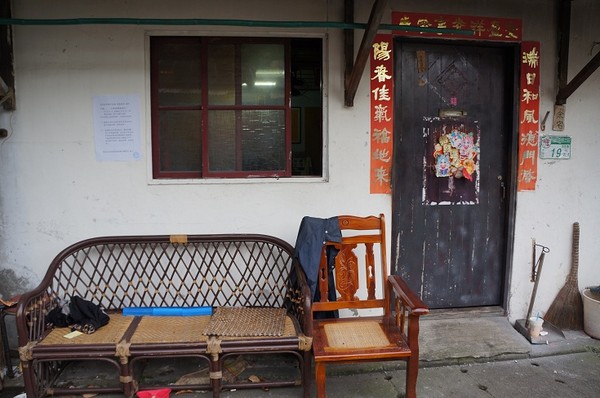
▲Uncle Yu’s home, a low house with a damp smell. I know Uncle Yu is inside, but I just can’t bring myself to knock and see the forlorn scene.
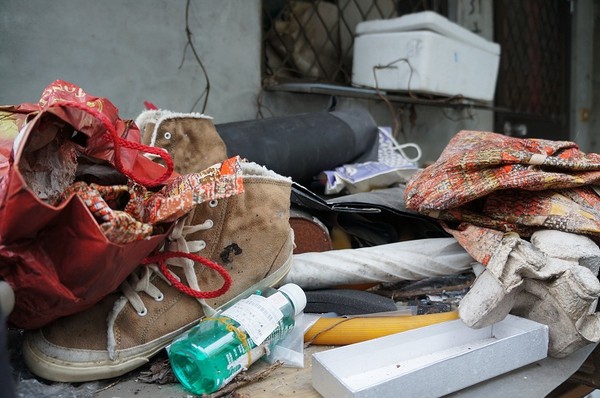
▲When leaving, they didn’t even take their shoes. How far can bare feet carry you?
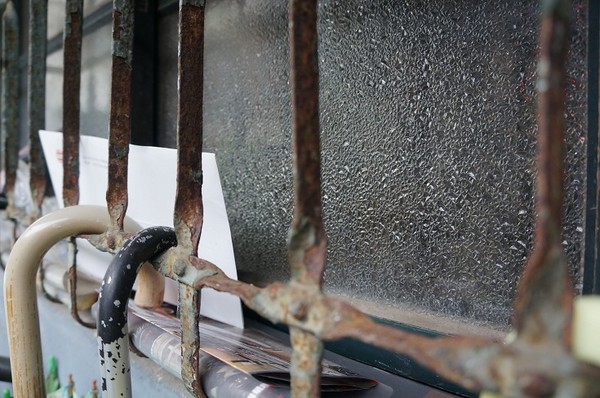
▲An empty house still has its old glass windows—craftsmanship rarely seen in Taipei nowadays, yet here in Huaguang Community, the marks on the glass seem like the tears of the residents.
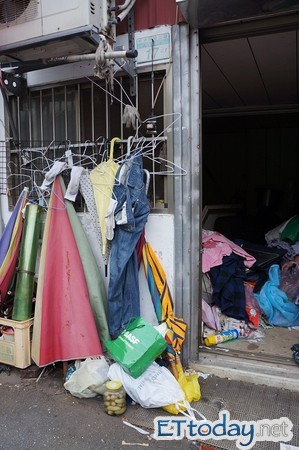
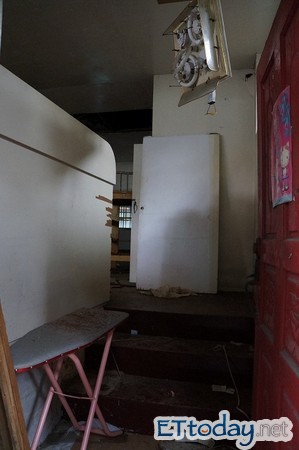
▲A lifetime home, now reduced to empty rooms and unmovable clutter.
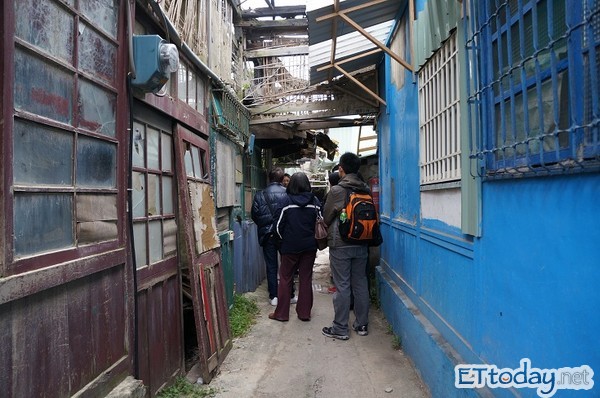
▲A rare "square-ring" style building in Taiwan is hidden in this narrow alley of Huaguang Community; on the left is Mr. Li’s home.
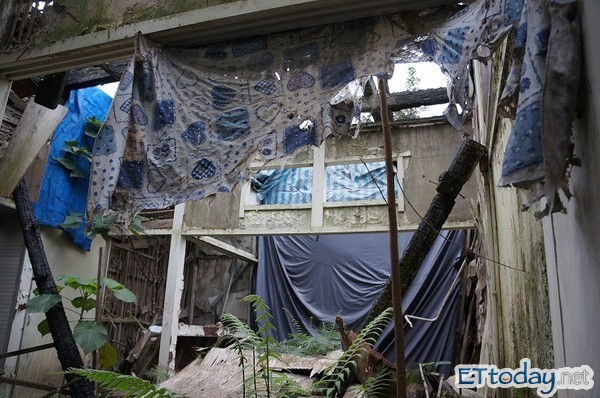
▲In the early hours of 2012, an unnamed fire burned everything in the house, even the last of Mr. Li’s philatelic and numismatic collections.
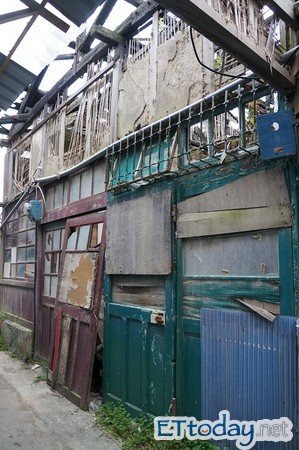
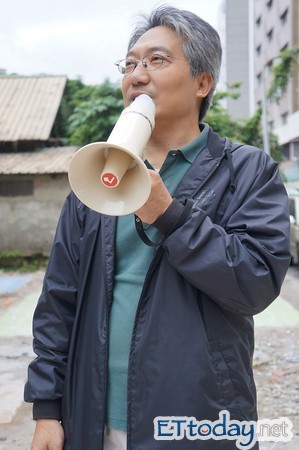
▲Left: The charred exterior of Mr. Li’s home. Right: Mr. Li leading a community walk activity.
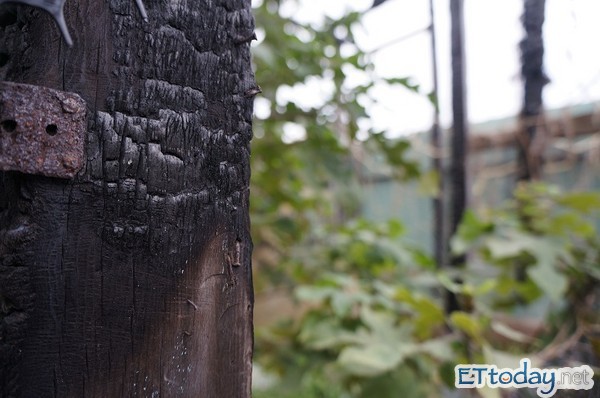
▲The remaining house pillars, covered in scorched black marks, with weeds growing inside.
"The whole of Huaguang Community—if you wanted to tell stories like these, you really couldn’t finish. It’s just heartbreaking." Passing by a house with the words "This was once home" painted on the wall, Mr. Li spoke wistfully about his feelings. This weekly Saturday "community walk" activity was initiated jointly by National Taiwan University’s Department of Urban Planning and the community residents, taking outsiders on a tour through the homes of the "survivors on the golden brick." These homes had roofs, tiles, and traces of life—but the people are long gone. The area of Huaguang Community, slated for demolition after the New Year, will likely soon become nothing but a memory.
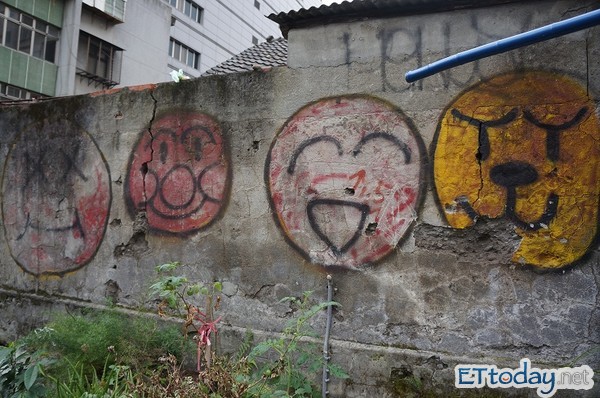
▲A community wall where residents can spray paint their emotions—joy, anger, sorrow, and happiness.
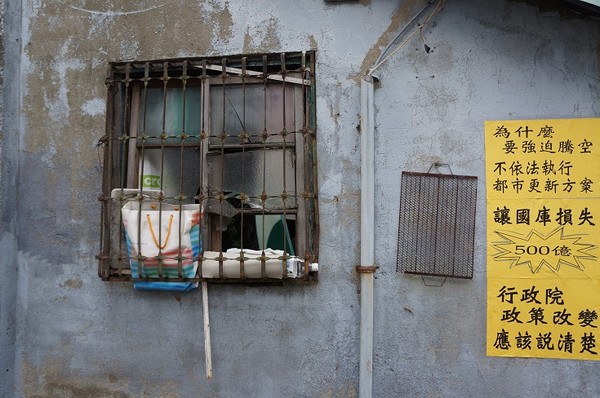
▲All over the community, you can see signs posted on walls asking "Why?"

▲The open space in front of the house—once the Xie family’s home—is now marked only by the floor tiles that hint it was once a "home."
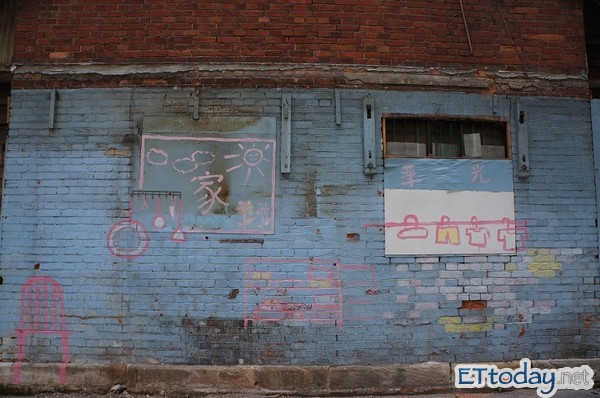
▲Students from National Taiwan University and local residents painted their vision of "home" here—complete with windows, shrines, chairs, and even a clothesline.
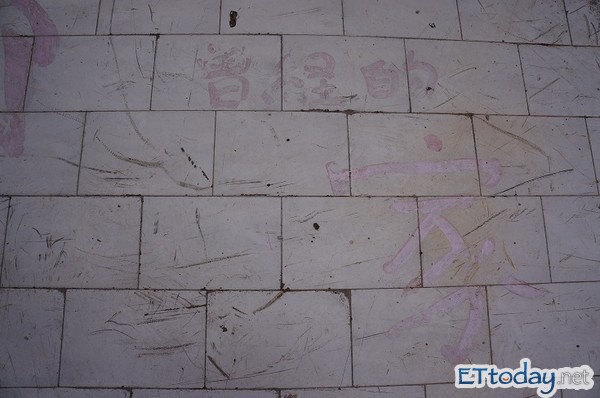
▲The tiles on the ground are inscribed with the words: "Once, a home."
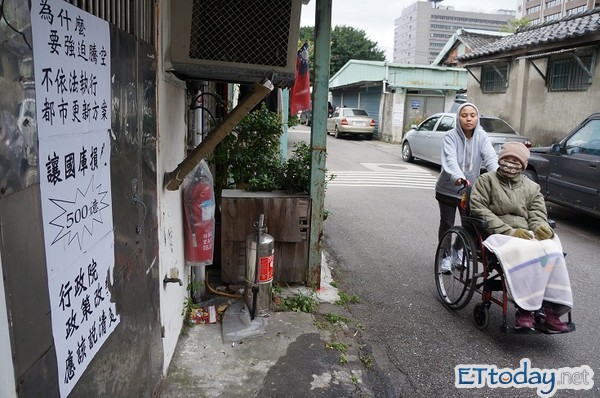
▲A 92-year-old grandmother in the community spoke slowly and gently about the government: "Please don’t blame the government. They still send people to check on us, and they’ve been very kind to us." (Illustration, not the actual person.)
【Huaguang Community: The Remaining Residents on Golden Soil】:https://www.facebook.com/HuaKuang.our.home
【Explore the Community: A Half-Day Journey Through Huaguang】:http://tinyurl.com/awxcn33
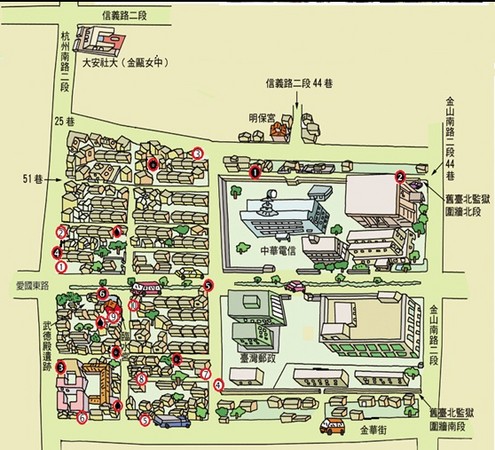
▲Map of Huaguang Community. (Photo / Provided by Da’an Community College, illustrated by Chen Jian-yi)
Share
This article is published by HowToTrip. Sharing and reposting are welcome — please credit the source.
Article URL: https://www.howtotrip.net/views-29229
Related Articles
- Shaoxing's "Grandpa Gourd" hangs the gourds back up: "If there are too many people, we'll interact less — just take a quick look from afar"
- Chinese authorities announce "reciprocal adjustment" to Japan visa fees — single-entry visa jumps from 2,250 to 16,750 yen!
- The "health stones" carried by a traveler were found to have radiation levels exceeding safety limits by a thousand times, potentially endangering fellow passengers on the same flight. Customs issues warning!
- Shenzhen Airport Issues Late-Night Notice: Unidentified Aerial Object Detected, Causing Widespread Flight Delays!
- “They only said it cost money after I opened the box and washed it!” 200g of grapes sold for 60 yuan on a high-speed train—12306 responds!
- Can't buy an airline ticket? Denied exit? Blocked from boarding? A large number of Chinese tourists have mysteriously become "discredited individuals"
- Adverse weather and economic fluctuations impact Colombia's coffee market
- Beach bathing area responds to 2 yuan/30 seconds fee for freshwater foot rinsing: Clearly priced!
- Taking off with an improperly closed cabin door? Wing malfunction? Multiple flights made emergency returns mid-journey!
- Experience the gifts of nature! A countdown of the world’s ten most stunning coastlines