From Coal to Cats: A Tribute to Houdong’s Black Gold Era (Part 2)
Reported by Cai Mengxiu / Taipei
“Houdong,” once Taiwan’s foremost mountain town—how much do you know about it?
Most people’s first impression of Houdong is “cats.” The arrival of the cats has added some color to this lonely mountain town, but many may not know that its river water was once murky, the air thick with coal dust, and its people worked in sunless mines. In the dim, narrow spaces, the faint beam of a headlamp illuminating the coal was the hope of an entire family.
%己铐霞蚪槎唐?/strong>. (Video / Source:New Taipei City Government Tourism and Travel Bureau)
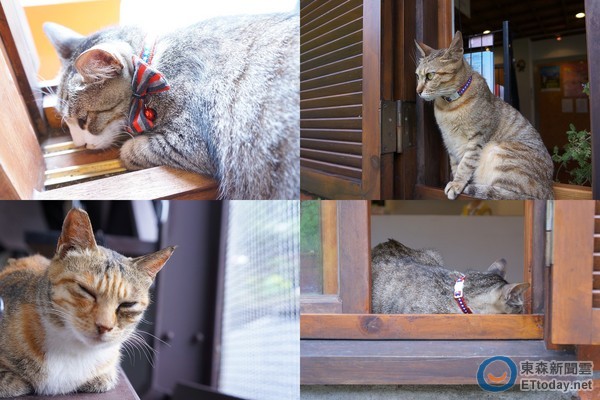
▲ The cats of Houdong lazily lounge by the window, completely unafraid of strangers. (Photo / Cai Mengxiu)
How many visitors stop here and come to understand this lonely mountain town just a little more?Wu Nianzhen once said that history, scenery, culture, and tranquility are the specialties of Houdong, and with a genuine, in-depth experience, what you might take away is a faint sense of melancholy. Next time you visit Houdong, besides watching the cats, take the time to delve into the local culture and history, and discover the beauty of this simple town.
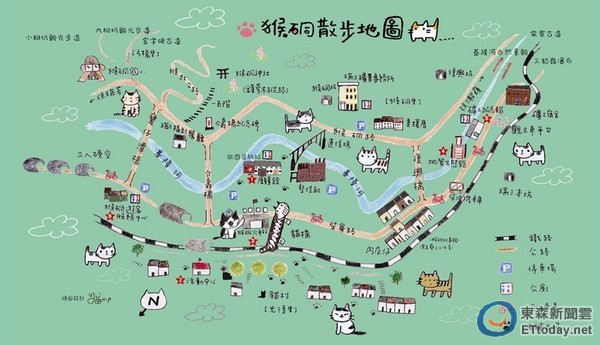
The Houdong settlement isn’t large, and its layout isn’t complicated. The two sides of the Keelung River are Houdong Road and Chailiao Road, connected by a few footbridges, forming a circular route. The settlement developed along the riverbanks, so both sides of the Keelung River showcase remnants of the early mining industry. A bike ride makes it easy to complete a “Black Gold Era” tour, allowing you to revisit this bygone chapter from an observer’s perspective.
Tourism Information Center & Vision Museum:
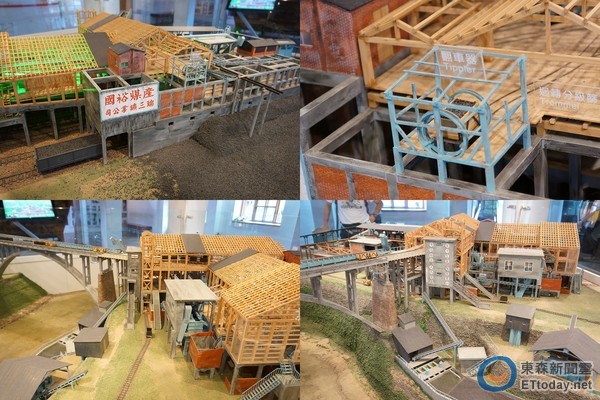
Upon arriving at Houdong, you’ll see the Tourism Information Center and Vision Museum right after exiting the train station. These two buildings have a long history. The Vision Museum was converted from an old coal processing plant warehouse and houses a model of the original coal sorting site, offering a glimpse of its former glory. The red-brick Tourism Information Center, built in 1935, has a history of around 80 years. To learn about Houdong’s mining history, you can inquire here for relevant information and also pick up a free map to help plan your journey.

▲ This red-brick building was constructed during the Japanese colonial period and is about 80 years old. It has not undergone major alterations, so what you see today is its original appearance from that era. It now serves as the Tourism Information Center, where visitors can obtain information about Houdong. (Photo / Cai Mengxiu)
Coal Processing Plant:
In 1918, Taiwanese mining magnate Yan Yun-nian and Japan’s Mitsui & Co. established the “Keelung Coal Mining Co., Ltd.” to extract Houdong’s abundant coal resources. The coal processing plant was completed in 1920 and was the most advanced of its kind in Taiwan at the time, featuring Taiwan’s first coal sorter and freight elevator. Since cranes weren’t available then, the large machinery for the plant couldn’t be transported directly to the mines on the opposite bank. Instead, the machines were first shipped to Houdong by train, then disassembled and carried up to the upper floor of the processing plant via the freight elevator. From there, they were transported across the river to the mines via a coal transport bridge for assembly.
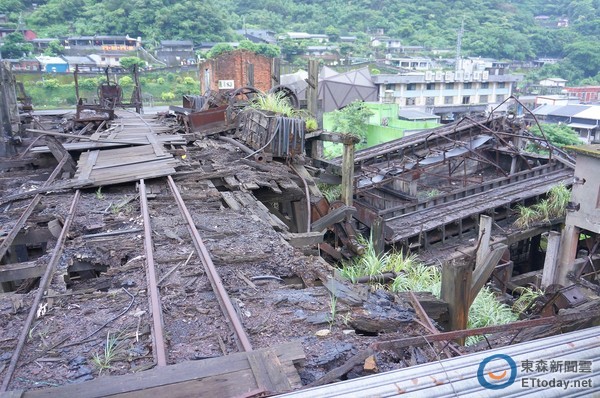
▲ The coal processing plant from the Japanese colonial period had a concrete first floor and a wooden second floor. Nearly sixty years later, it is now in ruins, with only parts of the first floor retaining their original structure. At its peak, it led Taiwan in coal production, equipment, and technology, but compared to its former glory, all that remains are memories. (Photo / Cai Mengxiu)

▲ A view of the coal processing plant from across the Keelung River. (Photo / Cai Mengxiu)
▲ The Vision Museum displays models of the coal processing plant and the coal transport bridge, recreating their original appearance. The photo in the bottom right can be compared with the previous image. (Photo / Cai Mengxiu)
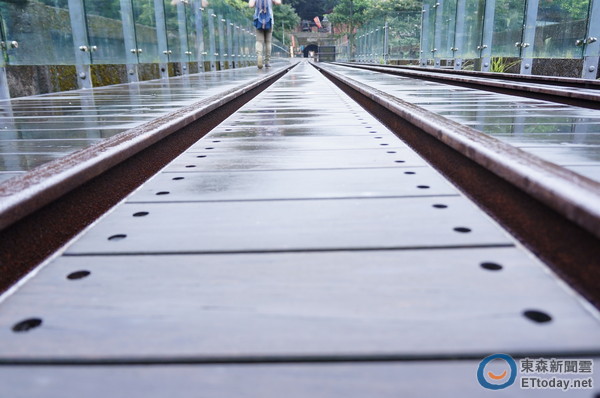
▲ The original coal transport bridge is no longer in use, and the current one was built later for tourism purposes.(Photo / Cai Mengxiu)
After 1934, the Taiwan Ruisan Mining Company took over the Houdong mine and its facilities. At its peak, coal production accounted for nearly 1/7 of Taiwan’s total output. However, as coal resources and their added value declined, the industry gradually faded into obsolescence and eventually became history. Nevertheless, many structures from the Ruisan coal processing plant—the factory buildings, machinery, coal car rail tracks, wastewater treatment pools, and more—are still largely intact. Together with the Ruisan coal transport bridge, they stand as witnesses to Taiwan’s coal mining history.
Ruisan Main Pit:
The Ruisan Main Pit was established in 1940 to mine the main coal seam located 500 meters below a fault line. It was the largest pit operated by the Ruisan Company, extending up to 5 kilometers from the entrance, with depths ranging from +96 meters above sea level at the entrance to -348 meters below.
The guard post at the entrance was used to check workers for prohibited items such as matches, cigarettes, or alcohol before they entered the pit. Mine explosions could generally be categorized as gas explosions or coal dust explosions. The former occurred when poor ventilation caused gas buildup, which could ignite from sparks or high temperatures. The latter happened when suspended coal dust reached a certain concentration and encountered a spark or heat source. As a result, workers were rigorously searched for any banned items before entering the mine.
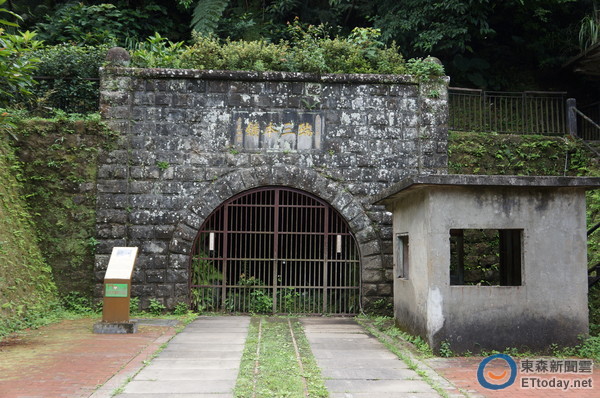
▲ Standing in front of the Ruisan Main Pit, you can clearly feel the cool breeze blowing from inside, while springs continuously flow out from within the mine. (Photo / Cai Mengxiu)
Miners’ Memorial Hall:
The Miners’ Memorial Hall is the most worthwhile site to visit. It was converted from an old miners’ bathhouse and houses a variety of mining equipment and tools, along with numerous documents recording miners’ lives and the environment of Houdong at the time. Every figure in the black-and-white photos has a story, revealing how people left their hometowns to work dangerous jobs just to make a living, never knowing if they’d see the sun again after descending into the pit each day. That’s why miners often said:"One death in the pit, and the whole family dies if you don't go."This is a portrayal of that very reality.
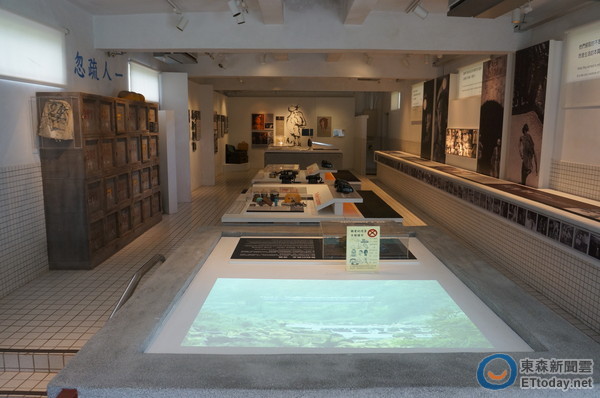
▲ The Miners' Memorial Hall was renovated from the miners' bathhouse, and even after remodeling, it retains the layout of the time. (Photo / Reporter Cai Mengxiu)

▲ In those days, miners risked their lives to extract what is known as "black gold"—coal. (Photo / Reporter Cai Mengxiu)
The hall displays the lockers that belonged to miners back then. When you open them, besides everyday items, on the locker doors there’s a faded family photo with the words: "For my family, no matter how tough or dangerous it is in the pit, I have to go." A black-and-white photo became the miners’ source of courage, and a simple line of text brings tears to one's eyes.
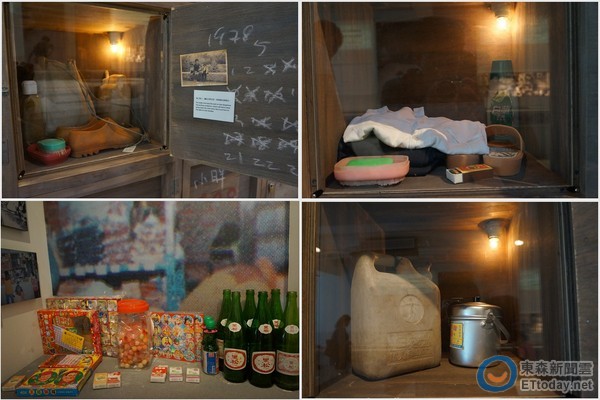
▲ These are personal belongings from the miners' lockers, and the bottom-left image shows goods sold at the welfare store (formerly called the supply station). (Photo / Reporter Cai Mengxiu)
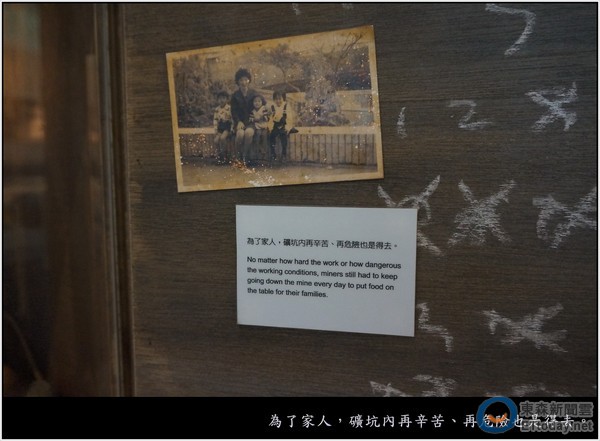
▲ Finishing the tour, this photo strikes the deepest chord. Back then, people came to Houtong to work in the mines just to make a living, living a life where today might be their last. No matter how dangerous or exhausting, they clenched their teeth, earned money to support their wives and children—it was all about fulfilling their duties as fathers and husbands. The chalk marks in the photo were made by miners counting down the days to payday. It was a "grab-the-cash" job, with pay issued every 15 days, so each crossed-off day meant payday and a reunion with family was one day closer. (Photo / Reporter Cai Mengxiu)
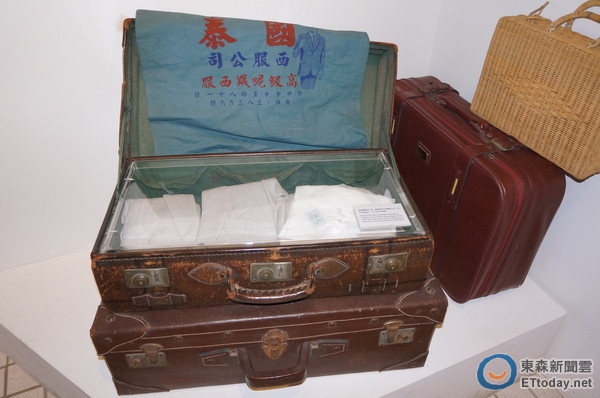
▲ Carrying simple luggage, leaving home behind to live in a mining village was the shared background of many of the older generation in Houtong. (Photo / Reporter Cai Mengxiu)
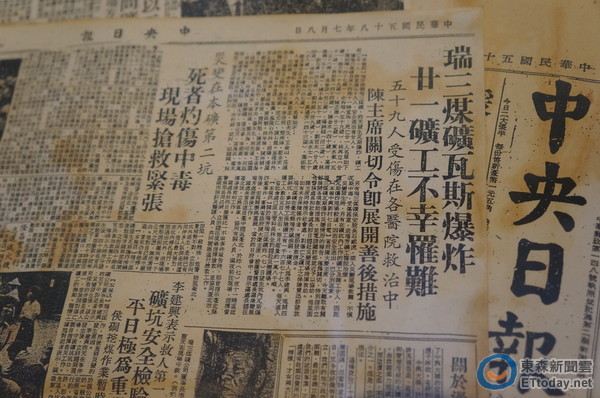
▲ The Miners' Memorial Hall still preserves reports related to mining disasters from those years, such as this news from July 8, 1969. (Photo / Reporter Cai Mengxiu)
At the very bottom of the Miners' Memorial Hall, there are two X-ray images—one of a normal person’s lungs and one of a miner’s lungs—explaining the most common fatal disease among miners: pneumoconiosis. Those who have seen the film "Dad, Where Are We Going?" directed by Wu Nien-jen will understand something of it.
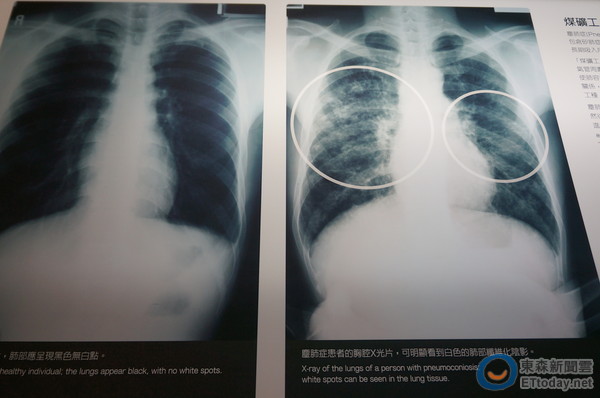
▲Pneumoconiosis is commonly known in Taiwan as silicosis.It results from miners inhaling coal dust and silica dust over a long period, causing these particles along with dust-laden phagocytes to accumulate around the bronchioles, gradually reducing lung capacity and impairing gas exchange. (Photo / Reporter Cai Mengxiu)
This movie is based on the life of Wu Nien-jen’s father, who in his later years suffered from severe silicosis and pulmonary fibrosis. Unable to bear the pain, he jumped to his death from a hospital building. At the time, Wu Nien-jen was only 38 years old. Overcome with shock and grief, he later traveled to Mount Fuji in Japan with his father’s ashes, fulfilling a wish his father had never been able to realize.
Thus, even if miners avoid accidents in the pits, pneumoconiosis remains a nightmare in their later years. The latency period for the disease is long, usually manifesting 10 to 20 years later, when lung capacity diminishes, making it hard to breathe. Many spend their final days simply struggling to draw one more breath.
Leaving the Miners' Memorial Hall, one is left with a deep sense of sorrow, imagining how in early Taiwan, with scarce resources, these people had to undertake such life-threatening jobs just to feed their families. Their hands raised countless families and also witnessed many lives lost. If you can imagine being part of that chapter of history, you might cherish your current life even more.
Geological Ecology Hall:
Exiting through the back door of the Miners' Memorial Hall and looking to the left, you can see the unique pothole landforms of the Keelung River. The pockmarked surface was formed by erosion. When water flows over depressions in the riverbed, it creates swirling currents. Combined with sand and silt carried by the water, prolonged swirling erosion leads to the formation of these potholes.
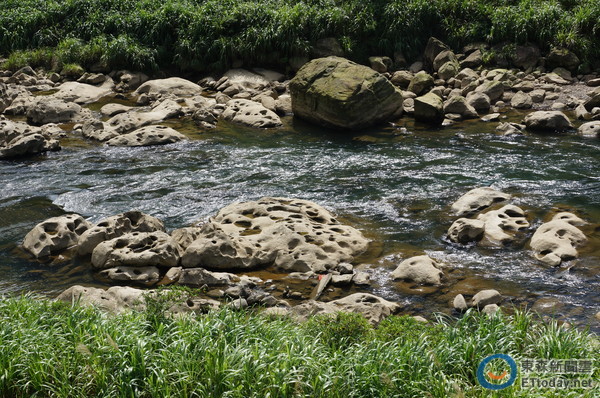
▲ Pothole landforms formed by erosion. (Photo / Reporter Cai Mengxiu)
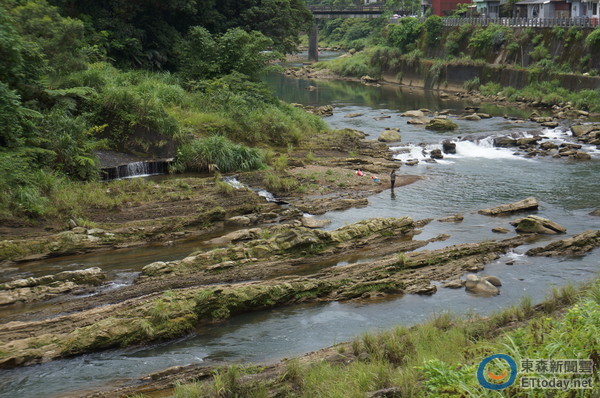
▲ Stone ridge landforms shaped by years of river erosion. (Photo / Reporter Cai Mengxiu)
Stone ridges are another special geological feature of this river section. The long, stacked strips of rock are called stone ridges (pronounced "shí léng"), formed by the compression of tectonic movements 20 million years ago. Due to varying hardness across different parts of the rock, prolonged water erosion has created these unique landscapes.
Miners' Dormitories:
The miners’ dormitories, built with red bricks and tiles, are also known as "Liao-á," constructed in 1968. Each window represents one household. In the early years, miners who came from other places sometimes brought their families to live in these dormitories, squeezing an entire family into these tiny rooms.
Back then, the "Liao-á" were divided by wooden boards, with small holes cut into the walls for electric lights shared by two households. Kitchens, bathrooms, and toilets were also communal. Today, the interiors of the miners’ dormitories still retain their original appearance. From furniture arrangements, utensils, to kitchen setups… all reveal the harsh living conditions of the miners at the time.
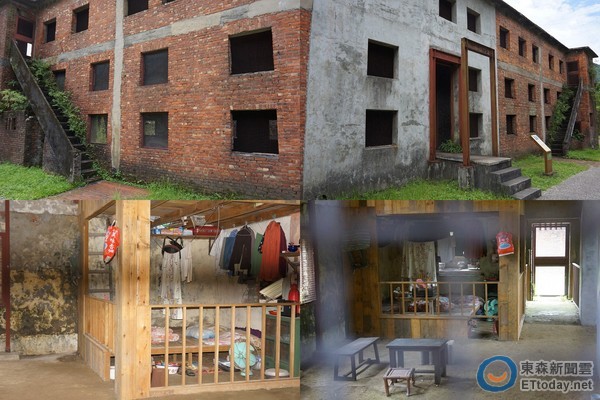
▲ The "Liao-á" were the miners’ dormitories, with one window per household, where an entire family’s daily life was crammed into these cramped spaces. Some remnants of the "Liao-á" still preserve their former look. (Photo / Reporter Cai Mengxiu).
Samya Bangkong:
After completing the route on the right side of Chailiao Road, you can bike back toward the left side of Chailiao for a scenic stretch. This part of the path is beautiful, with the bike trail winding along mountains and rivers, accompanied by countless butterflies. After passing the Houtong Visitor Center, the latter half of the cycling route runs parallel to the railway—often offering the amusing sight of cyclists racing trains. With multiple curves, tunnels, and mountain-surrounded tracks, and all types of TRA trains passing through here, this spot attracts many train enthusiasts and photographers.

▲ Because Houtong allows up-close train viewing, combined with long curves, tunnels, and mountainous surroundings, it draws many train enthusiasts. (Photo / Reporter Cai Mengxiu)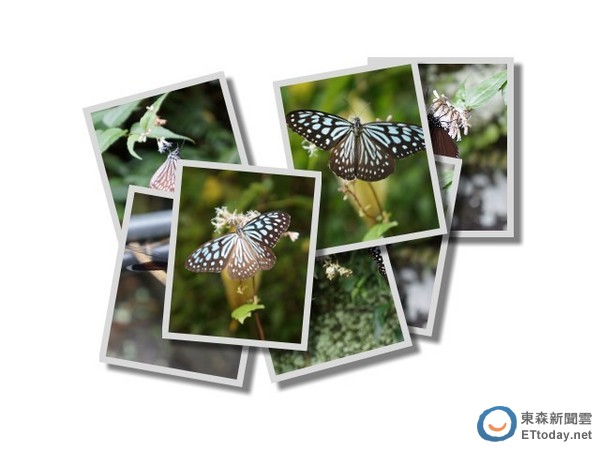
▲ Chailiao Creek offers a picturesque cycling path, with many butterflies along the way. (Photo / Reporter Cai Mengxiu)
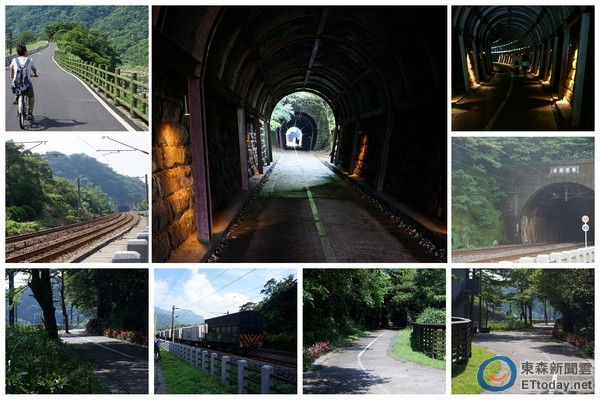
▲ This photo shows the cycling scenery along Chailiao Road, with "Samya Bangkong" in the middle. Few tourists visit this area, allowing for a peaceful and enjoyable bike ride. (Photo / Reporter Cai Mengxiu)
This bike path passes by a scenic spot called "Sanye Bangkong" along the way, a site not specifically marked on the tourist center's map. "Sanye Bangkong," pronounced in Taiwanese Hokkien, means "three caves." In the past, this was a railway tunnel, but after it was decommissioned, it was converted into a bike path. Due to its somewhat remote location and lack of a marking on the guide map, this spot is mostly frequented by cyclists, lending it a relatively peaceful atmosphere.
Houdong Elementary School:
Houdong Elementary School is the only school in this quiet mountain town. In 1990, during Typhoon Herb, a massive mudslide destroyed most of the campus. Later, it was relocated near the Yuanshanzi Flood Diversion Channel and rebuilt on a new site. The school has six classrooms arranged in three pairs facing each other, with a student population of only around 50. The sloped corridors on campus symbolize coal cart tracks, and the school gate is also embedded with a coal cart motif, reflecting a complete mining-themed design concept.
Additionally, one of the most eye-catching features is the playground equipment at the entrance — the “Big Monkey Slide.” Not only does it creatively incorporate the shape of a monkey into the slide, but the monkey’s mouth and eyes can also be changed, offering a total of five different expressions. Charming and endearing, it is one of Houdong’s famous attractions.
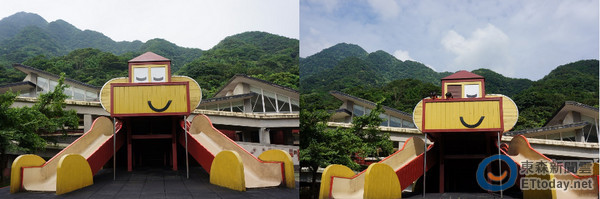
▲ Did you notice? The monkey in the right photo has its eyes closed. (Photo / Reporter Tsai Meng-hsiu)
Local Culture:
Houdong is a simple and unpretentious small town, and its “people” are one of its defining local characteristics. The residents live contentedly, free from the hustle and bustle of city life or the glitz and glamour of urban living. What you see here is an unfiltered display of rustic simplicity. Many shop owners run small family businesses. Children come home and squat by metal buckets, helping wash dishes and share household chores while greeting customers and doing their homework — no one keeps score or complains.
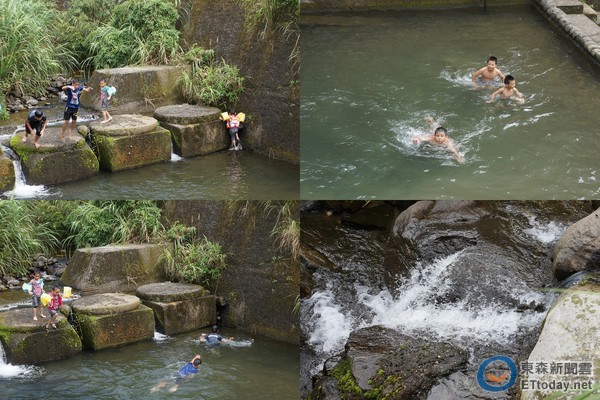
▲ The water here is mountain spring water flowing down from the hills, crystal clear. Locals love to swim here in the summer to beat the heat. (Photo / Reporter Tsai Meng-hsiu)
Near Houdong Elementary School, there is a sediment dam that serves as a paradise for children seeking relief from the summer heat. The crystal-clear mountain spring water that flows down from the hills attracts locals who come here to play, swim, catch shrimp, and fish. This scene is like a journey back in time to the era of early agricultural society, vividly embodying the truth that “simplicity is joy.”
After a day of exploration, visitors can stay in Houdong to enjoy local cuisine. The food scene in the Houdong area is mostly concentrated near the train station entrance, typically featuring old-fashioned noodle dishes or traditional meals. One particularly iconic dish that visitors must try is the “chicken roll.” However, don’t let the name mislead you — there is no chicken in the chicken roll. Its name mainly comes from its Hokkien pronunciation.
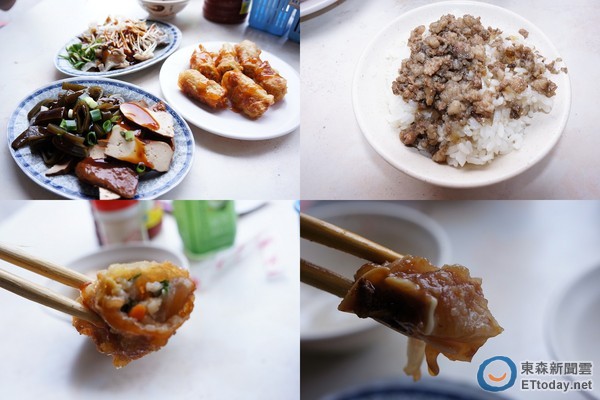
The word for “chicken” in Hokkien can also mean “extra” or “leftover.” Originally, locals used bean curd skin to wrap leftover rice and dishes, hence the idea of rolling something extra. The chicken roll is a frugal dish from farming days that evolved into a unique specialty. Its crispy fried exterior encases a filling typically made of pork and vegetables, resulting in a texture that is crunchy outside and tender inside. The wrapper is juicy, creating a refreshing and non-greasy bite.
Besides the chicken roll, braised pork rice and pork skull meat are two other popular snacks. The pork skull meat is sliced to just the right thickness and served generously, pairing perfectly with the sauce. However, the pork belly rice is a bit too oily, leaving quite a bit of grease at the bottom of the bowl, and its flavor isn’t particularly outstanding, so it’s less recommended.
Finishing the meal also marks the end of the day trip. As you walk away tired but fulfilled, you’ll find yourself constantly reminiscing about what you saw and experienced in Houdong. You might even try to imagine the town during its mining heyday, when it was home to 900 households and over 6,000 people. Now, it stands largely abandoned. In just sixty short years, it has transformed into a lonely mountain town, with only the footsteps of those who once struggled remaining — as if telling a poignant tale of hardship and sacrifice, leaving behind a lingering sense of nostalgia.
Transportation Information:
A. Train: Take a local train (East Coast Main Line) from Taipei Railway Station to Houdong, or take a Tze-Chiang Limited Express or local train to Ruifang, then purchase a Pingxi One-Day Pass (NT$54 per ticket), which allows unlimited rides between Ruifang and Jing Tong stations.
B. Bus: Take a train to Ruifang Station, then transfer to Bus 808 to Houdong.※ Bus 808 Schedule
Shop Information:
Shop Name: Ah Ying’s Handmade Chicken Rolls, Miner’s Noodles
Address: No. 38, Chailiao Road, Ruifang District, New Taipei City (visible right after exiting Houdong Station)
Business Hours: 08:00–16:00
Houdong Station:
Share
This article is published by HowToTrip. Sharing and reposting are welcome — please credit the source.
Article URL: https://www.howtotrip.net/views-28272
Related Articles
- Shaoxing's "Grandpa Gourd" hangs the gourds back up: "If there are too many people, we'll interact less — just take a quick look from afar"
- Chinese authorities announce "reciprocal adjustment" to Japan visa fees — single-entry visa jumps from 2,250 to 16,750 yen!
- The "health stones" carried by a traveler were found to have radiation levels exceeding safety limits by a thousand times, potentially endangering fellow passengers on the same flight. Customs issues warning!
- Shenzhen Airport Issues Late-Night Notice: Unidentified Aerial Object Detected, Causing Widespread Flight Delays!
- “They only said it cost money after I opened the box and washed it!” 200g of grapes sold for 60 yuan on a high-speed train—12306 responds!
- Can't buy an airline ticket? Denied exit? Blocked from boarding? A large number of Chinese tourists have mysteriously become "discredited individuals"
- Adverse weather and economic fluctuations impact Colombia's coffee market
- Beach bathing area responds to 2 yuan/30 seconds fee for freshwater foot rinsing: Clearly priced!
- Taking off with an improperly closed cabin door? Wing malfunction? Multiple flights made emergency returns mid-journey!
- Experience the gifts of nature! A countdown of the world’s ten most stunning coastlines