Divine creativity of nature!Wildlife reigns supreme in South Africa, the "Rainbow Nation"
Reporter Lin Yuling / Special Report
In addition to being called the "Rainbow Nation," South Africa is also known as the "playground of divine creativity." It not only has a richly diverse culture but also features a wide array of unique natural landscapes where wildlife lives side by side and thrives according to its own instincts. When the desert is nourished by spring rains, it astonishingly blooms into a sea of vibrant, rare and one-of-a-kind flowers. These awe-inspiring, strange yet harmonious scenes are what adventurous travelers most want to explore.
%It shows that humans are not the masters of the Earth, but are humbled by the vitality of wildlife. (Image: southafrica.net))
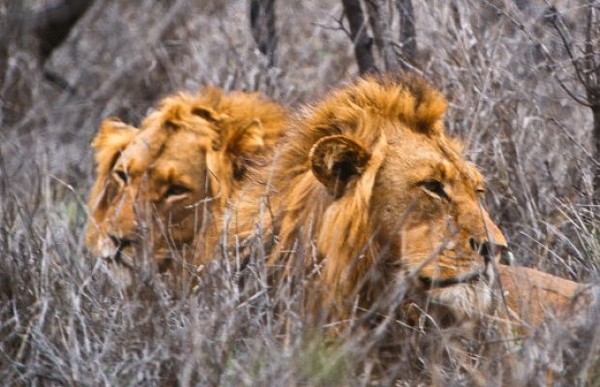
Rich Ecological Landscape – iSimangaliso Wetland Park
For those who love ecology and nature, the "iSimangaliso Wetland Park" (Greater St. Lucia Wetland Park), which encompasses five ecosystems, is an absolute must-visit destination.iSimangaliso Wetland Park(Greater St. Lucia Wetland Park) is definitely a must-see spot. It includes lakes, swamps, sand dunes, wetlands, grasslands, caves, beaches, and coral reefs—each unique yet interconnected, allowing a diverse range of wildlife to gather here, creating a rare and spectacular sight. Here, you can see hippos grazing by the lake, crocodiles lurking in the swamps ready to pounce, African elephants and rhinos strolling on land, dolphins leaping through the waves, fish eagles soaring from the bushes, and up to 521 species of birds calling this place home.
%It’s home to a wide variety of birds. (Image: southafrica.net))
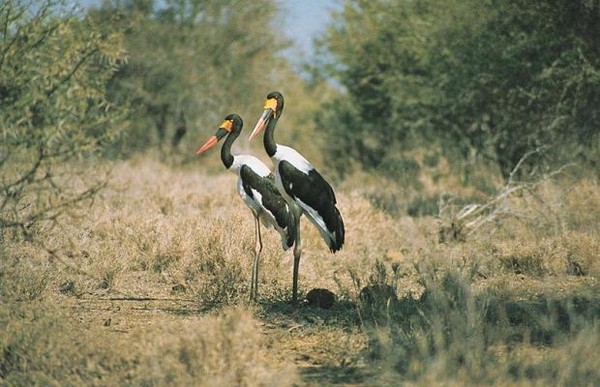
A Favorite Among Wildlife Enthusiasts – Kruger National Park
Visiting South Africa is like stepping into the "home of wildlife." Here, you’ll truly understand that "humans are not the masters of the Earth" and will be humbled by the vitality of all living things. Wildlife lovers simply cannot miss Kruger National Park, the world’s first wildlife reserve. It is home to the “Big Five” — elephants, lions, leopards, buffalo, and rhinos — as well as antelopes, giraffes, zebras, wildebeest, and more. While observing these fierce creatures rarely seen in cities, don’t forget to stay safe; there might just be a leopard hiding in the grass, its green eyes gleaming.Kruger National Park(Kruger National Park) is also the world’s first wildlife sanctuary. Along with the “Big Five” — elephants, lions, leopards, buffaloes, and rhinos — you can also find antelopes, giraffes, zebras, and wildebeests. When observing these majestic beasts rarely seen in urban areas, remember to stay cautious; a leopard might be lurking in the grass with its emerald eyes watching you.
%Being in their habitat allows you to observe them up close. (Image: southafrica.net))
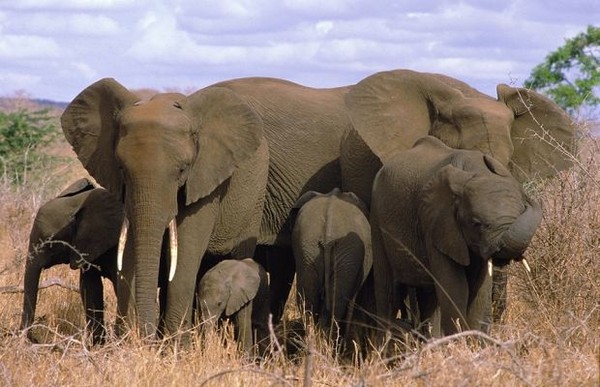
Don’t Get Addicted to Meerkats… Or Will You?
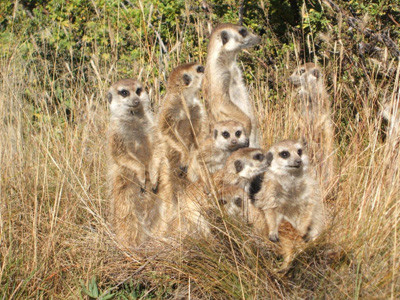
One of the Animal Planet’s most popular shows, "Meerkat Manor," was filmed and documented in South Africa’s Kalahari Desert, specifically in the Kuruman River Reserve.Kalahari Desert Kuruman River ReserveMeerkats are incredibly social and family-oriented animals. They love to cuddle with each other, which is absolutely adorable. They also work together for survival — some forage for food, others keep watch for predators, and some stay behind to care for the young. Observing their interactions is sure to get you hooked.
%Watching them may get you addicted. (Photo /southafrica.net)
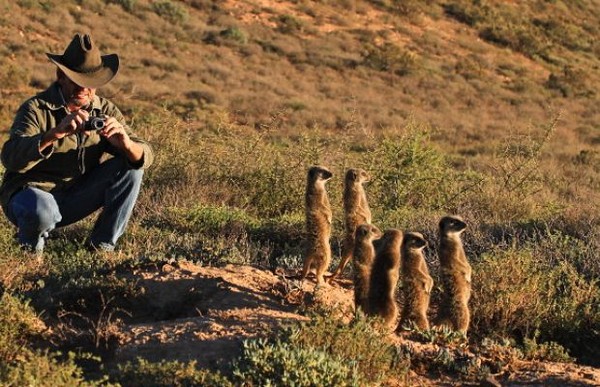
A single mother from Taiwan, Wen Fangling,Wen Fanglingwas so moved by meerkats that she spent three years applying to become the first person from East Asia to visit a meerkat conservation area in the South African desert. She said that in today’s society, where family structures are often weak, the bonds of meerkat families are even more precious and offer valuable inspiration to people.
%Their family structure and strong familial bonds offer plenty of inspiration to people. (Photo /southafrica.net)

Africa Is So Hot… But It Has Penguins Too
“Africa is so hot—how can there be penguins?” is the most astonishing thing many people think at first. Head to Cape Town’sBoulders(Boulders beach)African Penguin Colony,and you’ll often encounter penguins while strolling along the beach. They sunbathe and play on the sand, and occasionally wander up the sightseeing stairway. Once, a visitor standing on the stairs was pecked on the foot by a penguin’s sharp beak—it turned out there were eggs hidden in the nearby bushes, and the penguin was protecting its young by ambushing passersby. In such situations, don’t take it personally—after all, a penguin peck can really hurt, and this is their home. As “guests,” we should restrain ourselves and quickly leave the area.
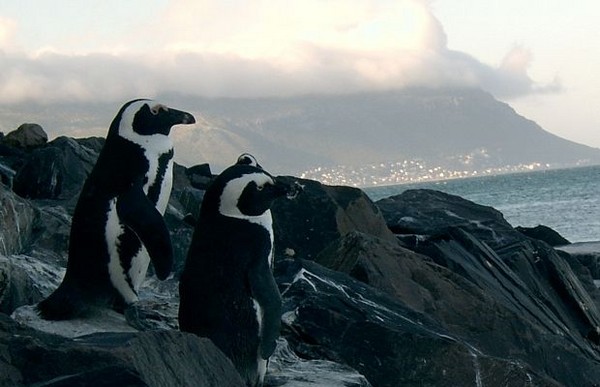
▲% Don’t stay too long here, as the penguins are quite sensitive to human presence. (Source: southafrica.net)
South Africa’s Backyard – Namaqualand
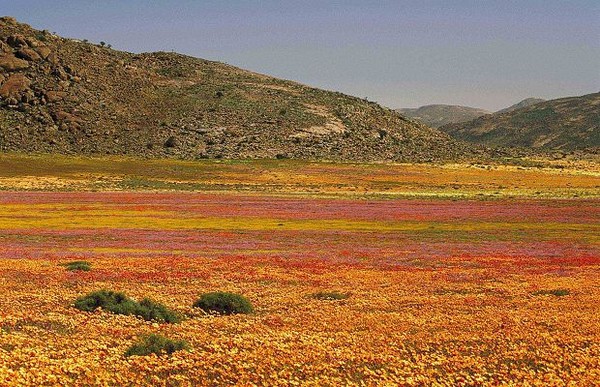
Namaqualand, located in the semi-desert region of South Africa’s Northern Cape, is known as the “backyard of South Africa.” During the dry season, it’s a barren desert. But after the spring rains, it bursts into a dazzling explosion of wildflowers—a surreal sea of color. Here, 3,000 plant species coexist, many of which are found nowhere else in the world, such as golden lilies, blue irises, and orange daisies, as if the heavens spilled their paint palette. When the rainy season gives way to the dry season, the landscape reverts to desert, making the flower spectacle feel like a dream. These wonders make one marvel that South Africa is truly a “creative paradise of the Creator!”
▲% The desert transforms into a colorful ocean of flowers after the rainy season. (Source: southafrica.net)
Safety and Health
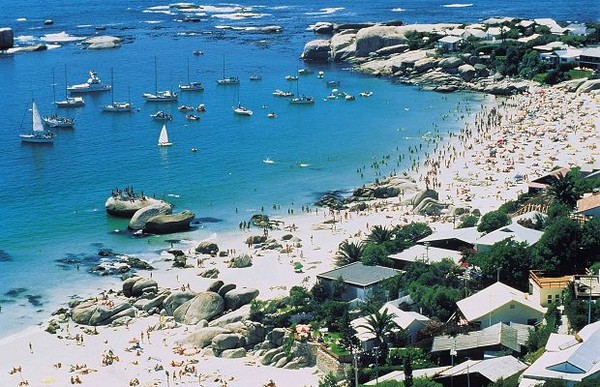
South Africa’s tourism infrastructure is now well-developed, and many travel agencies in Taiwan offer related tours. If you’re concerned about risks while traveling alone, consider joining a group tour, traveling with local friends or relatives, and purchasing insurance in advance to enhance your safety and vigilance. Try to travel during the day, as nightlife can be more dangerous—many travelers have experienced robberies. Additionally, malaria is prevalent in the region; you can take preventive malaria medication in advance, use mosquito repellent, and sleep under a mosquito net at night. The World Health Organization advises visitors to South African farms or wildlife parks to avoid contact with the blood or bodily fluids of sick animals, refrain from drinking untreated water, and avoid eating raw meat. Take proper preventive measures and avoid mosquito bites. HIV/AIDS is also widespread, with carriers accounting for up to 20% of the population, and the disease spreads rapidly.
% Despite challenges, South Africa offers rich experiences in culture, adventure, and nature. (Source: SouthAfricanTourism)
※ About the Republic of South Africa
● Location: At the southernmost tip of Africa.
● Climate: Arid and rainless along the western coast; subtropical humid climate in the east.
● Capitals: Pretoria, Bloemfontein, and Cape Town; largest city is Johannesburg.
● Population: 50 million, with 11 official languages.
● Currency: 1 South African Rand = 2.9759 New Taiwan Dollars
● Highlights: Modern urban culture, agricultural and tribal traditions, natural landscapes, wildlife, and desert ecosystems.
● Recommended Itinerary: Travel north to south or vice versa. If entering via Johannesburg, heading south and exiting from Cape Town can save on airfare. (Source: Backpackers’ Inn)
● Tour Operators: Contact agencies like Earth Holidays, Master Travel, New Journey Travel, or Phoenix Travel.
★ Taiwanese travelers must apply for a visa before visiting South Africa.
Share
This article is published by HowToTrip. Sharing and reposting are welcome — please credit the source.
Article URL: https://www.howtotrip.net/views-28273
Related Articles
- Shaoxing's "Grandpa Gourd" hangs the gourds back up: "If there are too many people, we'll interact less — just take a quick look from afar"
- Chinese authorities announce "reciprocal adjustment" to Japan visa fees — single-entry visa jumps from 2,250 to 16,750 yen!
- The "health stones" carried by a traveler were found to have radiation levels exceeding safety limits by a thousand times, potentially endangering fellow passengers on the same flight. Customs issues warning!
- Shenzhen Airport Issues Late-Night Notice: Unidentified Aerial Object Detected, Causing Widespread Flight Delays!
- “They only said it cost money after I opened the box and washed it!” 200g of grapes sold for 60 yuan on a high-speed train—12306 responds!
- Can't buy an airline ticket? Denied exit? Blocked from boarding? A large number of Chinese tourists have mysteriously become "discredited individuals"
- Adverse weather and economic fluctuations impact Colombia's coffee market
- Beach bathing area responds to 2 yuan/30 seconds fee for freshwater foot rinsing: Clearly priced!
- Taking off with an improperly closed cabin door? Wing malfunction? Multiple flights made emergency returns mid-journey!
- Experience the gifts of nature! A countdown of the world’s ten most stunning coastlines